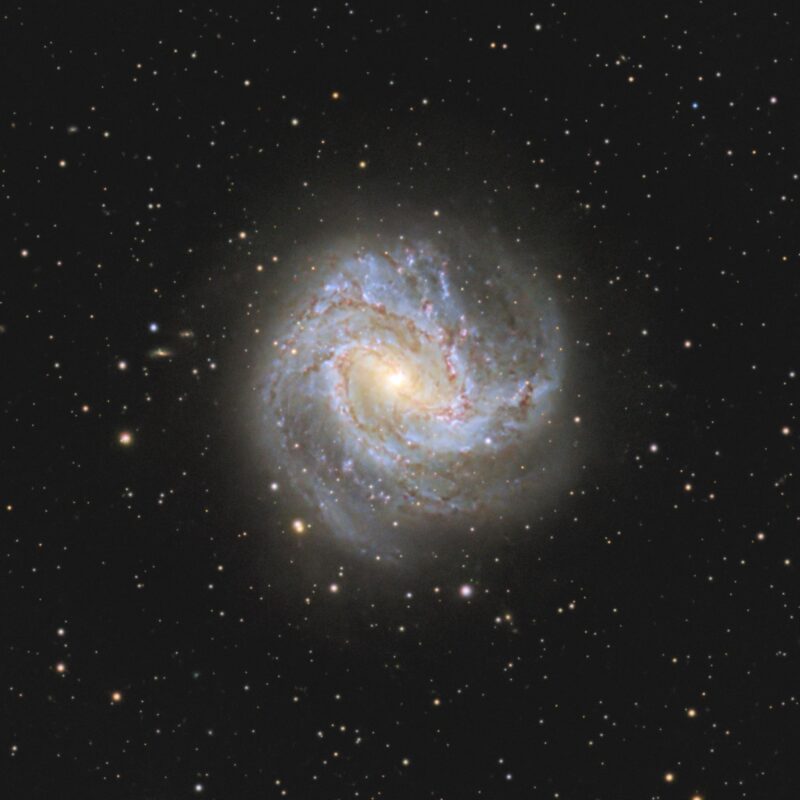
View at EarthSky Community Photos. | Steven Bellavia in Smithfield, Virginia, captured this telescopic view of galaxy Messier 83 on May 11, 2026. Steven wrote: “Even down here in southern Virginia, M83, the Southern Pinwheel Galaxy, only reaches an altitude of 22 degrees. So this is a challenging object to capture. M83, also called the Southern Pinwheel Galaxy, is a barred spiral galaxy in the constellation borders of Hydra and Centaurus. Nicolas-Louis de Lacaille discovered it on February 17, 1752, at the Cape of Good Hope. Charles Messier added it to his catalog in March 1781. At 15 million light-years away, it is one of the closest and brightest barred spiral galaxies in the sky, visible even with binoculars.” Thank you, Steven! See more deep-sky photos from May 2026 below.
The EarthSky community has many talented astrophotographers who capture stunning images of the deep sky. We gathered some of our favorite deep-sky photos from May 2026 for you to enjoy. Do you have images of your own to share? You can submit them to EarthSky here. We’d love to see them and share them!
Deep-sky photos of diffuse nebulae
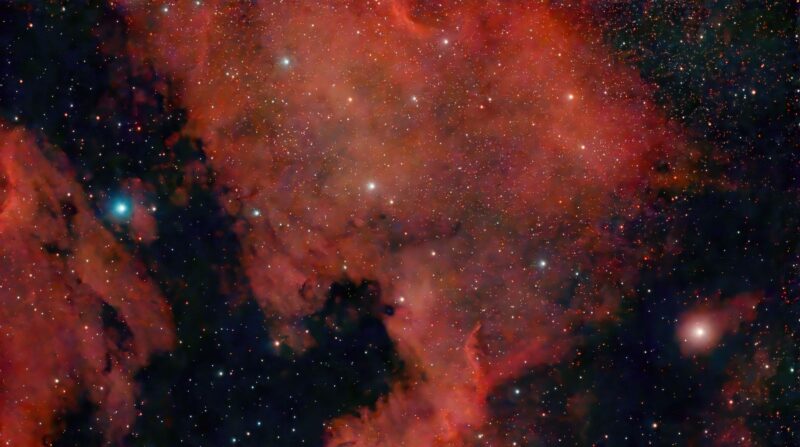
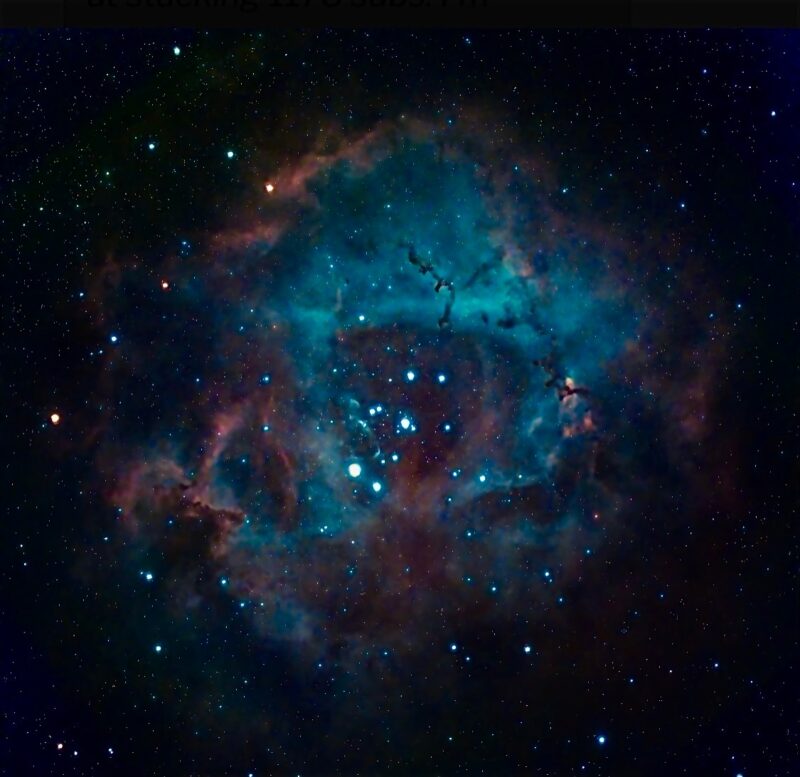
View at EarthSky Community Photos. | Vikash Singh in Dhannad, Jharkhand, India, captured this telescopic view of the North America Nebula on May 8, 2026. Vikash wrote: “NGC 7000, also known as the North America Nebula, from my city Dhanbad using my Dwarf 3 Smart Telescope. Located in the constellation Cygnus near the bright star Deneb, this emission nebula lies around 1,500-2,200 light-years away from Earth and stretches nearly 50 light-years across space.” Thank you, Vikash!View at EarthSky Community Photos. | Jacky Brown in Aurora, Colorado, captured this telescopic view of the Rosette Nebula with its associated star cluster, in the constellation Monoceros, on May 10, 2026. Jacky wrote: “I was actually watching Betelgeuse and got sidetracked to this star cluster. Beautiful object, as always.” Thank you, Jacky!
Planetary nebulae
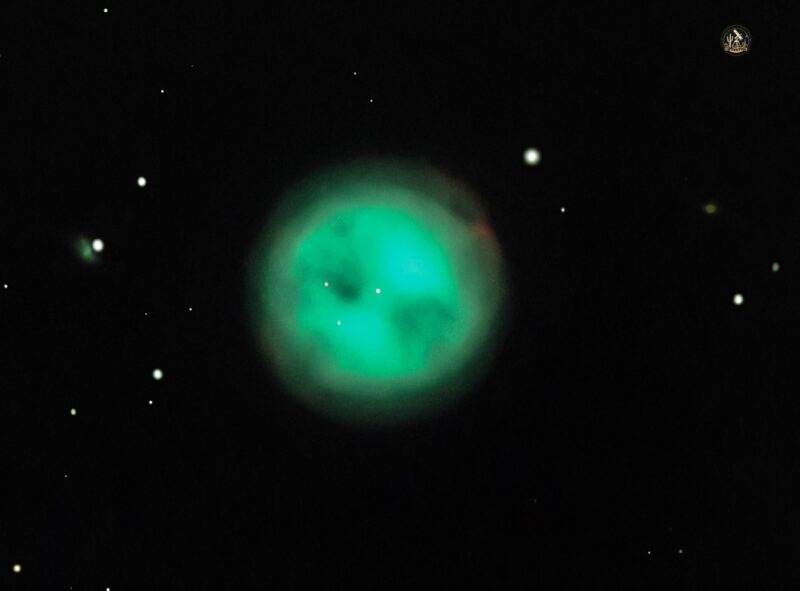
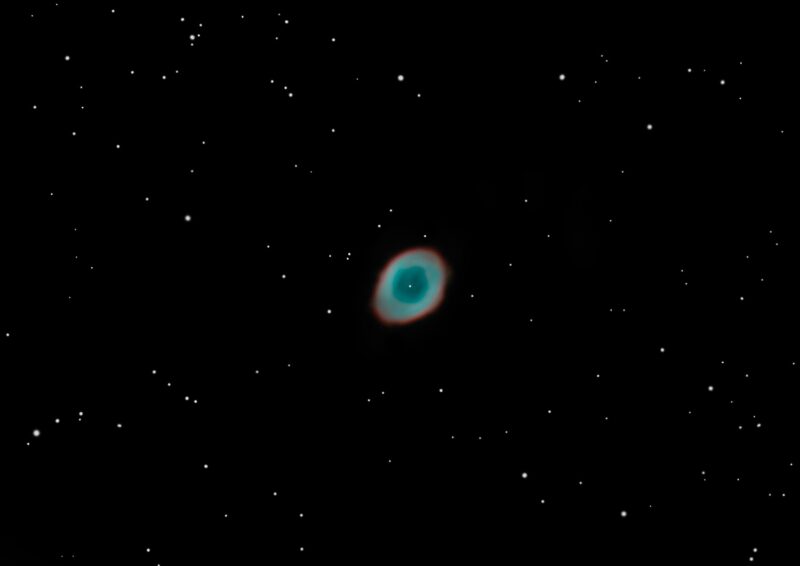
View at EarthSky Community Photos. | Jelieta Walinski at Desert Bloom Observatory in St. David, Arizona, captured this telescopic view of Messier 97, the Owl Nebula in the constellation Ursa Major, on May 15, 2026. Jelieta wrote: “The Owl Nebula, located in the constellation Ursa Major approximately 2,000 light-years from Earth, is a planetary nebula formed from the outer layers of a dying sunlike star. Its distinctive ‘owl-eyed’ appearance emerges from complex shells of glowing gas illuminated by the hot remnant stellar core. This image represents both the beauty and the challenge of modern backyard astrophotography, where even under intrusive artificial light, faint deep-sky objects can still be revealed through patience, precision tracking, and long exposure imaging.” Thank you, Jelieta!View at EarthSky Community Photos. | Jelieta Walinski at Desert Bloom Observatory in St. David, Arizona, captured this telescopic view of Messier 57, the Ring Nebula, in the constellation Lyra, on May 16, 2026. Jelieta wrote: “Captured from Desert Bloom Observatory under intermittent monsoon skies in the Arizona desert, this image reveals the luminous beauty of the Ring Nebula (Messier 57), the glowing remains of a dying star approximately 2,300 light-years from Earth. Its delicate emerald core and expanding outer shell shine like a celestial smoke ring suspended in the darkness of space.” Thank you, Jelieta!
Star clusters
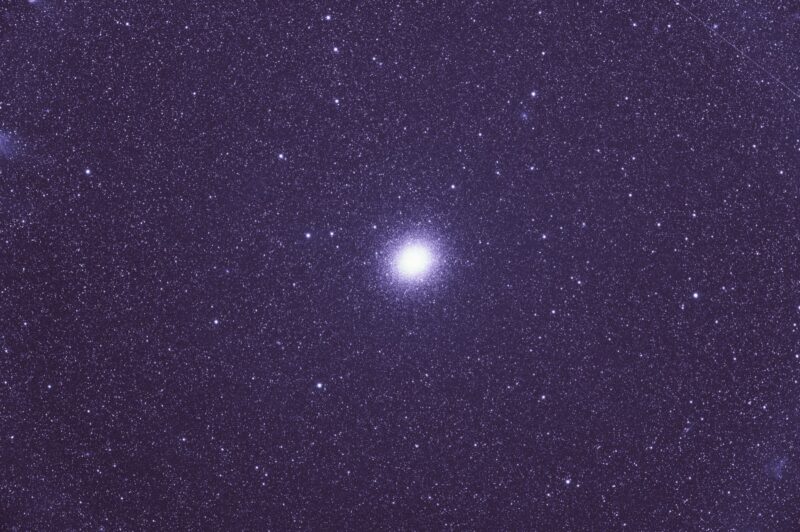
View at EarthSky Community Photos. | Giuseppe Pappa from Sicily, Italy, used a remote telescope in Namibia to capture this view of globular cluster NGC 5139, Omega Centauri, on May 13, 2026. Giuseppe wrote: “May offers the optimal annual window for latitudes around 38-32 degrees north latitude. In this case I took the images from Namibia (remote control). Wide-field capture of the Milky Way’s most massive globular cluster. The flat field of the AG70 astrograph delivers pinpoint stellar profiles across the entire frame, mapping the steep radial density gradient from the structural outskirts to the unresolved core. Due to its multiple stellar populations with distinct chemical profiles and ages, NGC 5139 is classified as a stripped galactic nucleus: the fossil remnant of a dwarf galaxy accreted by the Milky Way.” Thank you, Giuseppe!
Deep-sky photos of distant galaxies
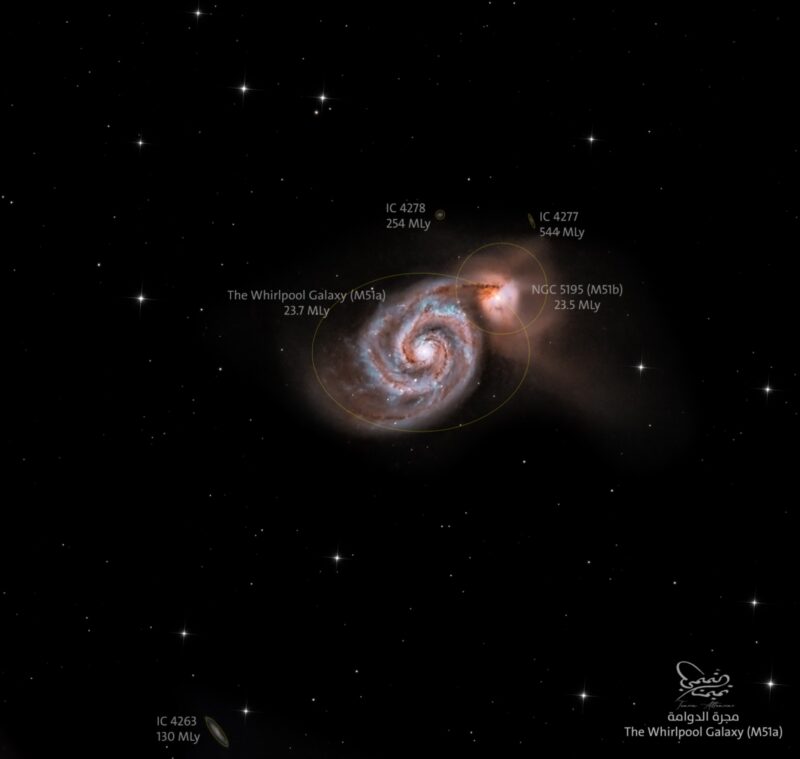
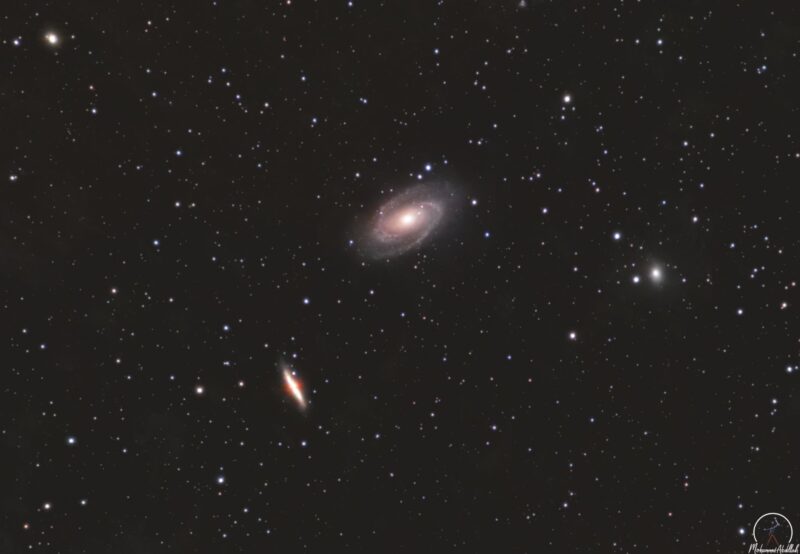
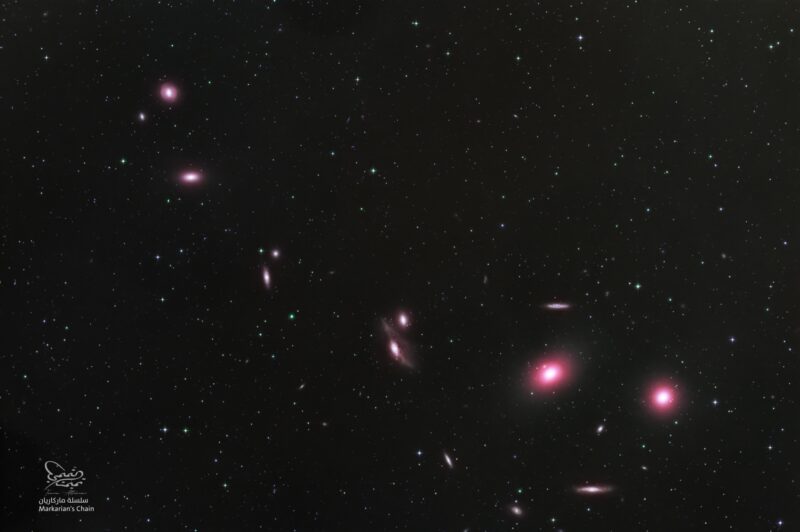
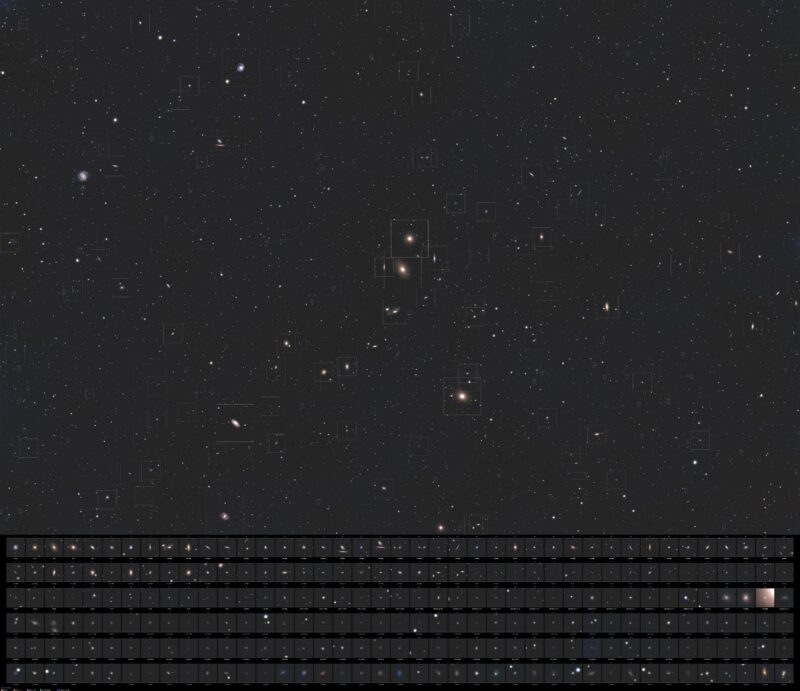
View at EarthSky Community Photos. | Tameem Altameemi in the United Arab Emirates (UAE) captured this telescopic view of Messier 51, the Whirlpool galaxy, on May 9, 2026. Tameem wrote: “Located about 23.5 million light-years away in the constellation Canes Venatici, M51 is one of the most famous interacting spiral galaxies in the night sky. Its striking spiral structure is believed to be enhanced by the gravitational interaction with its companion galaxy NGC 5195, visible beside it. Several distant background galaxies also appear throughout the frame, including IC 4277 and IC 4278, adding depth to this cosmic scene.” Thank you, Tameem!View at EarthSky Community Photos. | Mohammed Abdallah in Suez, Egypt, used a telephoto lens to capture this view of galaxies Messier 81 and Messier 82 on May 6, 2026. Mohammed wrote: “M81 and M82 are interacting galaxies located in Ursa Major, and they are about 12 million light-years away. It’s impressive to think about how many million stars are in front of your eyes.” Thank you, Mohammed!View at EarthSky Community Photos. | Tameem Altameemi in Al Qou’, United Arab Emirates (UAE), captured this telescopic view of Markarian’s Chain of galaxies on May 23, 2026. Tameem wrote: “Markarian’s Chain is a famous curved alignment of galaxies located within the Virgo Cluster, one of the nearest large galaxy clusters to Earth. The chain was named after the Armenian astrophysicist Benjamin Markarian, who noticed that many of these galaxies appear visually connected in a smooth arc across the sky. This region contains a remarkable variety of galaxies, including giant elliptical galaxies, spiral galaxies seen edge-on, and interacting systems shaped by gravitational encounters over millions of years.” Thank you, Tameem!View at EarthSky Community Photos. | Steven Bellavia in Smithfield, Virginia, captured this telescopic view of Markarian’s Chain of galaxies on May 30, 2026. Steven wrote: “The Markarian chain of galaxies and even more field beyond them. The finder chart and poster are courtesy of a free script for PixInsight, developed by Daniel Nimmervoll of Germany. Note that well over 500 galaxies are revealed in this image. I chose to stop at 246.” Thank you, Steven!
Bottom line: Without a doubt, you’ll enjoy this gallery of deep-sky photos from May 2026 by our EarthSky community. If you have a great photo to share, send it in, too. We love to see them!
Armando is known primarily as an astronomy educator, after 30+ years of extensive public outreach and 10 years teaching in colleges. As one of only a handful of science communicators in Puerto Rico during Comet Halley's last visit, he assumed a pioneering role starting in 1985 when science was just beginning to enter the collective mindset. Over the years, his work as a teacher, speaker and writer, inspired people to pursue interests in science and brought enduring change to Puerto Rican culture. After being accepted into the 2014–2015 Antarctic season of PolarTREC, Armando was assigned to the Amundsen-Scott South Pole Station, where in 2015 he successfully conducted 10 days of work at the IceCube Neutrino Observatory. His affiliations include Ana G. Méndez University, Cupey campus (2014 to 2021), the University of Puerto Rico, Aguadilla campus (2015 to 2017), NASA JPL's Solar System Ambassadors (2004 to 2006), and NASA Space Grant (2017 to 2019) where he served as an affiliate representative.
Like what you read? Subscribe and receive daily news delivered to your inbox.
Thank you! Your submission has been received!
Oops! Something went wrong while submitting the form.