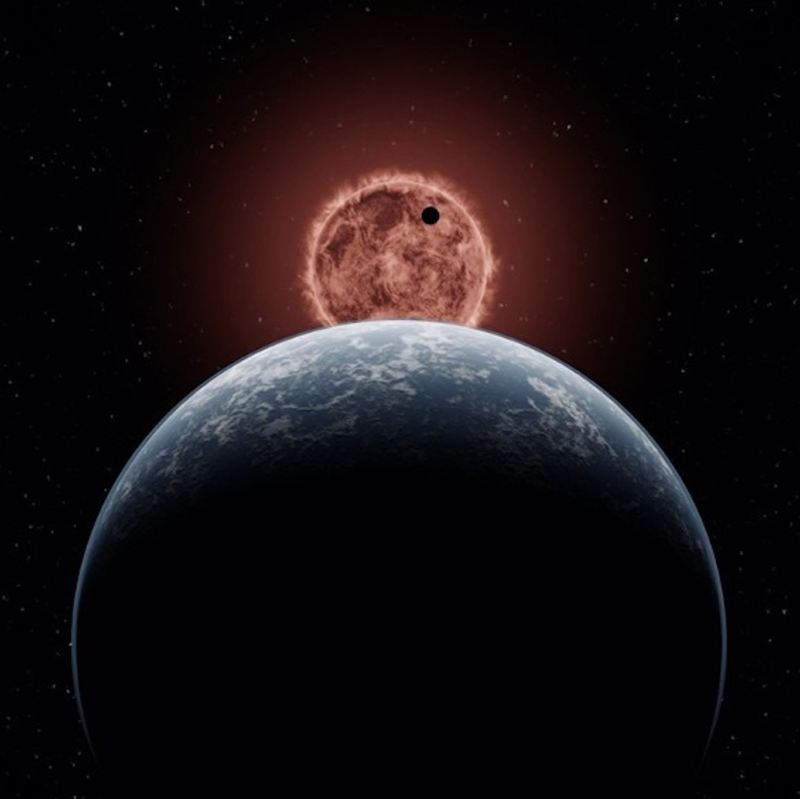
- Astronomers use the word habitable to mean a planet whose physical conditions might allow life – any form of life, perhaps microbial life – to exist there.
- Are there worlds more habitable than Earth? Some scientists think so.
- They wonder if super-Earth planets — larger and more massive than Earth — might be better suited for life than Earth is.
Are there worlds more habitable than Earth?
Science news, night sky events and beautiful photos, all in one place. Click here to subscribe to our free daily newsletter.
Scientists are seeking signs of life elsewhere in the universe. Even the tiniest microbe would be big news! So far, we don’t have conclusive evidence of any form of life on any planet beyond our own. So Earth is our primary model for what might be possible. Our planet is still the only one known to be brimming with life.
We know many rocky planets like Earth exist. Some are larger and more massive than Earth. We call them super-Earths. And we know that some are potentially habitable. Could they be even more habitable than Earth?
Some scientists have been weighing that idea. Nowadays, they are more confident than in past that such worlds might exist, especially since about 2010. The Kepler Space Telescope launched in 2009, for example. It has demonstrated that Earth-sized and super-Earth-sized planets are extremely common across our Milky Way galaxy.
Do the most habitable worlds orbit K dwarfs?
Beginning around 2010, astrobiologists — scientists who study the possibility of life beyond Earth — began recognizing that G-type stars like our sun might not be the best places for life. Research around this time highlighted orange dwarfs (K-type stars). They are far more abundant, have significantly longer lifespans (tens of billions of years in contrast to our sun’s 10 billion years) and emit less harmful ultraviolet radiation.
Around that time, scientists like René Heller and John Armstrong began challenging the anthropocentric assumption that an Earth twin is the ideal place for life. They formulated the concept of superhabitable worlds—super-Earths with stronger magnetic fields, thicker atmospheres, and warmer, more stable climates capable of supporting richer, more diverse ecosystems than Earth.
They teamed up in 2014 to present the hypothesis that smaller, cooler stars might be better for habitable planets. Why? Because they burn through their hydrogen fuel more slowly and brighten more gradually as they age. So they have longer lifespans for life to develop.
Our own sun only has about five billion years left before it turns into a red giant star. But K-type stars can live for 10s of billions of years. What kind of life could develop on planets in that length of time?
Armstrong, a professor at Weber State University in Utah, recently asked in the comments section of an astrobiology seminar on YouTube:
Shouldn’t there be planets more habitable than Earth?
What would these worlds be like?
Natalie Wolchover wrote about the fascinating possibility of superhabitable worlds for The New York Times on October 13, 2026. She pointed out that carbon-based life — like on Earth — could last longer and be even more diverse on such worlds than on Earth. But what might these planets be like?
The researchers say that typically they would be 20-30% larger than Earth and twice as massive. Hence, a super-Earth. Like Earth, they’d need water. But such massive rocky planets would have stronger gravity than Earth. They’d have been able to hold on to the ingredients for water as they formed. So they might have thicker atmospheres than Earth. They might have warmer and more stable climates.
Plus, super-Earths likely have iron cores that are larger than Earth’s. Those cores could produce stronger magnetic fields that would protect life even better than Earth’s magnetic field.
But — in the space of our Milky Way galaxy — do we know of any super-Earths orbiting more benign K-type stars better suited for life than Earth? The answer to that is no.

Experiments related to super-Earths
As noted in Wolchover’s article, astrobiologist Iva Vilovic at the Leibniz Institute for Astrophysics in Potsdam, Germany, thinks that life could thrive on super-Earths orbiting K-type stars.
She did experiments with garden cress. She simulated the light coming from a K-type star to see if photosynthesis would occur. And surprise! The plants grew even better than they did under regular sunlight on Earth. She told Wolchover:
K-dwarf light is a very, very interesting light source, and it should be considered, if not prioritized, for any type of search for extraterrestrial life, in my opinion.
The idea of a planet even more biologically diverse than Earth might be hard to imagine. On Earth, the tropics are some of the most biodiverse areas on the planet. But what if an entire planet was like that?
Consider that the light from the K-type star could reach to the bottom of a shallow ocean. This could help fuel an amazingly diverse marine ecosystem, including on any islands that might exist.
Is Earth only marginally habitable?
The seemingly endless kinds of life on Earth are breathtaking. But many scientists consider Earth to be only marginally habitable. If our planet were just 2% closer to the sun, for example, it probably wouldn’t have as much — if any — surface water.
So did we just get lucky?
René Heller, at the Max Planck Institute for Solar System Research in Germany, thinks that maybe we shouldn’t be so focused on finding Earth’s “twin.” He said:
It occurred to me that currently, humanity is looking for Earthlike planets with the same anthropocentric bias. Of course, Earth is special to us. But from a universal perspective, why should Earth be a reference?
He also wonders about there being “someone to talk to,” saying:
Although I am not, at least in my everyday life, a very spiritual person, it’s nevertheless something that at least drives me, this question. Could there be someone?
How can we find worlds more habitable than Earth?
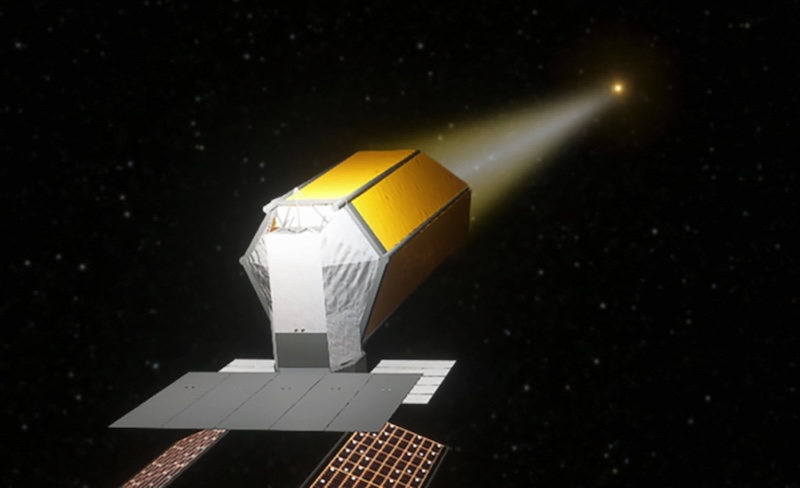
If such worlds do exist, how can we find them? The European Space Agency’s Plato mission is launching in 2027. The space telescope will be able to find potentially habitable planets, including super-Earths orbiting K-type stars. But it will have its limits. Heller said:
We will probably find a few of them, maybe a dozen. But we won’t learn much about them.
But there’s also the James Webb Space Telescope and the Extremely Large Telescope in Chile. Both can find potentially habitable super-Earths. And NASA’s planned Habitable Worlds Observatory — expected to launch sometime in the 2040s — will be able to make more detailed observations.
Read more: Could an Earthlike planet with 2 stars be nearby?
Read more: Nearby super-Earth GJ 3378b may be a good candidate for life
Like what you read?
Subscribe and receive daily news delivered to your inbox.
More from
Paul Scott Anderson


Pentagon UAP files part 7: Silent black triangles

Lucy mission to Trojan asteroids: 5 years of discoveries
Surprising colors of white dwarf stars revealed for 1st time
Caves on the moon are target of new NASA mission