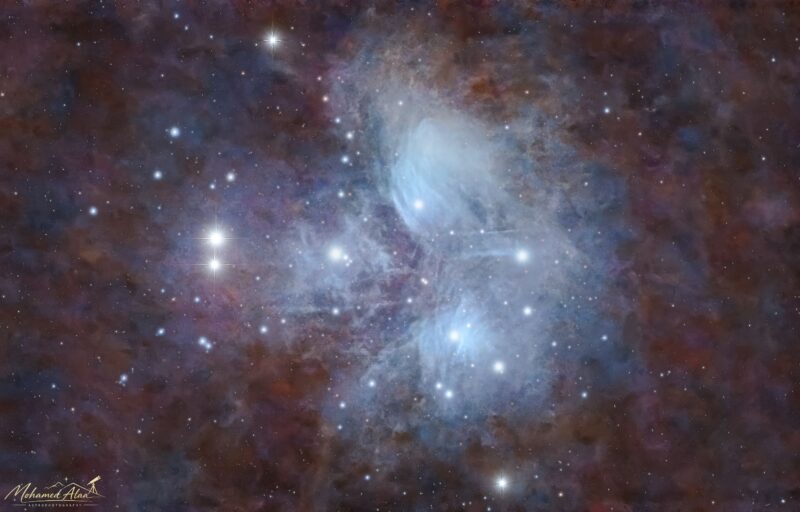
View at EarthSky Community Photos. | Muhammad Alaa in Egypt used a smart telescope to capture this view of the Pleiades open cluster on September 15, 2026. Muhammad wrote: “One of the most beautiful open star clusters in the night sky, surrounded by stunning blue reflection nebulosity.” Thank you, Muhammad! See more deep-sky photos from September 2026 below.
The EarthSky community has many talented astrophotographers who capture stunning images of the deep sky. We gathered some of our favorite deep-sky photos from September 2026 for you to enjoy. Do you have images of your own to share? You can submit them to EarthSky here. We’d love to see them and share them!
Deep-sky photos of diffuse nebulae
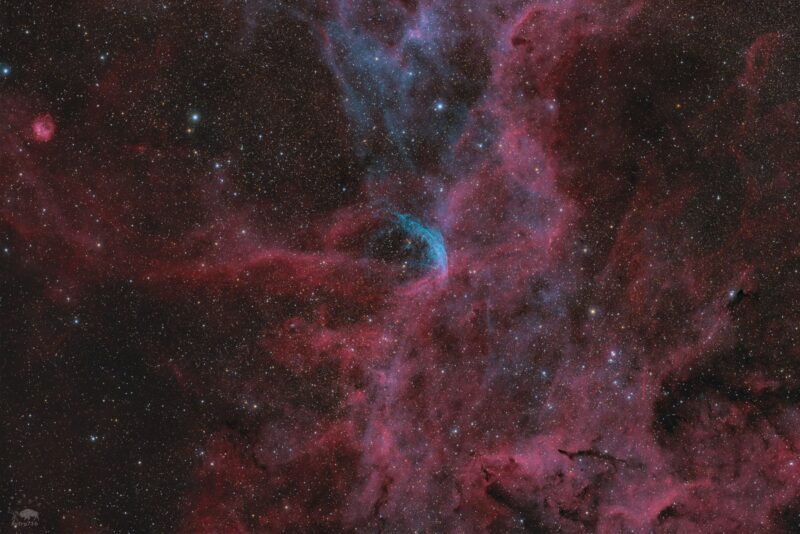
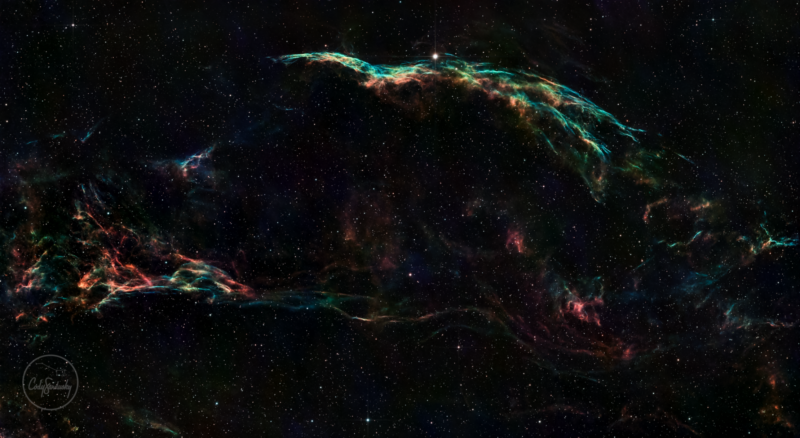
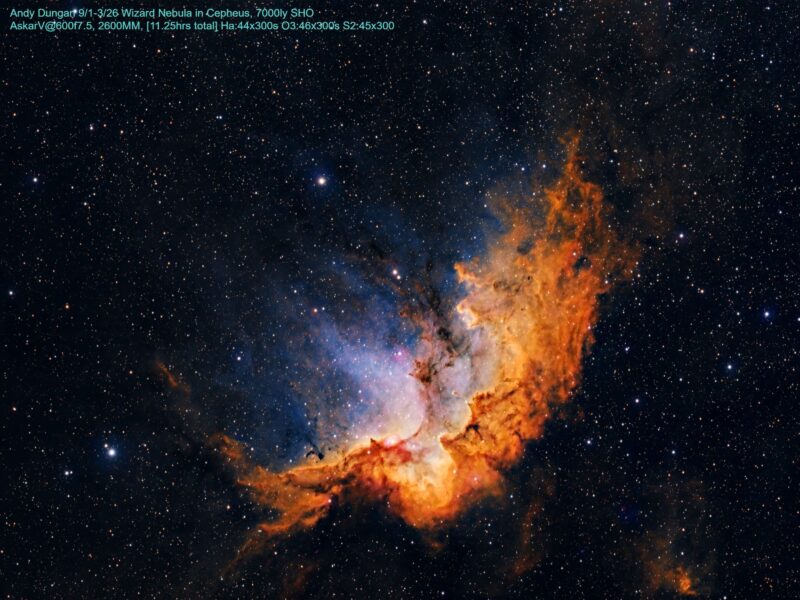
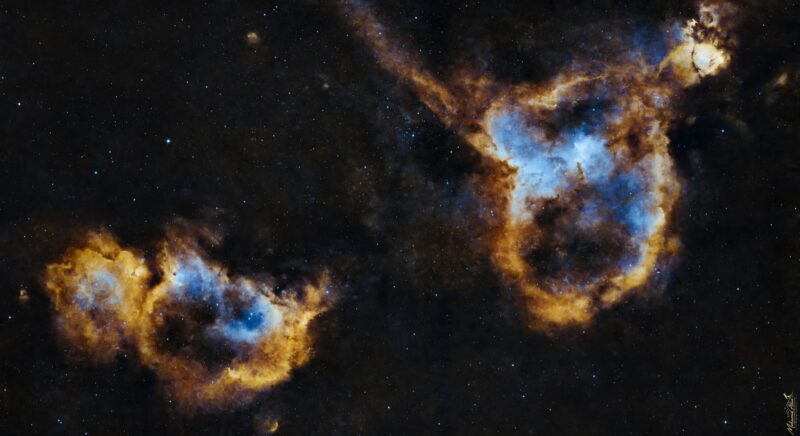
View at EarthSky Community Photos. | Ernest Jacobs in Eden, New York, captured this telescopic view of nebulae surrounding the star WR134 on September 6, 2026. Ernest wrote: “WR 134 (also known as V1769 Cyg) is a Wolf-Rayet star—a massive, hot, and rapidly shedding stellar core in its final stages of life. It has a surface temperature of about 63,000 K and a luminosity roughly 400,000 times that of the sun. WR 134 is located in the constellation Cygnus about 6,000 light-years from Earth. This image was captured over 3 nights with my wide-field deep sky imaging rig from my backyard.” Thank you, Ernest!View at EarthSky Community Photos. | Cody Sandusky in Harrisburg, Illinois, used a smart telescope to capture a part of the Veil Nebula, in the constellation Cygnus, on September 15, 2026. Cody wrote: “NGC 6960, the Western Veil Nebula, captured over five nights (approximately 15 hours of integration time) from my back yard.” Thank you, Cody!View at EarthSky Community Photos. | Andy Dungan near Cotopaxi, Colorado, captured this telescopic view of the Wizard Nebula, in the constellation Cepheus, on September 3, 2026. Andy wrote: “I remember taking a pic of the Wizard Nebula 2 years ago. It was basically a red blob. By using narrow-band filters I really get more information and can color it in more unique ways.” Thank you, Andy!View at EarthSky Community Photos. | Muhammad Alaa in Assiut, Egypt, used a smart telescope to capture this view of the Heart and Soul nebulae on September 24, 2025. Muhammad calls this image a labor of love, and wrote: “The Heart and Soul Nebulae (IC 1805 and IC 1848) are two spectacular emission nebulae located in the constellation Cassiopeia, filled with glowing hydrogen gas and intricate clouds of interstellar dust. I truly love this image. This one was a little challenging to process, especially bringing out the delicate hydrogen-alpha + oxygen III emissions while preserving the natural structure and fine details of the nebulae.” Thank you, Muhammad!
Deep-sky photos of distant galaxies
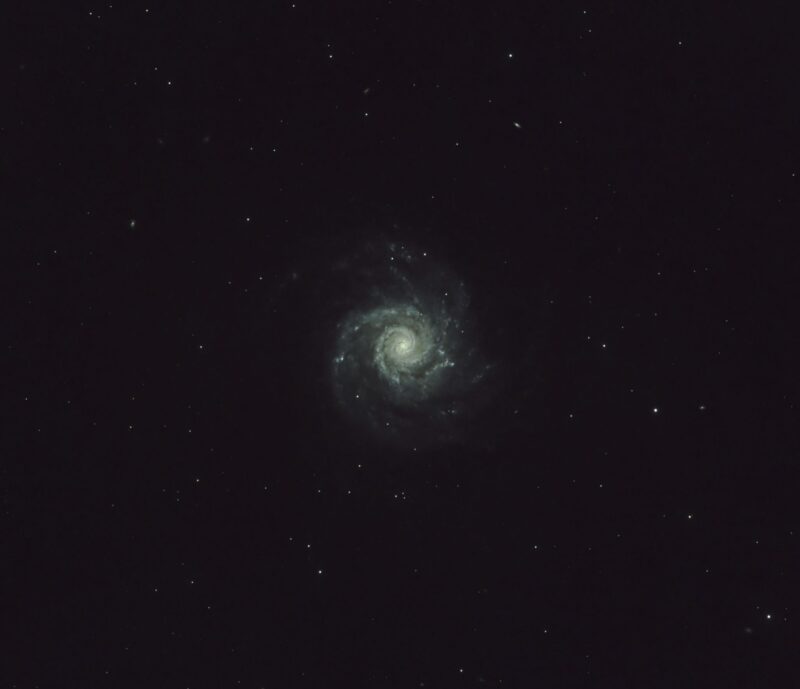
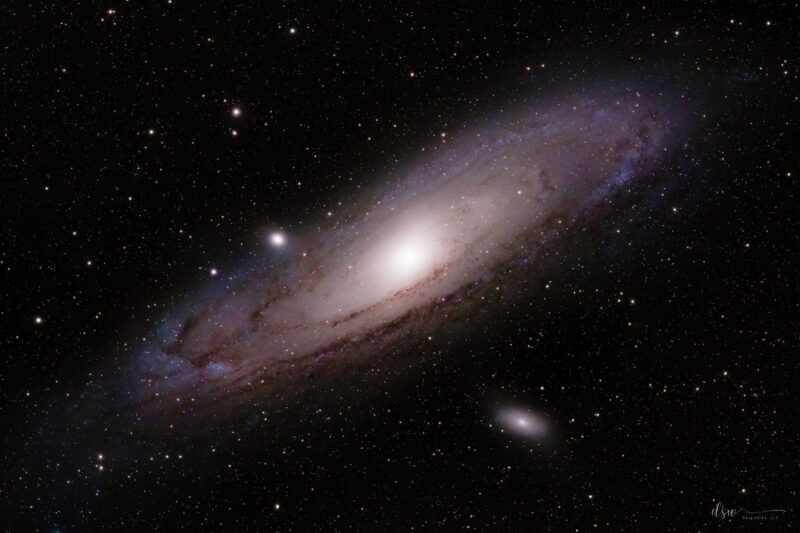
View at EarthSky Community Photos. | Catherine Hyde in Cambria, California, captured this telescopic view of galaxy Messier 74, in the constellation Pisces, on September 19, 2026. Catherine wrote: “This is the big, beautiful face-on spiral galaxy M74 in the constellation Pisces. This is 134 images, 300 seconds each, stacked, for a little over 11 hours of total integration time. I took it over four nights because of weather conditions.” Thank you, Catherine!View at EarthSky Community Photos. | Jeremy Likness in Newport, Oregon, captured this telescopic view of the Andromeda galaxy on September 10, 2026. Jeremy wrote: “The numbers are mind-numbing. 2.5 million light years? One trillion stars? This week had a run of clear, dark skies. Though I’m not in a position to travel from our Newport home, the garage roof was just fine to capture my target: M31, the Andromeda galaxy. Our nearest galactic neighbor is also enthusiastically approaching us at a rate of 250,000 miles per hour, on track to collide after the estimated billion years it will take to cross the estimated 250 million light years between our galaxies. And this is the busy neighborhood!” Thank you, Jeremy!
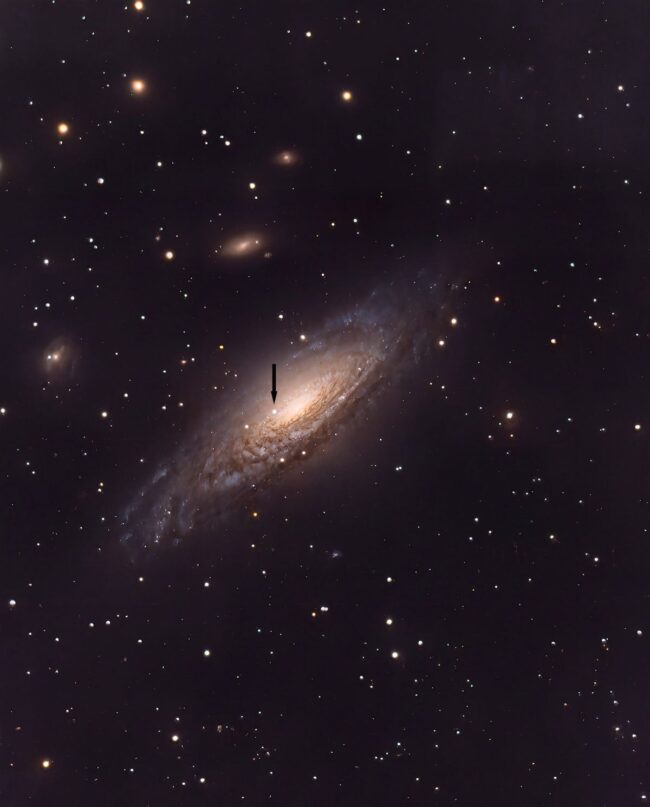
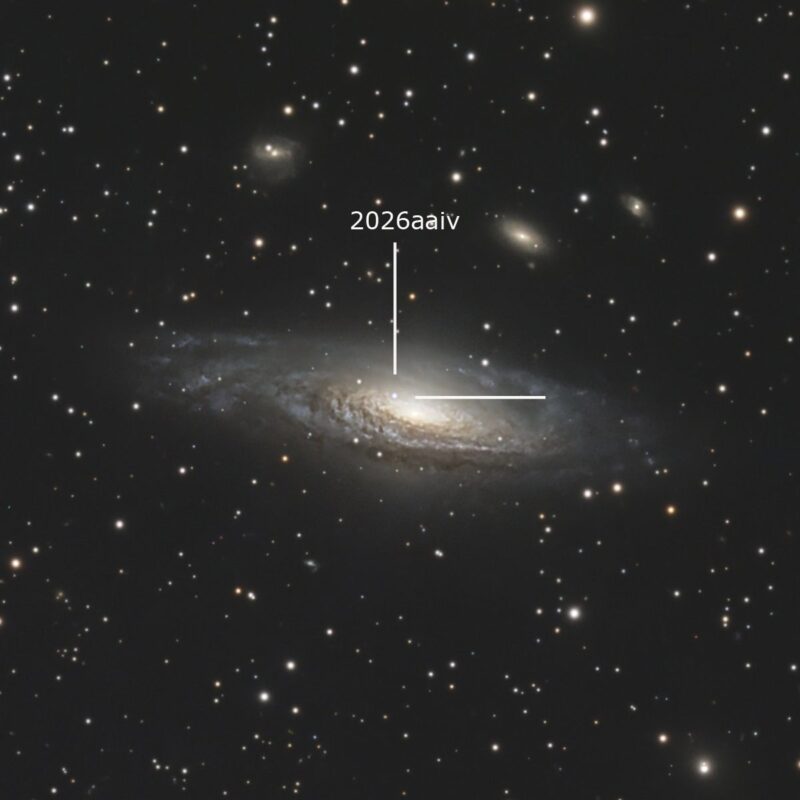
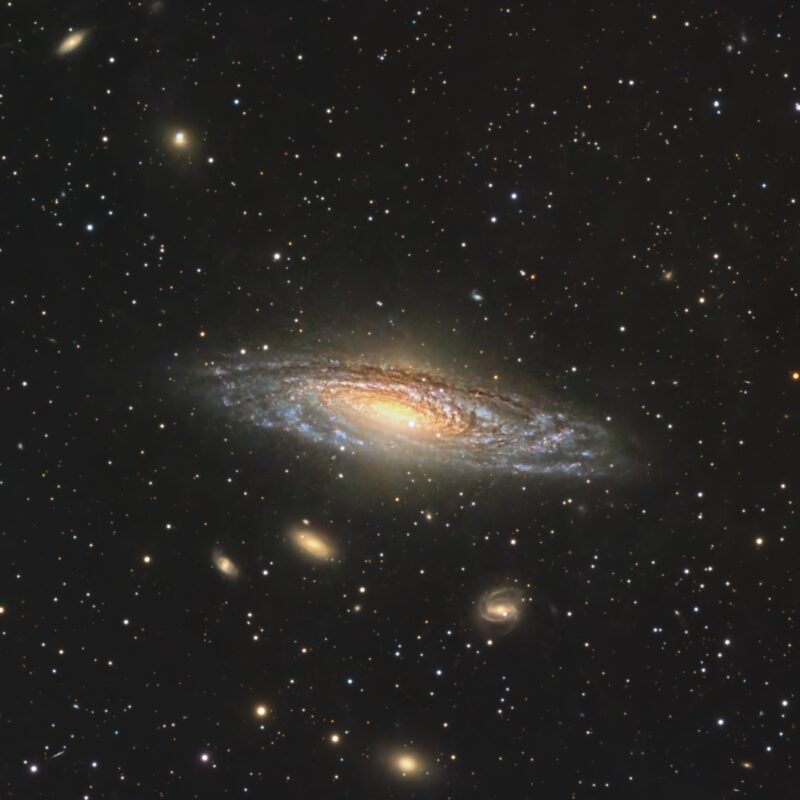
Galaxy NGC 7331 with supernova 2026aaiv
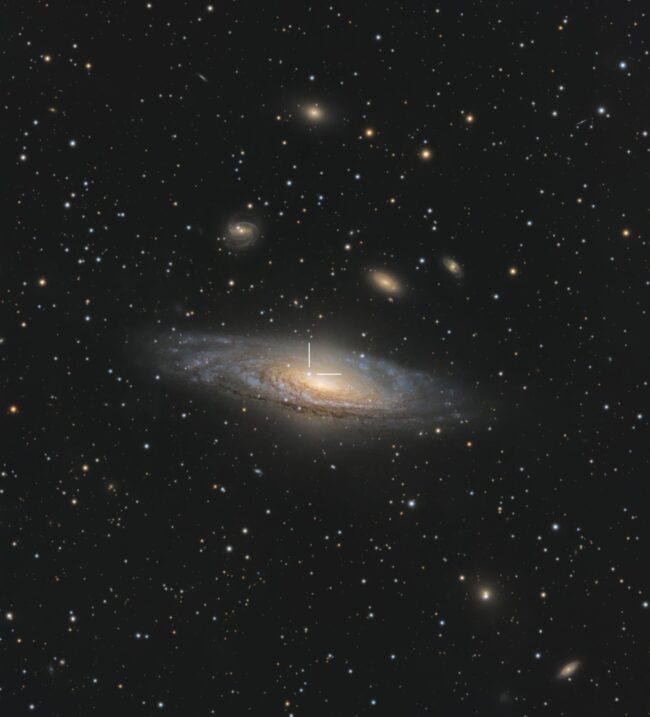
View at EarthSky Community Photos. | Ernest Jacobs in North Java, New York, captured this telescopic view of galaxy NGC 7331 with supernova 2026aaiv on September 11, 2026. Ernest wrote: “This data was captured on Friday 9/11/2026 at our club’s observatory following our September member meeting. This is my processing of the data. SN2026aaiv was discovered in NGC 7331 on 9/1/2026. It is a Type Ia supernova. There was another Type Ia supernova in NGC 7331 discovered last July. NGC 7331 is in the constellation Pegasus and is about 45 million light-years from Earth. NGC 7331 is the most prominent galaxy in the NGC 7331 Group (a.k.a. The Deer Lick Group). The smaller galaxies surrounding it are sometimes referred to as The Fleas.” Thank you, Ernest!View at EarthSky Community Photos. | Dominique Gering in Belgium captured this telescopic view of galaxy NGC 7331 with supernova 2026aaiv on September 10, 2026. Dominique wrote: “Here is a galaxy that closely resembles our own (the Milky Way) in both shape and size. Located in the constellation Pegasus, NGC 7331 (its nickname) exhibits different activity; specifically, supernovae explosions occur there more frequently than in our own galaxy. A supernova marks the end of a star more massive than our sun. In this particular case, it is the thermonuclear explosion of a white dwarf that is accreting material stripped from a neighboring star. The bright star (named SN 2026aaiv) visible near the core appeared suddenly on September 1st. It will shine for a few weeks or months before “fading out.” Supernova explosions were also observed there last year, as well as in 2014, 2013, and 1959. The galaxy lies approximately 45 million light-years away from us.” Thank you, Dominique!View at EarthSky Community Photos. | Steven Bellavia in Smithfield, Virginia, captured this telescopic view of galaxy NGC 7331 with supernova 2026aaiv on September 8, 2026. Steven wrote: “Supernova SN2026aaiv is a Type Ia supernova, in galaxy NGC 7331 discovered by ATLAS on September 1st (exploding around 44 million years ago, and the light just reaching us now). Last year’s SN2025rbs, also a type Ia supernova, was the brightest of 2025, and in the same host galaxy! That is rare. Typically galaxies can go 100 years or more between supernovae.” Thank you, Steven!View at EarthSky Community Photos. | Robert Pettengill in Lampasas, Texas captured this telescopic view of galaxy NGC 7331 with supernova 2026aaiv on September 10, 2026. Robert wrote: “NGC 7331 is the largest of the Deer Lick group of galaxies in Pegasus. On Sept 1 the ATLAS asteroid warning network detected a type 1A supernova, SN 2026 aaiv near its center. I was out at Bad Wolf Ranch, near Lampasas, Texas, imaging the Deer Lick group along with nearby Stephan’s Quintet on August 13 and September 10 when I captured this image.” Thank you, Robert!
Bottom line: Enjoy this gallery of deep-sky photos from September 2026 by our EarthSky community. If you have a great photo to share, we’d love to see it!
Armando is known primarily as an astronomy educator, after 30+ years of extensive public outreach and 10 years teaching in colleges. As one of only a handful of science communicators in Puerto Rico during Comet Halley's last visit, he assumed a pioneering role starting in 1985 when science was just beginning to enter the collective mindset. Over the years, his work as a teacher, speaker and writer, inspired people to pursue interests in science and brought enduring change to Puerto Rican culture. After being accepted into the 2014–2015 Antarctic season of PolarTREC, Armando was assigned to the Amundsen-Scott South Pole Station, where in 2015 he successfully conducted 10 days of work at the IceCube Neutrino Observatory. His affiliations include Ana G. Méndez University, Cupey campus (2014 to 2021), the University of Puerto Rico, Aguadilla campus (2015 to 2017), NASA JPL's Solar System Ambassadors (2004 to 2006), and NASA Space Grant (2017 to 2019) where he served as an affiliate representative.
Like what you read? Subscribe and receive daily news delivered to your inbox.
Thank you! Your submission has been received!
Oops! Something went wrong while submitting the form.