Science matters. Wonder matters. You matter.
Join our 2025 Donation Campaign today.
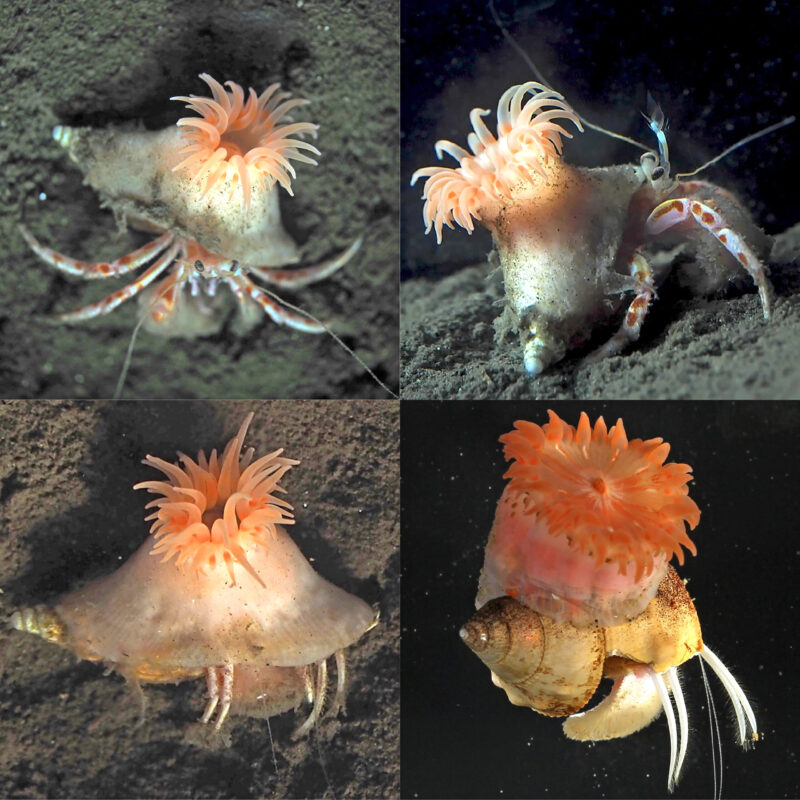
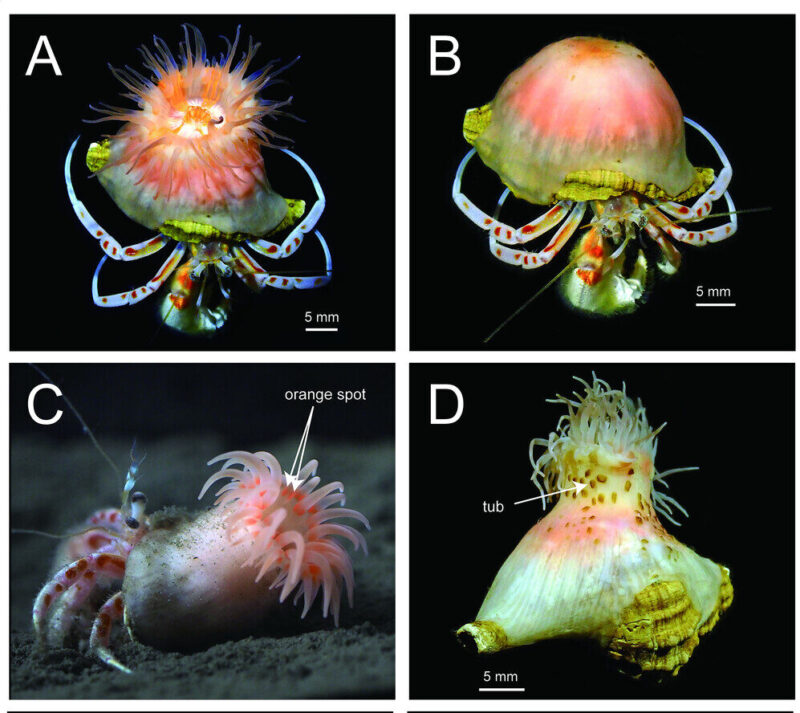
Scientists have discovered a new species of sea anemone, Paracalliactis tsukisome, which inhabits the depths of the Pacific Ocean off the coast of Japan. Researchers from Kumamoto University in Japan said on October 22, 2025, that this organism possesses an unusual ability. It creates a kind of shell using its own secretions to house hermit crabs, forming a unique symbiotic relationship. The delicate pink anemone’s name, tsukisome, comes from a word found in Japan’s oldest collection of poems – the Manyoshu – and evokes the idea of sincere and enduring love.
The research team published their study in the peer-reviewed journal Royal Society Open Science on October 22, 2025.
Discovery of the sea anemone Paracalliactis tsukisome
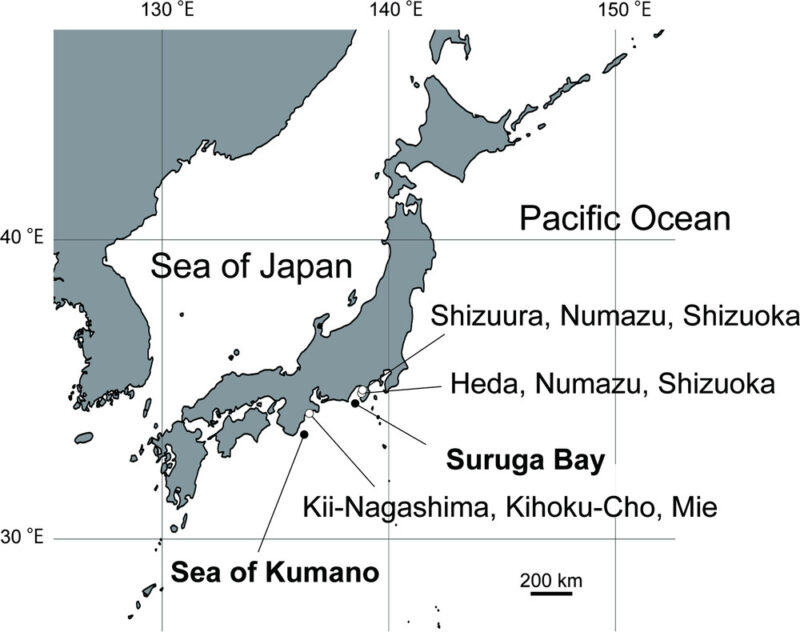
The team, led by Akihiro Yoshikawa of Kumamoto University, together with Takato Izumi of Fukuyama University and Kensuke Yanagi of Chiba Museum of Natural History and Institute, collected specimens at depths of 656 to 1,640 feet (200 to 500 meters) in the Kumano-Nada and Suruga Bay areas.
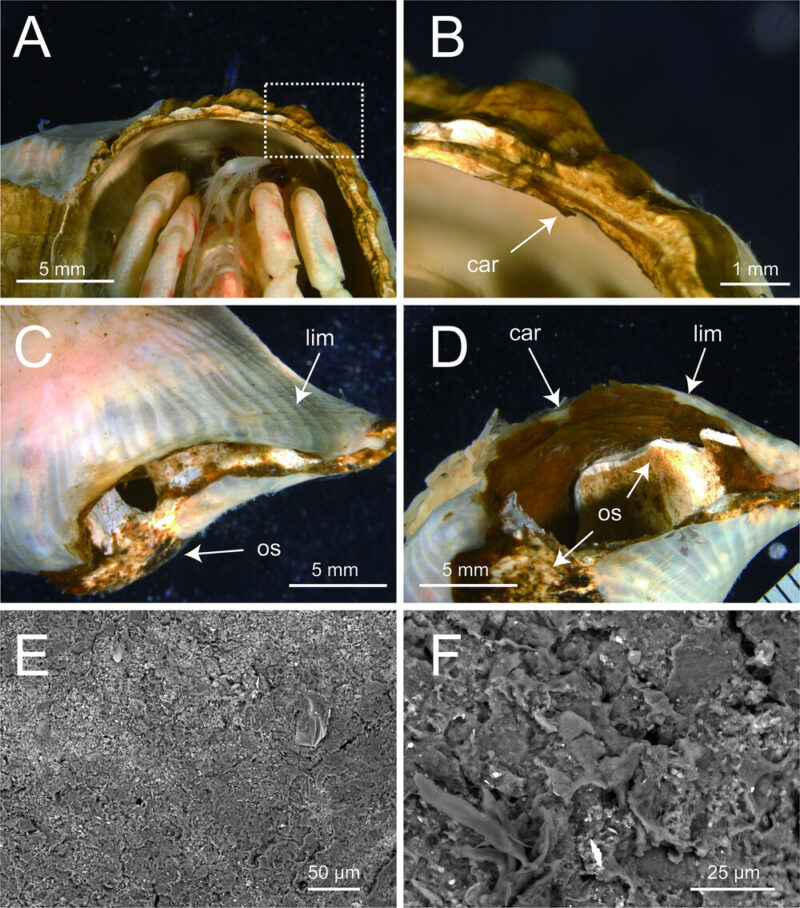
Unlike common anemones, this species can create a hardened form. The newly discovered anemone secretes a substance that can form a shell-like structure, or a carcinoecium. And it’s this structure that can provide a larger living space for a host hermit crab.
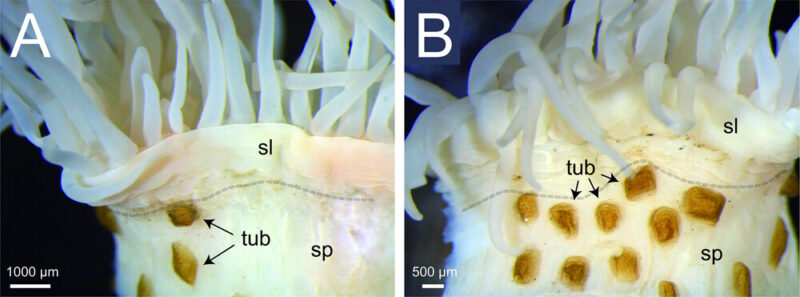
Morphological and genetic analyses confirmed that the anemone belongs to the genus Paracalliactis, though it has distinct features that justify its classification as a new species.
Additionally, 3D tomography images revealed the anemone always attaches itself in the same direction on the shell, indicating a certain degree of spatial awareness. And that’s something that’s rare in radially symmetrical animals. A radial animal (or one with radial symmetry) has a body organized around a central axis, so it can be divided into equal parts, like the slices of a pizza.
Mutual benefit in the depths of the ocean
Scientists performed analyses to determine what P. tsukisome eats. They discovered that it partially feeds on the waste and organic remains of its host. In turn, the crabs associated with this anemone species grow larger than crabs that don’t participate in this mutual relationship. This interdependence suggests a long coevolutionary process in which both species benefit. One gains food and shelter, while the other gains protection and an expanded home.
Hermit crabs living with the new species of anemone reach significantly larger sizes than related species that lack such companionship. This difference suggests their relationship with P. tsukisome provides tangible ecological advantages. The carcinoecium – the structure the anemone builds around the shell – expands and reinforces the crab’s refuge, allowing it to continue using it as it grows.
Normally, hermit crabs must change shells several times during their lives. This exposes them to predators while searching for a new home. But thanks to its collaboration with the anemone, the crab reduces that risk and conserves energy. In turn, that might result in more stable and prolonged growth. Moreover, the anemone serves as a living shield, warding off potential attackers with its stinging tentacles.
Cultural and scientific significance
The name tsukisome, which alludes to the pale pink color of the peach blossom, evokes in ancient poetry a discreet and sincere form of love. The researchers chose this term to reflect the harmony between the anemone and its hermit companion.
This discovery also highlights the biological diversity of Japan’s deep-sea environments, many of which remain unexplored and are threatened by bottom trawling.
Looking ahead
The case of P. tsukisome provides an exceptional opportunity to study how simple organisms can develop spatial orientation and asymmetric structures. These phenomena are uncommon among radially symmetrical animals.
Scientists hope future behavioral experiments in aquariums will shed light on how these anemones decide the direction of their growth.
As it is frequently caught as bycatch, this species could become an accessible research model and an appealing ambassador for deep-sea ecosystems. Its discovery expands our understanding of marine evolution, while revealing a beautiful bond that unites two species in the vast ocean.
Bottom line: A newly discovered sea anemone secretes a substance that becomes a hardened home for hermit crabs. The animals have a mutually beneficial relationship.
Read more: Blackwater photography reveals new fish-anemone interactions
Like what you read?
Subscribe and receive daily news delivered to your inbox.
More from
Cristina Ortiz


New clues to how infectious fungus Candida auris resists antifungals

Amazon wildfires hide another threat to the rainforest
The Komodo dragon is the world’s largest living lizard
Scientists discover a new tiger cat hiding in plain sight