Sun news June 30: A blast of sun-stuff is on its way to Earth
(11 UTC to 11 UTC)
The sun fired out a powerful blast of solar material and magnetic fields – a coronal mass ejection (CME) – at 19:54 UTC yesterday evening during a C4.0 (common) solar flare. NASA’s SOHO spacecraft recorded the blast as a partial halo event, meaning the solar material seemed to soar out in a huge expanding ring. This effect occurs when a CME is fired largely toward Earth. And sure enough, analysts have found that a part of this blast is heading our way, with an estimated arrival time of early July 2. This may trigger a G1 (minor) geomagnetic storm, leading to possible auroral displays at high latitudes. Stay tuned!
- Solar activity remained low over the past 24 hours. The sun produced only four C flares in total. An incoming as-yet-unnumbered active region in the southeast was the leading flare producer with two C flares.
- Currently, the sun has ten sunspot regions on the solar disk we see from Earth. All active regions on the sun’s visible disk show simple alpha or beta magnetic complexities. There are two newcomer spots that moved into view in the southeast, now numbered AR4127 and AR4128.
- Blasts from the sun? The abovementioned coronal mass ejection (CME) has an Earth-bound component, expected to arrive early on July 2.
- Solar wind: Solar wind speeds averaged around 520 km/s (1,164,000 mph). The solar wind speed is 430 km/s (961,000 mph) at the time of this writing. The interplanetary magnetic field (IMF) is at a low level, and the north-south component (Bz) was mostly southward throughout the period, moving north at the time of this writing. A southward Bz is more favorable for auroras.
- Earth’s magnetic field was quiet to unsettled (Kp 2-3) over the past day.
Sun news June 29: Another BIG coronal hole comes on stage
(11 UTC to 11 UTC)
A new large coronal hole has come into view in the sun’s southeast quadrant. It’s becoming larger and larger! Soon, it’ll move into a geoeffective position and the fast solar wind it produces might start coming Earth’s way. Shall this big coronal hole be the next to bring us auroral displays? We’ll keep an eye on it and bring you the news. Stay with us.
- Solar activity has been low in the past 24 hours, with the production of seven faint flares in total, three C (common) flares and four B (weak) flares. Sunspot region AR4126 in the northwest blasted out the day’s largest event, a C4.0 flare at 19:54 UTC on June 28. This region produced three of the seven flares of the period, becoming the lead flare producer of the day.
- Currently, the sun has eight sunspot regions on the solar disk as we see it from Earth. And, today, all the active sunspot regions on the sun’s visible disk show simpler alpha or beta magnetic complexity. There is a newcomer spot that moved into view in the northeast, now numbered AR4126.
- Blasts from the sun? A partial halo event was observed in available coronagraph imagery. The event is associated with the C4.0 flare by AR4126 at 19:54 on June 28. Modeling and analysis undergoing to determine if a component of a coronal mass ejections (CMEs) is earthbound.
- Solar wind: Solar wind speed peaked at 690 km/s (1,543,000 mph) at around 12 UTC on June 28 and continued reducing speed. Solar wind speed is 534 km/s (1,195,000 mph) at the time of this writing. The interplanetary magnetic field (IMF) is at low level, and the north-south component (Bz) was mostly southward throughout the period, moving north at the time of this writing. A southward Bz is more favorable for auroras.
- Earth’s magnetic field was quiet at (Kp 2) during the past day.
What’s ahead? Sun-Earth forecast
- Moderate-to-low flare activity is expected in the coming day. The chance for M (moderate) flares is 25% today and the chance for X (strong) flares is 5%.
- Geomagnetic activity forecast: Conditions are anticipated to be at quiet to unsettled levels for the rest of this quiet sun-day. And we expect mostly quiet conditions for tomorrow, June 30. All this due to negative polarity fast solar wind from a coronal hole.


Sun news June 28: Long filaments in symmetric activity
(11 UTC to 11 UTC)

Sun activity is low today, in terms of flare production, but our star continues to surprise us. A symmetric pair of long-lasting filaments attracted our attention this time. They run parallel, one in the sun’s north hemisphere and one in the south hemisphere. They run from east to west both ending in correspondent long-lasting prominences. At the end of each filament, they appear to be providing fiery activity. It seems a filament conversation between north and south is going on. Take a look at the image below. On Earth, after the storm a calm as the the fast solar wind from a large coronal hole started to wane. Keep with us for more sun news.
- Solar activity continues low. Over the past 24 hours the sun produced only C and B flares, four flares in total: two C (common) flares and two B (weak) flares. The largest blast was a C1.2 produced at 13:33 UTC on June 27 by sunspot region AR4120 in the northwest. This region was the lead flare producer of the day. It produced two flares in total, one C and one B flares.
- There are currently eight sunspot regions on the solar disk as we see it from Earth. Only simpler alpha and beta configurations on the active regions as active region AR4120 lost its gamma magnetic complexity. There are Three newcomers on the Earth-viewed side of our star. They are now numbered AR4123, AR4124 and AR4125.
- Blasts from the sun? Analysts observed no Earth-bound coronal mass ejections (CMEs) in the available coronagraph imagery.
- Solar wind: Solar wind speed peaked at 770 km/s (1,722,000 mph) at 15:30 UTC on June 27 but started reducing speed. Solar wind speed is 630 km/s (1,409,000 mph) at the time of this writing. The interplanetary magnetic field (IMF) is at low level, and the north-south component (Bz) fluctuated north-south but it was mostly southward throughout the period, moving southward at the time of this writing. A southward Bz is more favorable for auroras.
- Earth’s magnetic field was unsettled (Kp 3 – 4) during the past day.

Sun news June 27: Last night’s G1 geomagnetic storm
(11 UTC to 11 UTC)
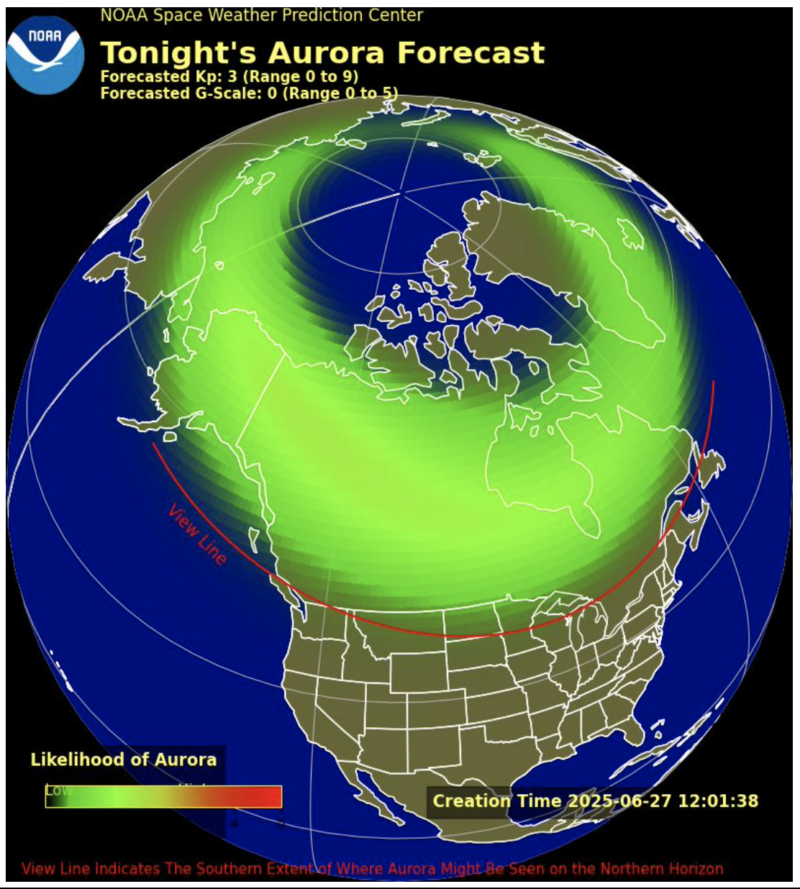
The anticipated G1 (minor) geomagnetic storms did arrive last night, bringing auroral displays. The Kp = 5 threshold (aka the G1 threshold) was reached at 1:36 UTC on June 27. The storm did not reach the G2 (moderate) level, but it was almost there, provoked by fast solar wind from the large coronal hole we observed early this week. There were reportsof auroral display from high latitudes, as low as the states of Maine and Minnesota in US. Did you see the auroras last night? Share with us your beautiful photos. Submit them here.
- Solar activity continues low with the production of only faint C and B flares. Over the past 24 hours the sun produced eight flares in total: four C (common) flares and four B (weak) flares. The largest blast was a C1.9 blasted out at 3:01 UTC on June 27 by sunspot region AR4122 in the northeast. This region continues as the lead flare producer of the day, this time producing five flares in total, three C flares and two Bs.
- There are currently five sunspot regions on the side of the sun we see from Earth. Active region AR4120 keeps its beta-gamma magnetic complexity. The rest of the sunspot regions, all of them show simpler a beta configuration.
- Blasts from the sun? Analysts observed no Earth-bound coronal mass ejections (CMEs) in the available coronagraph imagery.
- Solar wind: Solar wind speed peaked at 810 km/s (1,812,000 mph) at 0:32 UTC on June 27. Solar wind speed is 675 km/s (1,510,000 mph) at the time of this writing. The interplanetary magnetic field (IMF) is at low level, and the north-south component (Bz) fluctuated north-south but it was mostly southward throughout the period, moving northward at the time of this writing. A southward Bz is more favorable for auroras.
- Earth’s magnetic field was from unsettled to active (Kp 3 – 5+) during the past day. A G1 (minor) geomagnetic storm level was observed during two three-hour synoptic periods. The Kp = 5 threshold was reached 1:39 UTC on June 27.
Sun news June 26: Geomagnetic storming possible today
(11 UTC to 11 UTC)

The anticipated G1-to-G2 (minor-to-moderate) geomagnetic storms did not materialize yesterday, but an increase in solar wind intensity over the past day has led forecasters to predict G1 storming later today. G2 storming remains possible tomorrow, although the likelihood has decreased. If geomagnetic storms do occur, those at high latitudes could see auroras tonight. Good luck and clear skies!
- Solar activity remains low. The sun produced 12 faint flares over the past 24 hours: six C (common) flares and six B (weak) flares, exactly the same as the day before. The largest blast was a C1.4 produced at 21:12 UTC on June 25 by sunspot region AR4120. This region was the leading flare producer of the past day, producing four C flares and three Bs.
- There are currently five sunspot regions on the side of the sun we see from Earth. Active region AR4120 developed a gamma configuration, meaning it now shows a beta-gamma magnetic complexity. The rest of the sunspot regions show simpler alpha or beta configurations. There is a newcomer in the northeast quadrant now numbered AR4122.
- Blasts from the sun? Analysts observed no Earth-bound coronal mass ejections (CMEs) in the available coronagraph imagery.
- Solar wind: Solar wind speeds steadily increased from 450 km/s (1,000,000 mph) yesterday to 770 km/s (1,722,000 mph) at the time of this writing. The interplanetary magnetic field (IMF) increased to a moderate level, and the north-south component (Bz) fluctuated between northward and southward throughout the period, moving northward at the time of this writing. A southward Bz is more favorable for auroras.
- Earth’s magnetic field remained quiet to unsettled (Kp 1-3) during the period.
Sun news June 25: Geomagnetic storms coming, auroras tonight?
(11 UTC to 11 UTC)
Forecasters are predicting geomagnetic storms up to a G2 (moderate) level today through tomorrow. And that means possible auroras at northerly latitudes! A blast of fast solar wind from a large coronal hole is the cause of this anticipated disturbance to our magnetic field. This coronal hole is now no longer pointing at Earth, but the solar wind it’s released over the past few days is already on its way to our planet. Clear skies and good luck, aurora chasers.
- Solar activity increased in terms of flare production over the past day, but still remains low. The sun produced 12 faint flares over the past 24 hours, compared to five flares the previous day. We observed six C (common) flares and six B (weak) flares. The largest event was a C3.1 produced at 15:45 UTC on June 24 by sunspot region AR4118. This region was the leading flare producer of the day with four C flares.
- There are currently four sunspot regions on the side of the sun we see from Earth. Active region AR4118 lost its gamma magnetic complexity, so all the labeled active regions on the solar disk now show either alpha or beta configurations.
- Blasts from the sun? Analysts observed no Earth-bound coronal mass ejections (CMEs) in the available coronagraph imagery. However, there was some activity from AR4117 in the southwest that produced a non-Earth-directed CME.
- Solar wind: Solar wind speeds averaged around 450 km/s over the past 24 hours, and is 423 km/s at the time of this writing. The interplanetary magnetic field (IMF) has been low, and the north-south component (Bz) has mostly remained northward, but at the time of this writing is southward. A southward Bz is more favorable for auroras.
- Earth’s magnetic field ranged from quiet to unsettled (Kp 1-3).
Sun news June 24: Auroras possible tonight and tomorrow!
(11 UTC to 11 UTC)
Space weather forecasters are predicting G1 to G2 (minor to moderate) geomagnetic storms overnight tonight and through tomorrow. And that means possible auroras! Light displays could be visible from northern US latitudes such as the states of Washington and Wisconsin from the early hours of June 25. The disturbance is expected because a coronal hole – an area of lower density in the sun’s atmosphere – is now sending a stream of high-speed solar wind straight at Earth. Clear skies, aurora chasers. If you manage to take a picture of the aurora, share it with us here.
- Solar activity remained low over the past 24 hours. Over the past day the sun produced five flares: four Cs (common) and one B (weak) flares. A region over the western horizon, possibly AR4115, blasted the largest event: a C5.0 at 12:23 UTC on June 23. This region was the leading flare producer of the day, with three C flares.
- There are currently six sunspot regions on the Earth-facing disk. Active region AR4118 in the south has shown the most development, now with a beta-gamma magnetic complexity. The rest of the active regions show simpler alpha or beta configurations. There are three newcomers today on the solar disk, now numbered AR4119, AR4120 and AR4121.
- Blasts from the sun? Analysts observed no Earth-bound coronal mass ejections (CMEs) in the available coronagraph imagery.
- Solar wind: Elevated solar wind conditions continued under the influence of a coronal hole high-speed stream (CH HSS). After a peak at 484 km/s, wind speeds averaged around 430 km/s. The interplanetary magnetic field (IMF) was low, and the north-south component (Bz) intermittently jumped from northward to southward. At the moment of this writing it is southward. A southward Bz is more favorable for auroras.
- Earth’s magnetic field conditions ranged from quiet to unsettled (Kp 1-3).
Sun news June 23: Auroras at high latitudes tomorrow?
(11 UTC to 11 UTC)


A new stream of high-speed solar wind from a coronal hole – an area of lower density in the sun’s atmosphere – is expected to start buffering Earth in the coming days. Forecasters are predicting possible geomagnetic storming at G1-G2 (minor-moderate) levels beginning late on June 24 or early on June 25. And that could mean auroras at high latitudes! Stay tuned.
- Solar activity remained low over the past day. The largest flare was a C3.4 fired at 5:47 UTC on June 23 from a region over the western horizon, possibly AR4114. AR4118 was the only visible Earth-facing region that produced flares above B-class during the period. Forecasters continue to monitor this region, which shows growing magnetic complexity and remains the most flare-capable region on the solar disk.
- Five sunspot regions remain on the Earth-facing disk. AR4118 in the southeast shows the most development, especially in its trailing portion. AR4117 also displayed minor growth. The two regions in the northwest continued to decay as they approached the limb. A unipolar spot near the southwest limb is now rotating off the disk. A new region may emerge near the northeast limb in the coming days.
- Blasts from the sun? A coronal mass ejection (CME) was observed off the northwest limb around 14 UTC on June 22, near AR4115. This event may have involved a filament eruption and a small flare, but analysis is still in progress. No other Earth-directed CMEs appeared in available coronagraph imagery.
- Solar wind: Solar wind conditions continued under the influence of a coronal hole high-speed stream (CH HSS). Wind speeds ranged from 430–580 km/s, with brief peaks near 600 km/s. The interplanetary magnetic field (IMF) was low, and the north-south component (Bz) briefly dipped southward. A southward Bz is more favorable for auroras.
- Earth’s magnetic field conditions ranged from quiet to active (Kp 1-4). The elevated solar wind speeds and intermittent southward Bz supported brief active intervals. A stronger stream of solar wind is forecast to arrive late on June 24 or early on June 25, likely causing G1 or G2 storming.
Sun news June 22: AR4114 leaves the scene on a quiet Sunday!
(11 UTC to 11 UTC)
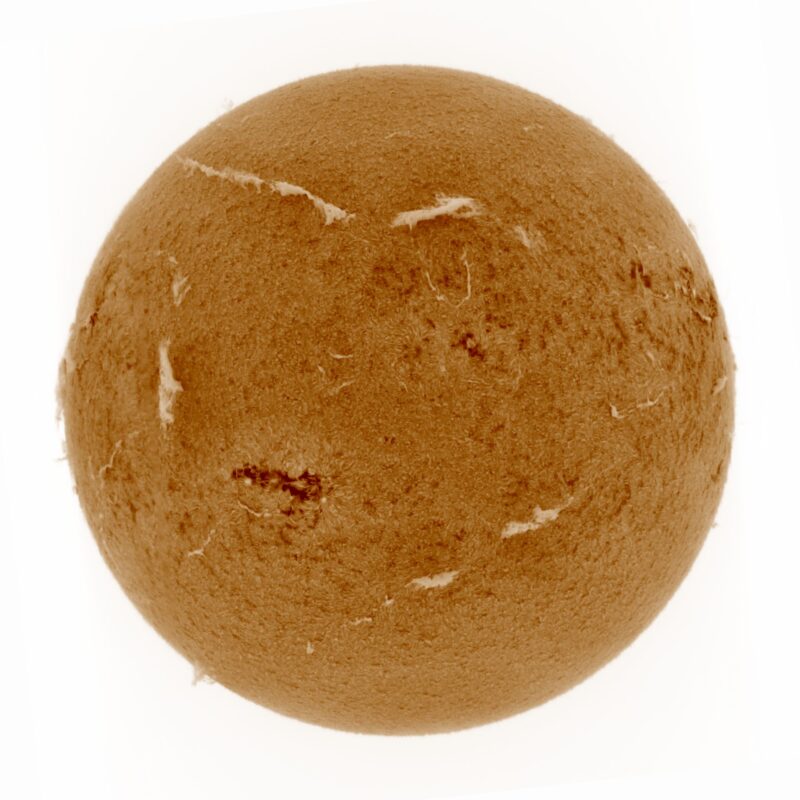
Happy Sun Day! Today our star is taking a breather after a week of some nice moderate to high activity from AR4114. The region dominated the spotlight but as it fades and rotates off the western limb, activity shifts to smaller developing regions. No Earth-directed coronal mass ejections (CMEs) have been observed. Solar wind speeds remained slightly elevated under a coronal hole high-speed stream (CH HSS), driving quiet to active geomagnetic conditions. A more intense CH HSS could arrive midweek, with a high likelihood of geomagnetic storming to G1-G2 levels.
- Solar activity dropped to low levels. AR4114, which had produced stronger flares earlier this week, generated a C1.3 flare at 3:15 UTC on June 22, as it continued to decay near the western limb (edge). The most significant event was a C1.4 from AR4118 at 10:59 UTC on June 22. No additional significant flares occurred, and background X-ray levels stayed below the C-class threshold for most of the period.
- Five sunspot regions remain on the Earth-facing disk. AR4114, the formerly dominant region, is now fading and rotating out of view, though it is still the only region with any magnetic complexity. AR4115 and AR4117 showed trailing spot development and intermediate growth, respectively. AR4118 also showed some minor evolution in its trailing spots. A potential new region appears near the northeastern limb and may become visible over the next 24–48 hours.
- Blasts from the sun? No Earth-directed coronal mass ejections (CMEs) were identified. A filament eruption occurred in the northeast at 21:20 UTC, and another dimming event appeared near the northeast. Analysts await further imagery to assess their structure and trajectory. Other CMEs during the period originated from far-side events.
- Solar wind: Solar wind conditions continued under the influence of a coronal hole high-speed stream (CH HSS). Wind speeds ranged from 450–575 km/s with an erratic pattern. TThe interplanetary magnetic field (IMF) was low, and the north-south component (Bz) briefly dipped southward.
- Earth’s magnetic field ranged from quiet to active (Kp 1-4). The elevated solar wind and periods of southward Bz supported occasional active intervals.
What’s ahead? Sun-Earth forecast
- Moderate-to-low flare activity is expected in the coming day. The chance for M (moderate) flares is 55% today and the chance for X (strong) flares is 10%.
- Geomagnetic activity forecast: No coronal mass ejections (CMEs) are expected to impact Earth. Analysts expect minor coronal hole high-speed stream (CH HSS) effects to continue through June 23, followed by a stronger coronal hole influence midweek. This could trigger G1-G2 (minor to moderate) geomagnetic storming, especially on June 24–25. Otherwise, quiet to unsettled conditions are likely.
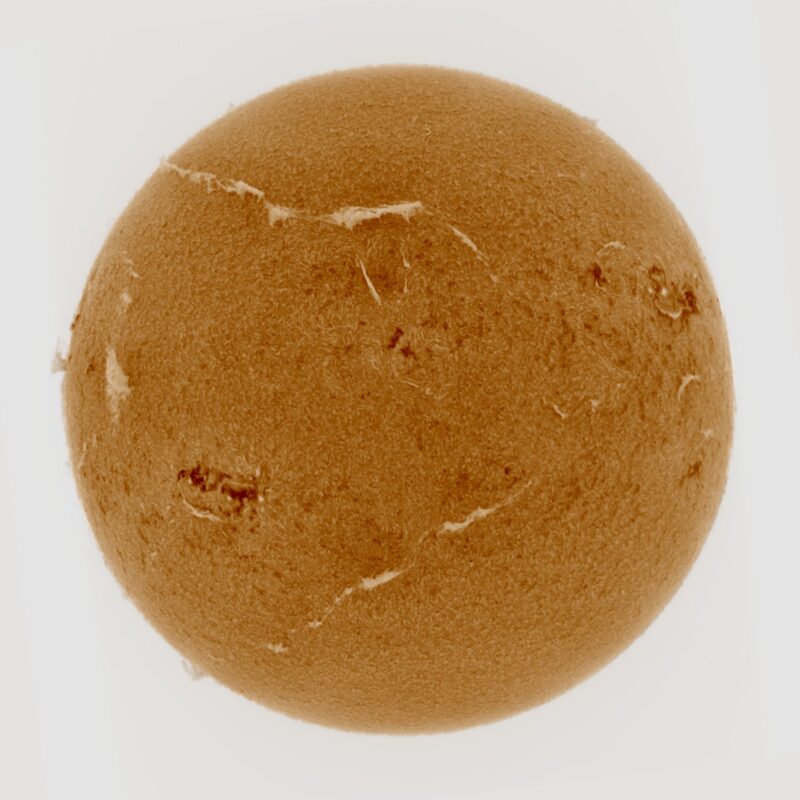
Sun news June 21: After this week’s X flares, a calm
(11 UTC to 11 UTC)
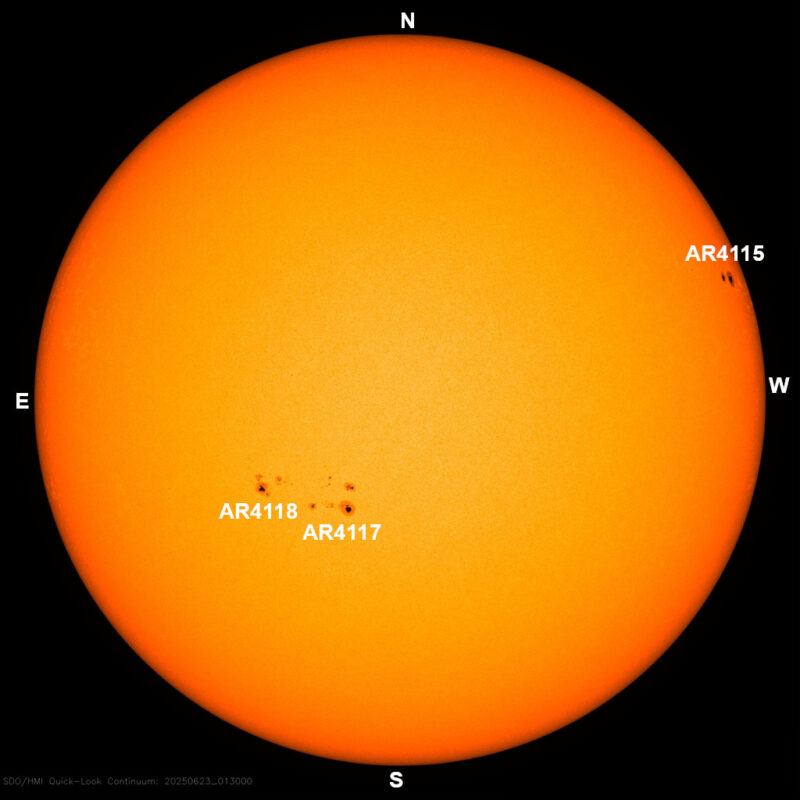
Happy first full day of astronomical summer. The June 2025 solstice happened 2:42 UTC this morning (9:42 p.m. CDT last night for us in the Americas). And, after several days of high sun activity, mostly due to AR4114, sun activity over the past day was moderate, with only an M flare, and barely an M at that (M1.0). This region continues to dominate the visible disk, though it is slowly but surely moving toward the western limb (edge) of the sun, soon to disappear. Meanwhile, its magnetic complexity is also gradually declining.
- Solar activity was moderate over the past day. AR4117 led the day’s activity with an M1.0 flare at 17:40 UTC. It followed the previous day’s X1.9 event. Although the region is decaying —particularly in its leader and intermediate spots — it might still give us additional flares. This region showed slight spot expansion between its leading and following spots. Other regions remained mostly unchanged or exhibited minor spot development.
- Six sunspot regions are currently Earth-facing. AR4114 remains the largest and most magnetically complex. But both its area and complexity are declining. A nearby group to the east remained stable. Magnetically simple regions in the western hemisphere showed no significant evolution. Two southeastern regions appeared to move westward in tandem, possibly contributing to local solar instability.
- Blasts from the sun? The sun released two minor minor coronal mass ejections (CMEs): a large-but-slow prominence eruption from the southwestern limb around 6 UTC, and another CME associated with the M1.0 flare from AR4117 at 17:39 UTC. Neither event appears Earth-directed. No additional CMEs were observed in available coronagraph imagery.
- Solar wind: Solar wind remained elevated over the past day, under the influence of a high-speed stream (CH HSS) from a large southern hemisphere coronal hole. Wind speeds fluctuated between 440–600 km/s. The interplanetary magnetic field (IMF) remained low, and the north-south component (Bz) briefly dipped southward. The solar wind’s particle density remained at background levels.
- Earth’s magnetic field Geomagnetic activity stayed quiet to unsettled (Kp = 1-3) throughout the past day. Although solar wind speeds remained elevated, overall magnetic conditions weakened, and brief southward Bz intervals occurred.
What’s ahead? Sun-Earth forecast
- Moderate-to-low flare activity is expected in the coming day. The chance for M (moderate) flares is 65% today and the chance for X (strong) flares is 15%.
- Geomagnetic activity forecast: Solar wind conditions are expected to remain elevated under the continued influence of the coronal hole high-speed stream (CH HSS) through June 22. Analysts expect a possible enhancement on June 23 from a more intense coronal hole feature or the late arrival of the June 17 coronal mass ejection (CME). Geomagnetic activity is expected to remain quiet to unsettled through June 22, with a chance of active conditions and isolated G1 (minor) geomagnetic storm intervals on June 23. No other CMEs are currently expected to impact Earth.
Sun news June 20: Another X flare from sunspot region AR4114
(11 UTC to 11 UTC)

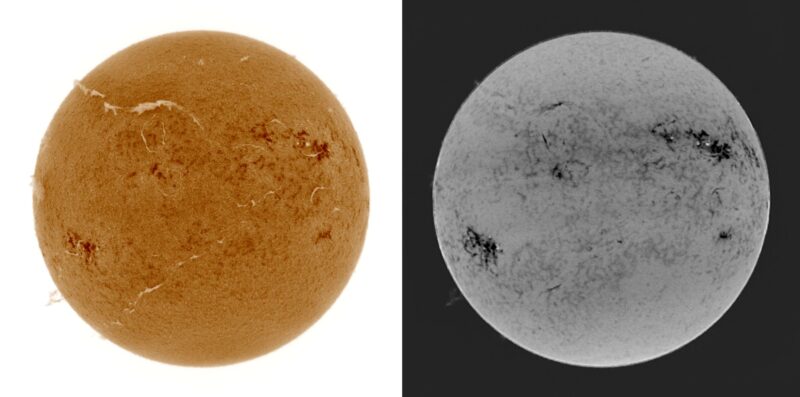
X flare! Solar activity surged to high levels late on June 19, when AR4114 produced an X1.9 flare at 23:50 UTC. This marked the strongest event of the day and highlighted AR4114’s continued complexity, even as it undergoes gradual decay. This is the second X flare this week, both from AR4114. Analysts observed a minor CME associated with a smaller region in the southwest, with a potential for an Earth-directed component. Meanwhile, fast solar wind from a southern hemisphere coronal hole kept conditions within Earth’s magnetic field slightly disturbed. Geomagnetic activity remained quiet to unsettled, with one active interval. A G1 (minor) storm remains possible through early June 21 due to a glancing CME and continued high-speed solar wind. Oh and
- Solar activity jumped to high levels, with an X, an M, and seven C flares produced in the past 24 hours. AR4114 produced an X1.9 flare at 23:50 UTC on June 19. Although the region is decaying, it remains magnetically complex and capable of additional strong flares. Other numbered regions on the disk mainly remained stable or showed gradual decay, with occasional low- to mid-level C-class flares observed throughout the day.
- Seven sunspot regions are visible, with six currently numbered. AR4114, located in the northwest quadrant, remains the most magnetically complex despite signs of simplification. Other regions are mostly small and simple, with minor growth or stability. Two emerging regions in the southeast remain difficult to assess fully due to limb position.
- Blasts from the sun? Coronagraph imagery detected a minor coronal mass ejection (CME) at 21:34 UTC on June 19, likely associated with a low-level flare from a small southwest region. This CME may include an Earth-directed component; analysis is ongoing. An earlier CME from a filament eruption and flare at 00:10 UTC on June 17 may deliver a glancing blow to Earth late on June 20.
- Solar wind: Solar wind speeds remained variable, ranging from 450 to 600 km/s. Speeds initially eased to slightly elevated levels around 450 km/s in the early afternoon, but then rebounded to strong levels later in the day. The interplanetary magnetic field (IMF) stayed moderate, and the north-south component (Bz) fluctuated weakly around north and south. These signatures reflect the continued influence of coronal hole high-speed stream (CH HSS).
- Earth’s magnetic field Geomagnetic conditions were generally quiet to unsettled, with one active (Kp = 4) interval between 18:00 and 21:00 UTC. The solar wind’s variable nature and occasional southward Bz contributed to minor disturbances.
- Solar activity has dropped to low levels, with 25 C-class flares produced in the past day. AR4114 produced the most flares, with 14 Cs. AR4115 produced the day’s largest flare, a C8.0, at 9:17 UTC on June 19. A new region produced multiple C-class flares, though analysts cannot yet assess its full structure.
- The sun currently has eight visible sunspot regions. AR4114 remains the largest and most complex region, although it has shown signs of stabilization. AR4115 has increased in length, but lost several interior sunspots. AR4117 rotated into view in the southeast, but its position near the horizon means magnetic classification is difficult. Two unnumbered regions emerging on the southeastern limb appear magnetically simple, but remain difficult to classify. All other regions remained stable or in decay.
- Blasts from the sun? Observers have detected multiple coronal mass ejections (CMEs) over the past day, including a partial halo CME from the far side’s northwest limb (edge) around 5:00 UTC today. Data from the SOHO spacecraft and the Solar Orbiter spacecraft confirm a likely flare between M7–X2 intensity around 4:42 UTC, with an associated Type II radio emission reaching 710–1110 km/s. None of these CMEs are expected to collide with Earth. However, a CME from a C5.5 flare on June 17 may deliver our planet a weak glancing blow on June 20.
- Solar wind: Solar wind speeds held between 480–500 km/s for much of the past 24 hours, before increasing to 550–580 km/s after 19:30 UTC. The interplanetary magnetic field (IMF) was steady, while the north-south component (Bz) fluctuated between north and south. Conditions reflected ongoing coronal hole high-speed stream (CH HSS) influence.
- Earth’s magnetic field remained quiet to unsettled (Kp 2-3) throughout the period. Coronal hole high-speed stream effects continued to drive slight disturbances. Forecasts include a G1 (minor) geomagnetic storm watch for June 20 due to the potential CME arrival.
- Solar activity remains high. AR4114 produced an X1.3 flare at 21:49 UTC on June 17, accompanied by a solar radio burst. This region continues to dominate solar activity with its complex beta-gamma-delta magnetic structure. AR4115 grew in size and produced several smaller flares, including an M1.5 event.
- The sun currently has seven visible sunspot regions. AR4114 remains the most active and complex region, showing minor development. AR4115 continues to grow and interact magnetically with AR4114. Other regions remain smaller and less complex. A new region on the southeast limb is emerging, but remains difficult to assess.
- Blasts from the sun? Multiple coronal mass ejections (CMEs) have been identified over the past day, but none were Earth-directed. Analysts determined that all ejecta either passed north of Earth, behind Earth, or came from the far side of the sun. A glancing impact from the June 15 CME associated with AR4114 remains possible on June 18. Another shock from a C5.5 flare at 8:13 UTC on June 17 may arrive on June 20.
- Solar wind: Solar wind speeds averaged at 470–520 km/s thanks to a coronal hole’s high-speed solar wind stream. The interplanetary magnetic field (IMF) was steady, while the north-south component (Bz) fluctuated between north and south. Density stayed near or slightly below average.
- Earth’s magnetic field stayed quiet to unsettled (Kp = 1-3). A G1 (minor) geomagnetic storm watch is in effect for June 20 in anticipation of possible shock passage from the June 17 CME.
- Solar activity remains high, with multiple M flares fired over the past day. AR4114 produced an M6.3 flare at 9:38 UTC on June 16. AR4109, now over the western horizon, produced an M1.4 flare at 11:39 UTC and an M1.1 at 14:55 UTC on June 16.
- The sun currently has six visible sunspot regions. AR4114 dominates with its large, complex magnetic field and continues to drive most flaring. AR4109 rotated off the disk. AR4116 continues growing but remains quiet. The remaining regions are small and magnetically simple.
- Blasts from the sun? The coronal mass ejection (CME) linked to a C6.5 flare from AR4107 has moved well ahead of Earth and poses no threat. The CME from AR4114’s M6.3 flare traveled northward, with no expected impact. The earlier CME from AR4114’s M8.4 flare at 18:07 UTC on June 15 may still deliver a glancing shock around June 18.
- Solar wind: The solar wind remains elevated thanks to a coronal hole’s high-speed solar wind stream. Solar wind speeds have been ranging between 470–520 km/s (1,051 to 1,163 mph) elevated bet. The interplanetary magnetic field strength (IMF) has been steady, while the north-south component (Bz) has been fluctuating between north and south. A southward Bz is more favorable for auroras.
- Earth’s magnetic field remained quiet to unsettled. The Kp index briefly reached 4 on June 16 under elevated solar wind conditions.
- Solar activity remains at high levels after several M-class flares. AR4105 produced an M2.2 flare at 7:56 UTC on June 15, accompanied by a coronal mass ejection (CME) observed off the west limb (edge) at 8:12 UTC. The same region produced an M1.9 flare at 10:47 UTC on June 15. The most significant flare of the past 24 hours was an M8.4 from AR4114 at 18:07 UTC on June 15. This flare was associated with another CME spotted over the northern horizon at 18:24 UTC.
- The sun currently has six visible sunspot regions. AR4105 continues to decay as it rotates toward the southwest limb. In contrast, AR4114 has grown significantly in both area and magnetic complexity, developing a pronounced delta configuration with an east-west-oriented magnetic inversion line, which increases the chance of further significant flaring. A large sunspot region in the northwest remains the largest on the disk, exhibiting steady growth. In the southeast, another region has shown modest growth in both its leading and trailing spots. The remaining sunspot regions are relatively small and magnetically simple.
- Blasts from the sun? Scientists have observed two coronal mass ejections (CMEs) during the past day. The first, associated with the M2.2 flare from AR4105, was fired off the west limb at 8:12 UTC on June 15, and modeling indicates it is not Earth-directed. The second CME, associated with the M8.4 flare from AR4114, was observed off the north limb at 18:24 UTC on June 15. Current analysis suggests that most of this CME will pass north of Earth’s orbit, but there remains the potential for a glancing shock impact around June 18.
- Solar wind: Solar wind conditions remain elevated due to the influence of a coronal hole’s high-speed solar wind stream. Over the past 24 hours, wind speeds ranged from 454 to 596 km/s (1,000 to 1,300 mph). The interplanetary magnetic field strength (IMF) fluctuated, while the north-south component (Bz) generally trended weak and northward. A southward Bz is more favorable for auroras.
- Earth’s magnetic field activity over the past 24 hours remained quiet-to-unsettled, with Kp values ranging from 2 to 3. No geomagnetic storm conditions were observed, but continued elevated solar wind speeds kept conditions disturbed throughout the period.
- Solar activity reached high levels over the past 24 hours. Region 4105 produced: an M6.8 flare at 23:01 UTC on June 14, an M1.0 flare at 18:04 UTC on June 14, an M2.2 flare at 7:56 UTC on June 15 and an M1.27 flare at 10:48 UTC on June 15. Region AR4114 showed moderate growth. Region AR4105 saw new flux emergence near its leader spots. Region AR4110 and region AR4116 also experienced slight growth.
- The sun currently has nine visible sunspot regions. All sunspot regions are either alpha or beta complexity.
- Blasts from the sun? No Earth-directed coronal mass ejections (CMEs) were observed in the available coronal imagery.
- Solar wind: Solar wind transitioned into a coronal hole high-speed stream (CH HSS). The solar wind speed rose from ~430 km/s (961,884 mph) to 480–535 km/s (1,073,731-1,196,861 mph) with the range 420–540 km/s (939,515-1,208,948 mph). The interplanetary magnetic field strength (IMF) total strength (Bt) decreased. The Bz component was initially moderate and southward, shifting to weakly northward and now it’s back to southward. A southward Bz is more favorable for auroras.
- Earth’s magnetic field ranged from unsettled to G1 (minor) geomagnetic storm conditions (Kp 5), especially early in the period, before subsiding to quiet-unsettled levels (Kp 2-3).
- Moderate-to-low flare activity is expected in the coming day. The chance for M (moderate) flares is 55% today and the chance for X (strong) flares is 15%.
- Geomagnetic activity forecast: Coronal hole high-speed stream (CH HSS) influence will persist, with solar wind speeds potentially increasing to 600–700 km/s on June 15 before gradually declining to around 500 km/s on June 16. The same coronal hole source may drive a resurgence of fast wind on June 17–18. Geomagnetic conditions are expected to range from unsettled to active (Kp 3-4), with continued chances for G1 (minor) storm intervals through June 18.
- Flare activity increased to moderate low over the past 24 hours, with one M and 12 C flares. The largest event was an M1.2 at 21:10 UTC on June 13 from AR4105 in the northwest. The most active region was AR4114 with six C flares. AR4105 was next-most-active, with one M flare and three C flares.
- The sun currently has eight visible sunspot regions. AR4110 has beta-gamma complexity. The remaining regions are simpler alpha or beta complexity.
- Blasts from the sun? No Earth-directed coronal mass ejections (CMEs) were observed in the available coronal imagery.
- Solar wind: Solar wind parameters indicate ongoing CME effects, with solar wind speeds ranging from 373 to 471 km/s (834,000 to 1,050,000 mph). The interplanetary magnetic field strength (IMF) total strength varied from low to moderate levels, while the Bz component reached moderate strength in the southward direction. A southward Bz is more favorable for auroras.
- Earth’s magnetic field reached G1-G2 (minor to moderate) geomagnetic storm levels due to the persistent coronal mass ejection (CME) influence. A peak G3 (strong) storm occurred on June 13 and oscillated between active (Kp 4), G1 (Kp 5) and G2 (Kp 6) levels over the last 24 hours.
- Flare activity remained low over the past 24 hours, with 13 C flares. The largest event was a C5.8 at 17:48 UTC on June 12 from AR4115 in the northeast. This is the other of the two regions that we were monitoring from over the horizon. AR4105 and AR4107 each produced four C flares, making them the most productive sunspot groups over the last 24 hours.
- The sun currently has nine visible sunspot regions. Most activity originated from two regions, AR4105 and AR4107. All region now have simple alpha complexity.
- Blasts from the sun? No Earth-directed coronal mass ejections (CMEs) were observed in the available coronal imagery.
- Solar wind: The solar wind was slightly elevated. Both coronal hole high-speed stream and a possible weak coronal mass ejection (CME) is influencing it. It started near 500 km/s, decreased to just over 400 km/s, then returned to ~500 km/s after a likely transient event, the possible weak CME. The Bz component ranged between north and south, mostly southward from late morning onward.
- Earth’s magnetic field began at G1 (minor) geomagnetic storm levels. It declined to unsettled to active (Kp 3-4) conditions during the day. It then returned to G1 (minor) storm levels at the end of the period.
- Flare activity remained low over the past 24 hours, with 16 C flares fired. However, flare sizes and flare number increased significantly. The largest event was a C8.5 at 19:11 UTC on June 11 from AR4114 on the northeast limb (edge). This is the region that we were monitoring from over the horizon. AR4107 produced nine C flares, making it the most productive sunspot group over the last 24 hours.
- The sun currently has nine visible sunspot regions. Most activity originated from three regions: two moderately large, complex regions in the southwest quadrant, AR4105 and AR410, and the new region AR4114. AR4105 now has a beta-gamma complexity and AR4107 has a beta-delta complexity. The remaining sunspot groups are simple alpha or beta regions.
- Blasts from the sun? A thin, slow-moving eruption in the southwest from region AR4105 on June 11 at 17:30 UTC is still being assessed for an Earth-directed coronal mass ejection (CME). No other Earth-directed CMEs were observed in the available coronal imagery.
- Solar wind: Solar wind speeds are slightly elevated, ranging from 400-490 km/s (895,000-1,100,000 mph), due to a weak coronal hole high-speed stream. The interplanetary magnetic field strength initially was weak, but later became moderate. The north-south component (Bz) was weak, fluctuated moderately and briefly dipped moderately southward.
- Earth’s magnetic field has been quiet to active (Kp 1-4) with a G1 (minor) geomagnetic storm after 18:00 UTC on June 11. The active conditions are likely due to a coronal hole’s high-speed stream and possibly a weak knot of solar winds called a co-rotating interaction region.
- Flare activity remained low over the past 24 hours, with seven C flares and one B flare. The largest event was a C3.0 at 21:50 UTC on June 10 from over the northeast limb. Multiple flares were also observed beyond the northeast limb, though the region responsible has not yet rotated into view.
- The visible solar disk currently has five numbered regions. Most activity originated from two moderately large, complex regions in the southwest quadrant: AR4105 and AR4107. Both experienced notable sunspot growth in the past day. Another new region, AR4112, emerged but has remained quiet. Several smaller and simpler spot regions across the disc are stable or in slight decay. There are indications of possible new small spot regions near the northeast limb, though poor viewing makes assessment uncertain. All current sunspot groups are simple alpha or beta regions.
- Blasts from the sun? No new coronal mass ejections were observed in the available coronal imagery.
- Solar wind: Solar wind speeds, measured via NASA’s ACE satellite, ranged from 400 km/s (894,775 mph) to 480 km/s (1,074,000 mph), with particle densities near average and a weak interplanetary magnetic field strength. The north-south component (Bz) fluctuated between positive and negative, with a brief southward dip. These conditions reflected continued influence from a coronal hole’s high-speed stream.
- Earth’s magnetic field was initially unsettled (Kp = 3) early in the period, then quietened to Kp = 1–2.
- Flare activity remained low over the past 24 hours, though we saw a rise in the number of flares. We observed 15 B (weak) and C (common) flares over the past 24 hours, an increase from just 4 the day before. The largest event was a C2.4 flare from AR4107 at 7:56 UTC on June 10. The sun produced eight C-class and seven B-class flares during the period.
- The visible solar disk currently has five numbered regions. AR4105 continues to show beta-gamma magnetic complexity and some intermediate sunspot development. The remaining sunspot groups appear stable or in decay and are magnetically simple.
- Blasts from the sun? No new coronal mass ejections were observed in the available coronal imagery.
- Solar wind: Solar wind speeds remained between 450-500 km/s (1,000 – 1,120 mph) over the past day. Solar wind parameters remained enhanced due to a likely CME arrival last Friday and the continued influence of a coronal hole’s fast solar wind. The interplanetary magnetic field strength has been moderate and the Bz component oscillated between a northward and southward direction. A southward Bz is more favorable for auroras.
- Earth’s magnetic field has been quiet to disturbed (Kp = 2 – 3).
- Flare activity remained low over the past 24 hours. Sunspot region AR4105, the most complex active region currently on the disk, produced several low-level B- and C-class flares, with the strongest reaching C1.9 at 13:03 UTC on June 8. In total, the sun produced two C-class and two B-class flares during the period.
- The visible solar disk currently has five numbered regions. AR4105 continues to show beta-gamma magnetic complexity and some intermediate sunspot development. The remaining sunspot groups appear stable or in decay and are magnetically simple.
- Blasts from the sun? A slow-moving coronal mass ejection was visible in the northeast of the SOHO spacecraft’s coronagraph imagery from 1:48 UTC on June 8. Analysis indicates the potential for a glancing blow early to midday on June 13.
- Solar wind: Solar wind speeds averaged around 430 km/s (961,000 mph) due to continued-but-waning influence from the June 6 coronal mass ejection. The interplanetary magnetic field strength has been moderate and the Bz component has remained northward. A southward Bz is more favorable for auroras.
- Earth’s magnetic field has been quiet to active (Kp = 2 – 4), with a brief period of G1 (minor) storm conditions, following a glancing blow from a coronal mass ejection (CME) on Saturday night. The solar wind stirred slightly — magnetic field strength increased, and the Bz tipped southward — and drove a brief period of G1 (minor) geomagnetic storming last night. Then, earlier today, the Kp index rose to 4 before settling back to quieter conditions.
- Flare activity remained low over the past 24 hours. Sunspot region AR4105, the most complex active region currently on the disk, produced several low-level C-class flares, with the strongest reaching C2.8 at 18:41 UTC on June 7. The most intense flare of the day—a C3.5—originated from AR4100 just beyond the northwest limb. In total, the sun produced 7 C-class and one B-class flares during the period.
- The visible solar disk currently has five numbered regions. AR4105 continues to show beta-gamma magnetic complexity and some intermediate spot development. The remaining sunspot groups appear stable or in decay and are magnetically simple.
- Blasts from the sun? No new Earth-directed CMEs were observed in the past day. But a weak coronal mass ejection (CME) observed on June 6 might arrive on June 9–10, possibly combining with coronal hole influences, to give us auroras.
No new Earth-directed coronal mass ejections (CMEs) were observed in the available coronal imagery.
- Solar wind: A shift in the Solar wind around 00:15 UTC likely marked the arrival of the June 3 CME. The interplanetary magnetic field strength rose and the Bz component turned southward for a short period. Solar wind speeds ranged from ~380 to 460 km/s, modest by storm standards.
- Earth’s magnetic field was mostly quiet, with a brief period of G1 (minor) storm conditions, following a gentle tap from the sun in the form of a glancing blow from a June 3 coronal mass ejection (CME). It arrived just after 00 UTC on June 7. The solar wind stirred slightly—magnetic field strength increased, and the Bz tipped southward—just enough to drive a brief period of G1 (minor) geomagnetic storming last night. Then, earlier today, the (Kp) index rose to 4 early again, before settling back to quieter conditions.
- Moderate-to-low flare activity is expected in the coming day. The chance for M (moderate) flares is 30% today and the chance for X (strong) flares is 5%.
- Geomagnetic activity forecast: At the time of this report (11 UTC on June 8), geomagnetic conditions are quiet. However, we expect continued influence from the June 3 CME and the onset of a coronal hole high-speed stream (CH HSS) later today. Together, these could again trigger G1 (minor) geomagnetic storming. On June 9, a second weak CME from June 6 may arrive, continuing unsettled to active conditions. By June 10, both effects are expected to wane, though minor disturbances may linger.
- Flare activity remained low over the past 24 hours. Sunspot regions AR4105 and AR4100 dominated solar activity over the past day. Together they unleashed 10 C-class flares. AR4100 released the most with six C flares. AR4105 released three but this included the largest event, a C4.6 flare at 17:06 UTC on June 6. The sun produced ten C flares total.
- The visible solar disk currently has four numbered regions. Region AR4105 gained beta-gamma configurations. AR4107 is the newest region. The remaining regions have either alpha or beta configurations.
- Blasts from the sun? No new Earth-directed coronal mass ejections (CMEs) were observed in the available coronal imagery.
- Solar wind: Solar wind conditions were calm, with speed declining from ~500 km/s to 390 km/s over the day. The interplanetary magnetic field strength was weak, and the Bz component remained mostly weakly fluctuating. No signs of CME impact were observed during this window, but a glancing blow from the June 3 CME is still expected later today, potentially combining with fast solar wind from a southern coronal hole.
- Geomagnetic activity: Earth’s magnetic field remained mostly quiet during the last 24 hours, but that could change. G1 (minor) storm conditions are likely mid-to-late June 7 as CMEs effects begin to arrive. The geomagnetic has reached an active level (Kp = 4) so perhaps this is the sign of change.
- Flare activity dropped to low levels over the past 24 hours. Sunspot region AR4105 dominated solar activity over the past day, unleashing 11 C-class flares, including a long-duration C8.8 flare at 15:47 UTC and a near-simultaneous C5.8 and C5.7 flare duo just after 17:00 UTC on June 5. The sun produced 15 flares, 14 C and 1 B flare.
- The visible solar disk currently has five numbered regions. Regions AR4100 and AR4105 lost their beta-gamma configurations. All regions have either alpha or beta configurations.
- Blasts from the sun? No new Earth-directed coronal mass ejections (CMEs) were observed in the available coronal imagery.
- Solar wind: Solar wind speeds declined over the past day from ~720 km/s to 580 km/s, showing the waning influence of a prior transient or hybrid event. The interplanetary magnetic field strength was low overall, with the Bz component” rel=”noopener” target=”_blank”>Bz component fluctuating modestly between north and south directions.
- Geomagnetic activity: Geomagnetic conditions remained disturbed to quiet (Kp = 3 to 1) during last 24 hours.
- Flare activity was moderate over the past 24 hours, the strongest event being an M1.1 flare at 23:28 UTC on June 4 from sunspot region AR4100. The event caused an R1 (minor) radio blackout over the Arabian Peninsula. The sun produced 10 flares in the past 24 hours. AR4100 produced six of these: the M flare and five C flares.
- The visible solar disk currently has five numbered regions, with AR4100 and AR4105 being the most complex. These regions currently have a beta-gamma configuration. The other sunspot groups are smaller and less magnetically complex. Regions AR4100 and AR4099 showed slight decay, and were relatively quiet. A new region, AR4106, joined the group.
- Blasts from the sun? A filament eruption launched a CME off the northeast limb (edge) over the past day, but it’s not expected to impact Earth. No new Earth-directed CMEs were observed in the available coronal imagery.
- Solar wind: An unexpected enhancement in the solar wind began around 13:41 UTC on June 4, pushing wind speeds to a peak of ~810 km/s (1,800,000 mph) before declining slightly to around 760 km/s (1,700,000 mph). The total magnetic field (Bt) rose, while the Bz component fluctuated between north and south, with sustained southward Bz component between 2:20 and 17:30 UTC on June 4. The source of the solar wind enhancement remains uncertain.
- Geomagnetic activity: Geomagnetic conditions remained disturbed during much of the last 24 hours, with G1 (minor) geomagnetic storm levels, peaking during 12:00–18:00 UTC on June 4.
- Flare activity was moderate, driven by an M1.4 flare from newly numbered region AR4105 at 13:03 UTC on June 3. This new region — now just emerging over the sun’s southeast limb – was also responsible for most C-class flares in the period. The event produced R1 (minor) radio blackout over western Africa. Due to its limb position, full magnetic analysis is not yet possible. But early signs suggest it may become a primary driver of activity in coming days. The sun produced six flares in the past 24 hours. AR4105 produced four including the M flare and three C flares.
- The visible solar disk currently has four numbered regions, with AR4100 being the most complex. AR4100 currently holds a beta-gamma configuration. The other sunspot groups are smaller and less magnetically complex. Regions AR4100 and AR4099 showed slight decay, and were relatively quiet. Yesterday’s unnumbered region is now AR4105.
- Blasts from the sun? A filament eruption in the northeast began around 2:24 UTC on June 3, launched a slow coronal mass ejection (CME) visible off the northeast limb in LASCO C2 imagery at 7:00 UTC on June 3. Initial modeling suggests a glancing blow at Earth around June 7. No other Earth-directed CMEs were observed in the available coronal imagery.
- Solar wind: Solar wind conditions eased as CME effects waned. The speed dropped from ~670 km/s (1,499,000 mph) to ~550 km/s (1,230,000 mph). The total magnetic field (Bt) decreased. The southward Bz component peaked at a moderate level, then weakened and shifted mostly positive. A southward Bz is more favorable for auroras.
- Geomagnetic activity: Geomagnetic conditions remained disturbed, with geomagnetic storms ranging from G1 (minor) to G3 (strong) levels overt the first half of the period, subsided to quiet conditions overnight.
- Flare activity rose to moderate levels over the past 24 hours thanks to two M-class (moderate) flares from AR4100. These two largest events of the past day were an M3.3 flare at 11:18 UTC on June 2 and an M1.2 flare at 21:42 UTC on June 2. The events produced R1 (minor) radio blackouts over Africa and east of Hawaii, respectively. The sun produced a total of 11 flares in the past 24 hours. AR4100 produced two C flares on top of its Ms, while the remaining seven C flares came from a new as-yet-unnumbered region over the southeast limb.
- The visible solar disk currently has four numbered regions, with AR4100 being the most complex. AR4100 currently holds a beta-gamma configuration. The other sunspot groups are smaller and less magnetically complex.
- Blasts from the sun? No Earth-directed coronal mass ejections (CMEs) were observed in the available coronal imagery.
- Solar wind: Solar wind parameters over the past day showed the waning influence of the May 31 CME and a possible glancing impact from a slower CME released later the same day. The solar wind speed declined from ~909 km/s (2,033,000 mph) to ~580 km/s (1,297,000 mph), with a brief rise back above 700 km/s (1,566,000 mph) late in the period. The Bz component decreased in the southward direction and remains southward at the time of this writing. A southward Bz is more favorable for auroras.
- Geomagnetic activity: Geomagnetic conditions remained disturbed, with geomagnetic storms ranging from G1 (minor) to G3 (strong) levels due to the coronal mass ejection (CME) from May 31.
- Flare activity dropped to low over the past 24 hours. AR4100 produced a C8.9 (common) flare at 14:43 UTC, the strongest of the period, and remains the most active region on the sun, though it has lost its delta configuration. AR4099 added a few low-level C flares.
- The visible solar disk currently shows six numbered regions, with AR4100 and AR4099 still the most complex. Both have simplified magnetically, now classified as beta-gamma magnetic configuration or beta. The other sunspot groups are smaller and magnetically quiet.
- Blasts from the sun? One filament lift-off was observed near AR4100 around 14:54 UTC, and it might deliver a glancing blow to Earth late on June 2. A large northeast limb prominence is visible in SDO AIA 304 and could erupt. No other Earth-directed CMEs were observed in the available coronal imagery.
- Solar wind: The solar wind reflects the aftermath of the 31 May CME. A shock arrival at 05:23 UTC on June 1 marked the transition from coronal hole influence to CME dominance. The solar wind speed rose from ~775 km/s (1,734,000 mph) to peak near 1,130 km/s (2,527,738 mph). The Bz component was strong and southward and it remains southward at the time of this writing. A southward Bz is more favorable for auroras.
- Geomagnetic activity: Earth’s magnetic field surged from G1 (minor) to G4 (severe) geomagnetic storm levels between 03:00–06:00 UTC on June 1 as the CME struck. Storming continued throughout the day, with G3 (strong) conditions still present at the close of the period. Notably, auroras were seen far from the poles, including parts of the U.S. Midwest and West. The geomagnetic field is at the G1 (minor) levels at the time of this writing.
- Flare activity dropped to moderate over the past 24 hours. AR4100 was responsible for 9 of the 15 flares, including the only M-class flare (M2.9) and largest event during this interval. Region AR4099 produced a cluster of low C-class flares early on June 1. The M2.9 event from AR4100 at 15:36 UTC produced an R1 (minor) radio blackout over the Atlantic, east of Cuba.
- The sun currently has five numbered active regions on its Earth-facing side. AR4100 and AR4099 remained the top flare producers. The two regions had beta-gamma-delta magnetic configuration but have lost their complexity. AR4099 is now a beta region and AR4100 has a beta-gamma configuration. The remaining sunspot regions show either alpha or beta configurations.
- Blasts from the sun? The full-halo CME from the May 31 M8.1 flare is Earth-directed and expected to reach Earth midday June 1 to early June 2 UTC. This CME may merge with earlier slower CMEs from May 30, potentially increasing geoeffectiveness. At time of this writing solar wind speed and density have jumped indicating that the CME may be here, however the while the speed and magnetic field have increased more significantly the density has not risen as much. So we have to keep an eye on conditions.
- Solar wind: The solar wind averaged around 650 km/s (1,454,000 mph) but at the time of this writing (11 UTC on June 1) speeds have jumped to 1060 km/s (2,371,152). The total magnetic field Bz component was moderate to low but has now jumped about 2-3 times in strength. The Bz component (north-south orientation) during most part of the period was southward and it remains southward and stronger at the time of this writing. A southward Bz is more favorable for auroras.
- Geomagnetic activity: Earth’s geomagnetic field were at active levels (Kp 4) during the period, reaching G1 (minor) geomagnetic storm levels then jumping to G4 (severe) storm levels. The geomagnetic field is at the G3 (strong) levels at the time of this writing.

??X marks the spot… AGAIN! ??
AR4114 is back at it with a fiery X1.9 flare at 23:50 UTC on June 19! ?
This region takes a lickin’ and keeps on tickin’—truly the Energizer Bunny of sunspots. ???
Stay tuned for updates: bit.ly/sunactivity
#SolarFlare #SpaceWeather #SunspotSuperstar #XClassFlare
— Dr. C. Alex Young (@thesuntoday.bsky.social) June 19, 2025 at 8:26 PM
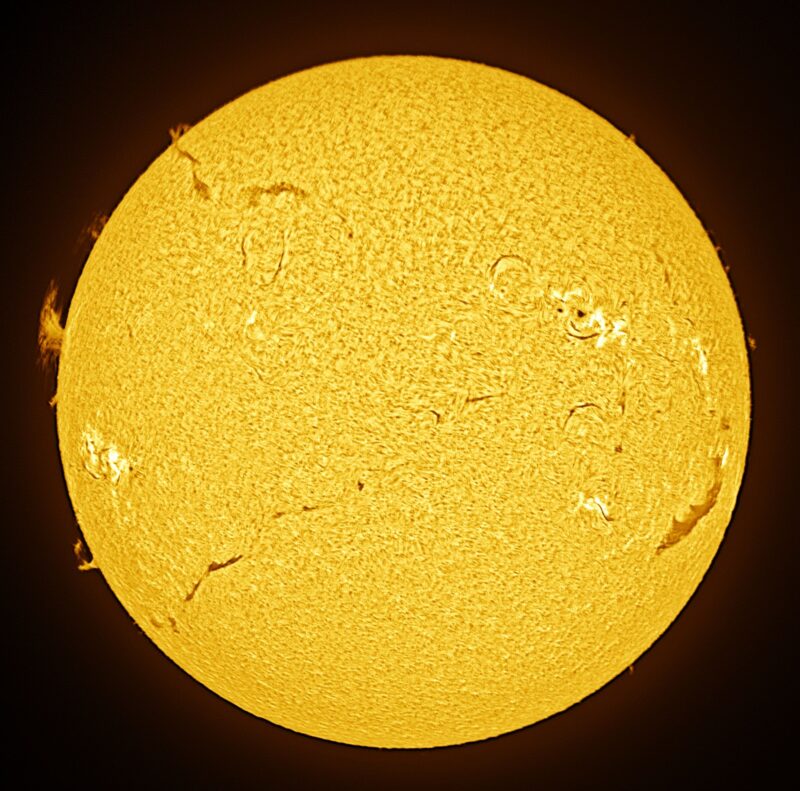
Sun news June 19: Explosive region fires 14 flares
(11 UTC to 11 UTC)
While recent X-flare-producing sunspot region AR4114 didn’t blast any M or X flares over the past day, it’s kept up some impressive activity. Of the 25 C flares fired over the past 24 hours, AR4114 produced an impressive 14 of them. This region remains the largest and most magnetically complex on the disk, so don’t be surprised if it produces some more major flares.

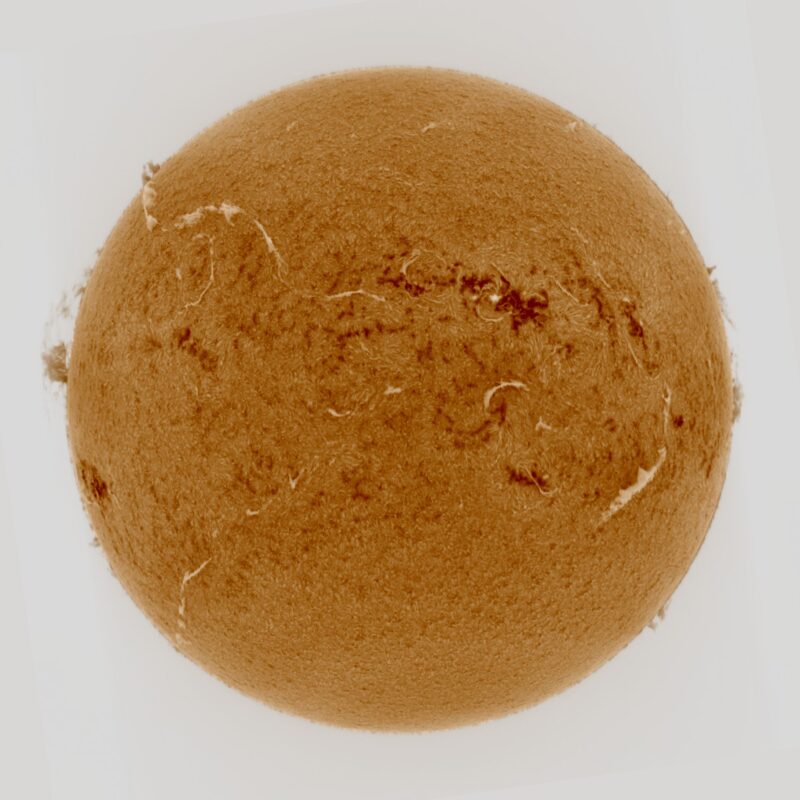
Sun news June 18: Volatile sunspot region blasts an X flare!
(11 UTC to 11 UTC)
Bam! At 21:49 UTC last night, prolific sunspot region AR4114 fired an X flare, the most powerful category of solar flare. We mentioned in yesterday’s sun news that an X flare could be on the way, judging by the region’s impressive size and magnetic complexity, and AR4114 quickly delivered with an X1.3. This region is facing straight at us, but it seems the flare didn’t send out any sun-stuff that could trigger auroras on Earth. But, thanks to solar wind streaming from a coronal hole and potential shocks from earlier coronal mass ejections (CMEs), there’s still a chance for G1 (minor) geomagnetic storms over the next few days.

? Boom! Sunspot AR4114 just fired off an X1.3 flare at 21:49 UTC on June 17! Did it also throw a solar spitball (CME) at Earth? Stay tuned for the latest on this solar action! ??? #SpaceWeather #SolarFlare #heliophysics
Updates at bit.ly/sunactivity
— Dr. C. Alex Young (@thesuntoday.bsky.social) June 17, 2025 at 5:49 PM
Sun news June 17: Will this volatile sunspot region fire X flares?
(11 UTC to 11 UTC)
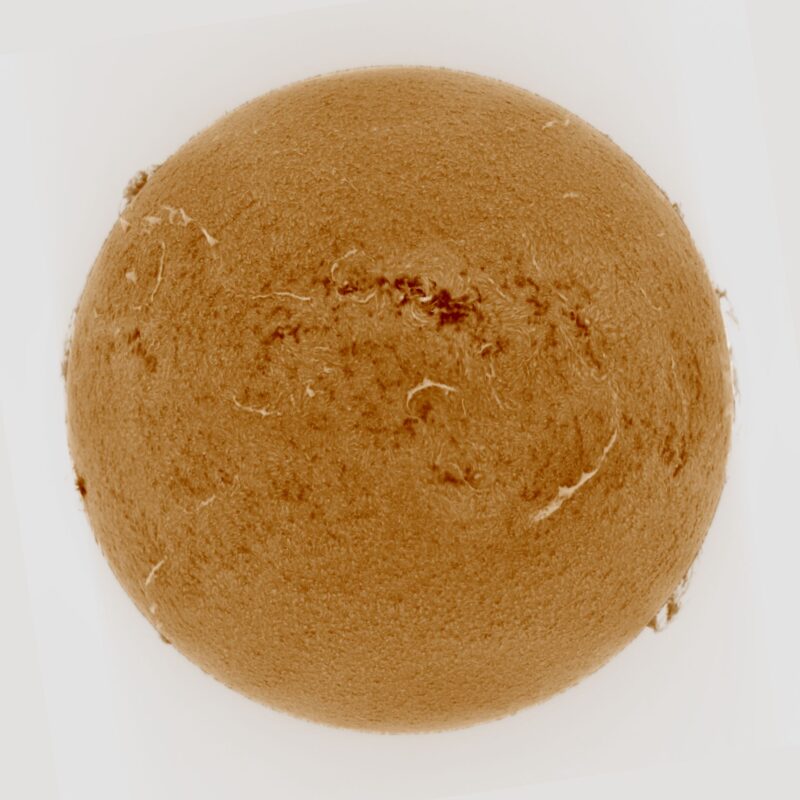
Solar activity remains high thanks to several M flares from prolific sunspot region AR4114 over the past 24 hours, including an M6.3 flare. The region continues to grow, and has maintained its highly complex beta-gamma-delta magnetic structure. That means it has the potential to produce more large M flares and even X flares. Stay tuned!
Sun news June 16: Flurry of flares continues – more to come?
(11 UTC to 11 UTC)

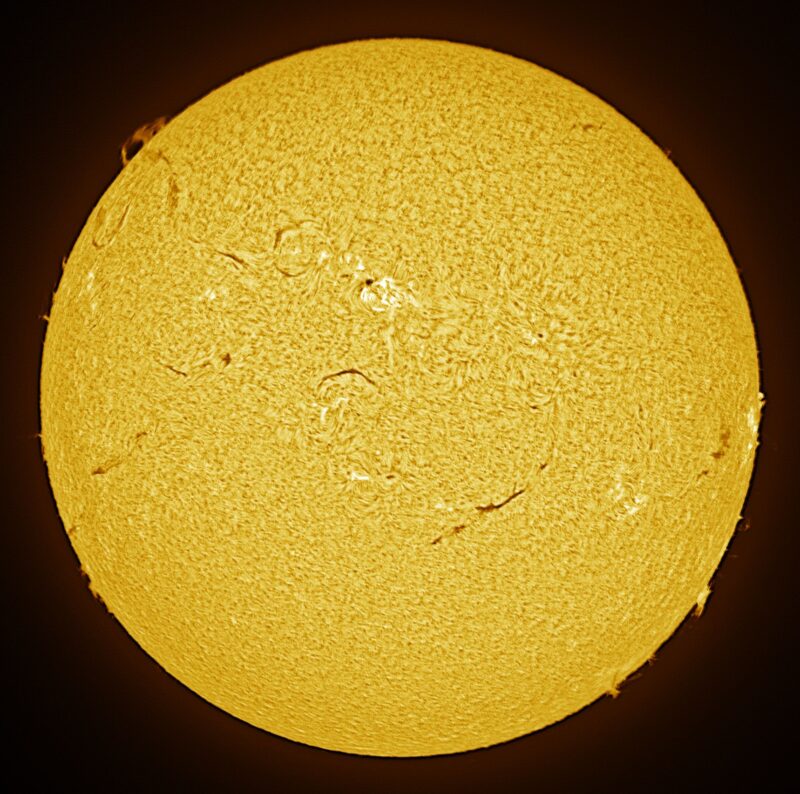
Solar activity remains high with multiple M flares fired over the past day, including a powerful M8.4 from region AR4114. More intense flaring could be on the way, as several active sunspot regions are evolving. AR4114 in particular is showing significant magnetic complexity and potential for strong flaring. As well as a flurry of flares, we observed two blasts of sun-stuff – coronal mass ejections (CMEs) – over the past day. The most recent of these, associated with the M8.4 flare, may deliver Earth a glancing blow around June 18. This could trigger G1 (minor) geomagnetic storms and potential auroras over the next few days. Stay tuned!
Sun news June 15: A surge of flare activity over the past day
(11 UTC to 11 UTC)

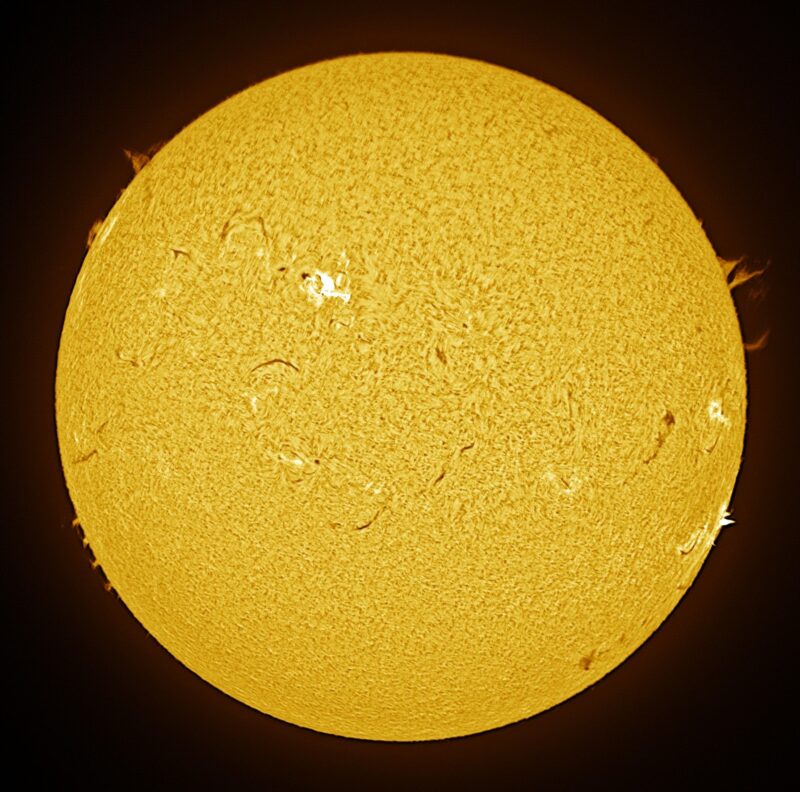
Today’s top story: Solar activity remains elevated with multiple moderate-class solar flares, including an M6.8 event. Active regions continue to evolve, with several sunspots showing growth and magnetic complexity. Geomagnetic conditions have been unsettled to G1 (minor) geomagnetic storm levels. The ongoing influence of a coronal hole high-speed stream, combined with prior CME effects, is driving this activity. Further minor storm intervals are possible in the coming days.
What’s ahead? Sun-Earth forecast
Sun news June 14: Sun news: A splash of auroras last night. Maybe more on the way?
(11 UTC to 11 UTC)
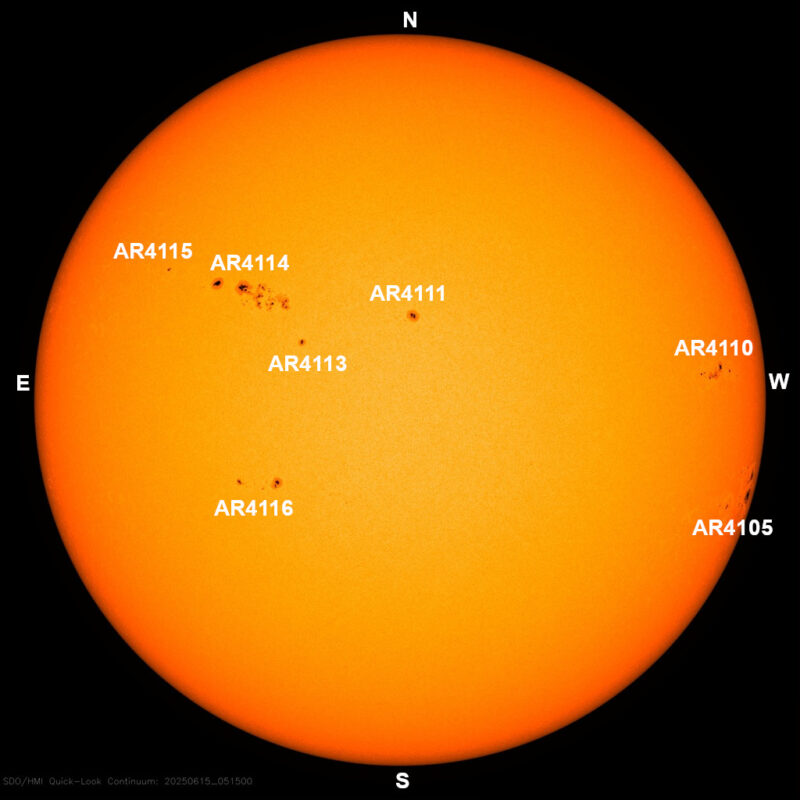
We’ve had auroras at high latitudes the past couple of nights. And, over the past 24 hours, geomagnetic activity reached G1-G2 (minor to moderate) storm levels. Persistent coronal mass ejection (CME) effects has been driving this activity. We observed a peak G3 (strong) storm early on June 13. Over the next two days, CME effects should continue to diminish.
Sun news June 13: Sun news: Storm to serenity: Geomagnetic swings this week
(11 UTC to 11 UTC)
Geomagnetic activity has fluctuated between unsettled-and-minor storm levels this week, with brief periods of moderate intensity. High-speed solar wind streams drove these disturbances, along with possible weak CME influences. Meanwhile, as we traverse Solar Cycle 25’s maximum period, solar physicists have looked forward to a look at the magnetic field at the solar poles. Now we have them thanks to the ESA/NASA Solar Orbiter mission. It has moved out of the ecliptic plane allowing it to image the corona and magnetic field at the poles. We can’t wait for the science and understanding of the solar cycle that will come from these measurements.

Sun news June 12: First eruption imagery from PUNCH mission!
(11 UTC to 11 UTC)

NASA has just released the PUNCH mission’s stunning first view of bursts of material from our star (CMEs). Launched in March this year, PUNCH consists of 4 spacecraft. The faint blocks you can see circling around the image are views from three of them, with the 4th spacecraft capturing the circle in the center. The images are then stitched together to capture these huge eruptions, revealing their structure and evolution in unprecedented detail. PUNCH is also designed to help scientists study how the corona – the sun’s outer atmosphere – transitions into the solar wind. And, in delivering wide-field, near real-time imagery of CMEs and the solar wind, PUNCH will greatly enhance our ability to observe, understand and predict the solar activity that drives geomagnetic disturbances on Earth.

Sun news June 11: Incoming! Solar wind and sun-stuff on the way
(11 UTC to 11 UTC)
Activity is on the way for Earth, with a blob of sun-stuff – a coronal mass ejection (CME) – forecast to give our planet a glancing blow on June 13. This could lead to G1 (minor) geomagnetic storms, especially when combined with incoming high-speed solar wind from two coronal holes. That means there’s an increased chance of auroras on June 12 and 14. Stay tuned!


Sun news June 10: Action on its way for the sun and Earth
(11 UTC to 11 UTC)
Action is brewing over the northeast horizon, with jets and flares hinting that a sunspot region may soon rotate into view. And action appears to be on the way to Earth, too. Two coronal mass ejections (CMEs) that departed the sun on June 6 and 8 may impact Earth today and on June 12, respectively. And that could trigger G1 (minor) geomagnetic storms today, and up to G2 (moderate) storming on June 12.

Sun news June 9: Geomagnetic storming possible today
(11 UTC to 11 UTC)
Activity on our star is in a lull, with only two C-class (common) and two B-class (weak) flares recorded over the past day. But while the sun is mostly quiet, Earth’s magnetic field remains disturbed after the arrival of a burst of sun-stuff on Saturday night. The lingering effects of this impact triggered a G1 (minor) geomagnetic storm last night, and another glancing blow from a coronal mass ejection (CME) fired on June 6 could trigger additional G1-level activity later today.
Sun news June 8: A teaser of solar imagery soon to come
(11 UTC to 11 UTC)
Today’s top story: Ground-based telescopes can be large, but Earth’s atmosphere blurs their view—especially at the sun’s edge. And this blurring limits our ability to study fine structures, such as solar prominences. But researchers at Big Bear Solar Observatory have developed a new adaptive optics system that corrects for atmospheric turbulence, improving resolution of structures in the sun’s corona, or outer atmosphere. We can now observe features 10 times more finely than before. This technology will be adopted by the Daniel K. Inouye Solar Telescope, the world’s largest solar telescope. It’ll open the door to new discoveries in the dynamic solar corona, or outer atmosphere.
What’s ahead? Sun-Earth forecast

Sun news June 7: Solar quiet might not last, as magnetic tensions rise
(11 UTC to 11 UTC)
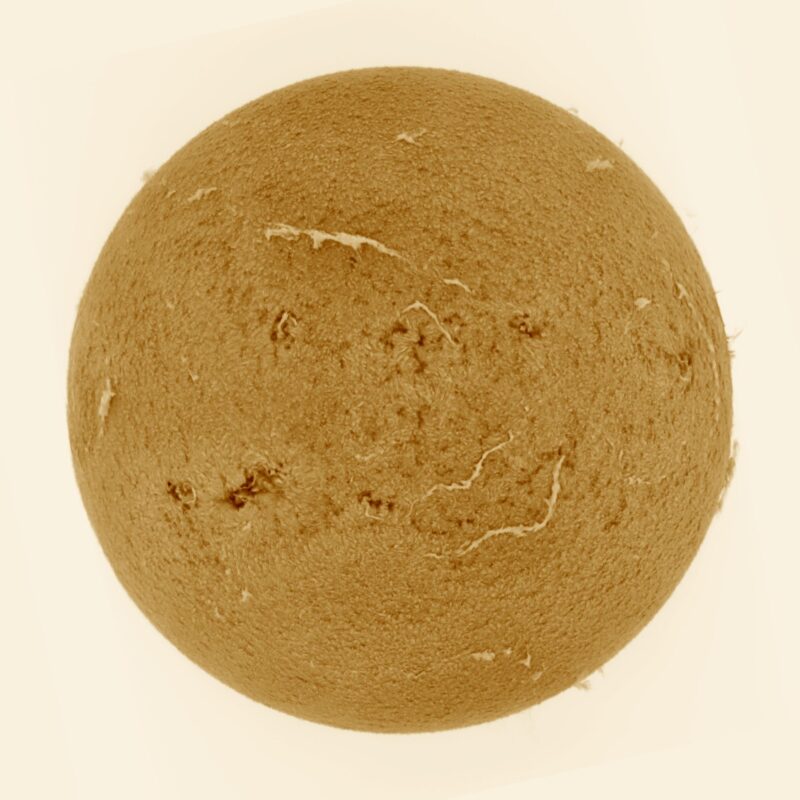
Today is a calm pause in a stormy season. Despite being near solar maximum, the past 24 hours brought relatively quiet conditions—solar wind speeds slowed, and Earth saw only low-level flare activity. But change may be on the horizon. A glancing blow from a June 3 coronal mass ejection (CME) is expected later today, and a southern coronal hole may soon send a burst of fast solar wind our way. Just moments ago, the Kp index jumped from 2 to 4, signaling Earth’s magnetic field is stirring. Is this the start of something bigger? Stay tuned.
Sun news June 6: The solar wind is winding down
(11 UTC to 11 UTC)

A calm has returned to the sun. Solar wind speeds declined from ~720 km/s to 580 km/s, signaling the waning influence of an earlier transient or hybrid event. The interplanetary magnetic field remained weak to moderate, and geomagnetic activity stayed quiet to active, over rhe past day. A coronal mass ejection (CME) from June 3 might brush past Earth on June 7, bringing G1 (minor) geomagnetic storming and possible auroras. What’s next? Stay tuned.

Sun news June 5: Surprise solar surge sparks storms
(11 UTC to 11 UTC)
An unexpected solar wind surge reached speeds soaring past 800 km/s (1,790,000 mph) yesterday, driving G1 (minor) geomagnetic storming. The surge didn’t match any predicted coronal mass ejection (CME) arrivals or solar wind streams, so it may have been the result of an undetected CME or a hidden coronal hole. The high wind speeds may persist today, with G1–G2 (minor-moderate) geomagnetic storms possible.
Sun news June 4: The sun is trying to decide what’s next
(11 UTC to 11 UTC)
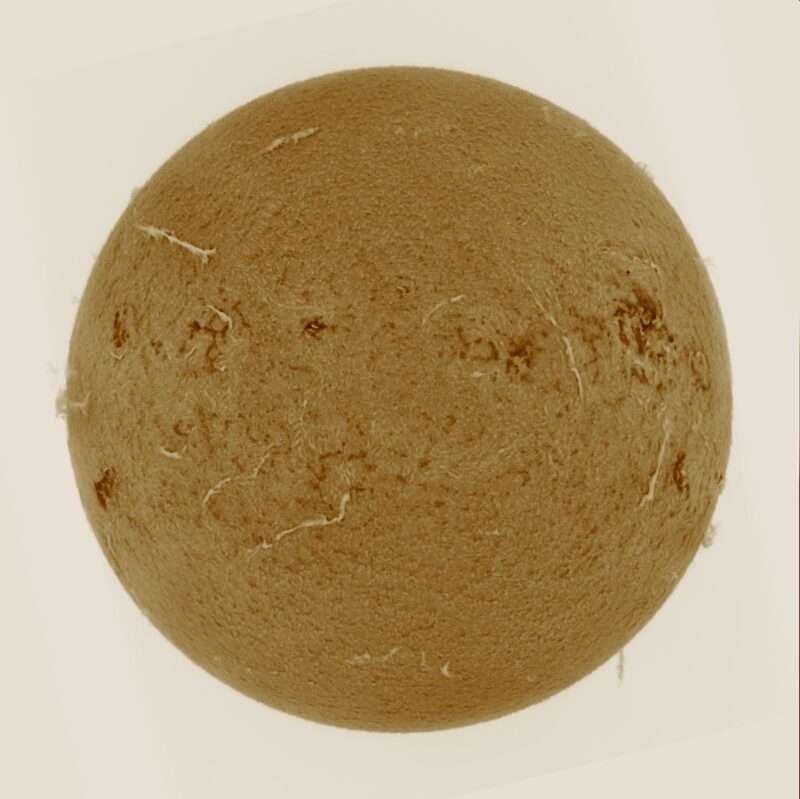
Solar activity remained at moderate levels, highlighted by a relatively small M1.4 flare from newly emerging sunspot region AR4105, near the southeast limb. This region is now the primary region of interest on the Earth-facing sun. While regions
AR4100 and AR4099 showed slight decay, a filament eruption off the sun’s northeastern limb launched a slow coronal mass ejection (CME), forecast to deliver a glancing blow to Earth – possibly bringing auroras – around June 7. Solar wind conditions gradually eased as CME effects diminished, though speeds remained elevated. Geomagnetic activity began the period at G1–G3 storm levels due to lingering CME influence, but settled to quiet levels by the end.
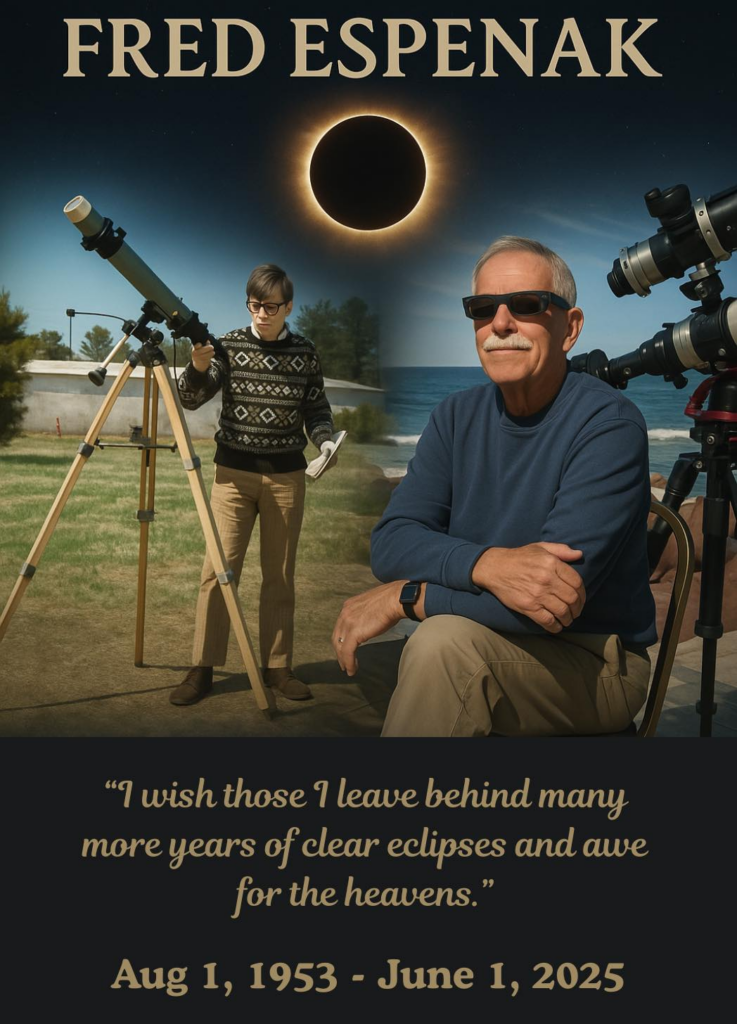
Sun news June 3: In memory of Fred Espenak, aka Mr. Eclipse
(11 UTC to 11 UTC)

If you watched the April 8, 2024, total solar eclipse in North America, your experience was in part due to the work of one man: Fred Espenak. With deep gratitude, we remember Fred for his decades of dedication in sharing the wonder of eclipses with the world. Through his tireless work, boundless curiosity and generous spirit, he brought the cosmos a little closer to us all. Thank you, Fred. You will be deeply missed.
Read about Fred Espenak’s life and contributions at SkyandTelescope.org
If you watched the April 8, 2024, total solar eclipse in the North America, your experience was in part due to the work of one man, Fred Espenak. Join us at 12:15 p.m. (17:15 UTC) on Wednesday, June 4, as we share stories and memories of Fred from his friend and writing partner, Michael Zeiler. Watch in the player above or on YouTube.

Sun news June 2: Aurora watch continues as solar storm eases
(11 UTC to 11 UTC)
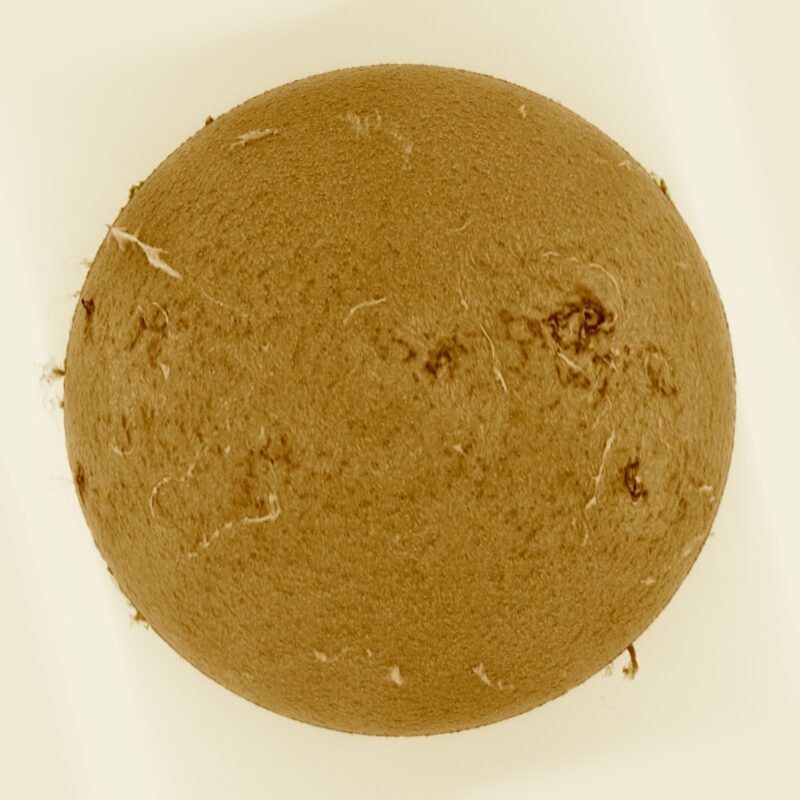

The intense coronal mass ejection (CME) from the May 31 M8.1 (moderate) flare has rocked Earth’s magnetic field. After its initial impact early on June 1, the storm peaked at G4 (severe) levels with solar wind speeds soaring above 1,100 km/s (2,460,630 mph). There were widespread auroras, visible even in California, Colorado, Utah and Missouri. While the strongest effects are over, Earth remains under the influence of the CME, and G1–G2 storming in Earth’s magnetic field is still possible today, with a slight chance of G3 conditions. Space weather is still active. Stay tuned.
Sun news June 1: Storm! The CME is here and Earth is rocking
(11 UTC to 11 UTC)
Today’s top story: The anticipated coronal mass ejection (CME) associated with the M8.1 flare on May 31 has arrived, striking Earth with a powerful shock. Solar wind speeds surged beyond 1,000 km/s, and the interplanetary magnetic field (IMF) turned strongly southward, driving a rapid and intense geomagnetic response. Earth’s magnetic field reached G4 (severe) storm levels, sparking vivid auroras at lower latitudes and disrupting HF radio communication. In addition, energetic particles from the eruption triggered an S2 (moderate) solar radiation storm, with proton flux levels remaining elevated. The combined effects of the CME and lingering coronal hole influence are expected to keep space weather active through June 2, with continued potential for G3–G4 geomagnetic activity and enhanced radiation conditions. Stay tuned!


Like what you read?
Subscribe and receive daily news delivered to your inbox.
More from
C. Alex Young


Sun news: See a huge solar eruption

Yes, there’s an aurora season, and it’s here
Sun activity archive for September 2026
Sun activity archive for August 2026