



Science matters. Wonder matters. You matter. Join our 2025 Donation Campaign today.
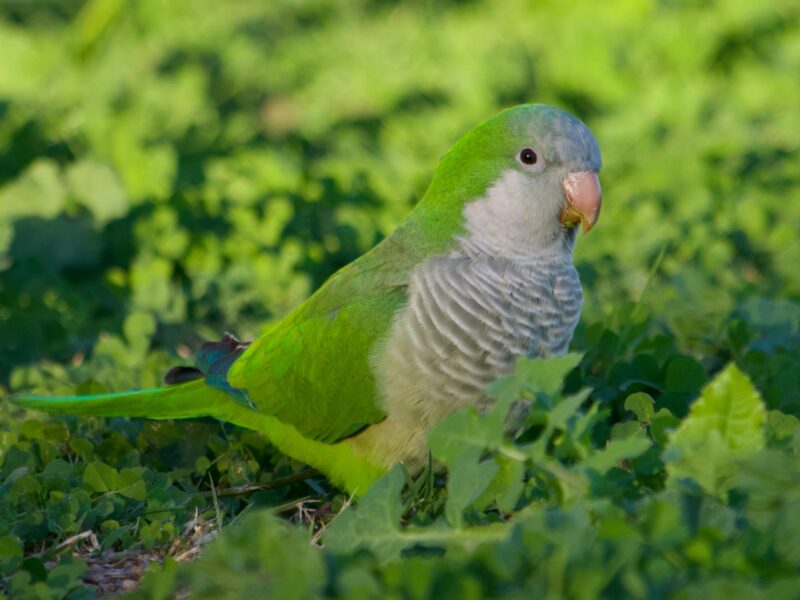
Monk parakeets are known for their ability to imitate sounds, including the human voice. And researchers said on May 7, 2025, that this species of parrot is not only capable of imitation, but that they also acquire richer vocal diversity the more they socialize with others. The team of scientists from the Max Planck Institute of Animal Behavior came to this conclusion having observed 337 monk parakeets for two years in Spain. And they also found that monk parakeets appear to modify their vocalizations to differentiate themselves from other members of a group.
The team published its study on May 7, 2025, in the peer-reviewed journal The Royal Society.
Monk parakeets in Europe
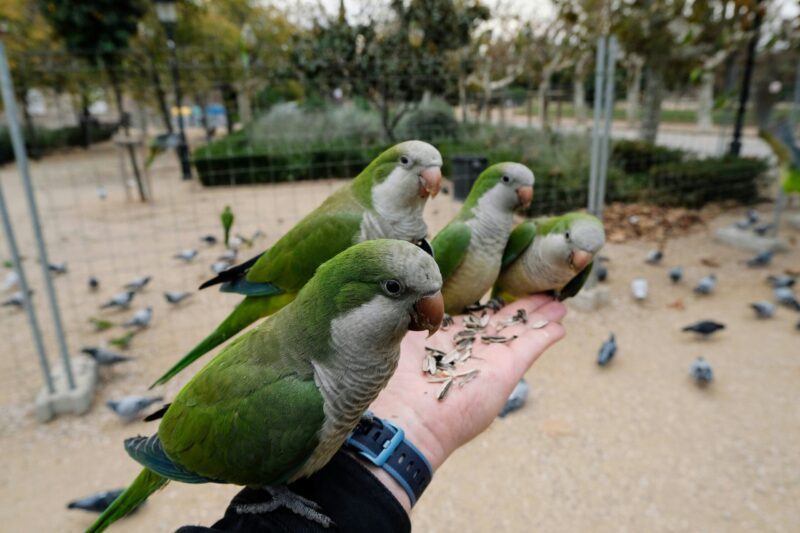
Although monk parakeets are native to South America, they are quite common in Europe. In fact, they live by the thousands in Spain. According to the latest national census of the monk parakeet, which SEO/BirdLife published in 2015, the count totaled more than 7,000 nests and a population of between 16,000 and 20,000 individuals. The most of them live in major cities such as Madrid, Barcelona and Malaga.
These bright green birds are abundant in urban parks. And that gives scientists an opportunity to study them and their group behavior. According to the scientists, social networks shape the vocal diversity of monk parakeets.
Monk parakeets are sociable and talkative animals. And fittingly, this species is known as cotorras argentinas in Spain, with the word cotorra referring to a person who never stops talking!
The advantages of living in groups
Animals with more complex social lives tend to have more sophisticated forms of communication. For example, dolphins and bonobos have rich communication systems. And humans, of course, are able to learn new words and expressions when they hear other people speak.
The new study on wild parrots, specifically the monk parakeet, shows a similarly rich language. These birds thrive in large colonies where they communicate with each other through numerous distinctive sounds. And by studying these communities, scientists attempted to understand the interplay between individual relationships and vocal variety.
The scientists observed 337 monk parakeets for several months at a time over two years, documenting their social lives and recording all their screeches, squawks and whistles. They obtained a total of 5,599 vocalizations. The team examined these calls in terms of repertoire diversity (how many different sounds a bird can make) and contact-call diversity (how much this specific type of call differs).
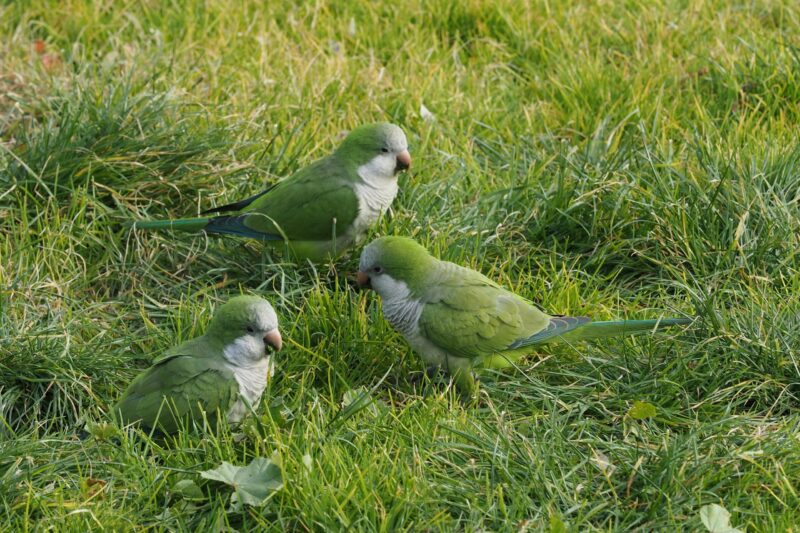
They also mapped the birds’ social networks, analyzing everything from the frequency with which they interacted with others to the strength of their relationships. From this information, the team concluded that parakeets living in larger groups produced a wider variety of sounds.
Other interesting discoveries from the study
The scientists also made another finding. They discovered that, interestingly, females had a more diverse repertoire than males. Lead author Simeon Smeele said this is unusual for birds:
This research is a really important first step. It really looks like there are some call types that are used uniquely in social situations. And it’s really interesting to see that females appear to produce more of these, suggesting they are the more social sex.
Another interesting finding is that parrots in more central positions in the social structure (those that were more influential in the group and interacted with more individuals) tended to have more diverse vocal repertoires. That is, the most sociable individuals seemed to have a larger vocabulary than the less sociable ones. Smeele adds:
What I find really exciting is that we were able to link what individuals say to very specific levels of sociality. For example, close friends that allowed each other to approach within pecking distance sounded less like each other, as if they were trying to sound unique in their little gang.

Why is this study about monk parakeets important?
By comparing these social animals with ourselves, we can learn a lot. After all, we also enrich our vocabularies by listening to and speaking with other people. And in doing so, we acquire unique ways of expressing ourselves that distinguish us from others.
These results shed light on how sociability might have driven the evolution of complex communication and, ultimately, human language. Previous research has linked sociability to a more diverse repertoire in species ranging from Carolina chickadees to marmosets. Smeele said:
The next big step is to better understand what each of the sounds mean, a real mammoth task, since most of the social squawking happens in large groups with many individuals talking at the same time!
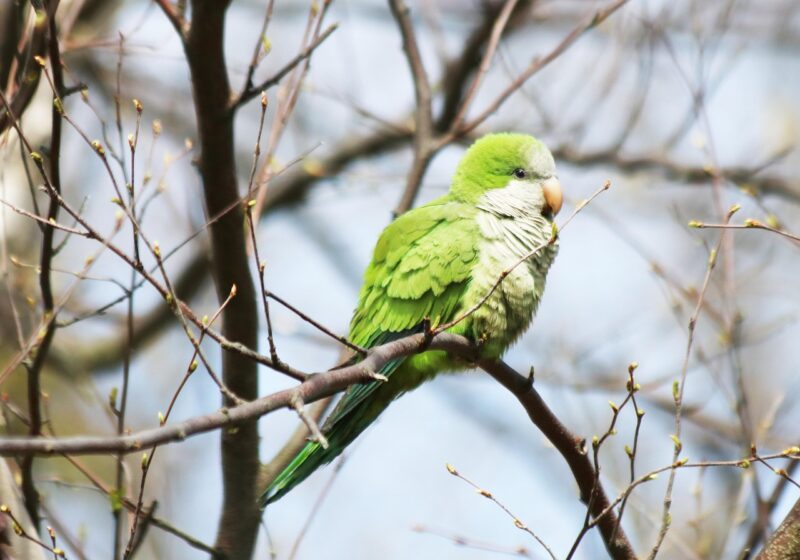
Bottom line: A new study found that the more sociable monk parakeets are, the more vocal diversity they gain.
Source: The effect of social structure on vocal flexibility in monk parakeets
Via the Max Planck Institute for Animal Behavior
Read more: Bonobo chatter shares a unique feature with human speech
Read more: Will humpback whales train us to communicate with aliens?
Like what you read?
Subscribe and receive daily news delivered to your inbox.
More from
Cristina Ortiz


Amazon wildfires hide another threat to the rainforest

The Komodo dragon is the world’s largest living lizard
Scientists discover a new tiger cat hiding in plain sight
Reef fish survival threatened by motorboat noise



