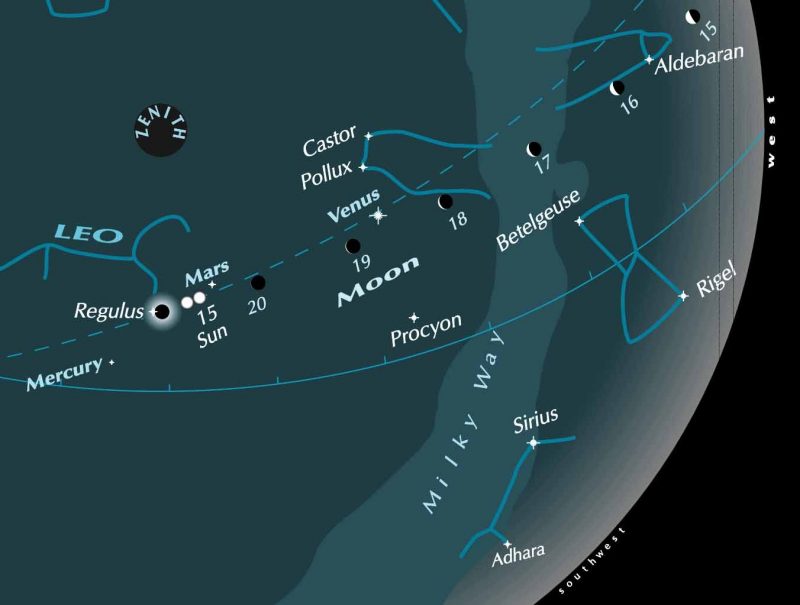
The moon has three-and-a-half days to go until its new phase – the moment, this time, when it will stamp on the sun. The strides of the moon toward its appointment with the sun are shown in the detail above, from the sky-scene illustration in The Under-Standing of Eclipses.
Each morning from now on, you could see it take one stride (of a bit less than an outstretched handspan) nearer to the sun. So you could each morning be up one hour later to see its dwindling crescent.
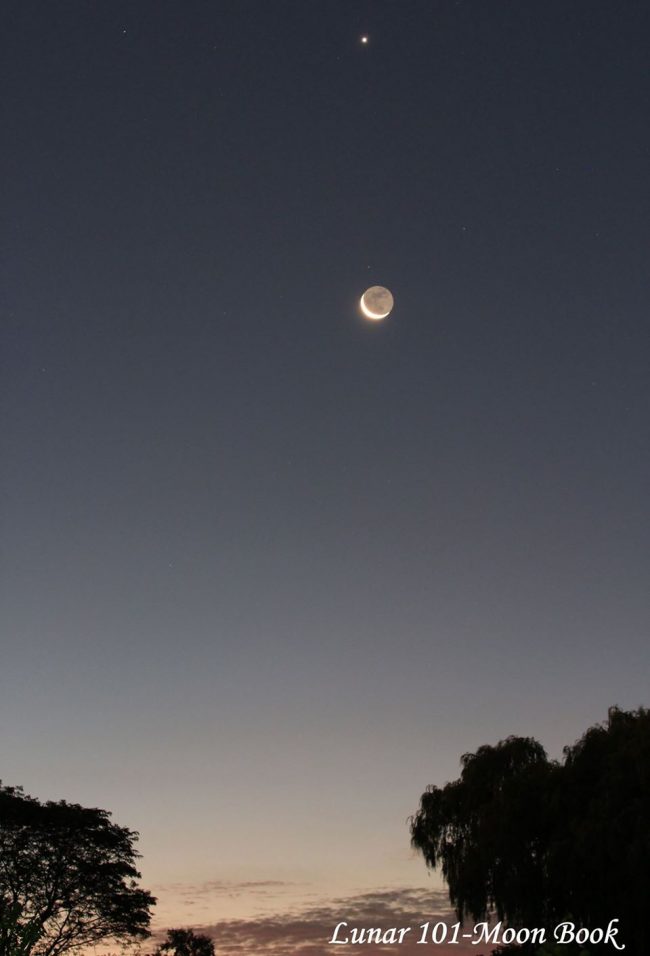
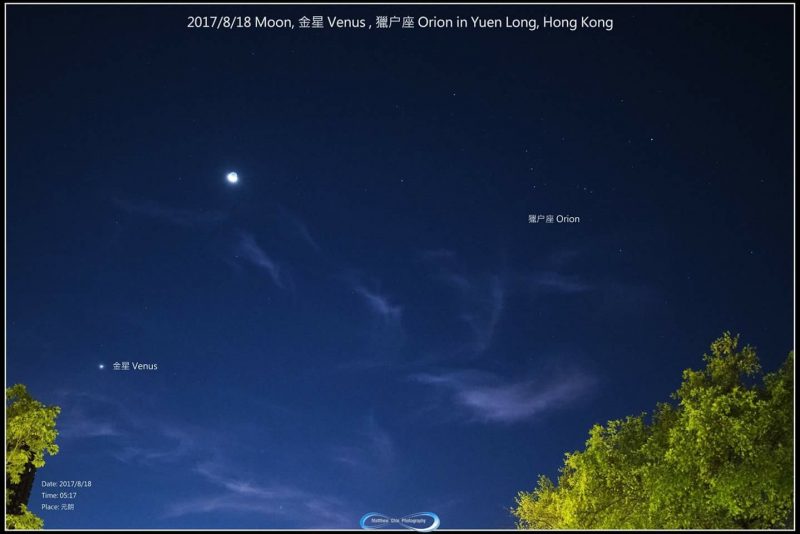
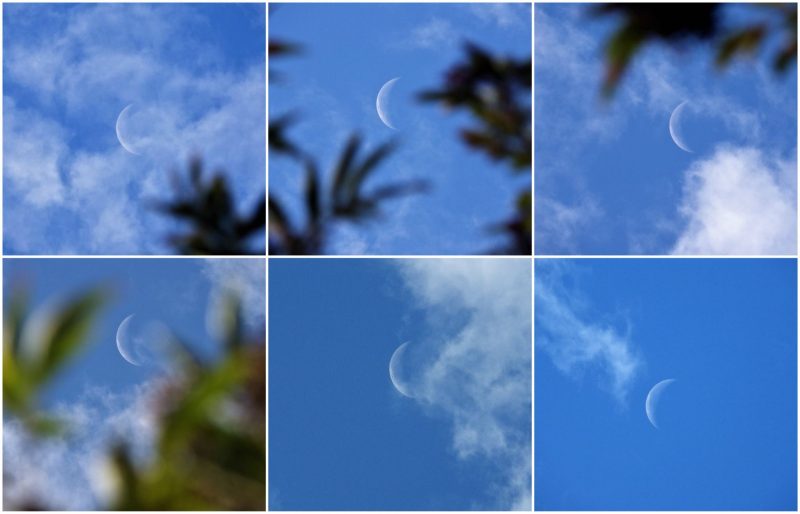
One day before eclipse day, the moon is an extremely thin crescent visible very low in the east before sunrise. Photo taken August 20, 2017 by Garry D. Irvine in Scotland.Closer and closer to sunrise! This is the moon on the morning of August 19, 2017 from our friend Lunar 101 Moon Book. It has now passed Venus – the bright “star” in this photo – and is heading toward its date with the sun. Will you see the moon Sunday morning? Maybe! Look low in the east.Matthew Chin in Hong Kong caught Friday morning’s waning crescent moon and Venus. August 18, 2017. Thanks, Matthew!Mosaic of the crescent moon on the morning of Thursday, August 17, 2017 via our friend Deirdre Horan in Dublin, Ireland.Waning crescent moon on the morning of Wednesday, August 16, 2017 via our friend Karl Diefenderfer of Quakertown, Pennsylvania. The bright nearby star is Aldebaran in the constellation Taurus. Karl wrote: “I’m very excited to see the moon age because that means the solar eclipse is almost upon us!”
Bottom line: Sky photos from EarthSky friends, plus insights and charts from astronomer Guy Ottewell, related to the moon’s movement on our sky’s dome toward the August 21, 2017 eclipse.
Astronomer, artist and poet Guy Ottewell's beloved Astronomical Calendar is back! Find the 2024 calendar here: https://www.universalworkshop.com/astronomical-calendar-2024/ And visit Guy’s website UniversalWorkshop.com or his blog at UniversalWorkshop.com/Guysblog. Guy's stories and art are used here with permission, and we are honored to have them. Thank you, Guy! The image shows Guy walking from the Carolina coast to the Blue Ridge mountains one spring (as depicted in Sky & Telescope magazine).
Like what you read? Subscribe and receive daily news delivered to your inbox.
Thank you! Your submission has been received!
Oops! Something went wrong while submitting the form.
If EarthSky has ever helped you discover something new, prepare for an eclipse, spot a planet, or simply inspired a moment of wonder, today is the perfect day to give back. Your donation helps keep trusted science news, expert night sky guides, and independent science journalism free for everyone.
Please help keep EarthSky going by donating today!
Please help keep
EarthSky going!
If you've already donated, we apologize for the popup and greatly appreciate your support.