



See the Trifid nebula aka Messier 20 tonight

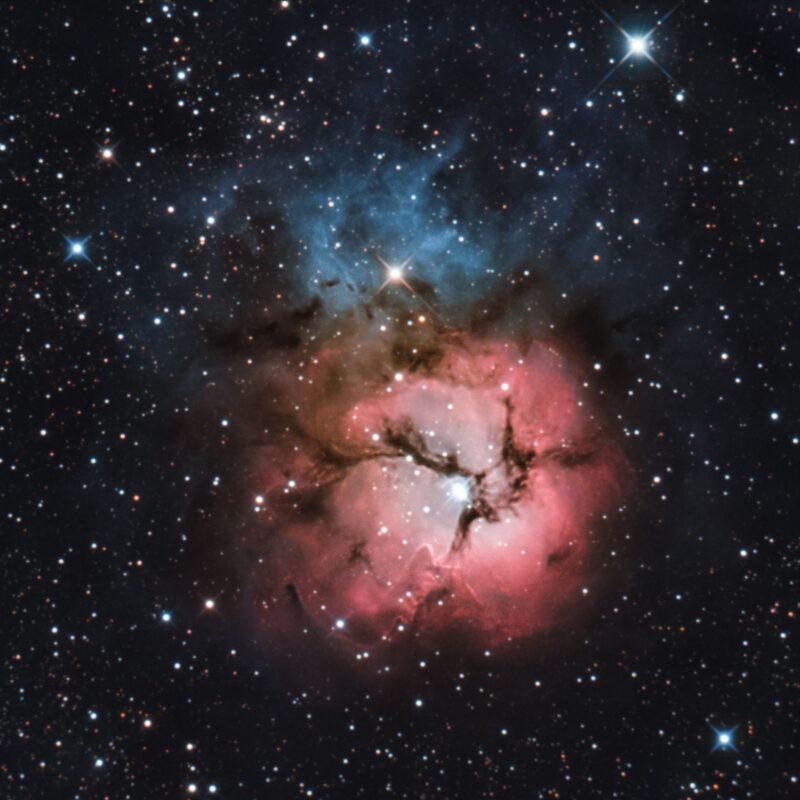
The Trifid nebula
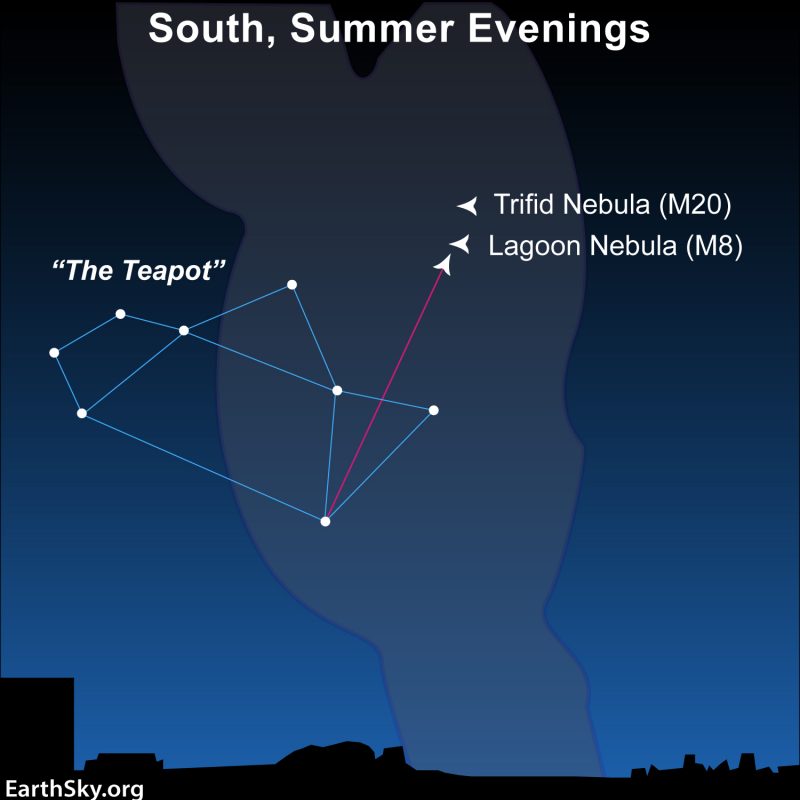
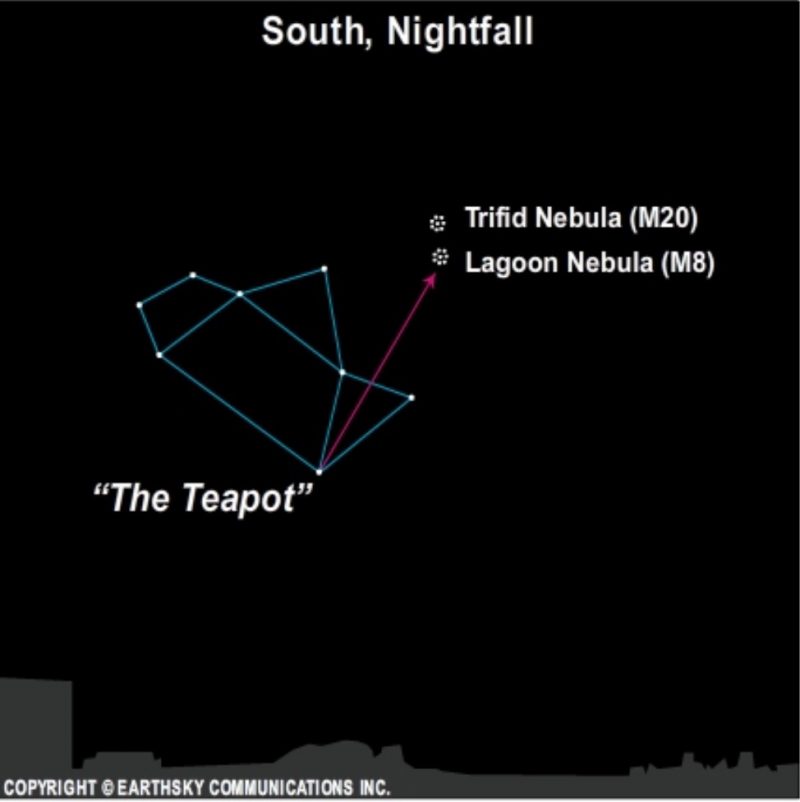
The Trifid nebula (Messier 20 or M20) is one of the many binocular treasures in the direction of the center of our Milky Way galaxy. In fact, its name means divided into three lobes, although you’ll likely need a telescope to see why. On a dark, moonless night – from a rural location – you can star-hop upward from the spout of the Teapot in Sagittarius to another famous nebula, the Lagoon, also known as Messier 8. Also, in the same binocular field, look for the smaller and fainter Trifid nebula as a fuzzy patch above the Lagoon.
Locating the Trifid nebula
To locate this nebula, first find the famous Teapot asterism in the western half of Sagittarius. The Teapot is just a star pattern, not an entire constellation. Nonetheless, most people have an easier time envisioning the Teapot than the Centaur that Sagittarius is supposed to represent. How can you find it? First, be sure you’re looking on a dark night, from a rural location.
Then, look southward in the evening from Earth’s Northern Hemisphere. Conversely, if you’re in Earth’s Southern Hemisphere, look northward, closer to overhead, and turn the charts below upside down. And for a precise view from your location, try Stellarium-Web.
The Lagoon nebula
The Trifid nebula is estimated to be about 5,000 light-years away. And the Lagoon nebula is thought to reside about 4,100 light-years away.
Both the Trifid and Lagoon are vast cocoons of interstellar dust and gas. They are stellar nurseries, actively giving birth to new stars. By the way, the Trifid and Lagoon nebulae are a counterpart to another star-forming region on the opposite side of the sky: the great Orion nebula.
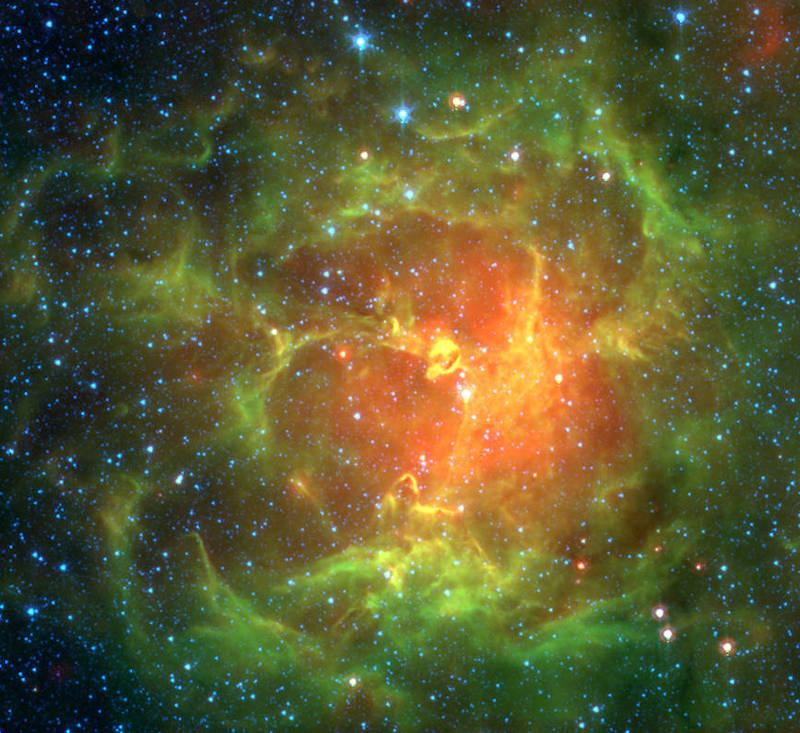
Bottom line: The Trifid nebula (M20) is located in the direction of the center of the Milky Way galaxy. If you have an extremely dark sky, you can see the nebula on a moonless night as a fuzzy patch in the Milky Way. And binoculars and telescopes show even more detail.
Read more: Find the Teapot, and look toward the galaxy’s center
Like what you read?
Subscribe and receive daily news delivered to your inbox.
More from
Bruce McClure


The Andromeda Galaxy: All you need to know
Are day and night equal on the equinox? Not exactly
See the year’s fastest sunsets and sunrises around equinoxes
Equinox fun: Track the sun’s shift now until the solstice



