Watch for Taurid fireballs
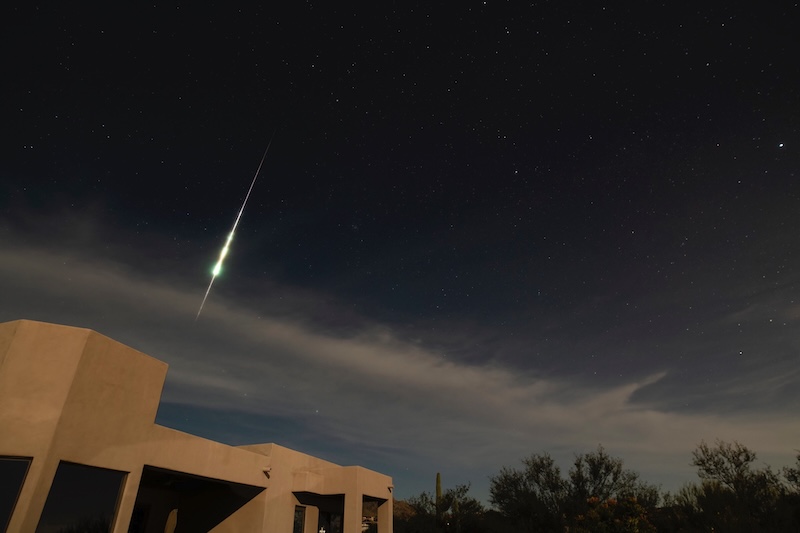
Now is the time to watch out for a fireball or two from the long-lasting South and North Taurid meteor showers. Various sources give wildly different dates for the peak of South Taurids (active from late September to late November), and the night of November 4 and 5, 2026, is one of those predicted times. The night before, or after, might be good to watch for meteors — and fireballs — too. The waning crescent moon those nights won’t interfere.
And a few days later, when the North Taurids peak on the night of November 12, the moonlight from the waxing crescent moon will also not interfere with watching for meteors. Despite the sparse number of meteors from these overlapping showers, the percentage of fireballs is rather high, so it’s always worth watching for them during their expected peak.
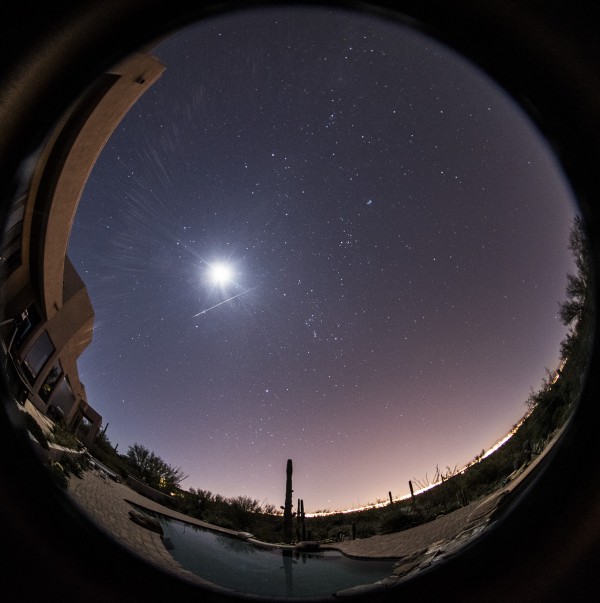
Skywatchers are still remembering the Taurid fireballs they saw in 2015 and 2022. The Taurids appear to have a 7-year cycle of bright fireballs, and 2015 was apparently a peak year! Read more about that, and see more fireball photos, here.
And 2022 was a good year for Taurid fireballs. The next predicted swarm year is 2032.
Both the South and North Taurids (active from late October to early December) are long, spread-out showers with no well-defined peak. During the peak nights for the South Taurid meteor shower, you might see as many as five meteors per hour. But the American Meteor Society explains what – in some years – can be awesome about the Taurid meteor showers:
The Taurids (both branches) are rich in fireballs and are often responsible for increased number of fireball reports from September through November.
Some years have more fireballs
Fireballs are the name of the game for the Taurids.
Seeing a Taurid fireball – even if it’s just one – counts as a big thrill. And, by the way, a fireball is just another word for a particularly bright meteor.
On any given night, these rather slow-moving meteors produce the greatest numbers in the few hours after midnight. The South Taurids peak on November 5 and the North Taurid peak on November 12. They’ll be in relatively dark skies.
Taurids ramble across the sky for weeks
And again … the Taurid showers do not exhibit strong peaks. So if you’re clouded out on a particular night, no problem. Just keep watching. The two Taurid showers tend to overlap and to plateau in activity during the first few weeks in November.
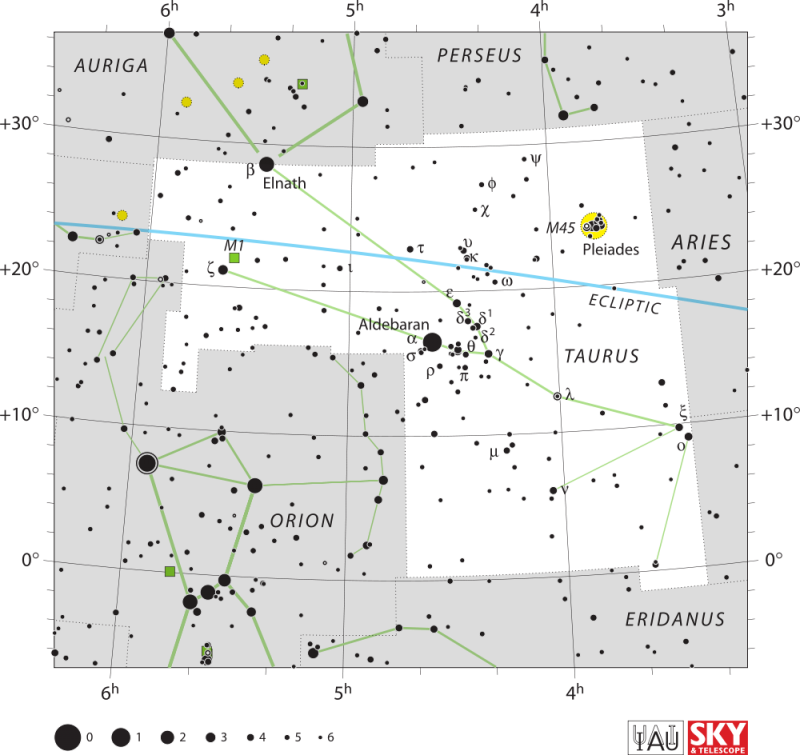
If you trace the South Taurid meteors backwards, they all appear to radiate from the constellation Taurus the Bull. As always, you don’t have to identify a meteor shower’s radiant point to watch the meteor shower. Just lie back comfortably and look up, in the hours between midnight and dawn.
By the way, the constellation Taurus itself is full of interesting things to see such as the Pleiades star cluster and the V-shaped Hyades cluster with bright Aldebaran in its midst.
Just be aware … you don’t need to find Taurus to watch the Taurid shower, for these meteors streak all over the sky.
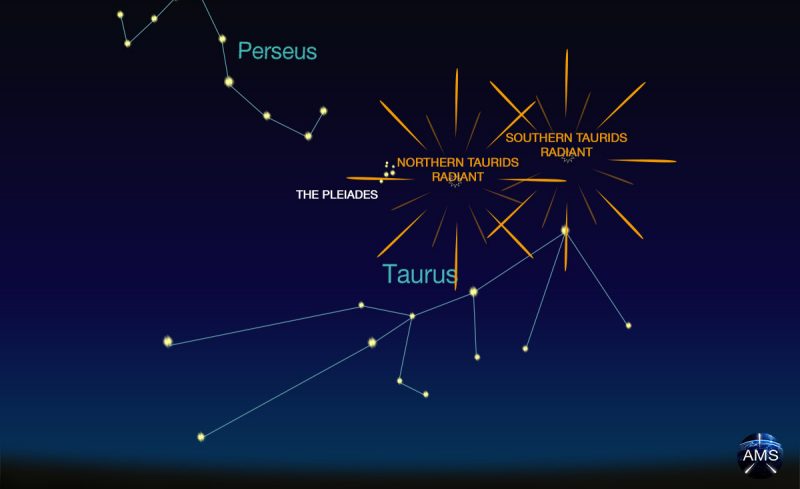
Bottom line: The annual South Taurid meteor shower has been going on throughout October, and now the North Taurids have started up as well. The peaks of these showers aren’t well defined, but the South Taurids might be peaking in the first week of November 2026. Watch for them.
Enjoying EarthSky so far? Sign up for our free daily newsletter today!
Like what you read?
Subscribe and receive daily news delivered to your inbox.
More from
Bruce McClure


Meet Aquarius the Water Bearer and its stars

Check out the Double Cluster in Perseus on October evenings
Find the Andromeda Galaxy using Cassiopeia
Alpha Cephei, or Alderamin, is a fast-spinning star