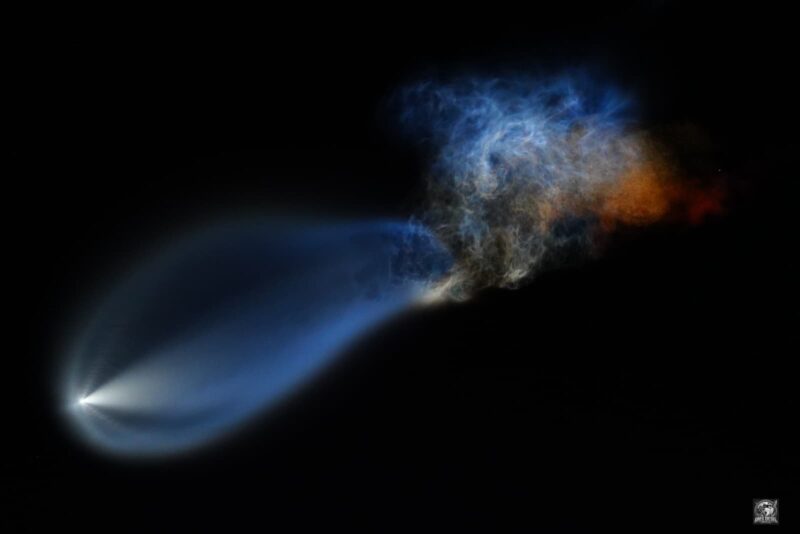
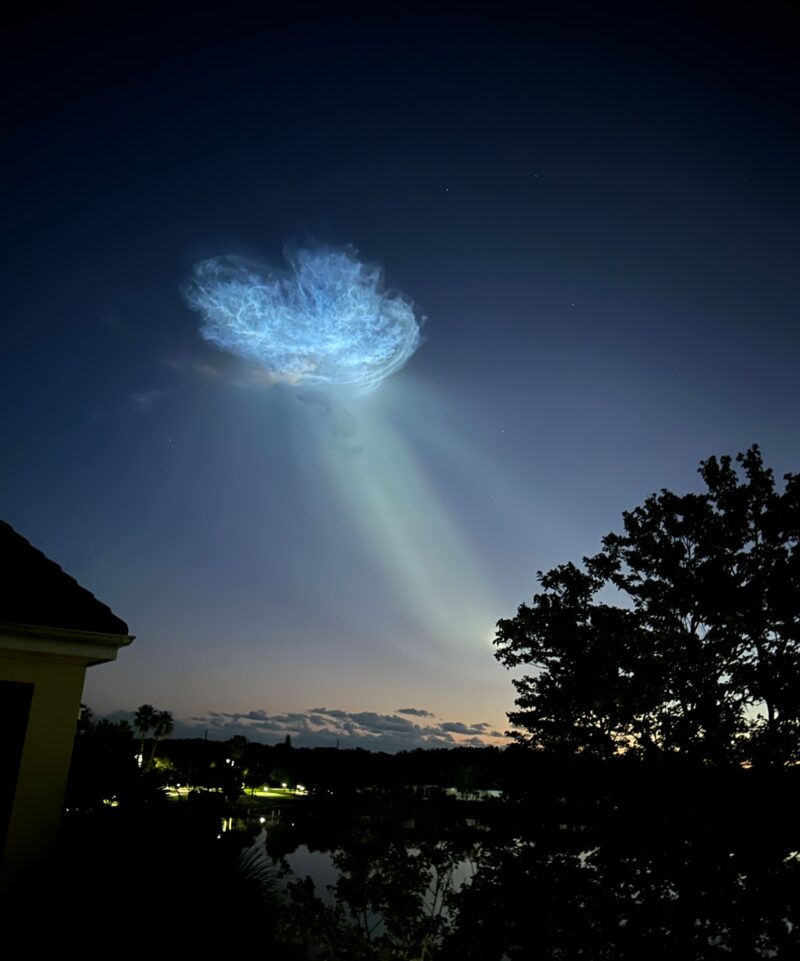
Many people up in the eastern portion of the U.S — who were up before sunrise on October 13, 2026 — reported seeing a strange cloud. This “jellyfish effect” is a phenomenon that occurs during a dawn and dusk rocket launches. Image via EarthSky’s Greg Diesel Walck.
Strange cloud from the U.S. East! Did you see it?
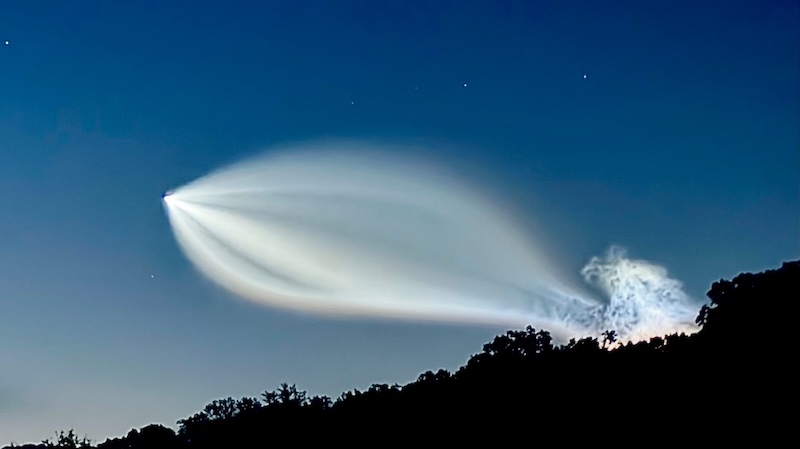
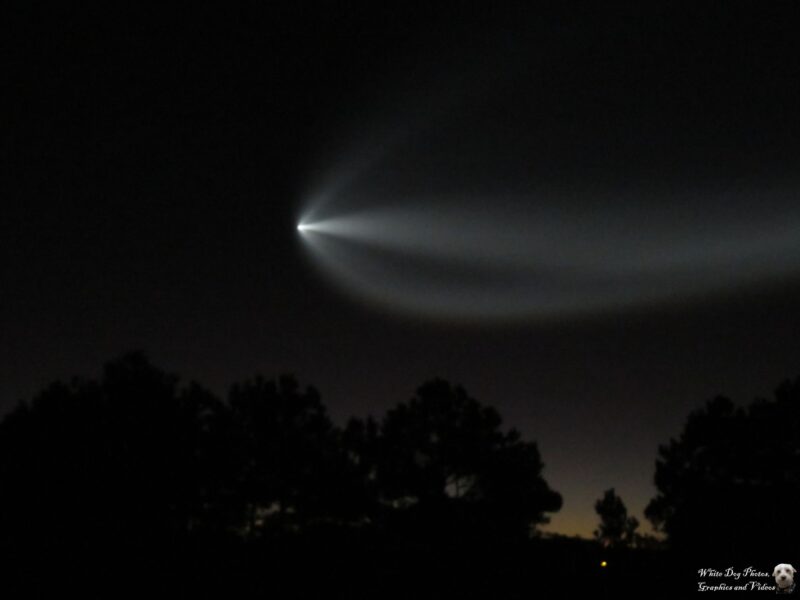
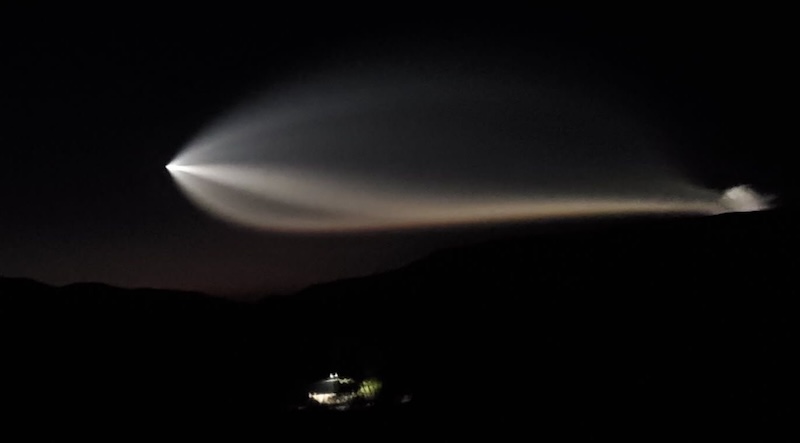
On Tuesday morning, October 13, 2026, a SpaceX Falcon rocket launched from Florida, sending a Dragon spacecraft to the International Space Station. This was a resupply mission, launching just before dawn. As the spacecraft headed upward through Earth’s atmosphere, it left behind a trail of exhaust. That trail expanded and was high enough to be sunlit by the approaching dawn. Observers often describe this phenomenon as the jellyfish effect.
We can see the jellyfish effect for the same reason we can see satellites orbiting Earth before sunrise and after sunset. The sun’s rays are still reaching the highest portions of our atmosphere, illuminating any objects there, whether that be a satellite or rocket exhaust.
Observers in the U.S. East could see the jellyfish phenomenon. It was visible from up to 800 miles (1,290 km) away.
Early Tuesday morning NASA sent up a resupply mission for the ISS atop a SpaceX Falcon 9 rocket. As the spacecraft blasted into orbit, it left behind a cloud of exhaust that caught the first rays of the morning sunlight and created what's called the "jellyfish effect." pic.twitter.com/VFt4tZONbv
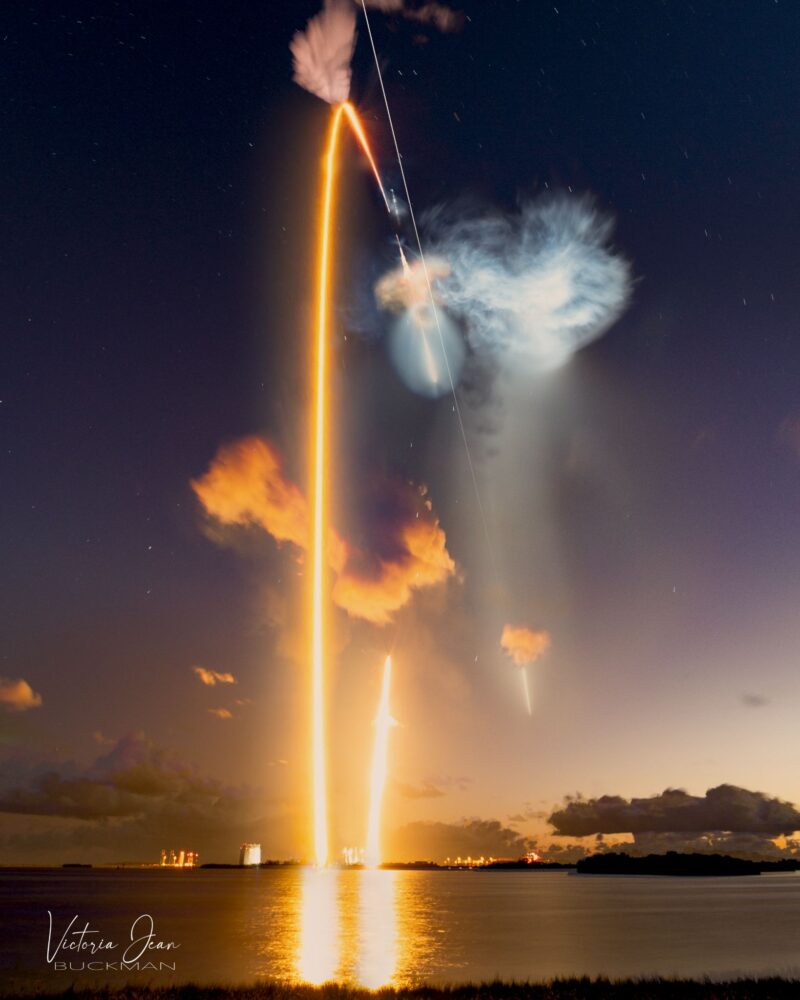
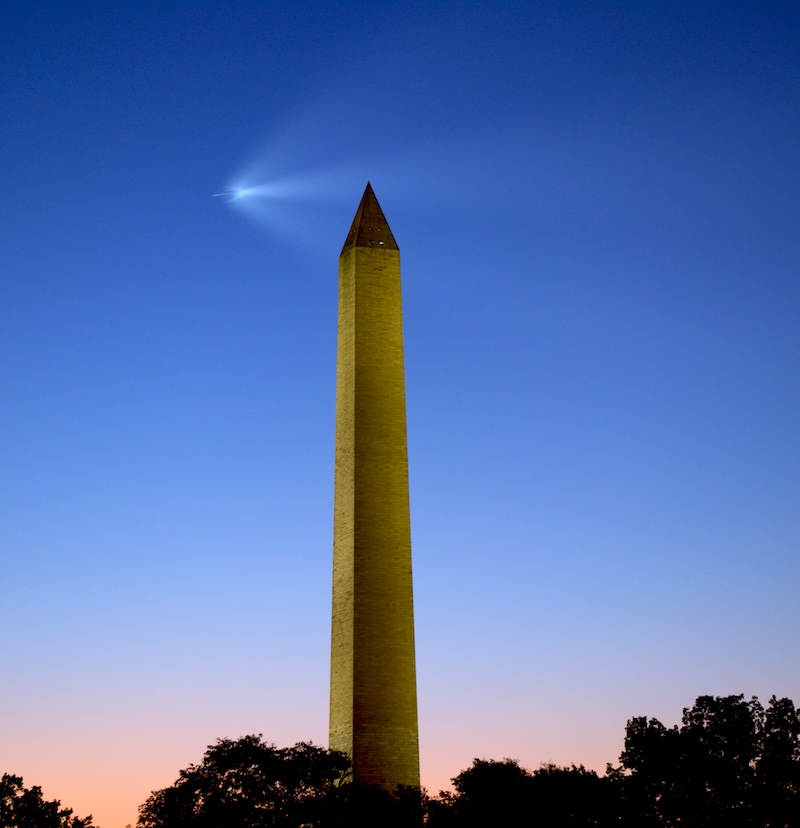
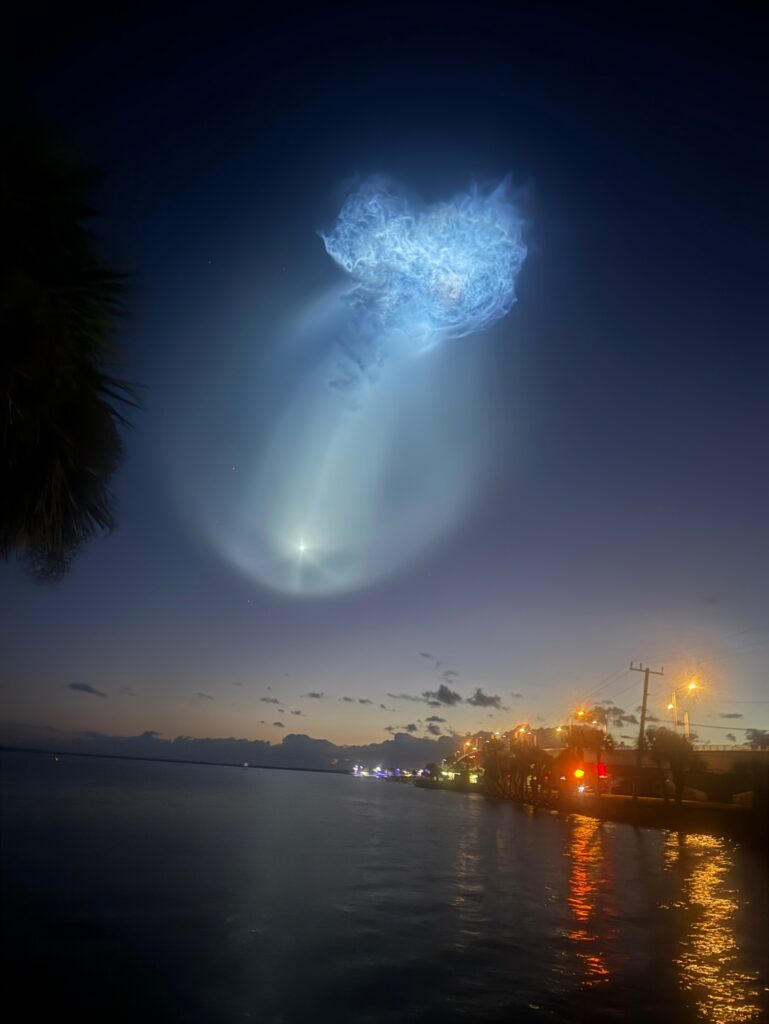
View at EarthSky Community Photos. | Victoria Buckman captured the launch from Cape Canaveral, Florida. She wrote: “A timelapse image reveals the streak of launch and booster return, but the special guest is the ISS itself as it was caught passing through the sky above!” Thank you, Victoria!View at EarthSky Community Photos. | Peter Roof captured this image from Washington, D.C., on October 13, 2026, and wrote: “I captured the launch of a Falcon 9 rocket as it passed by Washington, D.C., at 6:42 this morning. It was launched from Kennedy Space Center in Florida to resupply the International Space Station.” Thank you, Peter!View at EarthSky Community Photos. | Mary Beth Davila-Aponte took this stunning photo from Titusville, Florida. Thank you!View at EarthSky Community Photos. | Kathy Morton captured this view from Vero Beach, Florida. Thank you!
More images from our EarthSky Community
View at EarthSky Community Photos. | Marvin Pace caught the jellyfish effect cloud from the rocket launch on October 13, 2026, from Georgia. Thank you, Marvin!View at EarthSky Community Photos. | Gerald Barney took this photo from Port Wentworth, Georgia, and wrote: “The Dragon capsule is carrying over 6,300 pounds [2,860 kg] of supplies and science experiments, including new solar arrays, and is scheduled to dock on Thursday, October 15.” Thank you, Gerald!View at EarthSky Community Photos. | Lu Mann captured this image on October 13, 2026, from Tennessee. Lu wrote: “Space X rocket launch from Kennedy Space Center.” Thank you, Lu!
Bottom line: Many people up before sunrise on Tuesday morning saw a strange cloud. It was the plume from a SpaceX rocket headed for the space station. See stunning images here!
Kelly Kizer Whitt writes and edits some of the most fascinating stories at EarthSky.org. She's been writing about science, with a focus on astronomy, for decades. She began her career at Astronomy Magazine and made regular contributions to other outlets, including AstronomyToday and the Sierra Club. She has nine published books, including a children's picture book, Solar System Forecast, and a young adult dystopian novel, A Different Sky.
Like what you read? Subscribe and receive daily news delivered to your inbox.
Thank you! Your submission has been received!
Oops! Something went wrong while submitting the form.