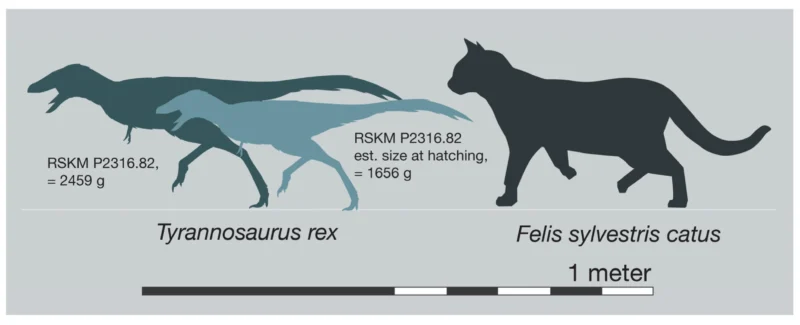
T. rex babies were the size of kittens!
We might think of T. rex dinosaurs as giant apex predators, but they didn’t start out life that way. When T. rex babies hatched from eggs, they were the size of kittens, researchers from the University of Saskatchewan said on November 17, 2026.
Adult T. rexes could span up to 40 feet (12 meters) from nose to tail, and weighed up to 15,000 pounds (7,000 kg). And momma T. rexes would lay from 30 to 100 eggs at a time, says the new study. The emerging pint-sized hatchlings were largely left to fend for themselves, so most T. rex babies likely ended up as prey instead of predators.
The researchers published their peer-reviewed study in the journal Biology on July 7, 2026.
EarthSky’s famous lunar calendar is now available. Our beautiful blue and silver poster shows every day’s moon phase for 2027. Get yours now!
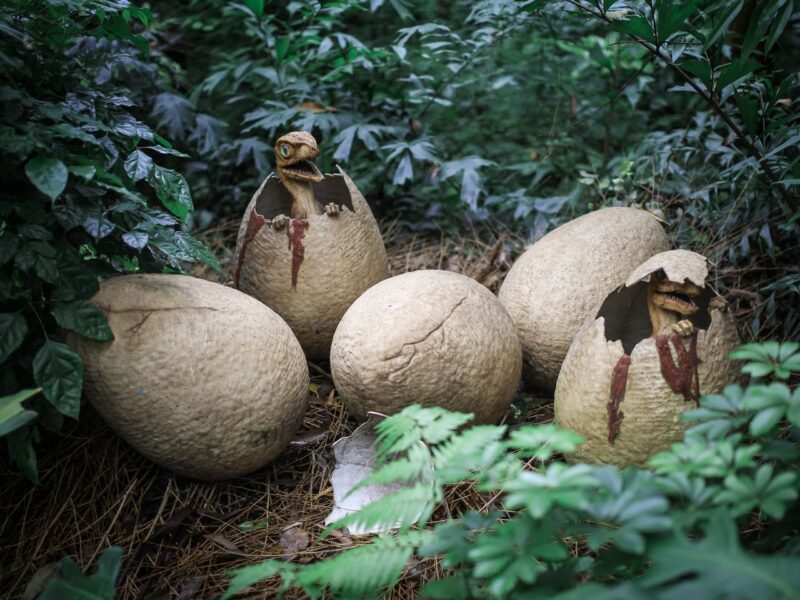
Investigating the T. rex fossils
Nick Longrich of the University of Bath discovered the tiny fossils in museum collections. He and his colleagues called on the help of the Canadian Light Source synchrotron at the University of Saskatchewan for further analysis. A synchrotron produces different kinds of light — such as X-rays — to study specimens at the molecular level.
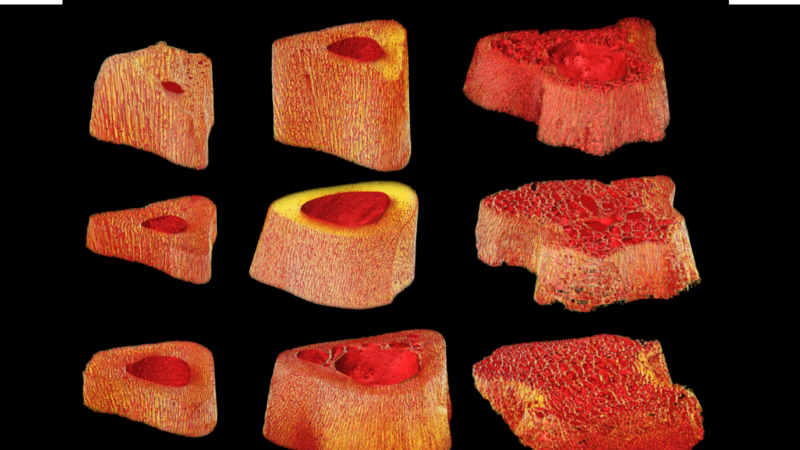
Thus, the synchrotron allowed researchers a closer look inside the fossilized bones. They were able to see blood vessels, growth patterns and changes in bone density in the bones of the T. rex babies. This data led them to a size estimate of the babies. And it also showed that these were indeed fossils from baby T. rexes and not embryos.
What fossils say about the life of a baby T. rex
When animals have a large number of babies instead of few, they are using a strategy known as r-selection. Animals with lots of babies don’t do a lot of parenting. The babies are largely left to fend for themselves, and hopefully with the large numbers it means at least some will survive. (For example, consider the ocean sunfish, which can give birth to 300 million babies at a time!)
Longrich said:
There just would’ve been tons of these little dinosaurs running around. And then you never find them because they all get eaten.
Longrich thinks T. rexes probably did a little parenting, but not much. More than, say, crocodiles and turtles, but less than birds. Longrich said:
They were starting to become better parents, but they weren’t quite there yet. It wasn’t this helicopter parent, like, just, you know, hovering over its offspring, protecting them, feeding them. It’s just kind of a … more of a free-range parent. You know, it’s, ‘Come on, kids. Don’t get eaten. We’re going this direction.’

Watch a short video about the T. rex fossils
Bottom line: T. rex babies were the size of kittens. A new study that analyzed the fossils of juvenile T. rex bones suggests parents were largely hands off.
Source: Hatchlings of Tyrannosaurus rex and the Evolution of Dinosaur Reproductive Strategies
Via University of Saskatchewan
Read more: Why did big, fierce T. Rex have such tiny arms?
Read more: Nanotyrannus, a T. rex mini-me, coexisted with the big guys
Like what you read?
Subscribe and receive daily news delivered to your inbox.
More from
Kelly Kizer Whitt


What do baby stars sound like? Listen to them here!

Visible planets and night sky guide for November
Voyager 1 reaches 1 light-day from Earth!
Mountain-sized asteroid 1999 AN10 to pass close to Earth in 2027