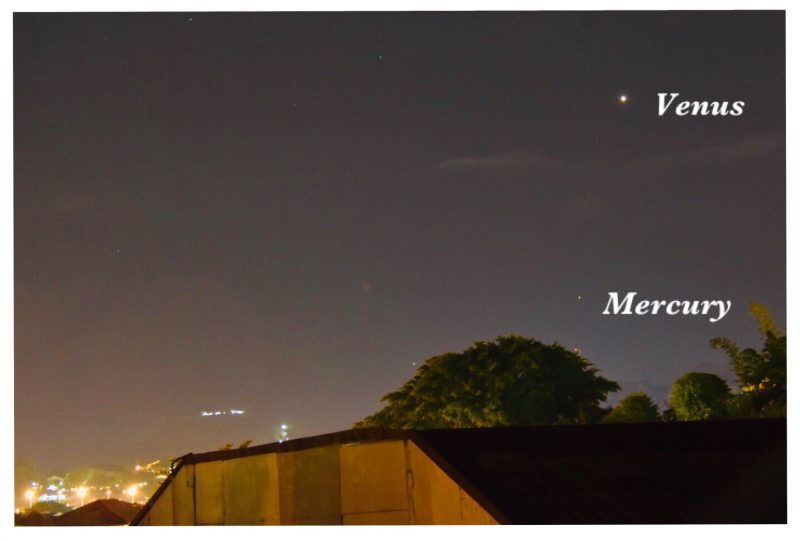
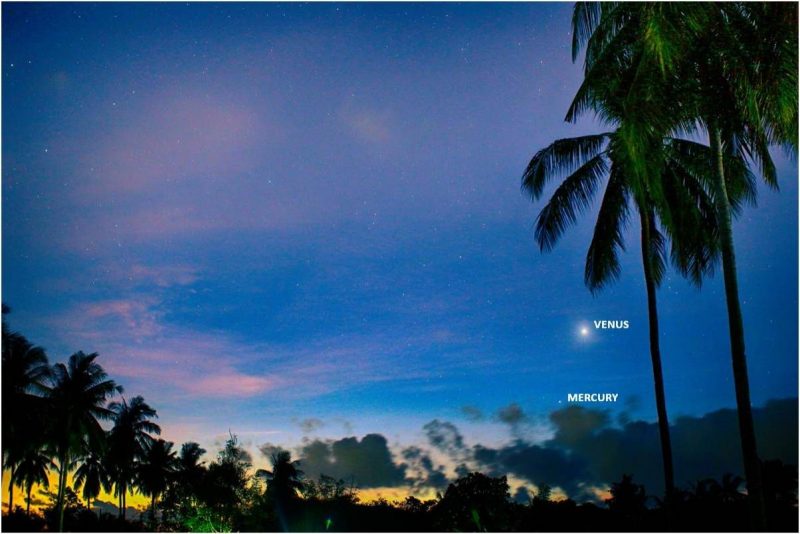
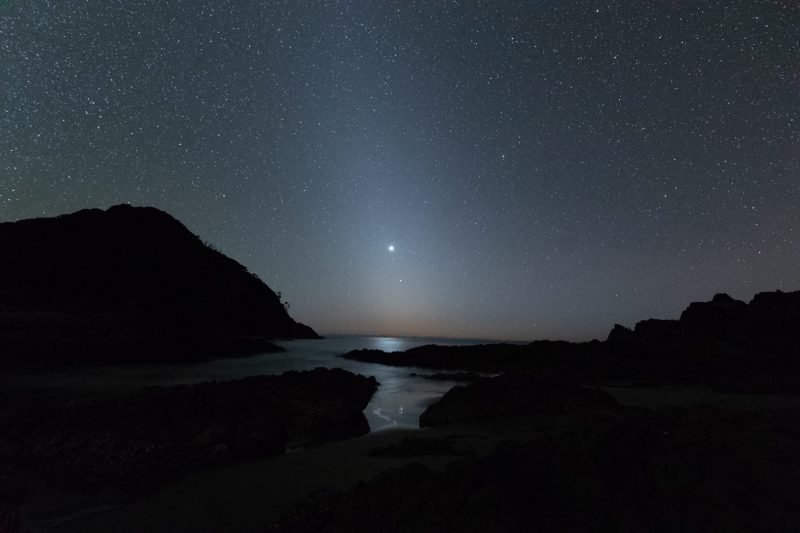
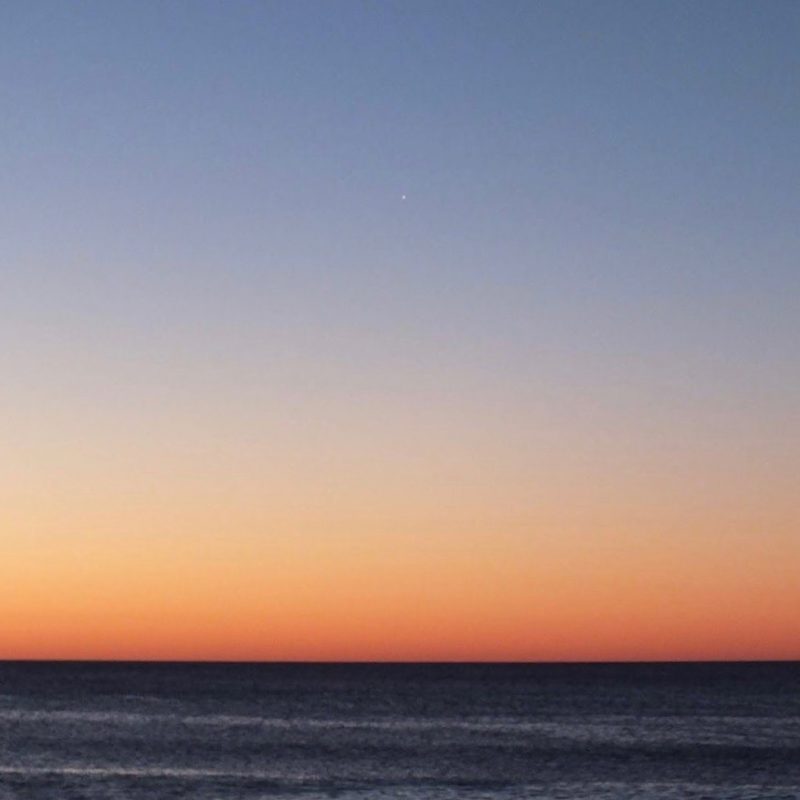
View at EarthSky Community Photos. | Dr Ski in Valencia, Philippines, caught Venus and Mercury on April 16, 2019. He wrote: “Mercury is a tough nut to crack!” And so it was. For those on the northern part of Earth this month, Mercury lived up to its reputation for being elusive. It was there, below Venus, but hard to spot in the dawn. The view from farther south was better. Dr Ski is at about 8 degrees N. latitude. Thanks, Dr Ski!View at EarthSky Community Photos. | Jenney Disimon in Sabah, N. Borneo – at about 6 degrees N. latitude – caught Mercury and Venus on the morning of April 17, 2019. Thanks, Jenney!View at EarthSky Community Photos. | Here’s one more from Dr Ski in Valencia, Philippines. It’s Venus and Mercury on the morning of April 14.View at EarthSky Community Photos. | Deeper in the Southern Hemisphere – where the view of these morning planets was best – Carol Comer caught a glorious view of the zodiacal light along with Venus and Mercury on April 9, 2018. Carol said: “The first time I have ever seen zodiacal light, and to have Venus rising with Mercury not far behind was an incredible sight to see. This is on Great Barrier Island, New Zealand, the first island in the world to be designated a dark sky sanctuary!” Carol was at about 36 degrees S. latitude when she captured this image. Thank you, Carol.View at EarthSky Community Photos. | Many skywatchers on the northern part of Earth’s globe had the same experience as Ragini Chaturvedi in Long Branch, New Jersey – at about 40 degrees N. latitude – whose photo above shows Venus (middle, top of photo) on April 16, 2019. He wrote: “My eyes with binoculars could see Mercury (and for a blink without binos), but I do not find it here.” Thank you, Ragini!
Bottom line: Photos of Mercury and Venus in the morning sky, April 2019. The two were located in the same binocular field – around 4 degrees (width of two fingers at arm’s length) apart on the sky’s dome – around April 16.
Deborah Byrd (asteroid 3505 Byrd) helps edit EarthSky.org and is a frequent host of EarthSky videos. Deborah created the EarthSky radio series in 1991 and founded EarthSky.org in 1994. Prior to that, she had worked for the University of Texas McDonald Observatory since 1976, and created and produced their Star Date radio series. She has won a galaxy of awards from the broadcasting and science communities, including having an asteroid named in her honor in 1990, a Public Service Award from the National Science Board in 2003, and the Education Prize from the American Astronomical Society in 2020. A science communicator and educator since 1976, Byrd believes in science as a force for good in the world and a vital tool for the 21st century. "Being an EarthSky editor is like hosting a big global party for cool nature-lovers," she says.
Like what you read? Subscribe and receive daily news delivered to your inbox.
Thank you! Your submission has been received!
Oops! Something went wrong while submitting the form.