Michael Scully in Hurdle Mills, North Carolina, wasn’t sure what he was seeing in the early morning twilight on May 21, 2018. He wrote:
This was eerie. The “cloud” pattern was the only thing lit up in that part of the sky. If you get a chance and could tell me what this is, I’d be thrilled.
Cool photo, Michael, especially to catch by chance!
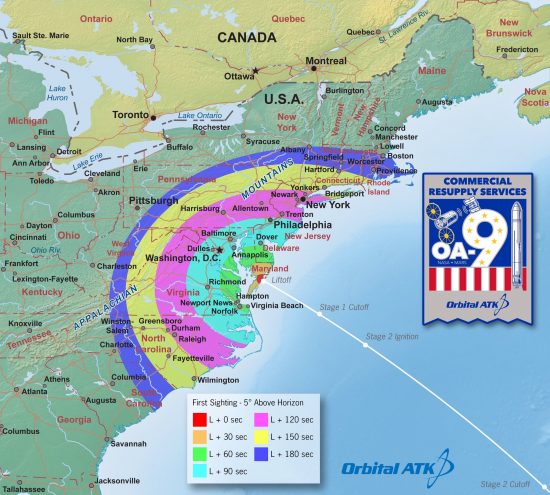
It was exhaust from Monday morning’s launch of an Antares rocket, which was boosting an uncrewed Cygnus cargo ship to space. The cargo ship did reach orbit nine minutes after launch at 4:44 a.m. EDT (08:44 UTC) from Pad-0A of NASA’s Wallops Flight Facility in Virginia. The Cygnus is carrying supplies to the International Space Station. It’s due to arrive at the space station today (Thursday, May 24, 2018).
Michael’s photo was not the only one we received of Monday’s launch from Wallops:

Bottom line: Images of Monday’s launch of an uncrewed Cygnus cargo ship, due to reach the International Space Station on Thursday, May 24.
Like what you read?
Subscribe and receive daily news delivered to your inbox.
More from
Deborah Byrd


Visible planets and night sky guide for October

Stargazing tips! 10 great tips for beginning astronomers
Mars calendar year begins September 30: Happy New Year, Mars!
Alpha Cephei, or Alderamin, is a fast-spinning star