



Blue Origin mega-rocket explosion update
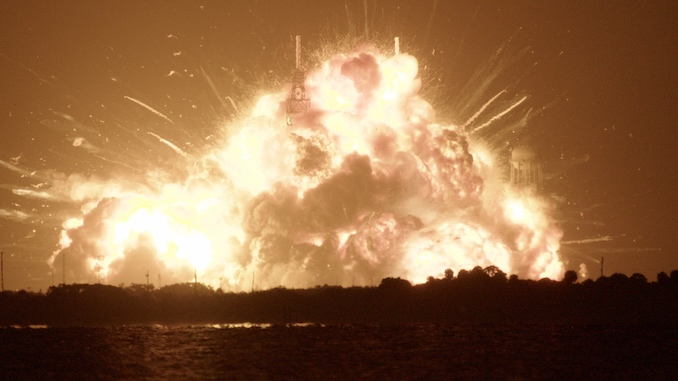
On May 28, 2026, Jeff Bezos’ space company Blue Origin was testing its New Glenn mega-rocket at Cape Canaveral, Florida, when a huge explosion erupted in a fireball that you could see on the other side of the state. It was one of the largest rocket explosions in U.S. history. Fortunately, no one was injured in the blast. And on June 1, 2026, Blue Origin finally released more information about the explosion. Dave Limp, the CEO of Blue Origin, posted the following on X:
Some LC-36 [Launch Complex 36] updates. Now that we’ve had access to the pad and integration facility we can share a bit of good news. The propellant farm, oxygen, liquid hydrogen and LNG tanks are all in good shape. This is good luck because these are very long lead items. The water tower is also good. The big support tower is damaged, but it can be repaired in place rather than torn down and replaced. The booster “Never Tell Me The Odds” and the three GS-2s [New Glenn rocket upper stages] that were onsite in the integration facility also look good.
I’ve seen some speculation that we might move directly to the 9×4 configuration, but we won’t do that. Rate manufacturing of 7×2 is going well, and we’re going to continue that at pace as planned and store the stages for use. In addition, we had already been working for some time on eliminating our transporter-erector in favor of an alternative vertical conop, and we’ll now go directly to that; so we don’t need a new transporter-erector.
We will fly again before the end of this year. Gradatim Ferociter [step by step ferociously].
What does it mean?
The explosion happened at Launch Complex 36, or LC-36. The propellant farm that Limp refers to are the storage tanks that hold fuel and related materials, such as liquid oxygen and hydrogen. Those can take years to replace, but fortunately Limp reports that they are in good shape.
The water tower is part of the fire suppression system and is also in good shape, Limp says. And the support tower was damaged but will not have to be demolished and rebuilt. Instead they will be able to repair it where it stands. You can see a satellite view of the launchpad from after the explosion here.
One first-stage booster (Never Tell Me The Odds) and three second-stage boosters are also in good shape. As for the configuration of the rocket, at this time Blue Origin is going to continue with the configuration it was already using, the 7×2 design.
It is, overall, an optimistic message. Time will tell if Blue Origin indeed resumes its launch schedule before the end of the year.
What sort of rocket was it?
The Blue Origin rocket is one of the largest operational or near-operational rockets on Earth. It belongs to the class of Heavy Lift Launch Vehicles (HLLVs). These rockets are about 98 meters (322 feet) tall, or roughly the height of a 32-story building.
NASA had just announced in May that Blue Origin would play a major role in carrying payloads to the moon for its planned moon base. And this is the rocket design that will play a role in those moon missions.
This Blue Origin rocket is designed to carry up to 45 metric tons (nearly 100,000 pounds) of cargo to low Earth orbit (LEO) in its fully reusable configuration. That’s roughly equivalent to launching three fully loaded commercial school buses into space at the exact same time.
The Blue Origin explosion came during testing
Blue Origin was performing a test ahead of an anticipated launch of the new rocket in the coming weeks. The coming launch was supposed to carry Amazon Leo internet satellites to space.
So the rocket was likely fully fueled, contributing to what is one of the largest rocket explosions in U.S. history and the worst failure in Blue Origin’s existence, according to media sources.
Before this, Blue Origin’s most notable inflight “anomaly” happened with an uncrewed New Shepard suborbital mission (NS-23) in 2022. Its capsule escape system safely triggered, but the booster hit the ground and was destroyed. And, before last night’s explosion, the company had never lost a massive, orbital-class vehicle like the New Glenn, let alone experienced a catastrophic pad explosion of this magnitude.
While the explosion caused significant damage to Launch Complex 36, Amazon confirmed that the 48 Amazon Leo (formerly called Project Kuiper) internet satellites scheduled for the upcoming flight were not yet loaded onto the rocket during the test.
What sort of test was it?
During the test, the rocket’s engines were ignited at full thrust while the vehicle was securely clamped down to the launchpad. That is what is known as a static fire test (also called a static hotfire test). It’s a common pre-launch procedure in aerospace engineering.
The primary goal is to test the rocket’s propulsion system and overall readiness under flight-like conditions without actually letting it lift off.
Bottom line: Blue Origin CEO Dave Limp gave an update on June 1, 2026, about the explosion that occurred during testing of its New Glenn mega-rocket at Cape Canaveral, Florida, on May 28, 2026.
Like what you read?
Subscribe and receive daily news delivered to your inbox.
More from
Deborah Byrd


Visible planets and night sky guide for October

Flashing star in autumn? Here are 3 candidates
Stargazing tips! 10 great tips for beginning astronomers
Mars calendar year begins September 30: Happy New Year, Mars!



