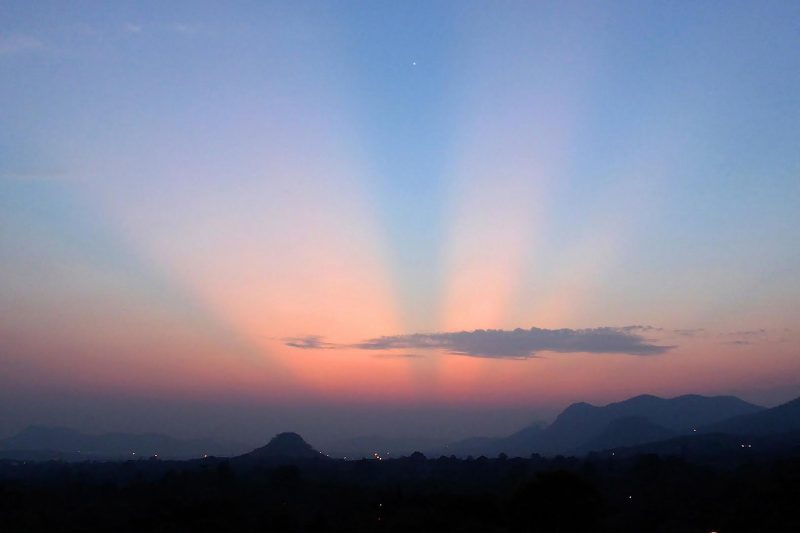
Venus has been in our evening sky since August, but it has been low in the sky ad not very noticeable. Beginning around now, though, Venus is becoming much easier to see. Watch for it as soon as the sky darkens, in the west, near the place where the sun went down. You can’t miss it! Peter Lowenstein wrote of the photo above:
This single photograph was taken about 20 minutes after the sun had set through a low layer of smoke haze using a Panasonic Lumix DMC-TZ60 camera in sunset scenery mode. No color enhancement or superimposition of images was required to produce this faithful rendition of what was observed.
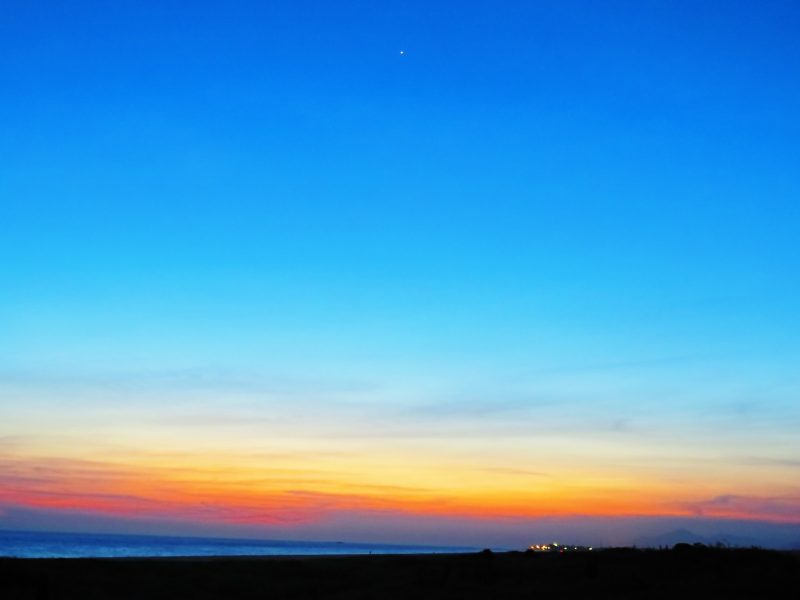
Helio C. Vital wrote of his image of Venus:
Local time was 7:19 p.m., and sunset had occurred only 20 minutes earlier.
Canon PowerShot SX60 HS camera on tripod in auto mode for sunset.
Five shots were piled into one to reduce noise with Registax.
By the way, if you’re up before dawn, you’ll find another very bright planet in the east before sunrise. It’s Jupiter.
Like what you read?
Subscribe and receive daily news delivered to your inbox.
More from
Deborah Byrd


Visible planets and night sky guide for October

Stargazing tips! 10 great tips for beginning astronomers
Mars calendar year begins September 30: Happy New Year, Mars!
Alpha Cephei, or Alderamin, is a fast-spinning star