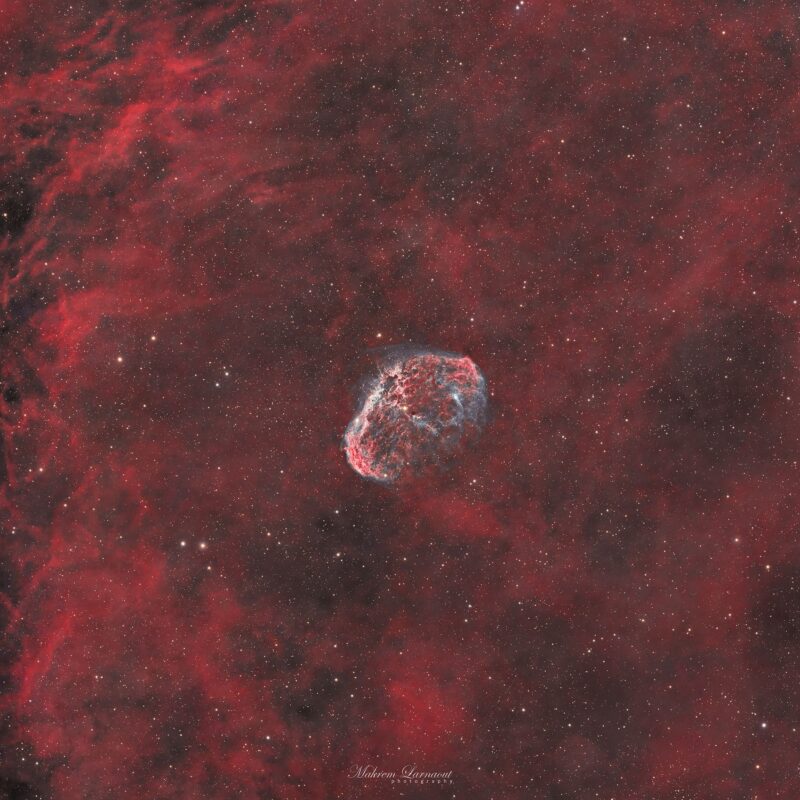
View at EarthSky Community Photos. | Makrem Larnaout in Tunis, Tunisia, captured the Crescent Nebula in the constellation Cygnus on June 6, 2024. Makrem wrote: “The image shows the gas clouds in red thanks to the hydrogen-alpha filter, highlighting the complex structure of the nebula. At center, you can admire the Crescent Nebula, formed by the powerful stellar winds of a dying Wolf-Rayet star. I am thrilled to share this interstellar journey with you!” Outstanding image. Thank you, Makrem. See more deep-sky photos from June below.
Stunning deep-sky photos from our community
The EarthSky community has many talented astrophotographers who capture stunning images of the deep sky. We gathered here some of the best deep-sky photos we received in June 2024 for you to enjoy. Do you have some of your own deep-sky images to share? You can submit them to us here. We love to see them!
Deep-sky photos of diffuse nebulae
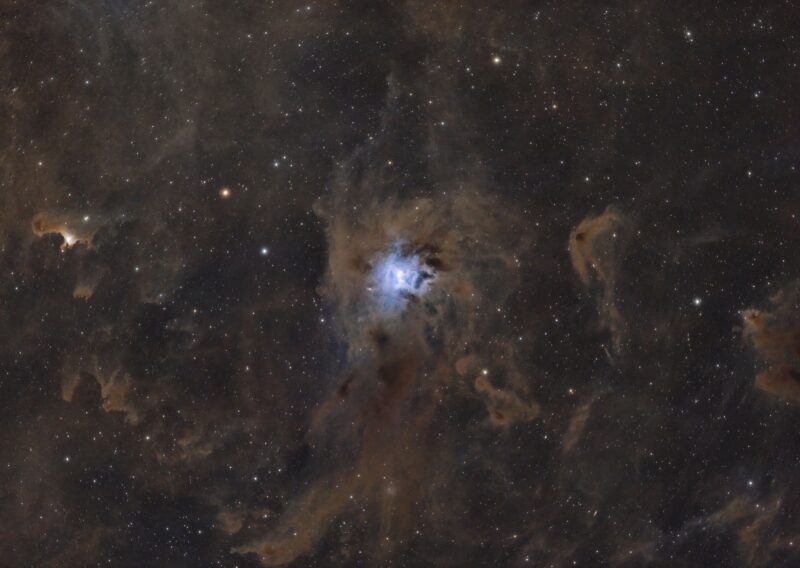
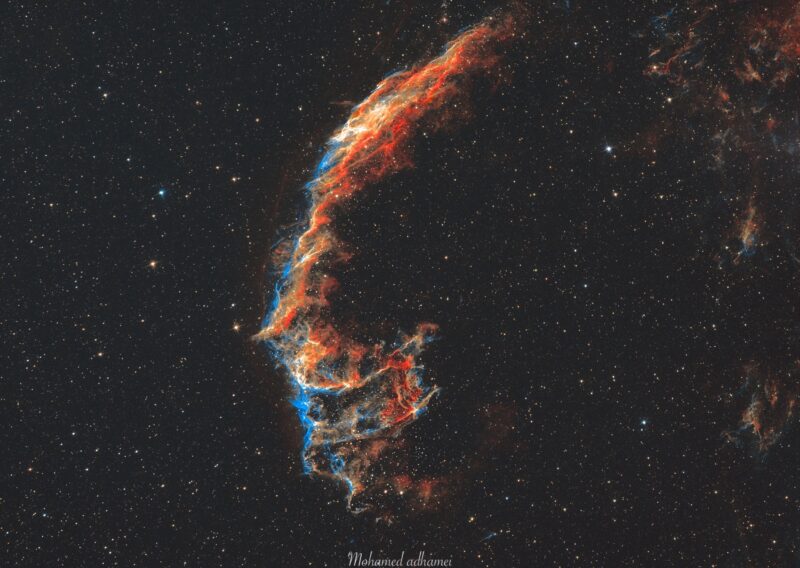
View at EarthSky Community Photos. | Andrew Warner in Fort Davis, Texas, captured the Iris Nebula in the constellation Cepheus on June 4, 2024. Andrew wrote: “The Iris Nebula appears bright blue due to light reflected from the bright, hot star V380 Cephei. The dusty area surrounding the Iris consists of dark molecular clouds and interstellar dust grains. These dust grains scatter and absorb light from nearby stars, creating intricate patterns and structures.” Thank you, Andrew!View at EarthSky Community Photos. | Mohamed Alaa in Alkut, Iraq, captured the Veil Nebula in the constellation Cygnus on June 7, 2024. Mohamed wrote: “The Veil Nebula consists of an emission nebula and a reflection nebula about 1,500 light-years away. This gathering is the remains of a supernova, which exploded about 18,000 years ago.” Thank you, Mohamed!
More nebulae
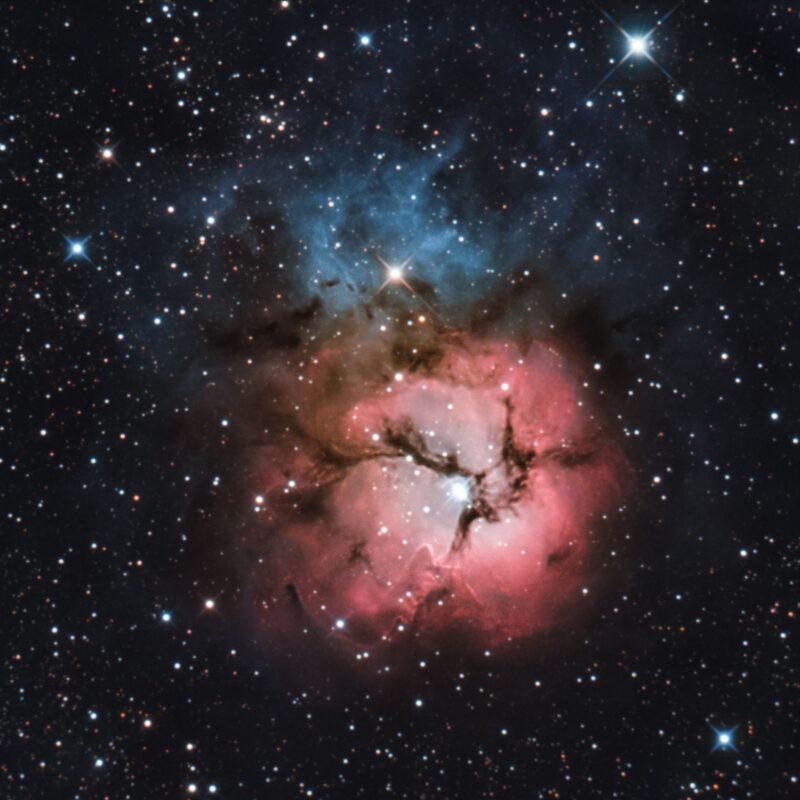
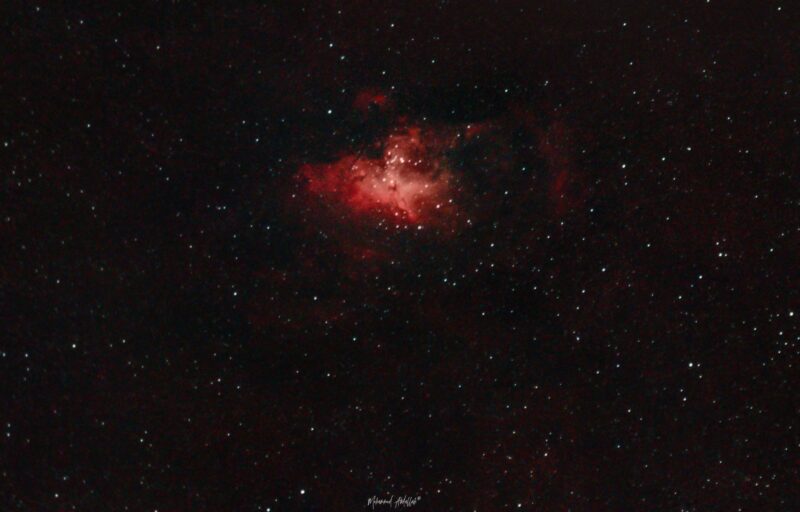
View at EarthSky Community Photos. | Andrea Iorio in Marino, Rome, Italy, captured this image on June 26, 2024. Andrea wrote: “The Trifid Nebula, M20, is an amazingly complex and photogenic nebula in the constellation Sagittarius. It contains a red hydrogen-alpha emission nebula with dark absorption nebula lanes which gives the object distinct lobes. Above the object is a blue reflection nebula where interstellar dust reflects the light of bright blue stars.” Thank you, Andrea!View at EarthSky Community Photos. | Mohammed Abdallah in Suez, Egypt, captured the Eagle Nebula in the constellation Serpens on June 5, 2024. Mohammed wrote: “I’ve shot the Eagle Nebula many times before. But this is the first time I shot it with the Pillars of Creation very visible. It was tricky from Bortle 8 and I’m happy about with this result.” Thank you, Mohammed!
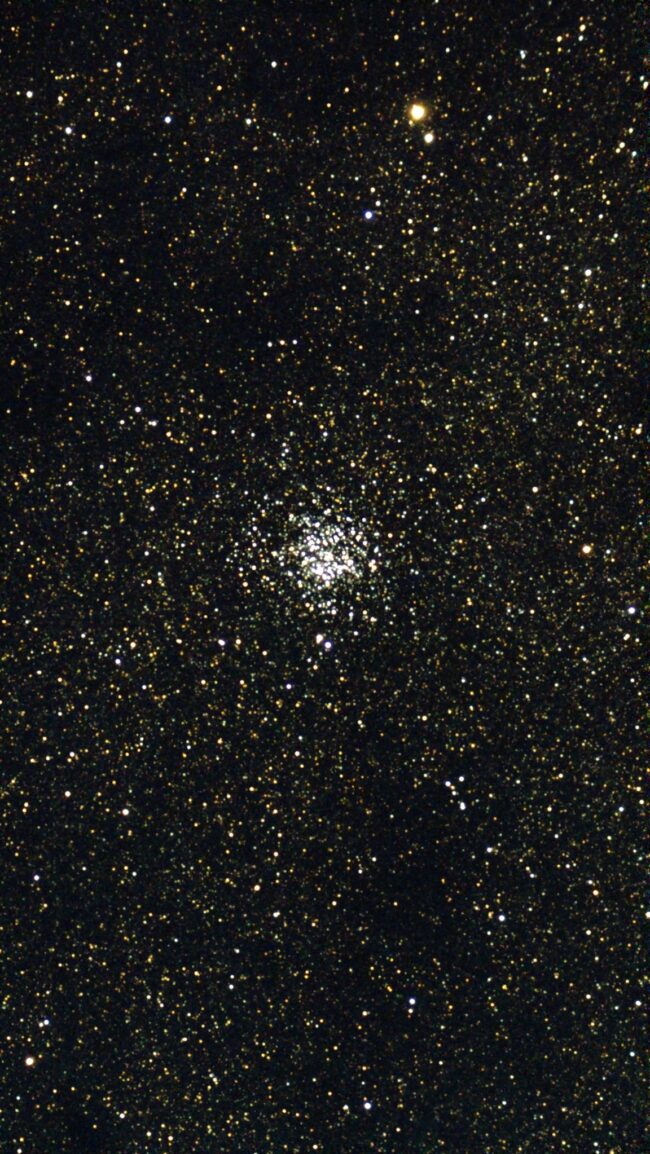
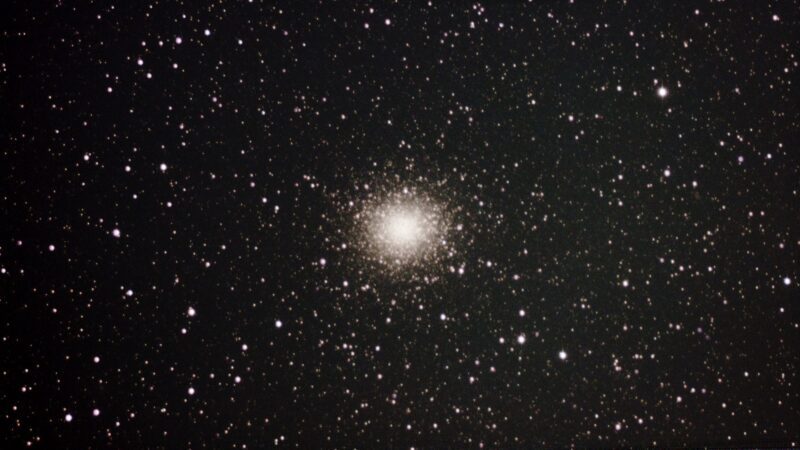
View at EarthSky Community Photos. | Guido Santacana in San Juan, Puerto Rico, captured this globular cluster on June 12, 2024. Guido wrote: “NGC 5139, or Omega Centauri, was taken in the midst of a large power blackout, which improved viewing conditions from the usual Bortle class 8, to about class 5 and possibly 4. The sky was not only clear but also transparent, which is an unusual occurrence for the tropical summer.” Thank you, Guido!
Deep-sky photos of galaxies
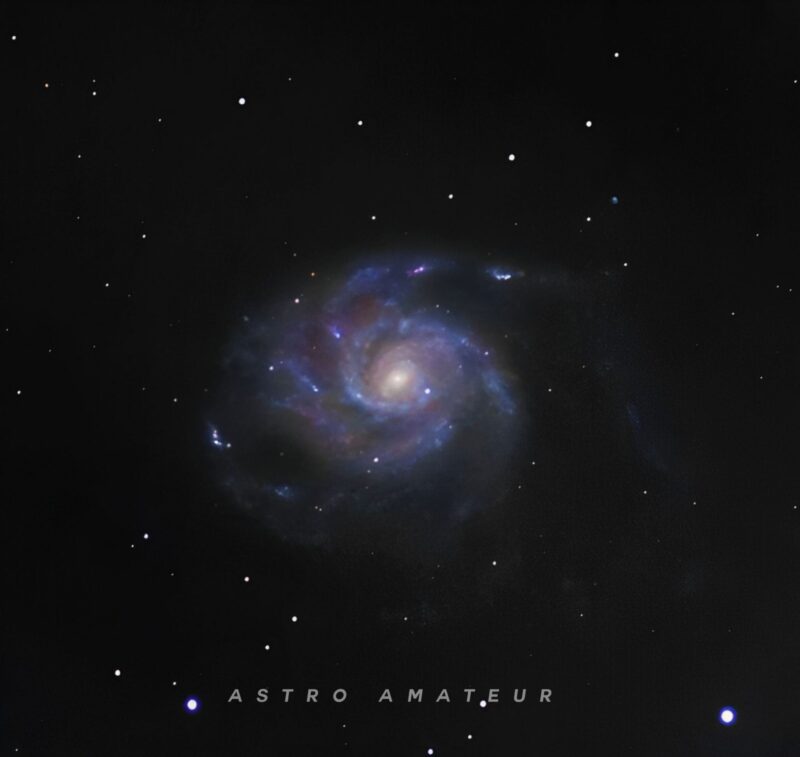
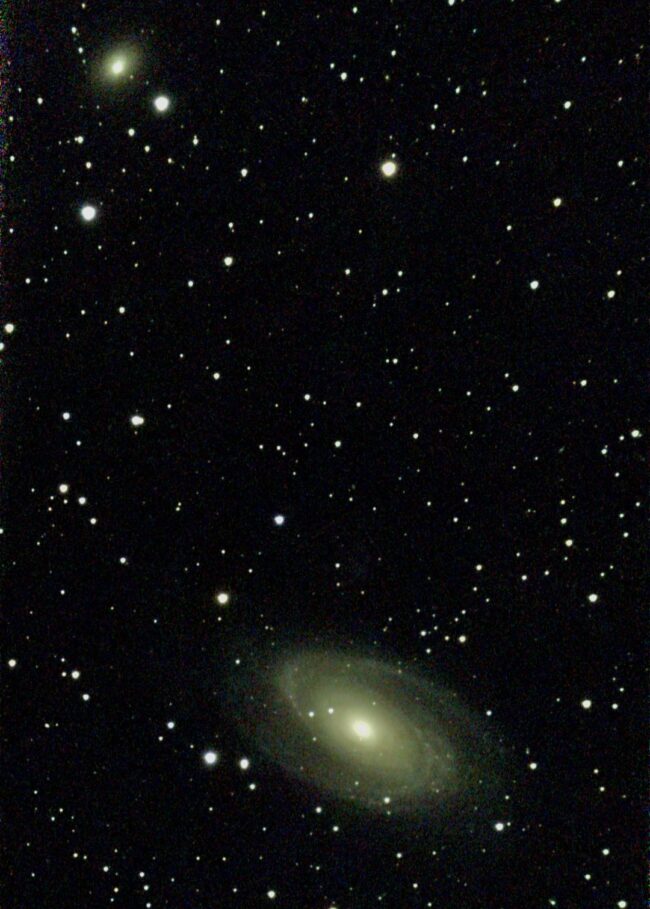
View at EarthSky Community Photos. | Kshitij Maurya in Bhadohi, Uttar Pradesh, India, captured Messier 101 on June 26, 2024. Kshitij wrote: “The stunning Pinwheel Galaxy in the constellation Ursa Major is about 20 to 25 million light-years from Earth. I spent 6 sleepless nights on a mission.” Thank you, Kshitij!View at EarthSky Community Photos. | Fred Holman in Contoocook, New Hampshire, captured Messier 81 on June 5, 2024. Fred wrote: “M81 (or Bode’s Galaxy) and NGC 3077 (upper left). M81 is a grand-design spiral galaxy located about 12 million light-years away in the constellation Ursa Major. NGC 3077, part of the M81 galaxy group, is a small disrupted elliptical galaxy also about 12 million light-years away.” Thank you, Fred!
And a group of galaxies
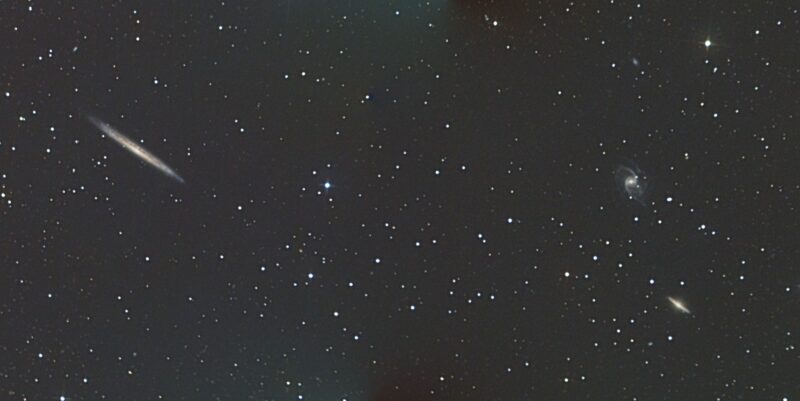
View at EarthSky Community Photos. | Kris Hazelbaker in Grangeville, Idaho, captured this image on June 13, 2024. Kris wrote: “I love finding and capturing multiple galaxies in a single picture. This is the Splinter Galaxy and a couple of ‘neighbors’ (from our viewpoint), found in the constellation Draco.” Wonderful shot. Thank you, Kris!
Bottom line: Enjoy this gallery of deep-sky photos for June 2024 from our EarthSky community. And if you have a great photo to share, send it in. We love to see them!
Armando is known primarily as an astronomy educator, after 30+ years of extensive public outreach and 10 years teaching in colleges. As one of only a handful of science communicators in Puerto Rico during Comet Halley's last visit, he assumed a pioneering role starting in 1985 when science was just beginning to enter the collective mindset. Over the years, his work as a teacher, speaker and writer, inspired people to pursue interests in science and brought enduring change to Puerto Rican culture. After being accepted into the 2014–2015 Antarctic season of PolarTREC, Armando was assigned to the Amundsen-Scott South Pole Station, where in 2015 he successfully conducted 10 days of work at the IceCube Neutrino Observatory. His affiliations include Ana G. Méndez University, Cupey campus (2014 to 2021), the University of Puerto Rico, Aguadilla campus (2015 to 2017), NASA JPL's Solar System Ambassadors (2004 to 2006), and NASA Space Grant (2017 to 2019) where he served as an affiliate representative.
Like what you read? Subscribe and receive daily news delivered to your inbox.
Thank you! Your submission has been received!
Oops! Something went wrong while submitting the form.