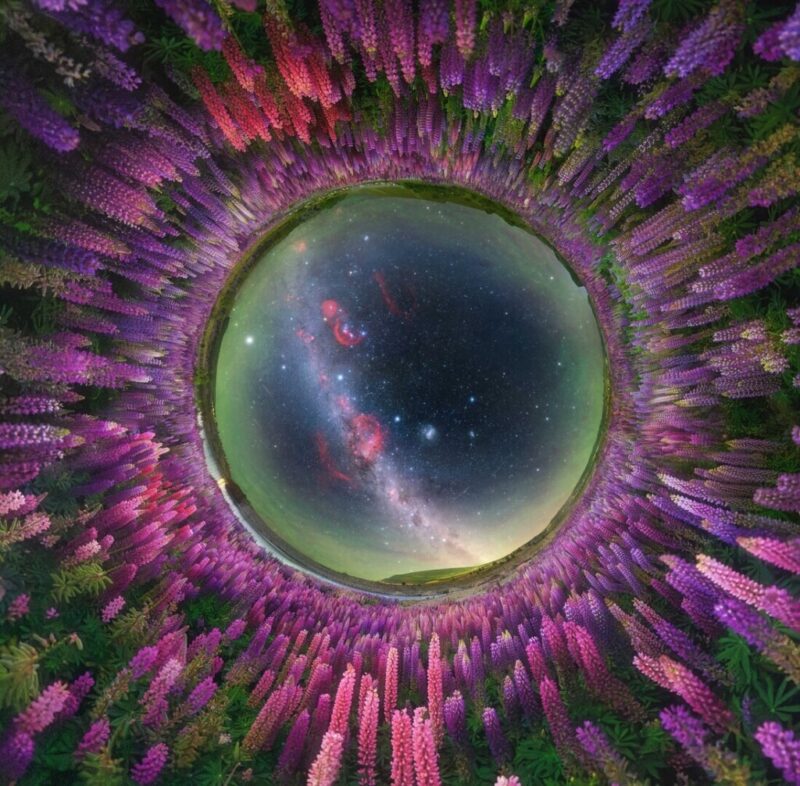
Here’s the winning entry for the annual Milky Way Photographer of the Year contest, curated by the travel blog Capture the Atlas. Alvin Wu, the winning photographer, wrote: “This image captures the Milky Way rising above a blooming field of lupines in New Zealand during November. That’s when spring wildflowers transform the landscape beneath our night sky. Using a fisheye perspective, the flowers encircle the scene … ” See more of the best Milky Way photos of 2026 below.
In its 9th year, 2026, the annual Milky Way Photographer of the Year contest – from the travel blog Capture the Atlas – received a record number of submissions. Dan Zafra and his team combed through 6,500 entries before deciding on this year’s 25 winners. We’ve narrowed those down to 10 to share with you here.
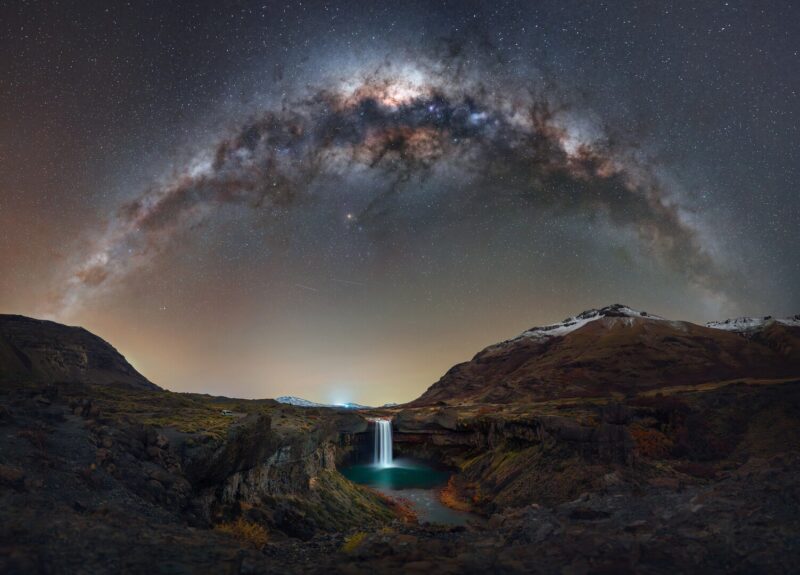
Alejandra Heis captured this winning image at Salto del Agrio in the province of Neuquén, Argentina. Alejandra wrote: “It’s a place that invites reflection on the immense sequence of events, both on Earth and in the sky, that shaped this landscape. The 45-meter (150 foot) waterfall plunges into a canyon carved by ancient lava flows from the Copahue volcano. Surrounded by basalt, the scene is enriched by the vivid colors left behind by minerals, particularly iron and sulfur carried by the Agrio River.”
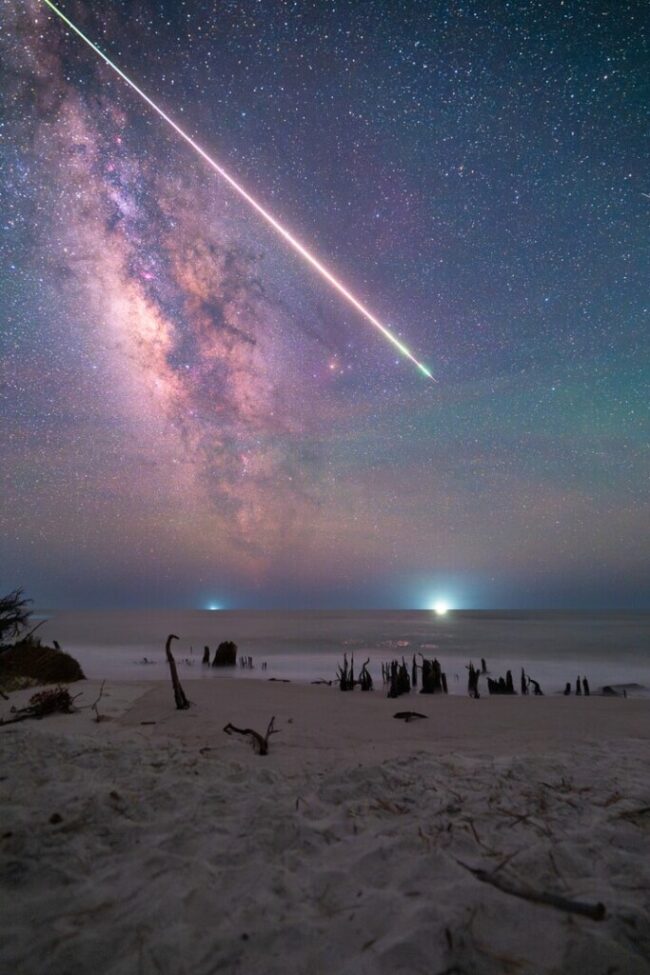
Fireball in Paradise by Jason Rice
Jason Rice captured this Milky Way image from Cape San Blas, Florida. Jason wrote: “This single-exposure image became a reminder to always expect the unexpected in astrophotography. The capture was part of a larger day-to-night time-lapse that I began shooting at golden hour. Several hours later, shortly after midnight, I noticed the ground around me suddenly illuminated by a green glow, prompting me to look up. What followed was the largest meteor I have ever witnessed. It moved slowly across the Milky Way for nearly 5 seconds. And the glowing trail left behind by the fireball remained visible for almost 15 minutes.”
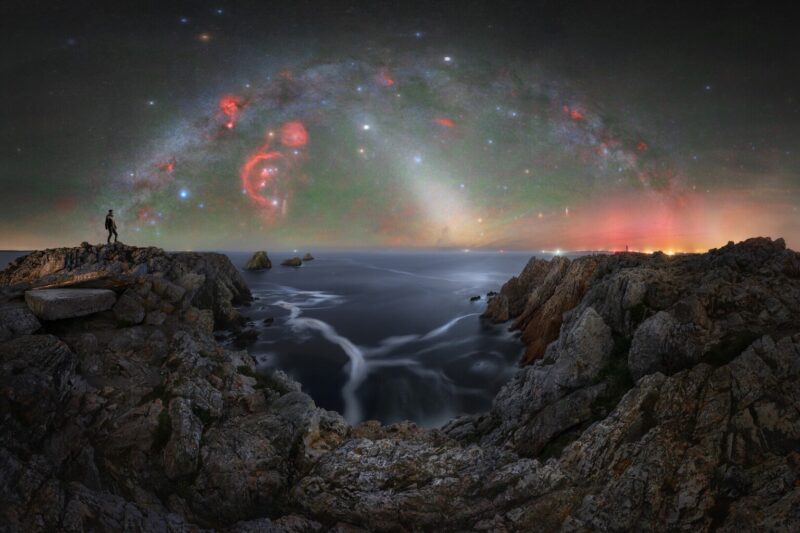
Where Earth Meets the Cosmos by Andrea Curzi
Andrea Curzi captured this image from Bretagne, France. Andrea wrote: “I was positioned on the Pen Hir peninsula, scouting for a wide panoramic composition of the Milky Way. I noticed an unexpected red glow in the sky, aurora. As the night unfolded, zodiacal light also became visible, adding yet another rare element to the scene.”
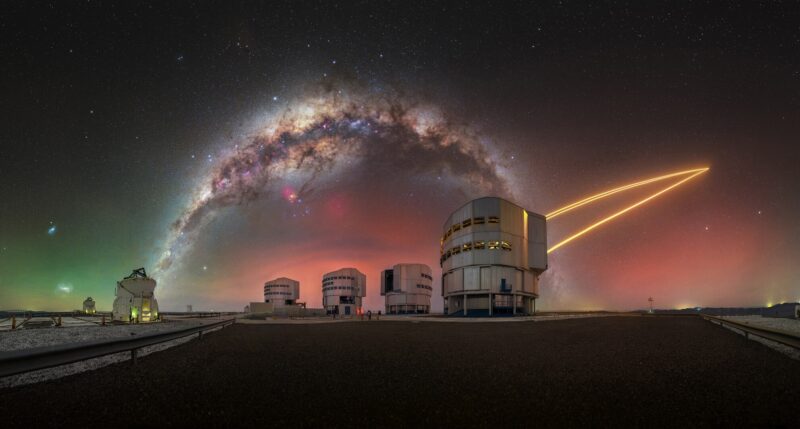
Sodium Milky Way by Julien Looten
Julien Looten captured this shot from the Very Large Telescope on Cerro Paranal, Chile. Julien wrote: “The Milky Way stretches across the sky, with its dense central bulge rising prominently overhead. To the left, the Magellanic Clouds, two neighboring satellite galaxies, are visible to the unaided eye from the Southern Hemisphere. Subtle airglow adds another layer to the scene, a natural emission produced by chemical reactions in the upper atmosphere at altitudes of 80 to 100 kilometers (50 to 62 miles).”
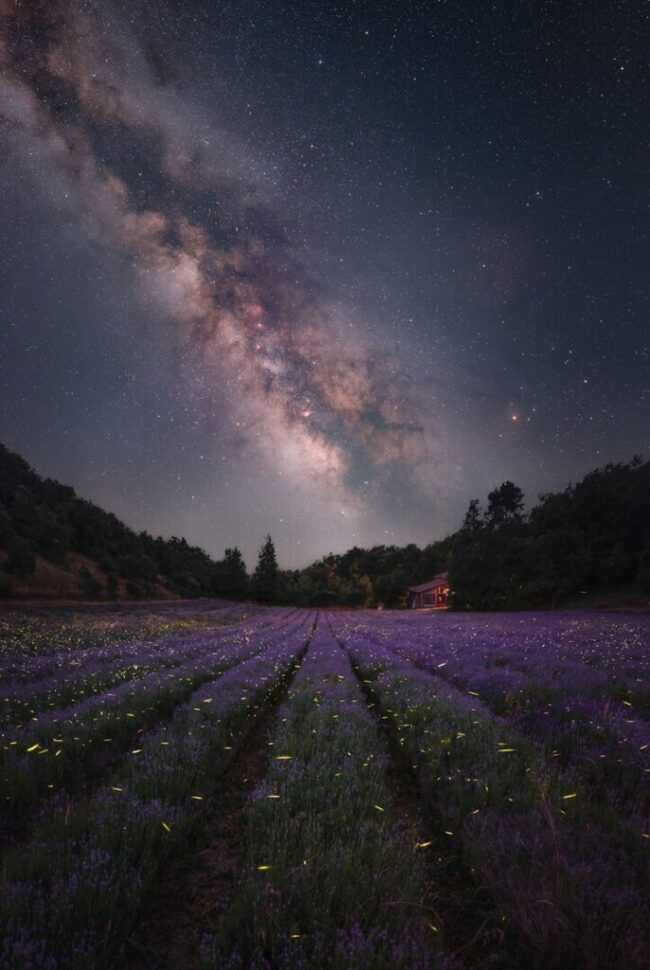
The Garden of Stars by Luca Fornaciari
Luca Fornaciari captured this image from Appennino Bolognese, Italy. Luca wrote: “Among rows of blooming lavender, the air filled with fragrance, fireflies appeared like small lanterns beneath a sky dominated by the summer Milky Way, a perfect meeting between the wonders of Earth and the night sky above.”
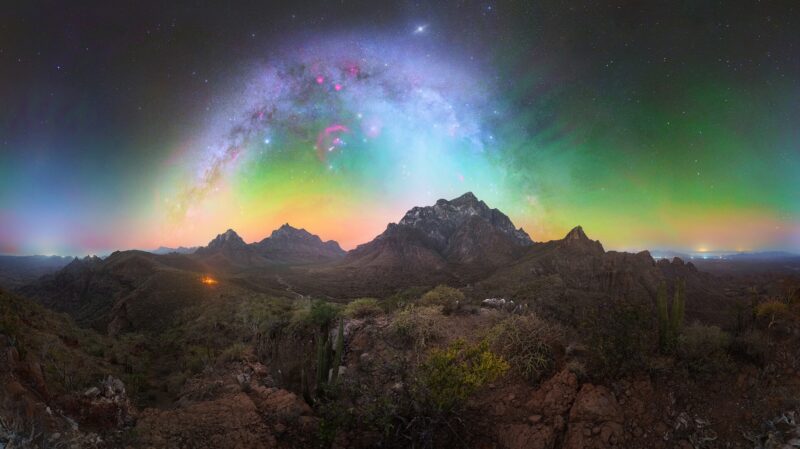
Standing on the Shoulders of Giants by Nacho Peláez
Nacho Peláez caught this winning image and wrote: “I captured this photograph in the heart of the Sierra La Giganta, in Baja California Sur, Mexico, following a 2-day expedition from the small village of San Juan Londo. The final approach required an ascent of more than 800 meters (2,600 feet) by mule along a long-forgotten section of the historic Camino Real, once used by vaqueros and their donkeys to transport goods between remote settlements.”
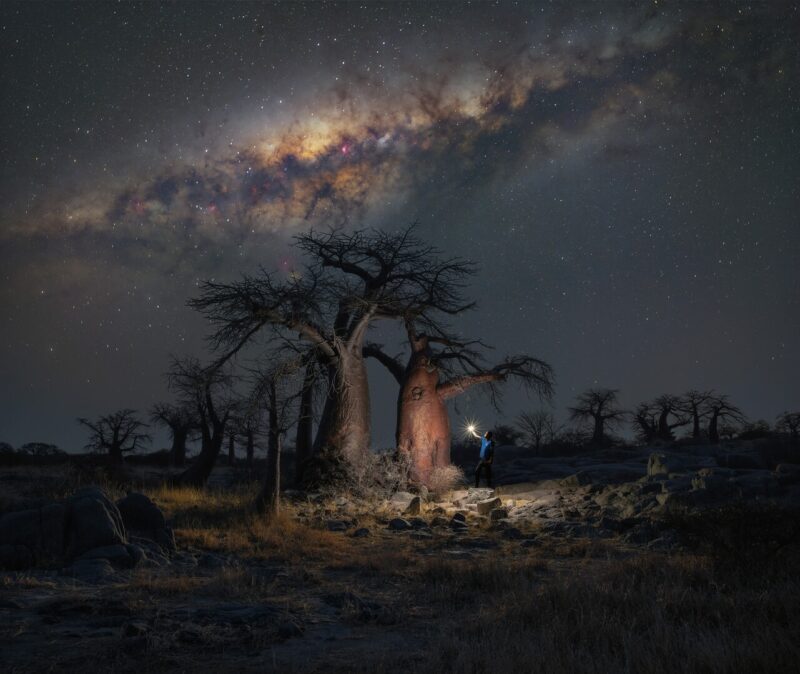
Botswana Baobabs by Night by Stefano Pellegrini
Stefano Pellegrini captured the Milky Way with baobab trees in Botswana, in southern Africa. Stefano wrote: “I spent 10 days traveling through Botswana, living out of my car and moving through remote desert landscapes. The island itself was covered with baobab trees, scattered in small groups or standing alone, each one offering a striking subject under the night sky. This particular group stood out to me the most. Alone in the darkness, I took my time shaping the scene, using a torch to carefully light-paint the foreground.”
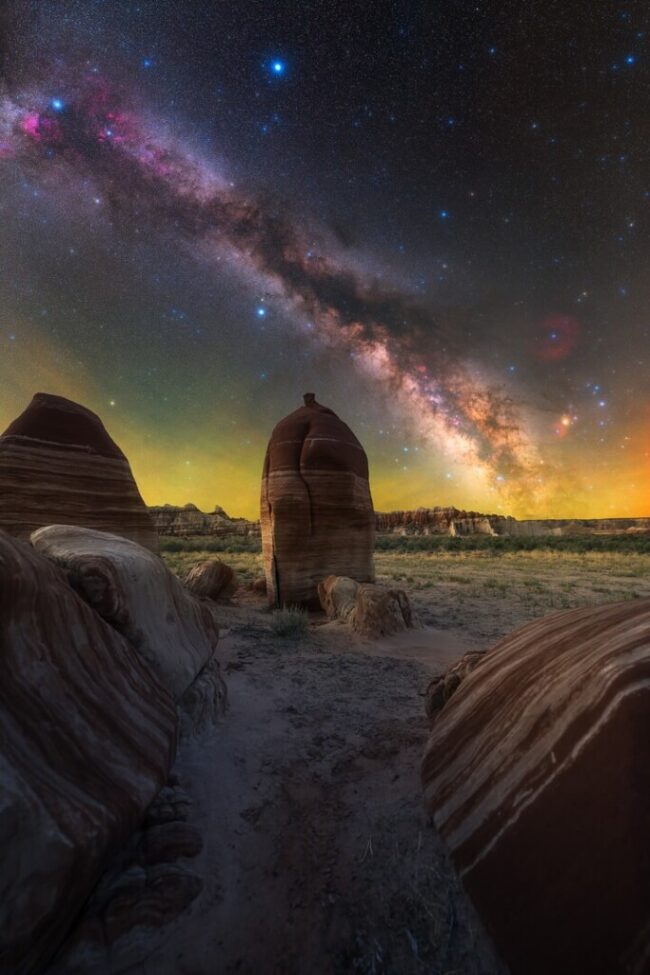
Galactic Spine by Andrew Imhoff
Andrew Imhoff captured this shot from the Hopi Reservation in Northern Arizona. Andrew wrote: “I am drawn to Milky Way photography because of its ability to spark curiosity. It offers a perspective that feels entirely different from other forms of photography, often revealing a world that many people have never experienced. With my images, my goal is to inspire that same sense of curiosity, encouraging others to imagine what it feels like to stand beneath a sky like this and witness it with their own eyes.”
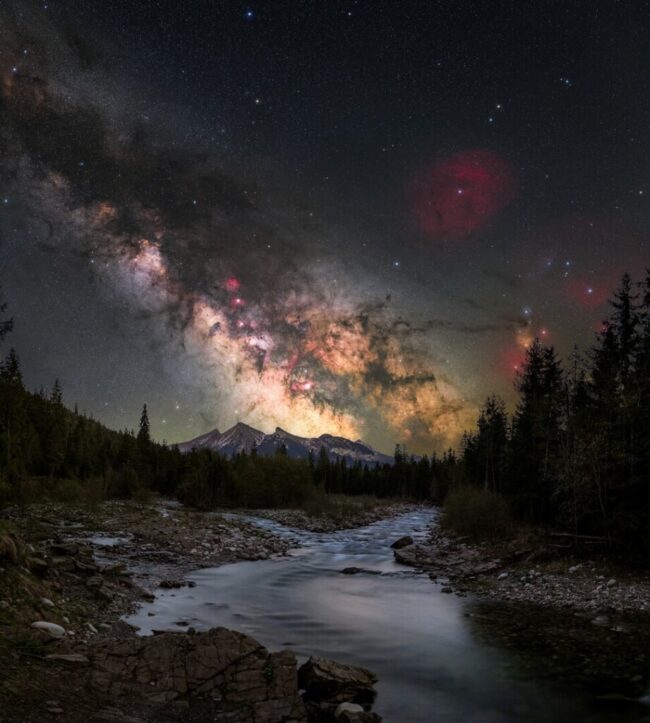
Milky Way Over the Tatra Mountains by Lukasz Remkowicz
Lukasz Remkowicz captured this scene from Jurgow, Poland, and wrote: “From this vantage point, the Milky Way rises above the Tatra Mountains, which in early spring still carry the lingering traces of winter. What drew me most to this scene was the contrast between the dark, rugged landscape and the richness of the sky. The galactic core emerges just above the mountain horizon, accompanied by the subtle colors of the dust and nebulae within the Rho Ophiuchi region.”
Bottom line: See 10 of the best Milky Way photos from across the globe, from the 2026 Milky Way Photographer of the Year contest, sponsored by Capture the Atlas.
Kelly Kizer Whitt writes and edits some of the most fascinating stories at EarthSky.org. She's been writing about science, with a focus on astronomy, for decades. She began her career at Astronomy Magazine and made regular contributions to other outlets, including AstronomyToday and the Sierra Club. She has nine published books, including a children's picture book, Solar System Forecast, and a young adult dystopian novel, A Different Sky.
Like what you read? Subscribe and receive daily news delivered to your inbox.
Thank you! Your submission has been received!
Oops! Something went wrong while submitting the form.