Sun news October 23: Active sunspot grows more powerful
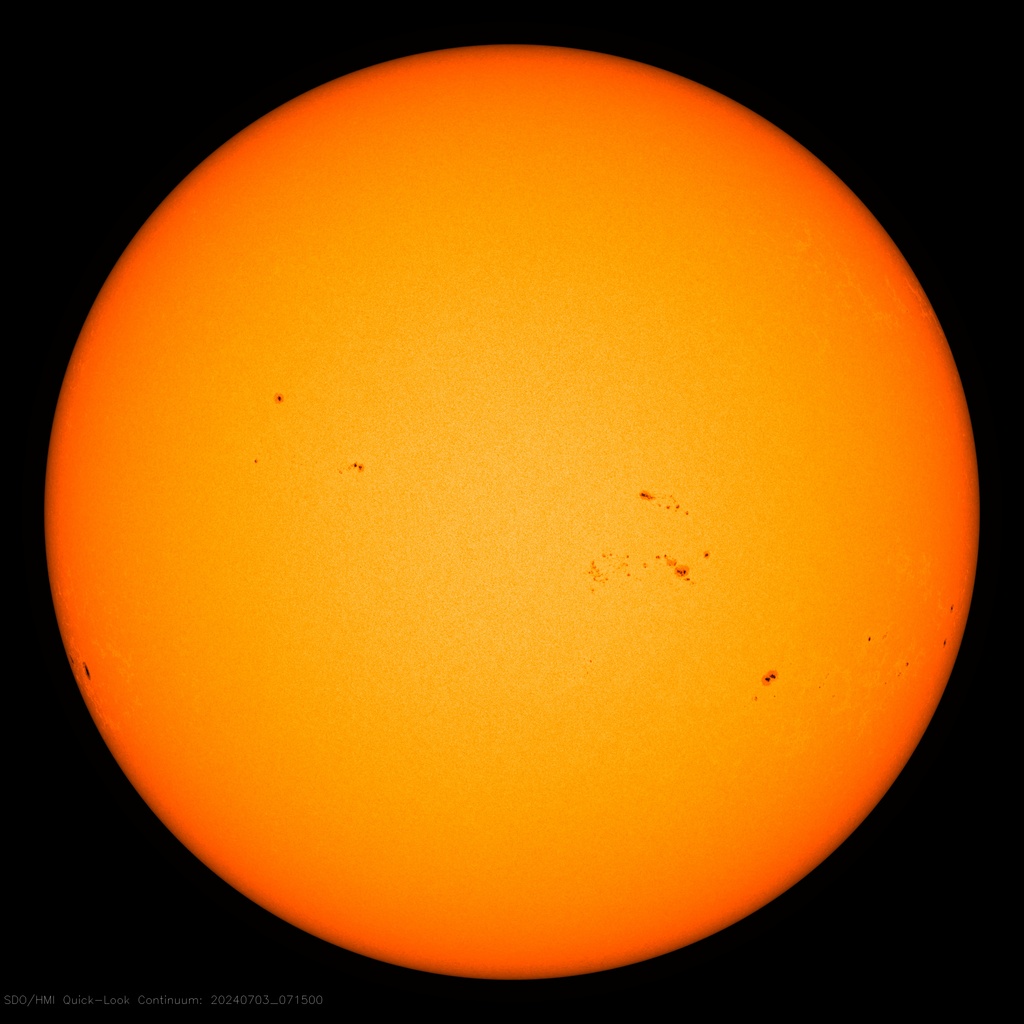
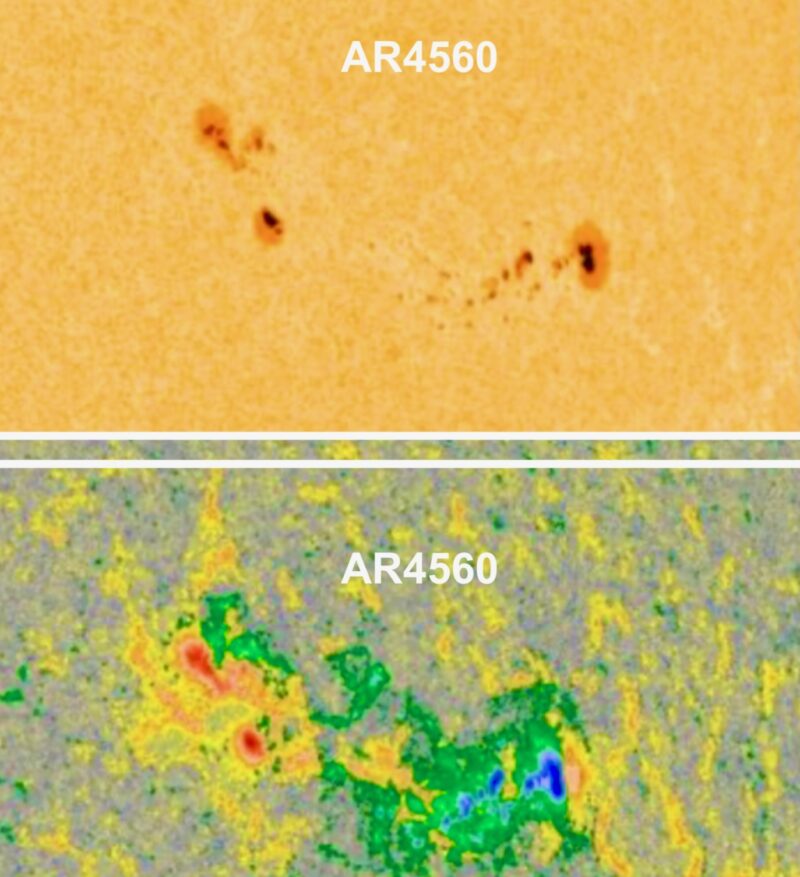
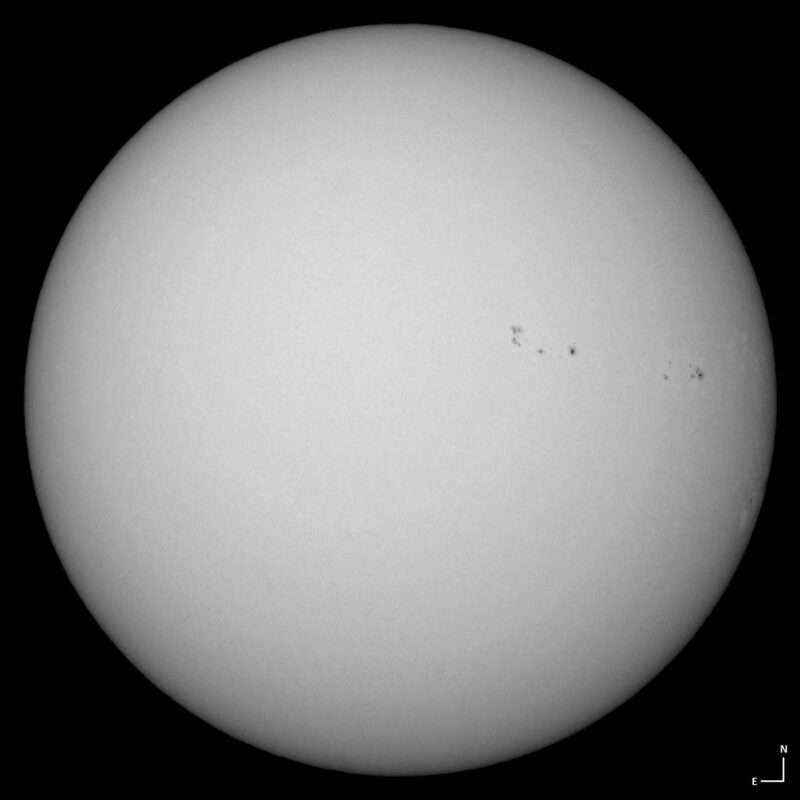
Today’s top story: August 2024 was the peak in raw monthly numbers of sunspots for Solar Cycle 25. That month saw 216 sunspots. Right now, there are only two numbered sunspots on the Earth-facing solar disk! Yet one of them just surprised us. AR4560, in the sun’s northwest quadrant, grew rapidly and developed a delta in its magnetic configuration. That’s a sign that M and even X flares might be imminent. In fact, AR4560 became the top flare producer, firing the strongest flare, a C3.3, at 5:42 UTC on October 23. This is the guy to watch.
Meanwhile, fast solar wind from a coronal hole kept Earth’s magnetic field active over the past day. It reached Kp 4 for a couple of three-hour periods. More activity may return late on October 24 and through October 25. That’s when fast solar wind from a second coronal hole could combine with a glancing blow from the October 21 eruption. Together, they could push conditions to geomagnetic storm levels and bring a fresh chance for auroral displays at far northern latitudes. Stay tuned!
Past 24 hours on the sun
(11 UTC October 22 – 11 UTC October 23)
Flare activity: Solar activity continued at low levels. Notably, though, flare production rose to 20 flares over the past day: eight C-class (common) and twelve B-class (weak).
- Strongest flare: A C3.3 from AR4560, peaking at 5:42 UTC on October 23.
- Other notable flares: On October 22, AR4560 fired a C1.3 at 11:32 UTC, and AR4557 blasted out a C1.5 at 17:33 UTC. Then, on October 23, AR4557 followed with a C1.4 at 3:55 UTC. AR4560 added three more: a C1.9 at 4:48 UTC, a C1.6 at 6:49 UTC, and a C1.1 at 8:01 UTC.
- Lead flare producer: AR4560 took the top spot with fourteen of the period’s 20 flares. AR4557 followed with six.
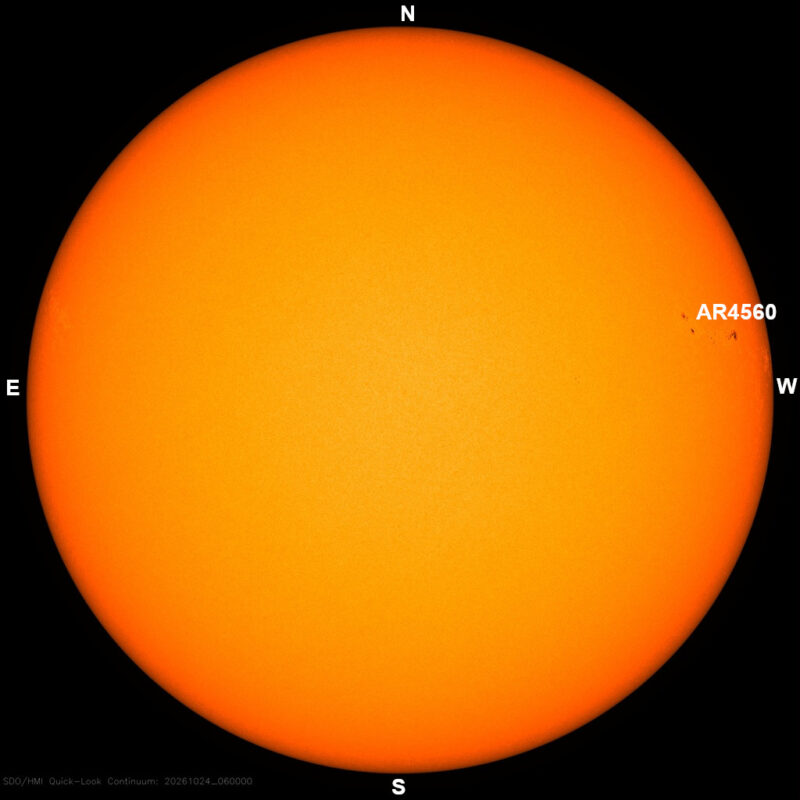
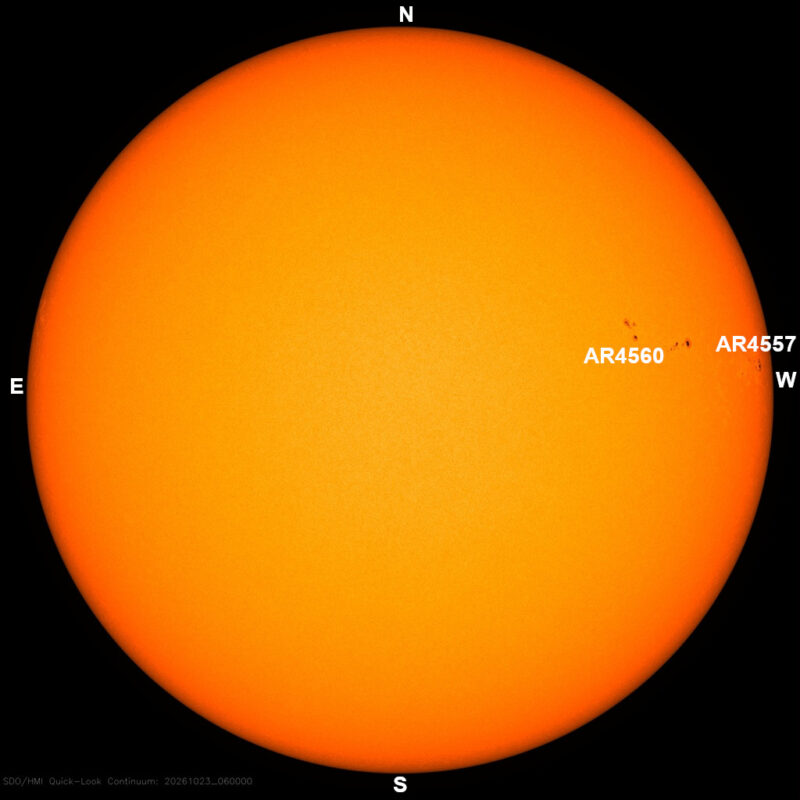
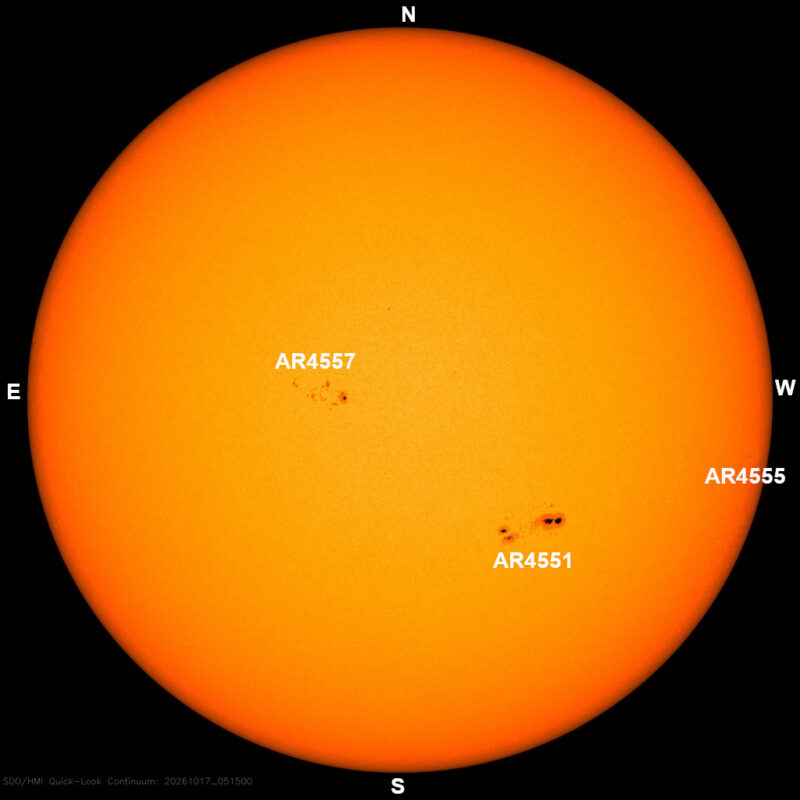
Sunspot regions: The solar disk, as we see it from Earth, shows just two numbered sunspot regions, now that AR4551 has rotated off. No newcomers have emerged.
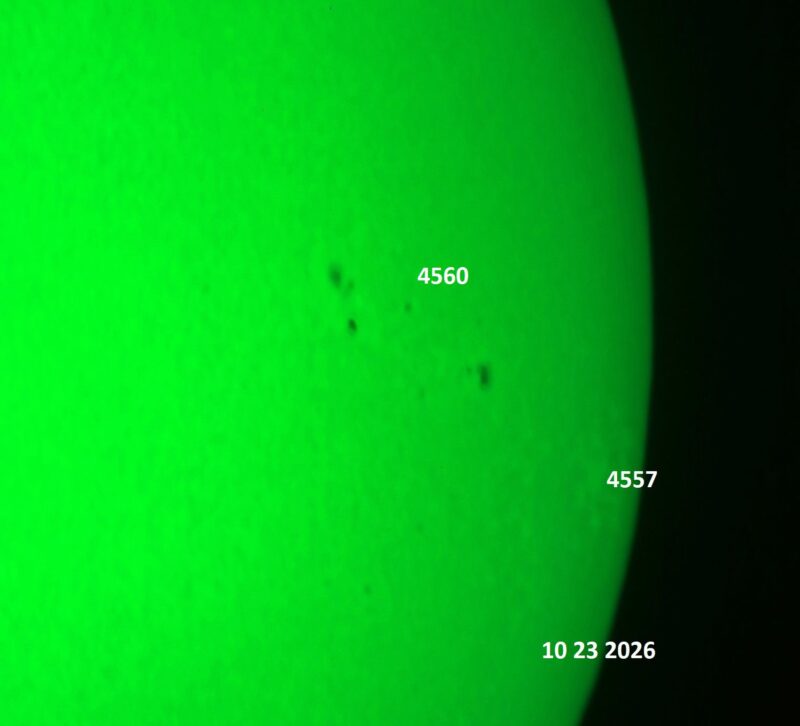
- AR4557 (beta): This region showed modest growth and kept producing flares during this period. It’s the next numbered region set to depart over the west horizon to the far side.
- AR4560 (beta-gamma-delta): This region kept growing and developed a delta complexity. It also fired the strongest flare of the period, the C3.3. Keep your eyes on this one.
Blasts from the sun? Observers spotted no Earth-bound coronal mass ejections (CMEs) in available coronagraph imagery during this period. However, forecasters still expect a glancing blow on October 25 from the October 21 eruption, which could enhance Earth’s magnetic field.
Past 24 hours in space weather
Solar wind: Solar wind speeds slowly eased from moderate to moderate-low levels during the past day. As the high-speed stream wanes, speeds should drop to low levels through the rest of the day today.
Bt, Bz and magnetic coupling: The total interplanetary magnetic field (IMF) averaged moderate-low strength. Meanwhile, the north-south component (Bz) started the period pointing strongly and steadily south. Long southward stretches like that favor auroral displays. Then, around 22 UTC on October 22, it turned north for the rest of the period. At the time of this writing, it has swung briefly southward again.
Earth’s magnetic field: The geomagnetic field ranged from quiet to active levels, with the Kp index at 2 to 4. Conditions reached the Kp 4 threshold at 11 UTC on October 22 and held there for a couple of three-hour synoptic periods. At the time of this report, the Kp index has dropped slightly below level 2.
What’s ahead? Sun–Earth forecast
Flare activity forecast: Forecasters still expect low solar activity, with a chance for isolated M-class flares. The chance for M-class flares holds at 20% today. Meanwhile, the small 5% chance of X-class (strong) flares remains. With AR4551 gone, AR4560 has become the main driver, now with a beta-gamma-delta complexity. AR4557 might help too.
Geomagnetic activity forecast:
- October 23: Anticipate quiet to unsettled conditions as the fast wind’s effects wane.
- October 24: Quiet to unsettled conditions may continue through the day. However, isolated active periods are possible as fast solar wind starts arriving from the second coronal hole.
- October 25: The combined effect of fast solar wind and a glancing blow from the October 21 CME may bring unsettled to active conditions, with a chance of G1 (minor) storm levels.
Sun news October 22: Geomagnetic storm arrived last night
It arrived after all! The G1 (minor) geomagnetic storm we’d been expecting finally occurred, a day later than forecast. It was triggered by a coronal hole’s stream of fast solar wind. First, the stream stirred an active disturbance, reaching Kp 4. Then a second surge pushed conditions past the geomagnetic storm threshold (Kp 5) at 23:59 UTC on October 21. And there could be more to come. A second coronal hole is now sending its own fast solar wind our way. It may reach us late on October 23 or early on October 24. That could disturb Earth’s magnetic field again and bring a fresh chance for auroral displays at far northerly latitudes. Did you see the auroras last night? Share your photos with us!
Past 24 hours on the sun
(11 UTC October 21 – 11 UTC October 22)
Flare activity: Solar activity stayed at low levels, with flare production much like the day before. Observers registered 11 flares this period: seven C-class (common) and four B-class (weak).
- Strongest flare: A C3.5 from AR4560, peaking at 3:09 UTC on October 22.
- Other notable flares: On October 21, AR4551 fired a C1.5 at 18:49 UTC. AR4557 followed with a C1.4 at 21:19 UTC. Then AR4560 added a C2.1 at 22:52 UTC.
- Lead flare producer: AR4551 topped the list with five of the period’s 11 flares. AR4560 followed closely with four. Meanwhile, AR4557 contributed the other two.
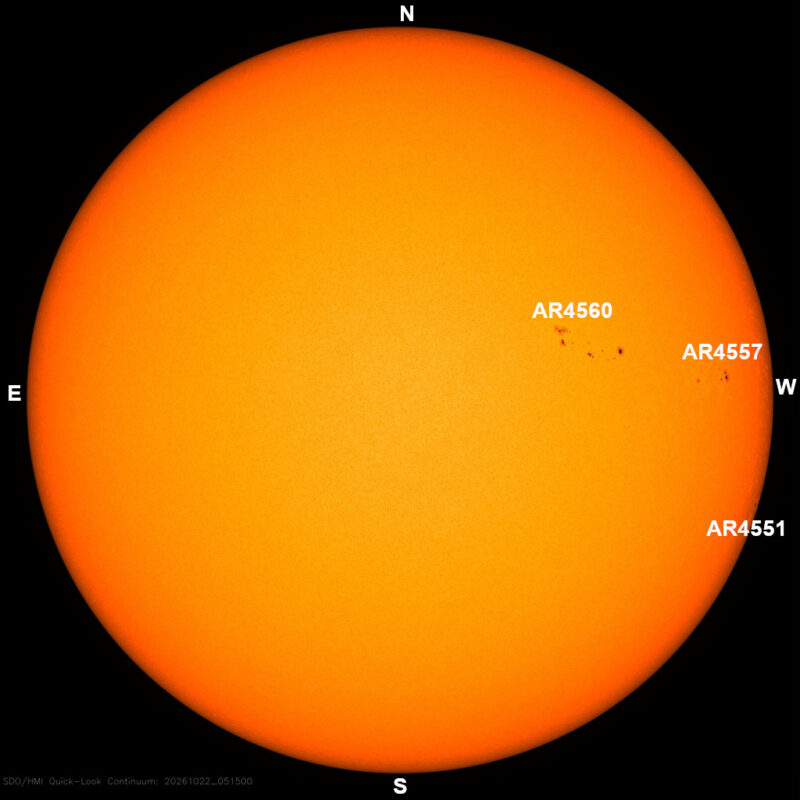
Sunspot regions: Three numbered sunspot regions still appear on the visible disk, since no newcomers have emerged. In fact, the entire eastern hemisphere remains devoid of numbered regions.
- AR4551 (beta-gamma magnetic configuration): This large region regained its gamma configuration on its way out. It kept blasting flares, too, becoming the lead flare producer of the period. Now it sits right at the southwest limb, ready to rotate to the far side.
- AR4557 (beta): This region kept decaying and lost its gamma configuration. It’s approaching the west horizon.
- AR4560 (beta-gamma): This region kept its gamma configuration and continued to grow. It also fired the strongest flare of the period, the C3.5.


Blasts from the sun? Observers spotted a coronal mass ejection (CME) at 9 UTC on October 21, near the northern coronal hole we’ve been watching. Modeling suggests part of this chunk of solar stuff may deliver a glancing blow to Earth late on October 26 or early on October 27.
Past 24 hours in space weather
Solar wind: Solar wind speeds peaked at moderate-high levels around 14 UTC on October 21. They then settled at moderate levels for the rest of the period. The high-speed stream should keep speeds moderate through the rest of the day.
Bt, Bz and magnetic coupling: The total interplanetary magnetic field started our observation period at moderate levels, then slowly eased to weak strength. Meanwhile, the north-south component (Bz) pointed south for most of the period. A few peaks pointed north. However, the strongest and steadiest peaks pointed south. Long southward stretches like that favor auroral displays.
Earth’s magnetic field: The geomagnetic field ranged from quiet to minor storm levels, with the Kp index at 2 to 5. A G1 (minor) geomagnetic storm struck as conditions reached the Kp 5 threshold at 23:59 UTC on October 21. At the time of this report, the Kp index has dropped to level 3.
Sun news October 21:Fast wind arrives, and more to come

The anticipated stream of fast solar wind from a coronal hole reached Earth today. However, it didn’t trigger the expected G1 (minor) geomagnetic storm. Instead, the wind only triggered active disturbance (Kp 4) in our magnetic field. But there’s another chance ahead. A second coronal hole now is now sitting near the center of the solar disk, facing Earth. Its fast solar wind may start reaching us in the coming days. That could disturb Earth’s magnetic field again and bring a fresh chance for auroral displays.
Past 24 hours on the sun
(11 UTC October 20 – 11 UTC October 21)
Flare activity: Solar activity stayed at low levels, but flare production dropped. Observers registered only 11 flares this period, compared to 22 yesterday. C-class output fell too, with just two C-class (common) flares and nine B-class (weak).
- Strongest flare: A C2.8 from AR4557, peaking at 13:56 UTC on October 20.
- Other notable flare: A C1.4 from AR4551, peaking at 18:36 UTC on October 20.
- Lead flare producer: AR4557 produced eight of the period’s 11 flares, including the strongest. Meanwhile, AR4551 contributed the other three.
Sunspot regions: Currently, only three numbered sunspot regions populate the visible disk. Notably, the eastern hemisphere has run out of numbered regions entirely.

- AR4551 (beta magnetic configuration): This large region is about to rotate to the far side, sitting right on the sun’s southwest shoulder. At that angle, its exact configuration is hard to determine. For now, it’s departing as a beta region with six sunspots, amid jets and prominences.
- AR4557 (beta-gamma): This region underwent minor decay and lost its delta. Even so, it still holds a beta-gamma configuration across 20 spots. And it took over as the period’s flare leader once again, firing eight flares, including the strongest, a C2.8.
- AR4560 (beta-gamma): This region kept growing, increasing in extent and developing additional sunspots. It now counts 21 spots, the most on the disk, and has gained a beta-gamma configuration. That makes it one to watch.
Blasts from the sun? Analysts identified several coronal mass ejections (CMEs) launched toward the north and northeast during this period. Initial analysis suggests none of these chunks of solar stuff are Earth-bound.
Past 24 hours in space weather
Solar wind: Solar wind speeds increased to moderate levels during this period. The arrival of a new high-speed stream drove the jump.
Bt, Bz and magnetic coupling: The total interplanetary magnetic field (Bt) stayed calm early in the period. Then, at around 12 UTC on October 20, it rose to moderate strength and held there through the time of this report. Meanwhile, the north-south component (Bz) pointed south for most of the period. Long, steady southward stretches like that favor auroral displays.
Earth’s magnetic field: The geomagnetic field ranged from quiet to active levels, with the Kp index at 2 to 4. Conditions reached the Kp 4 threshold at 4:29 UTC on October 21. At the time of this report, the Kp index sits at level 2.
Sun news October 20: Fast solar wind approaching Earth

A stream of fast solar wind from a coronal hole — a cooler, less-dense region in the sun’s atmosphere — is expected to reach Earth today. When it does, forecasters expect it to trigger G1 (minor) geomagnetic storm conditions. So aurora-watchers at high latitudes, keep an eye on the sky tonight!
Past 24 hours on the sun
(11 UTC October 19 – 11 UTC October 20)
Flare activity: Solar activity returned to low levels. Observers recorded 22 flares in all: 12 C-class (common) and 10 B-class (weak).
- Strongest flare: A C3.5 from AR4557, peaking at 2:45 UTC on October 20.
- Other notable flares: AR4557 fired most of the period’s flares, with AR4551 and AR4560 adding a handful more.
- Lead flare producer: AR4557 produced 17 of the period’s 22 flares, including the strongest. Meanwhile, AR4551 contributed 3 flares, and AR4560 added 2.
Sunspot regions: Currently, only three numbered sunspot regions populate the visible disk.
- AR4551 (beta-gamma): This large, magnetically complex region started showing signs of decay. Now getting closer to the solar southwest.
- AR4557 (beta): This region lost its delta configuration, but it took over as the period’s flare leader. It fired 17 flares, including the strongest, a C3.5. Its evolving magnetic structure keeps it well worth watching.
- AR4560 (beta): This newcomer emerged on the northeast portion of the disk and kept developing. It produced 2 flares. For now, it remains small and magnetically simple.
Blasts from the sun? Analysts identified no Earth-directed coronal mass ejections (CMEs) during this period. They also confirmed that the CME from yesterday’s M1.7 (moderate) flare is not heading our way.
Past 24 hours in space weather
Solar wind: Solar wind speeds eased toward normal levels as a previous coronal hole’s influence waned. However, that should change soon, as a new high-speed stream is due to arrive today.
Bt, Bz and magnetic coupling: The total interplanetary magnetic field (Bt) stayed mostly calm, briefly reaching moderate levels earlier in the period. Meanwhile, the north-south component (Bz) varied but favored a northward orientation, with brief southward dips.
Earth’s magnetic field: The geomagnetic field stayed at very quiet levels, with the Kp index ranging from 0 to 1. Aurora stayed confined to the highest latitudes. At the time of this report the Kp index sits at level 1.
Sun news October 19: M flare erupts as solar wind heads to Earth
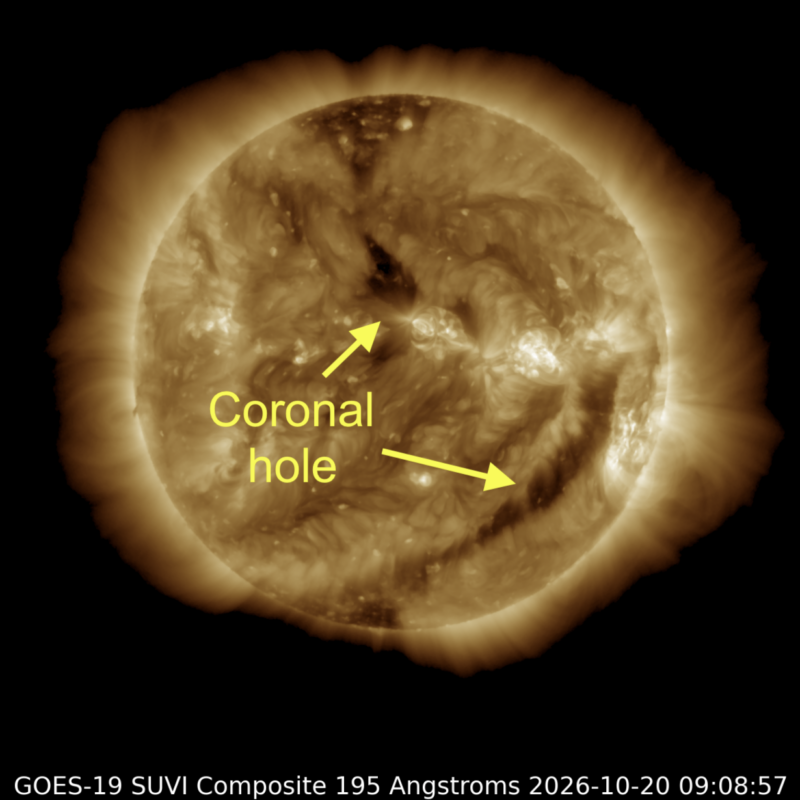

A coronal hole — an area of lower density in the sun’s atmosphere — is currently crossing the center of the solar disk. The high-speed solar wind streaming out of it should reach Earth tomorrow. When it arrives, forecasters expect G1 (minor) geomagnetic storm conditions and possible auroras at high latitudes. So what does that mean for skywatchers? If you live in the far north or south, keep an eye out for auroras late on October 19 or on October 20. Those in Northern Scotland and southern New Zealand could catch a glimpse. Meanwhile, AR4551 fired off an M1.7 (moderate) flare near the end of our reporting window, peaking at 9:03 UTC this morning. The blast caused an R1 (minor) radio blackout. This large, magnetically complex sunspot region has dominated flare production for days. And according to forecasters, it still has more to give. Stay tuned!
Past 24 hours on the sun
(11 UTC October 18 – 11 UTC October 19)
Flare activity: Solar activity reached moderate levels. Observers recorded 8 flares in all: 1 M-class, 5 C-class (common) and 2 B-class (weak).
- Strongest flare: An M1.7 from AR4551, peaking at 09:03 UTC on October 19. It produced an R1 (minor) radio blackout over southern Africa.
- Other notable flares: A C2.1 from AR4551 peaked at 19:17 UTC on October 18. Meanwhile, newly numbered AR4559 fired two C-class flares, including a C2.0 at 07:18 UTC on October 19.
- Lead flare producer: AR4551 produced 5 of the 8 flares, including the only M-class event. AR4559 contributed 2 C-class flares, and AR4557 added 1 B-class flare.
Sunspot regions: Four numbered sunspot regions populated the visible disk, including two newcomers: AR4559 and AR4560.
- AR4551 (beta-gamma): This large, magnetically complex region remains one of the biggest on the disk. Its strong, persistent, leader spot keeps it productive. In fact, it produced the bulk of the period’s flares, including the M1.7. Forecasters still consider it a potent source of more moderate flares.
- AR4557 (beta-delta): This region shrank slightly. However, it developed a weak delta configuration. It produced one B-class flare during the period. Despite some decay, its evolving magnetic structure keeps it worth watching.
- AR4560 (beta): This newcomer emerged on the northeast portion of the disk and kept developing. For now, it remains small and magnetically simple.
- AR4559 (beta): This newly numbered region emerged just south of AR4551. Despite being small and simple, this region surprised observers with two C-class flares.
Blasts from the sun? Analysts identified no Earth-directed coronal mass ejections (CMEs) during this period.
Past 24 hours in space weather
Solar wind: Solar wind speeds were slightly elevated as a previous coronal hole’s influence waned. By the end, conditions trended toward normal levels.
Bt, Bz and magnetic coupling: The total interplanetary magnetic field (Bt) stayed mostly calm. Earlier in the period, it briefly reached moderate levels. Meanwhile, the north-south component (Bz) varied but favored a northward orientation, with brief southward dips.
Earth’s magnetic field: The geomagnetic field stayed quiet to unsettled, with the Kp index ranging from 1 to 3. Conditions reached no storm thresholds. As a result, aurora stayed confined to the highest latitudes.
The sun in recent days
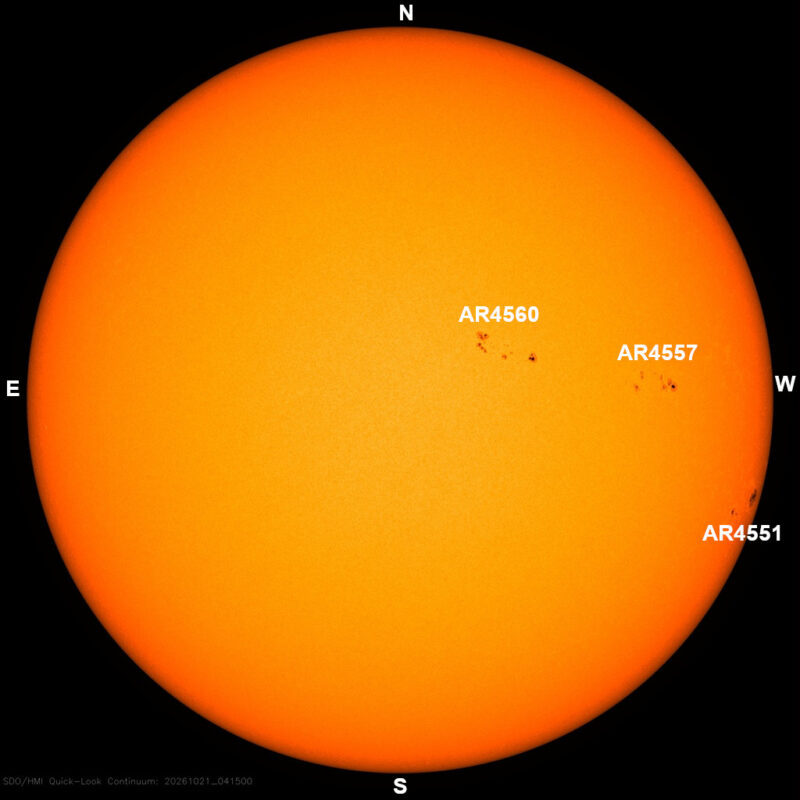
Earlier sun images
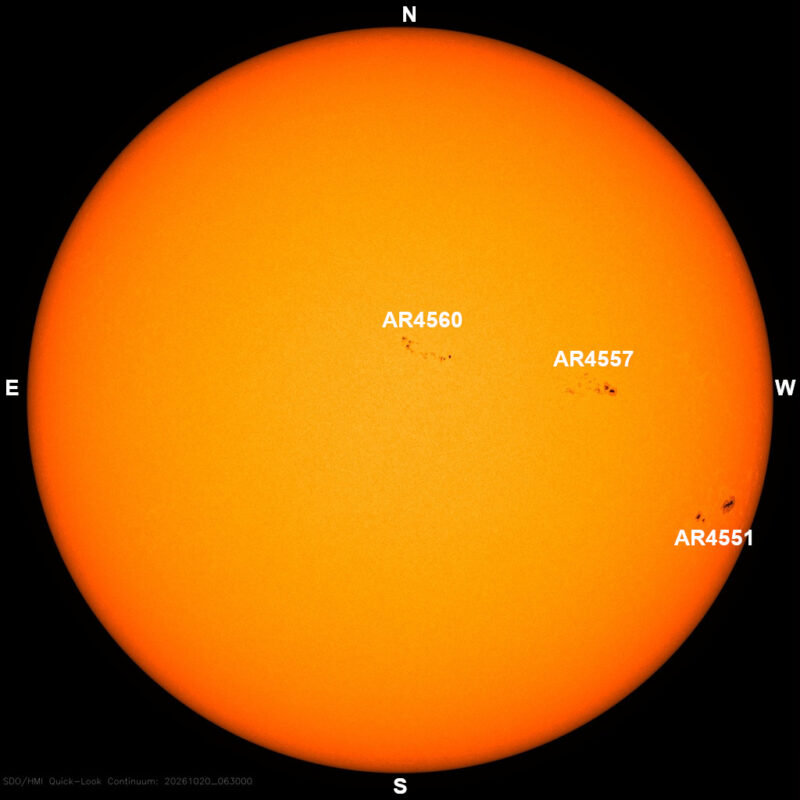
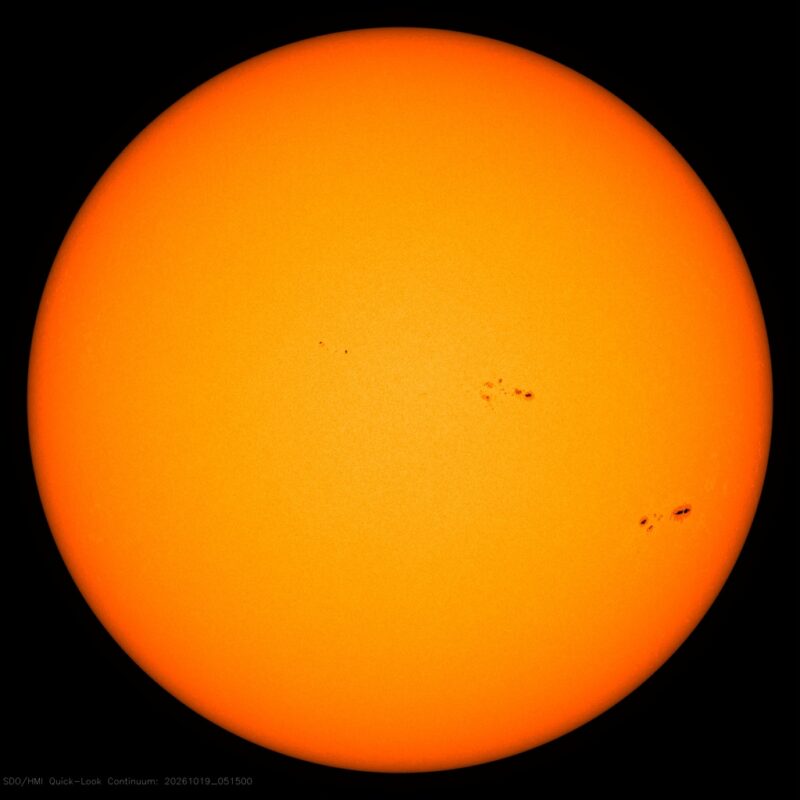
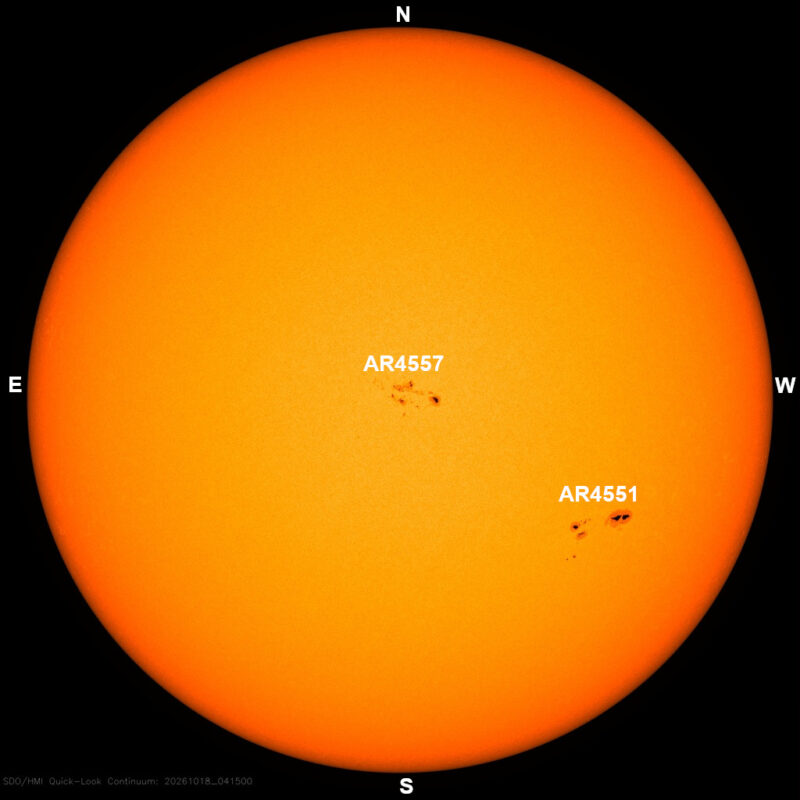
Sun images from our community
More sun images from our community
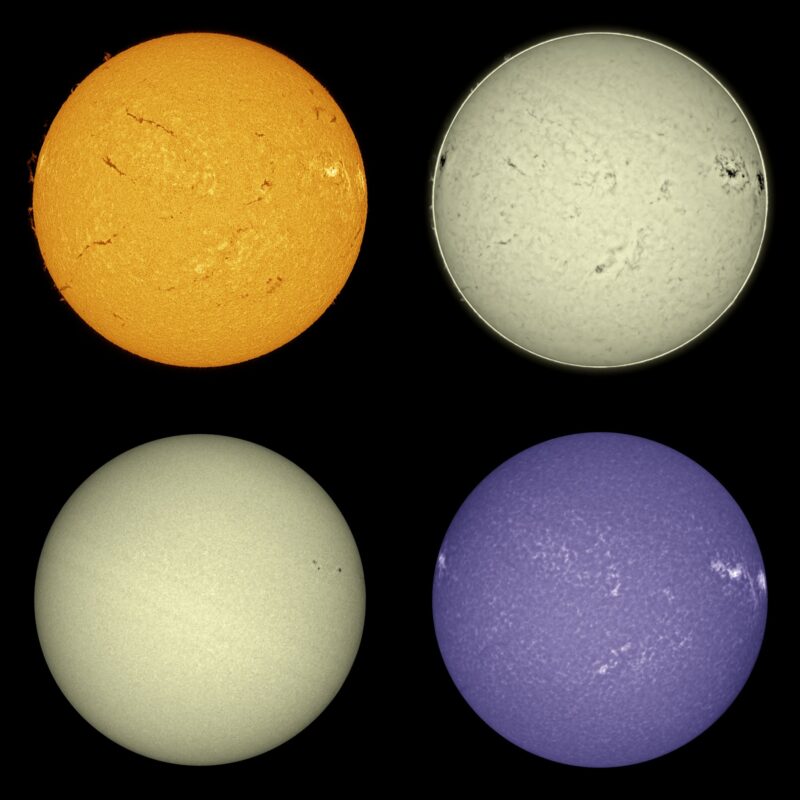
We sometimes feature sun images obtained using hydrogen-alpha filters. Read why.
Bottom line: Sun news October 23, 2026: AR4560 grew a delta, the most complex setup there is! Meanwhile, fast wind and a glancing CME could bring storms October 25.
Like what you read?
Subscribe and receive daily news delivered to your inbox.
More from
C. Alex Young


Yes, there’s an aurora season, and it’s here

Sun activity archive for September 2026
Sun activity archive for August 2026
Sun activity archive for July 2026