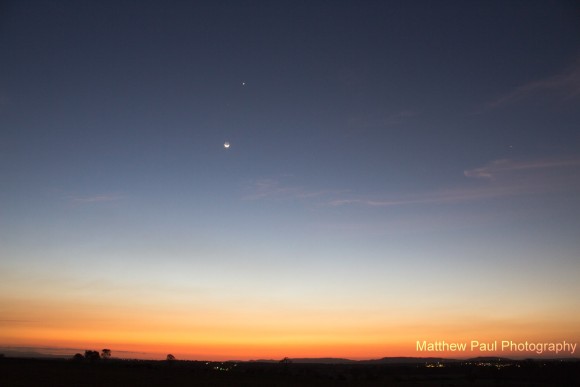
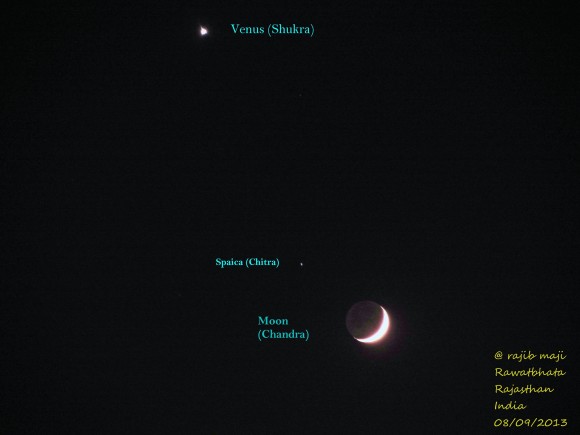
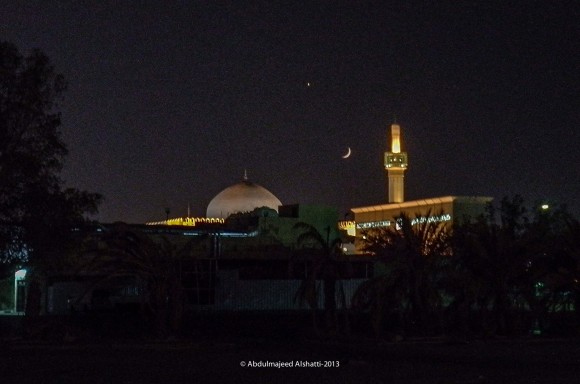
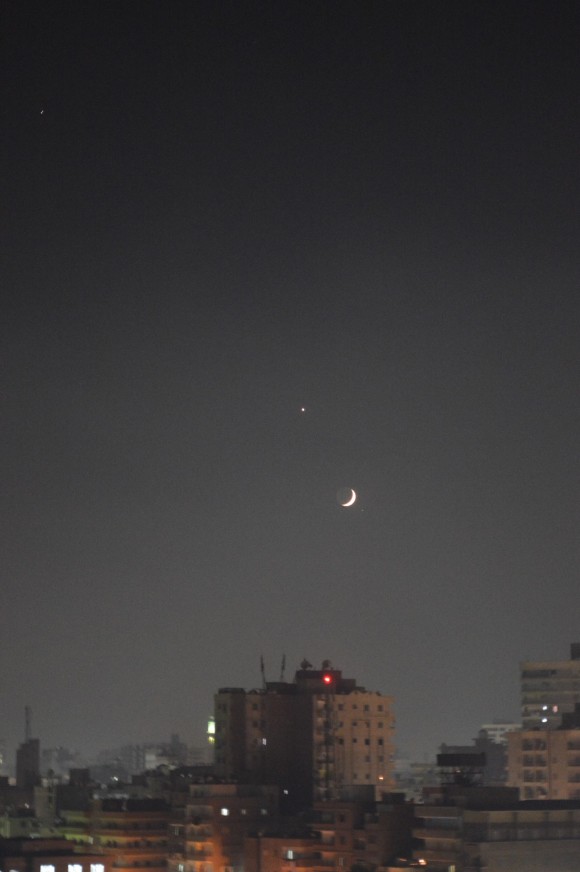
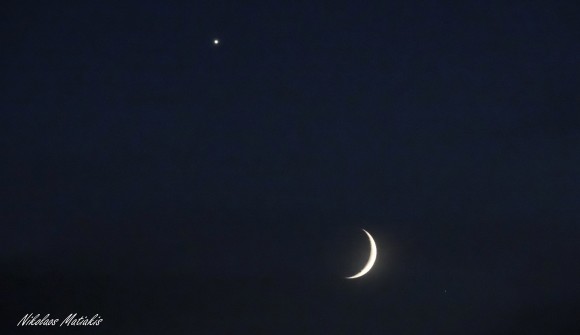
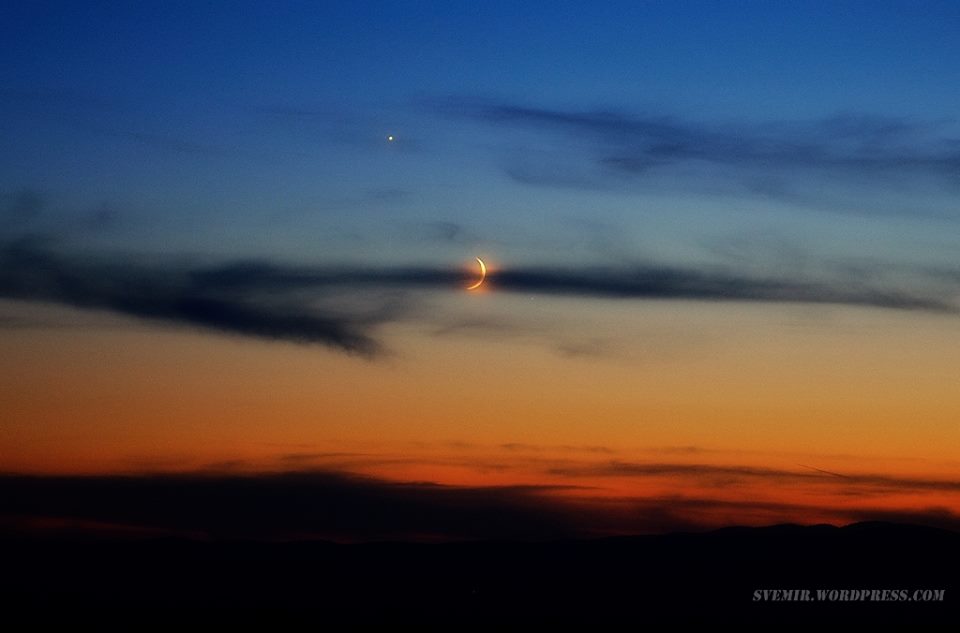
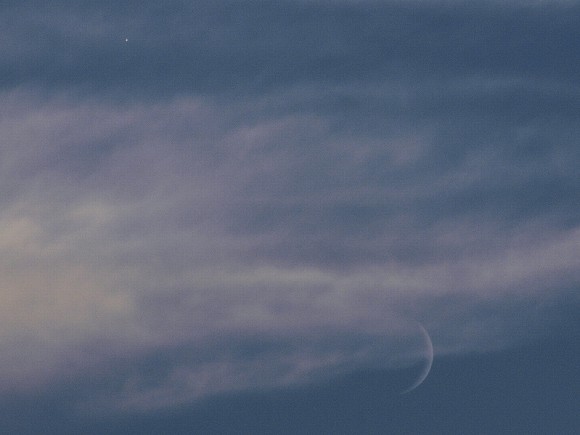
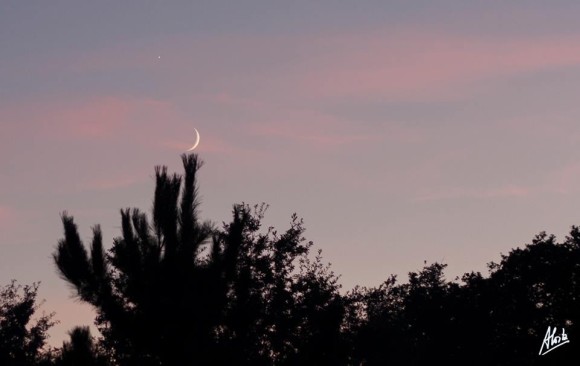
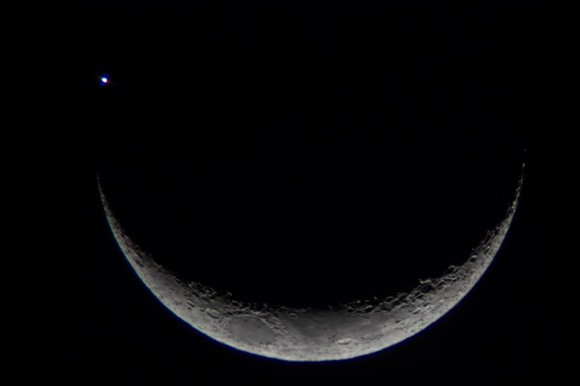
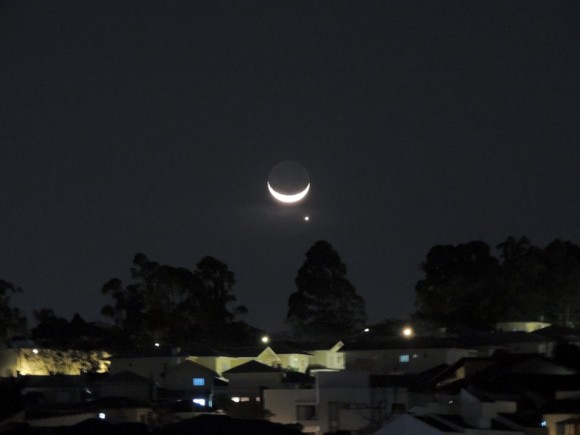
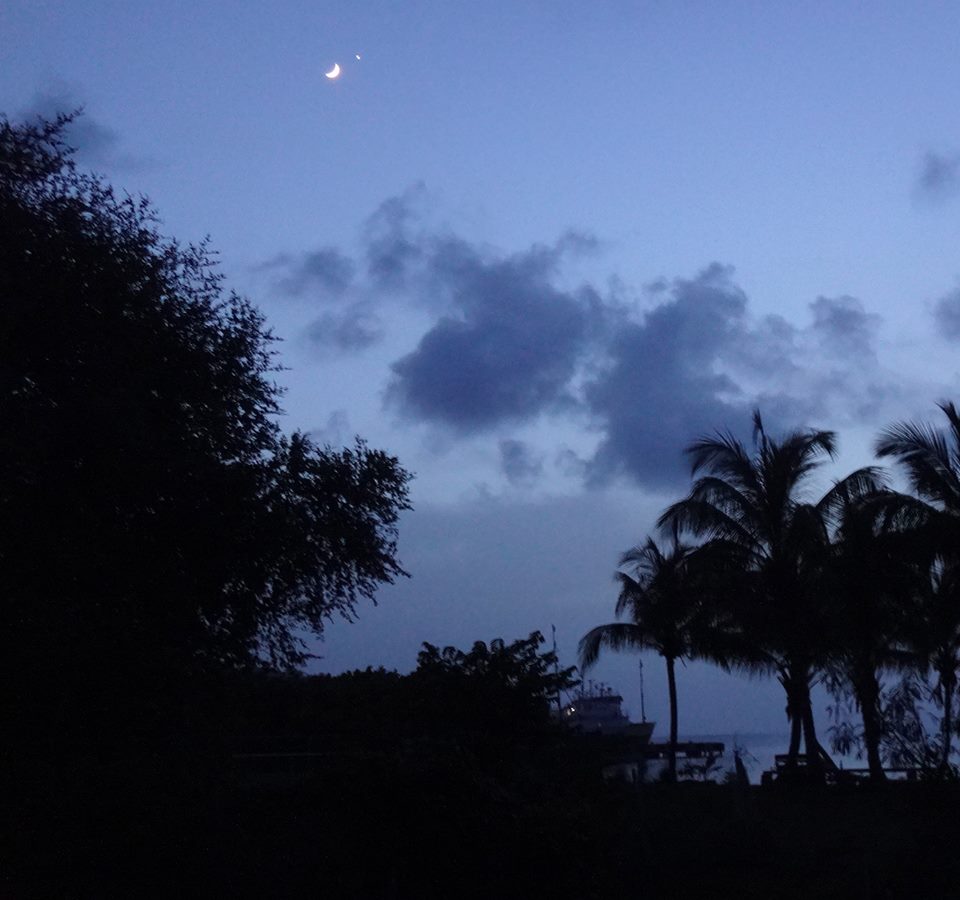
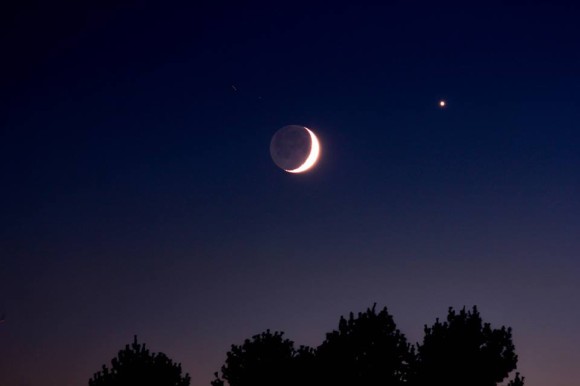
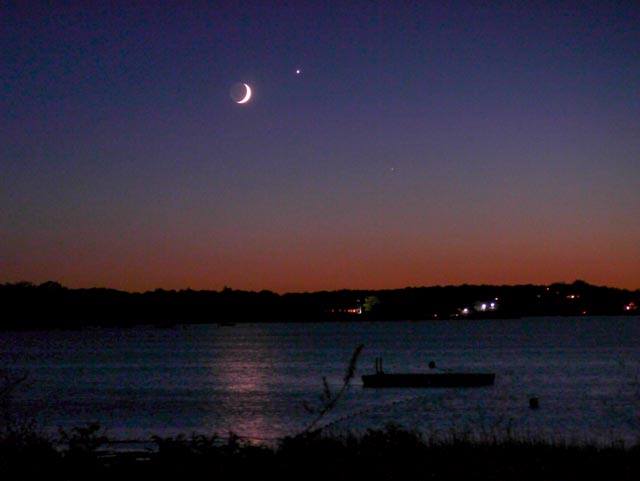
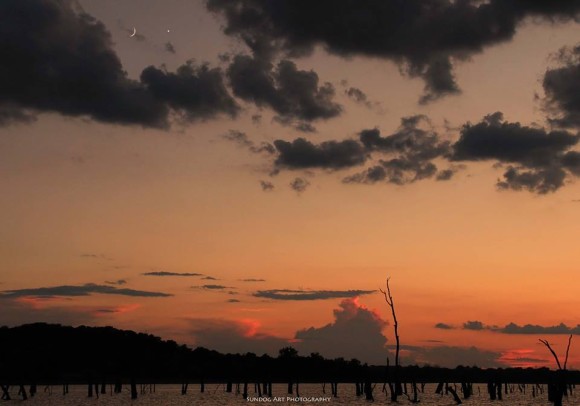
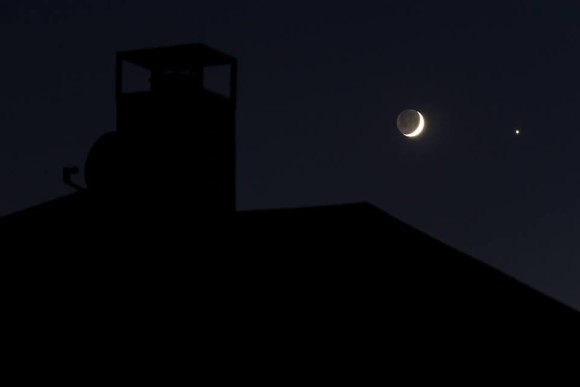
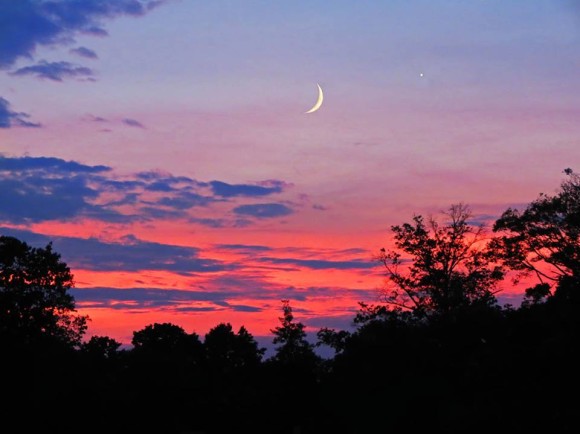
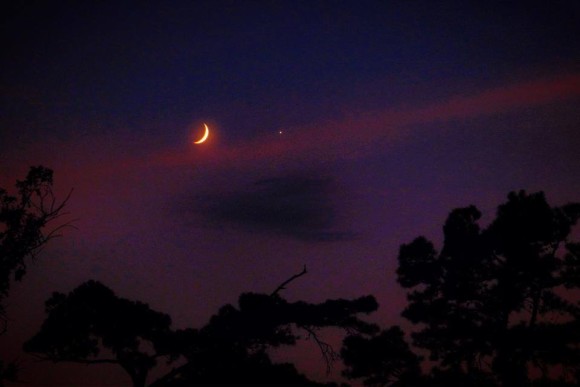
Yesterday evening (September 8, 2013), the moon swept past the planet Venus in the west after sunset. Our friends across the globe shared their photos of Venus and the moon in their skies. As the line of sunsets swept westward around the globe, the images came first from Australia and New Zealand, then Asia, the Middle East, Europe and finally the Americas. As the day passed, we could see from the images that the moon was drawing closer and closer to Venus. Why? Because the moon is moving in orbit around Earth, and its movement across half a day is noticeable in the sky. You can see that movement of the moon by looking at the photos below, from top to bottom.
If you had cloudy skies, or were stuck inside – or just want to relive the beauty of last night’s evening twilight sky – here are some of the best views of the spectacular moon-Venus pairing of September 8, 2013.
Thanks to all who posted on EarthSky’s Facebook and Google+ pages! We wish we could have used every single photo in this gallery, and we appreciate you all.
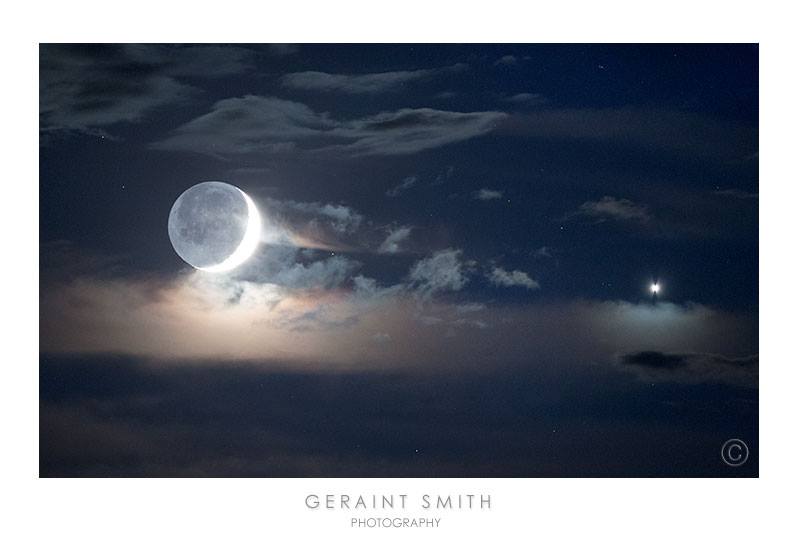
On EarthSky’s social media pages, we began seeing Venus-moon photos early in the day on September 8, since night had already fallen in Australia and New Zealand. This one is from our friend Matthew Paul in Ipswich, Queensland, Australia. Thank you, Matthew.Here’s another one from India. Photo via Rajib MajiThis is the moon and VEnus on September 8, 2013, over the Grand Mosque in Kuwait. Photo via EarthSky Facebook friend Abdulmajeed AlshattiMoon and Venus as seen from Egypt. Photo via our friend Mohammed HatataNikos Matiakis sent in this photo from Kozani, Macedonia, Greece.Pedrag Agatonovic in Serbia captured this beautiful image.The moon and Venus as seen on September 8 from Budapest, Hungary. Photo via Jozef Deak, who caught the pair just as the sun was setting. That’s why the sky is blue. Yesterday was the best day of 2013 to catch Venus in daylight.The moon and Venus as seen from Spain. Photo via Antonio CostaAs seen from parts of South America, the moon actually passed in front of Venus. Astronomers call this kind of event an occultation. Crístian Rubert captured this photo from Santa Maria, Rio Grande do Sul, Brazil, shortly before the occultation began.Another beauty from Sao Paulo, Brazil. Why is the angle different from the photos taken in the Northern Hemisphere? It’s just an effect of perspective, between one part of Earth and another. Photo via Igor AlexandreKristin Bourn captured this shot from Anguilla, British West Indies.One of our favorite photographers, Eileen Claffey, got this beautiful image from Brookline, Massachusetts.Phyllis Mandel is another wonderful photographer, who captured the moon and Venus at Oyster Pond, Cape Cod, Chatham, Massachusetts.Sundog Art Photography in Fort Worth, Texas captured this image. See more photos from Sundog here.Tracy Lynn Jones in Waxahachie, Texas sent in this beautiful shot.Duke Marsh captured this image from New Albany, Indiana.Nathan Scott James of Central Arkansas Astronomical Society captured this photo in Little Rock.Geraint Smith of San Cristobal, New Mexico posted this photo. Thank you, Geraint! See more of Geraint Smith’s photos here.
Deborah Byrd (asteroid 3505 Byrd) helps edit EarthSky.org and is a frequent host of EarthSky videos. Deborah created the EarthSky radio series in 1991 and founded EarthSky.org in 1994. Prior to that, she had worked for the University of Texas McDonald Observatory since 1976, and created and produced their Star Date radio series. She has won a galaxy of awards from the broadcasting and science communities, including having an asteroid named in her honor in 1990, a Public Service Award from the National Science Board in 2003, and the Education Prize from the American Astronomical Society in 2020. A science communicator and educator since 1976, Byrd believes in science as a force for good in the world and a vital tool for the 21st century. "Being an EarthSky editor is like hosting a big global party for cool nature-lovers," she says.
Eleanor Imster has helped write and edit EarthSky since 1995. She was an integral part of the award-winning EarthSky radio series almost since it began until it ended in 2013. She and her husband live in Tennessee, where they enjoy guitar playing and singing. They have 2 grown sons.
Like what you read? Subscribe and receive daily news delivered to your inbox.
Thank you! Your submission has been received!
Oops! Something went wrong while submitting the form.