
Sungrazing comet breaks up
Skywatchers have been super excited about a new sungrazing comet. It swept exceedingly close to the sun – only about 1% of Earth’s distance – on April 4, 2026. Comet C/2026 A1 (MAPS) caused a stir when astronomers first spotted it in January. Comets in this family – called Kreutz sungrazers – tend to appear only in the weeks before their closest approaches to the sun. And that’s because most are small. But Comet MAPS was spotted when it was still far away. So this comet was thought to have a shot at being a spectacular sight in our sky! Maybe it would be visible in daytime!
But as the months passed, expectations began to drop. And now it appears the comet is no more. It’s gone … Or is it?
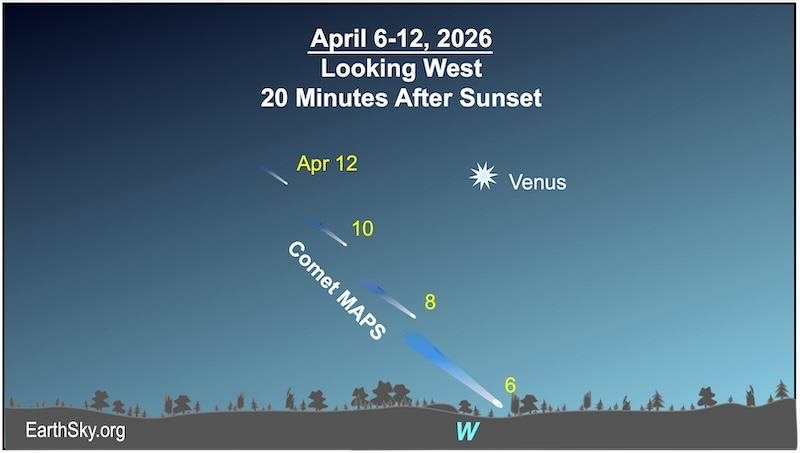
Comets like this typically appear brightest around their perihelion passages (closest points to the sun). This one was thought to begin its appearance low in our evening twilight sky on April 6. But, according to many on social media over this past weekend, the comet didn’t survive its perihelion passage. Is it completely gone? Or will any cometary debris be visible? We’ll know soon. Finder charts below show where the comet would have been visible.
Want to try to see the debris? Watch the video below
A couple of weeks ago, EarthSky’s Deborah Byrd, along with veteran comet-watcher Bob King, spoke about the comet – and gave detailed tips for seeing Comet MAPS, if it survived its passage near the sun. The tips are also good for seeing any remnants of the comet, if there are any! Check out the video below.
Brighter than expected when far from the sun
Comet MAPS was shining at around 18th magnitude when it was still twice Earth’s distance from the sun. Magnitude 18 is much too faint to see with the eye. But it’s bright for a comet at that distance. It was the farthest from the sun astronomers have seen of a comet like this one, in the Kruetz family of sungrazers.
So – based on its brightness at such a far distance – the comet was thought to be decently sized.
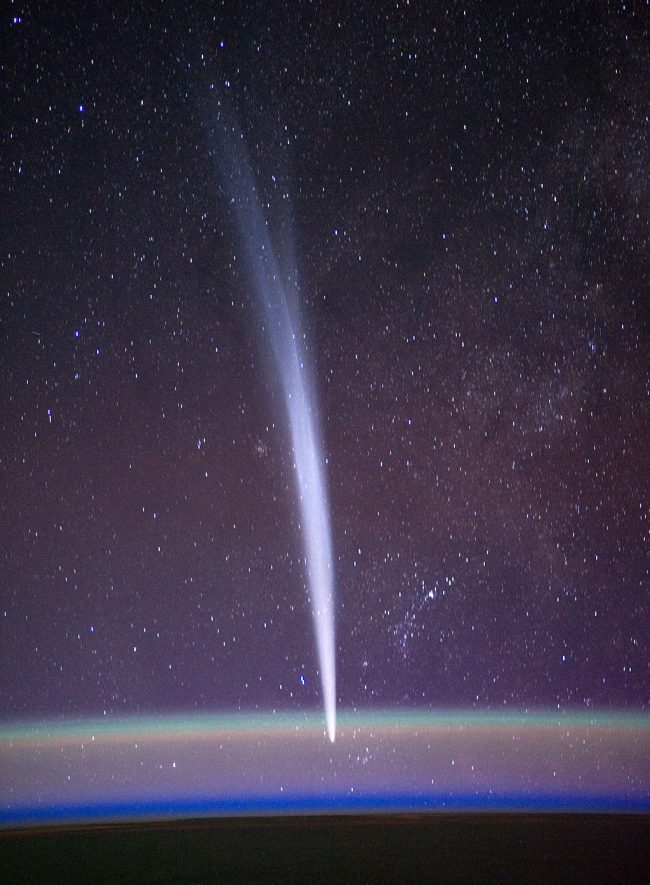
Preliminary observations indicated the newly found comet’s nucleus might have a diameter of up to 1.5 miles (2.4 km). But then more recent observations – made with the James Webb Space Telescope – suggested this comet might have only about a 0.25-mile (400-meter) nucleus. That would make it similar to or slightly smaller than the nucleus of another well-known and much-loved comet, called C/2011 W3 (Lovejoy). Comet Lovejoy put on a spectacular show for Southern Hemisphere stargazers in late 2011 and early 2012.
More history of this sungrazing comet
The MAPS program, run by a group of French amateur astronomers using telescopes in Chile, discovered the comet on January 13, 2026. They used an 11-inch (0.28 meter) diameter telescope at San Pedro de Atacama, Chile. Their observation program, MAPS, is an acronym that stands for their last names: Maury, Attard, Parrott and Signoret.
Comet MAPS passed extremely close to the sun on April 4, 2026. It passed at just 99,400 miles (160,000 km) from the sun’s photosphere, or visible surface. That’s closer than previous estimates had suggested. It’s scorchingly close! The diameter of the sun itself spans 865,370 miles (1,392,678 km).
Comets that get this close to the sun typically disintegrate. The intense solar heat can force outgassing in the comet that rips it apart. Plus, the pull of the sun’s gravity can also cause a comet to fragment.
Other comets have passed even closer to the sun and survived, though. They’ve even become bright beacons in the night sky. For example, C/1965 S1 (Ikeya–Seki) came within 280,000 miles (450,000 km) of the sun. It ended up shining at magnitude -10. Observers called it the Great Comet of 1965. Then, more recently, C/2011 W3 (Lovejoy) came within 87,000 miles (140,000 km) of the sun in 2011. Ultimately, it shone at around magnitude -3 or -4, or about as brightly as Venus.

A fragment from a larger comet?
Comets like C/2026 A1 (MAPS) – Kreutz sungrazers, named for the German astronomer Heinrich Kreutz – are thought to be fragments of an ancient giant comet that existed long ago. Recent observations suggest it last visited the interior of our solar system between 1,700 to 1,886 years ago. And astronomer Zdenek Sekanina from NASA/JPL said it might be related to a comet seen in broad daylight in the year 363, from what is now Antakya, Turkey.
It’s thought this huge comet came near the sun and broke apart. The fragments are now scattered around in the orbit of the original comet. So they still come near the sun. And most don’t survive.
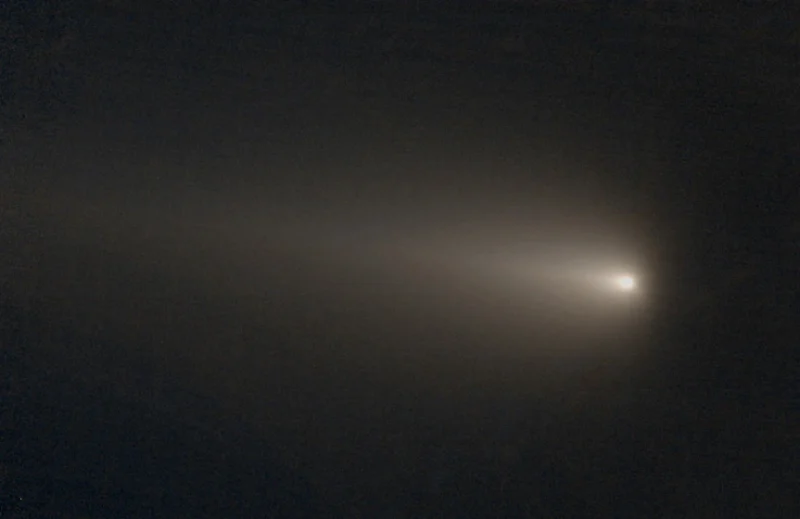
Telescopic photos of the comet

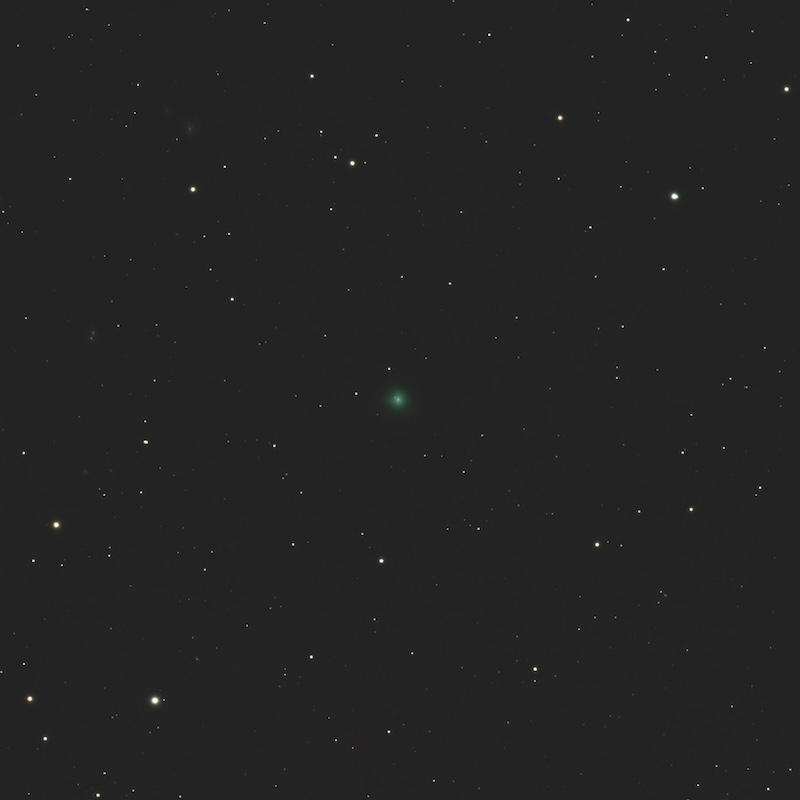


Bottom line: Sungrazing comet C/2026 A1 (MAPS) apparently didn’t survive its close encounter with the sun. Watch the apparent breakup in spacecraft images!
Read more: The best comets of 2026: Here’s what to watch for
Like what you read?
Subscribe and receive daily news delivered to your inbox.
More from
Eddie Irizarry


Mission to save Swift spacecraft fails, will crash back to Earth

Large asteroid safely passed Earth on June 27
The best comets of 2026: Here’s what to watch for
New comet C/2025 R2 (SWAN) is up after sunset