Sign Up for Our Amazing Newsletter!

A daily update by email. Science news, great photos, sky alerts.

Your email address will only be used for EarthSky content.
Privacy Policy
Thank you! Your submission has been received!
Oops! Something went wrong while submitting the form.

EarthSky
One Earth. One Sky. EarthSky.
Tonight Space Sun Earth Human Best Places to Stargaze EarthSky Community Photos About Store Donate Contact Us
Subscribe
Tonight
Tonight Brightest Stars Astronomy Essentials Moon Phases Clusters Nebulae Galaxies Favorite Star Patterns Constellations
Tonight
Which moon phase is best for stargazing? That depends.
Deborah Byrd
May 17, 2026
Astronomy Essentials
Tonight
Visible planets and night sky guide for May
Marcy Curran
May 16, 2026
Tonight
Apex of the sun: Look to Vega in May
Editors of EarthSky
May 15, 2026
Space
Sun
Earth
Human
Human Spaceflight
Best Places to Stargaze
Community Photos
View Community Photos Trending Submit a Photo
About
Store
Donate
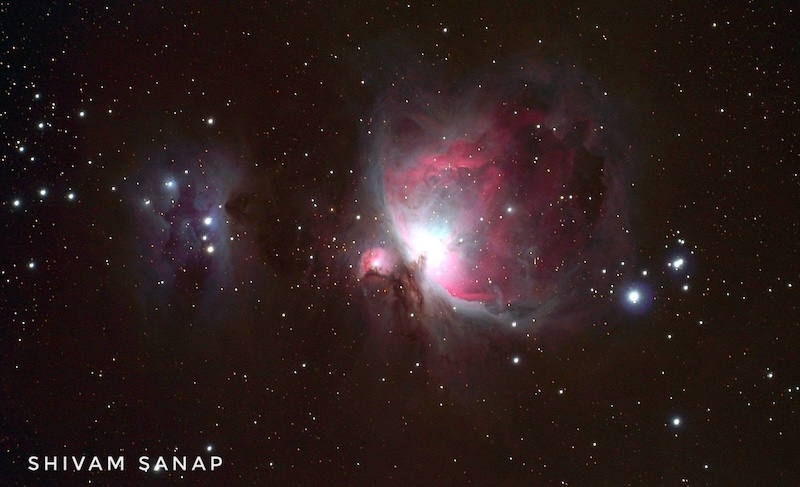
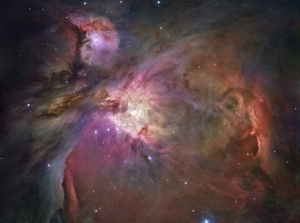
Crisply outlined swirls of 3 glowing, multicolored gas clouds with stars embedded in them.

The Orion Nebula (M42) is a starry nursery

You can see the Orion Nebula as a fuzzy spot in the sky using just your eyes. It's really a vast cloud in space where new stars are forming. Learn more.

Read More
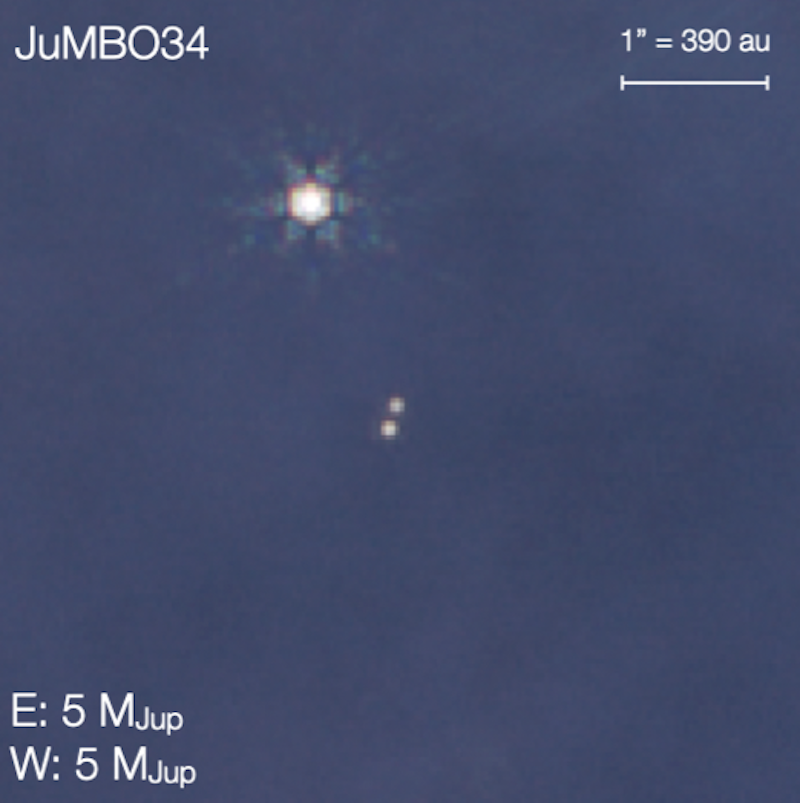
2 small bright dots close to each other in center of image, with larger bright dot to the upper left.

Mystery in the Orion Nebula: Pairs of rogue planets?

The James Webb Space Telescope has discovered something unexpected in the Orion Nebula: pairs of unusual planet-like 'binary objects' drifting freely in space.

Read More
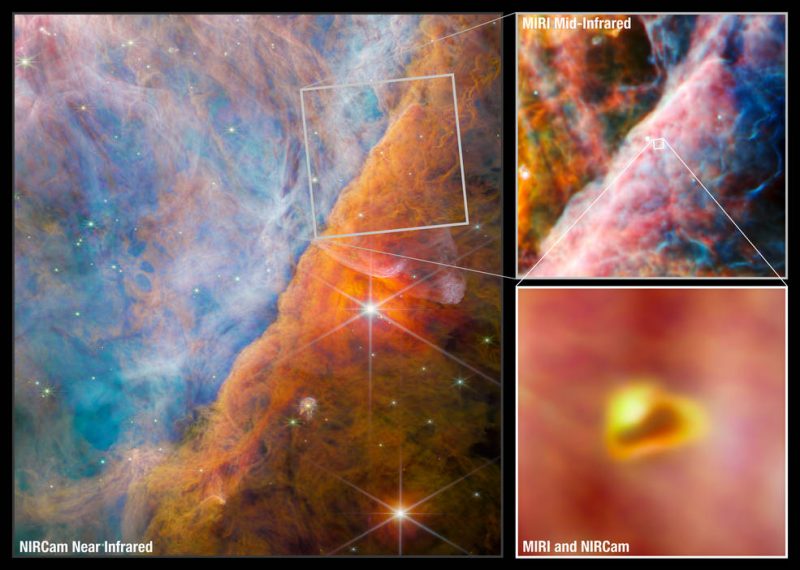
A composite made of 3 images of molecular clouds in space.

Life’s building blocks found in Orion Nebula

Scientists have found carbon compounds - life's building blocks - in a planet-forming disk, encircling a star in the famous Orion Nebula.

Read More

Fly through the Orion Nebula

Take 3 minutes to fly through the spectacular Orion Nebula, in this new 3D visualization from NASA.

Read More

Hubble Telescope finds substellar objects in Orion Nebula

Yes, the Orion Nebula is a star factory, but a new deep survey has revealed 17 brown dwarf companions to red dwarf stars, a brown dwarf pair, a brown dwarf with a planetary companion plus ... 3 giant planets.

Read More

A 3D journey through the Orion Nebula

Astronomers and visualization specialists at NASA have just released this unprecedented, 3-dimensional, fly-through view of the Orion Nebula, a nearby star-forming region.

Read More

New mosaic of Orion Nebula

The Orion Nebula - 1,400 light-years away- is the closest star formation region to Earth. This image is the latest in the Hubble Space Telescope's collection.

Read More

Orion Nebula and molecular gas clouds

Image of the Orion Nebula, shot on a cold night in Georgia, by Dave Woolsteen.

Read More

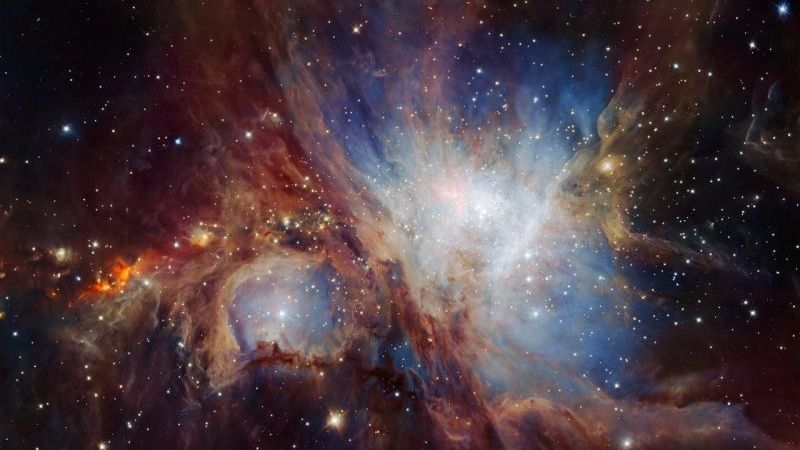
Deepest-yet look into Orion Nebula

Peering deeper into the Orion Nebula than ever before, astronomers have found a plethora of low-mass objects, some isolated "planets" and some brown dwarfs.

Read More

A black hole in the Orion Nebula?

An international team of astrophysicists says the famous Orion Nebula has a black hole at its heart, whose mass is some 200 times the mass of our sun.

Read More

Orion Nebula in beautiful new image

Igor Chekalin of Russia selected the data used for this ethereal image of the Orion Nebula, as part of the Hidden Treasures 2010 competition of the European Southern Observatory.

Read More

Orion Nebula has a new estimated distance

Here's news about the most famous stellar nursery of all, the Orion Nebula. Previously, the distance to the Orion Nebula was estimated at about 1,500 or 1,600 light-years. But the Orion Nebula is actually closer than that by about 200 light-years, according to Rob Jeffries at Keele University in England.

Read More
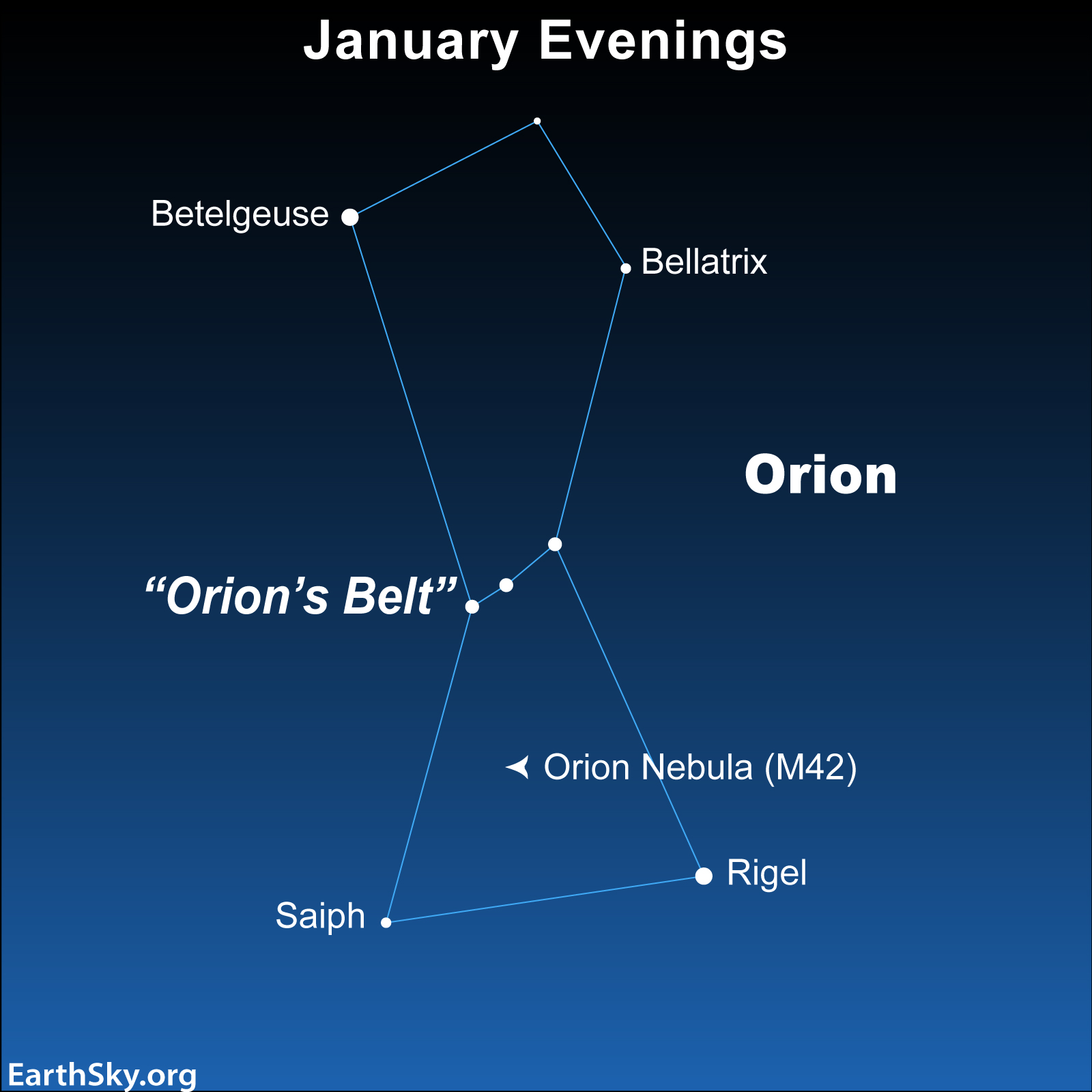
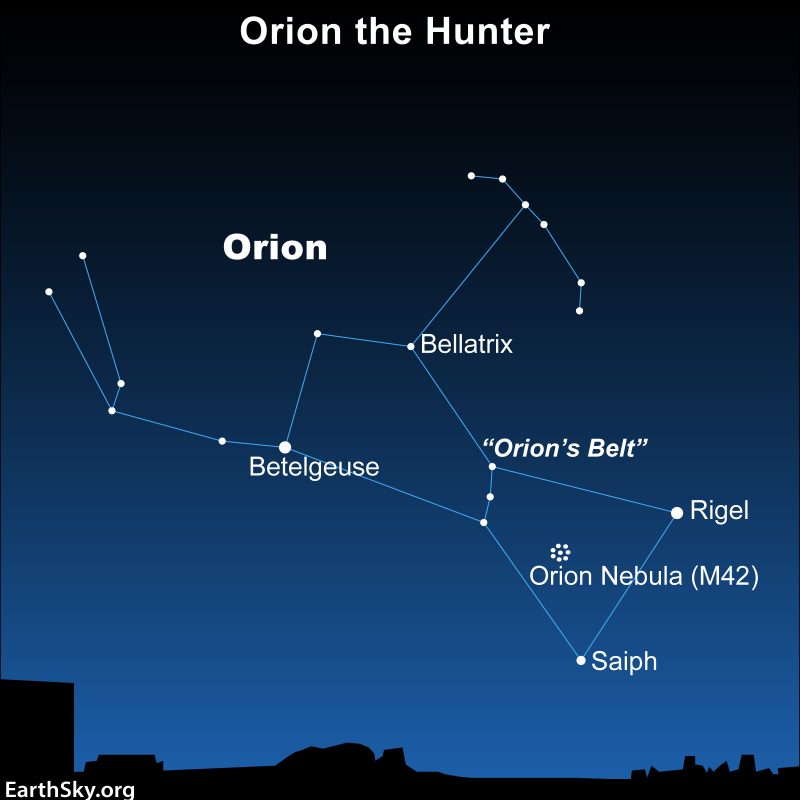
A star chart with white dots representing stars connected by light blue lines to trace the shape of the constellation. It is against a blue backdrop.

Orion the Hunter is easy to spot in January

Orion the Hunter is one of the easiest constellations to identify thanks to Orion's Belt, the 3 medium-bright stars in a short, straight row at his waist.

Read More
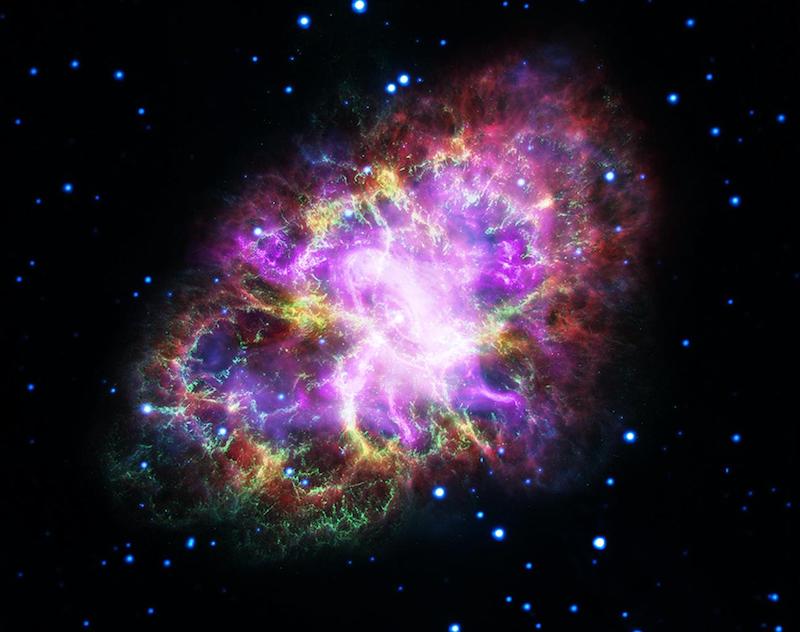
An oval-shaped nebula with fine filamentary detail in green, red, yellow, purple, and white.

Meet the Crab nebula, remnant of an exploding star

The Crab nebula is visible with binoculars or small telescopes. Scan near bright stars in Taurus to spot this expanding stellar remnant.

Read More
Constellation of Orion in a dark sky.

Orion the Hunter, the most recognizable constellation

Orion the Hunter may be the most recognizable constellation, visible from both hemispheres. It's best in winter from the north and summer from the south.

Read More
Star chart of big 19-star constellation Orion with stars, Belt, and a nebula labeled.

Orion the Hunter is back in the evening sky

In November, the famous constellation Orion is back in the evening sky! Its most recognizable feature is its belt of 3 medium-bright stars.

Read More
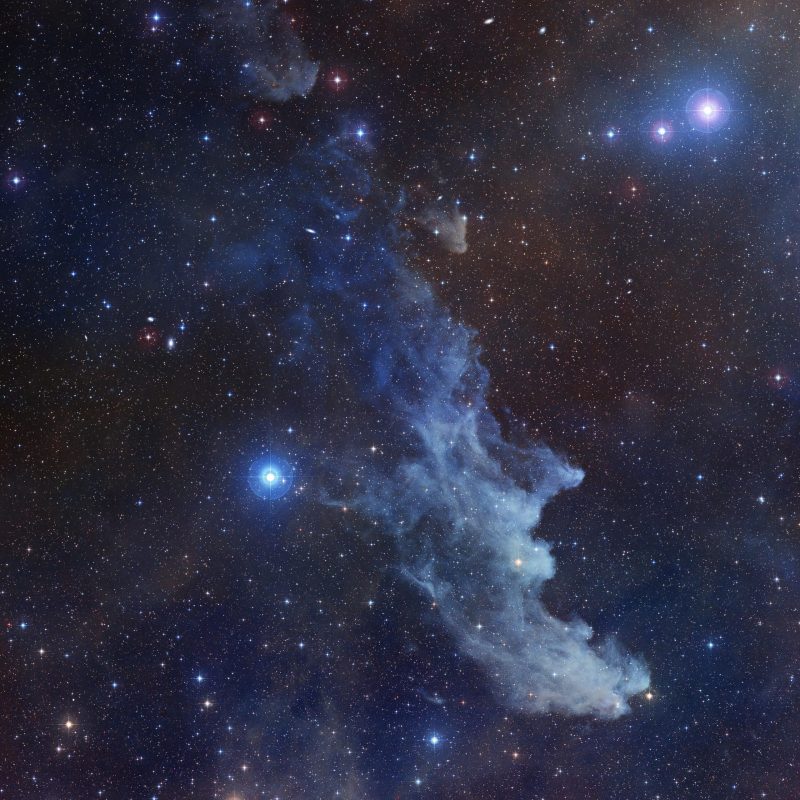
Bluish-purple gas cloud in the profile of a witch with pointy nose and chin, in starry space.

Look for the Witch Head nebula this Halloween night

The Witch Head nebula rises near the star Rigel in Orion on Halloween night, but it's too faint to see without a large telescope. A perfect sight for Halloween.

Read More
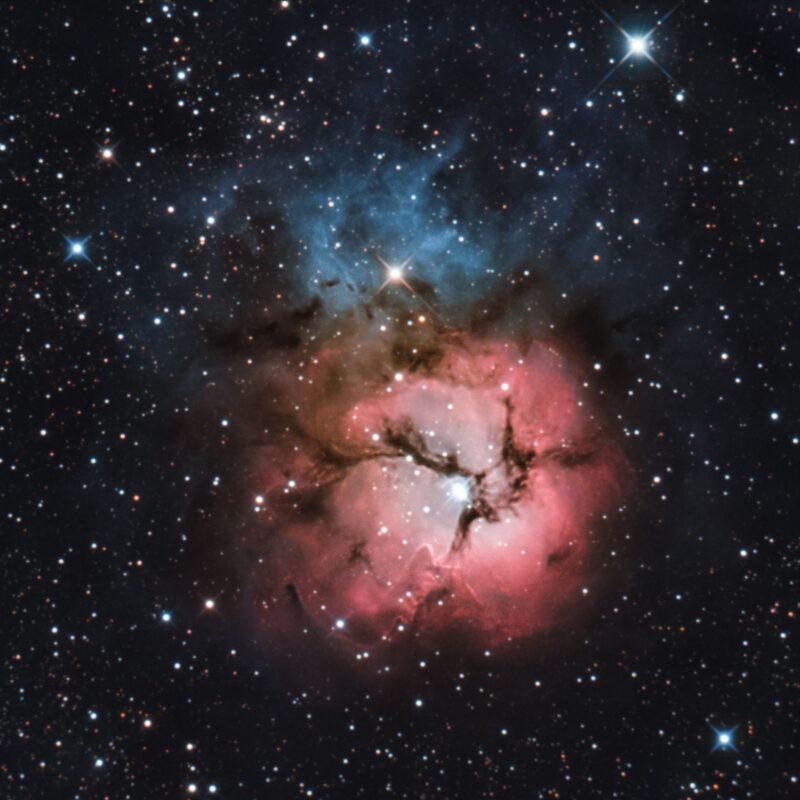
A large cloud with a blue lobe and a red lobe divided into 3 parts by dark lanes, overlaid with numerous stars.

See the Trifid nebula aka Messier 20 tonight

If you have a dark sky, you can spot the Trifid nebula as a fuzzy patch within the Milky Way. And binoculars or a telescope will reveal more details.

Read More
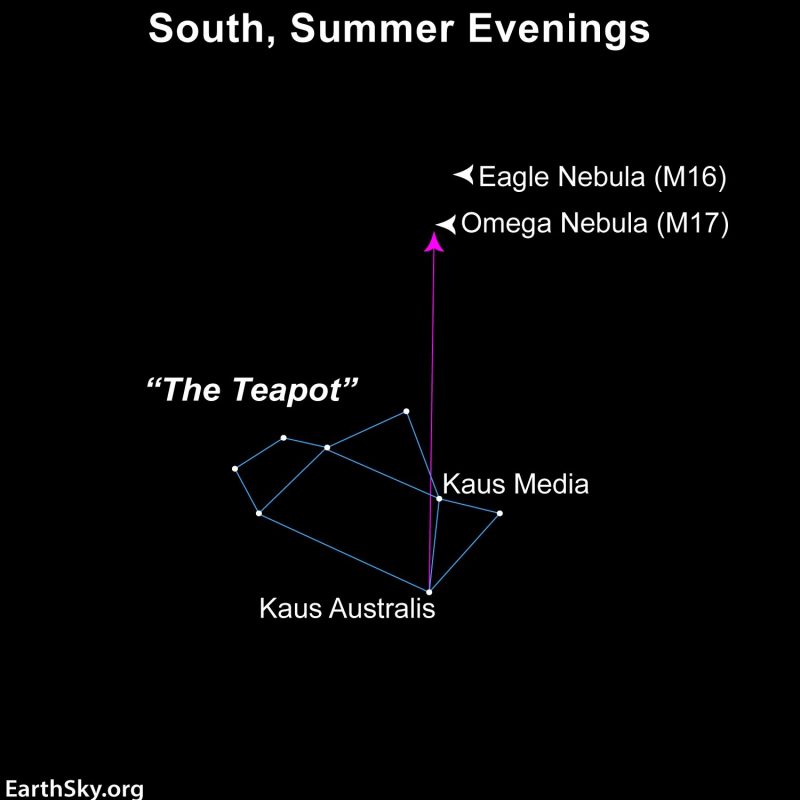
Star chart showing the Teapot, with an arrow drawn to 2 labeled arrows pointing out M16 and M17.

The Omega nebula is a star-forming region

The Omega nebula, also known as the Swan nebula or M17, is visible through binoculars and glorious through a telescope. Here's how to find it.

Read More
A deep space scene with a wispy, semicircular length of red cloud nearly as big as the constellation Orion.

Solar system passed through Orion, says intriguing new study

About 14 million years ago, our solar system passed through a dense region of dust and gas in the constellation Orion, possibly affecting Earth's climate.

Read More
EarthSky YouTube Channel
YouTube
Twitter
Facebook
Instagram
Store
Donate
© 2025-2029 Earthsky Communications Inc.
WEbsite by Milkyway.co
About
Contact Us
Terms & PRivacy