Witch Head Nebula
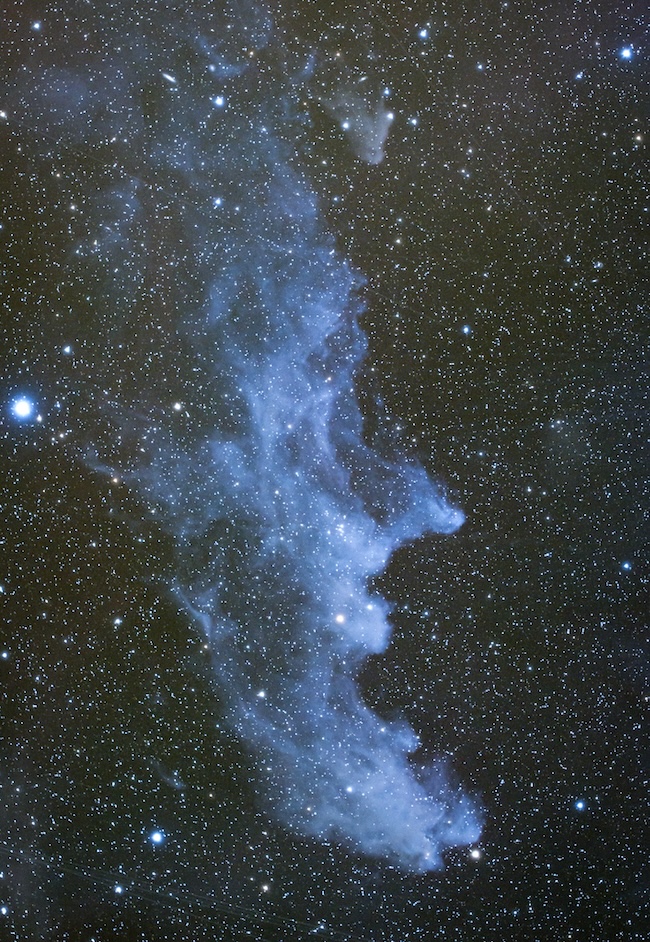
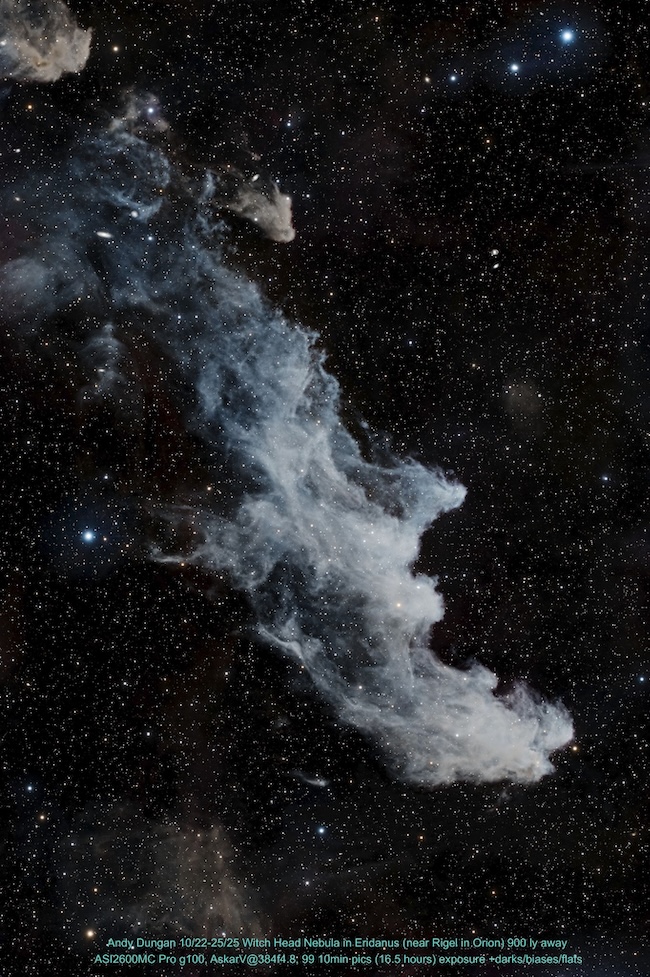
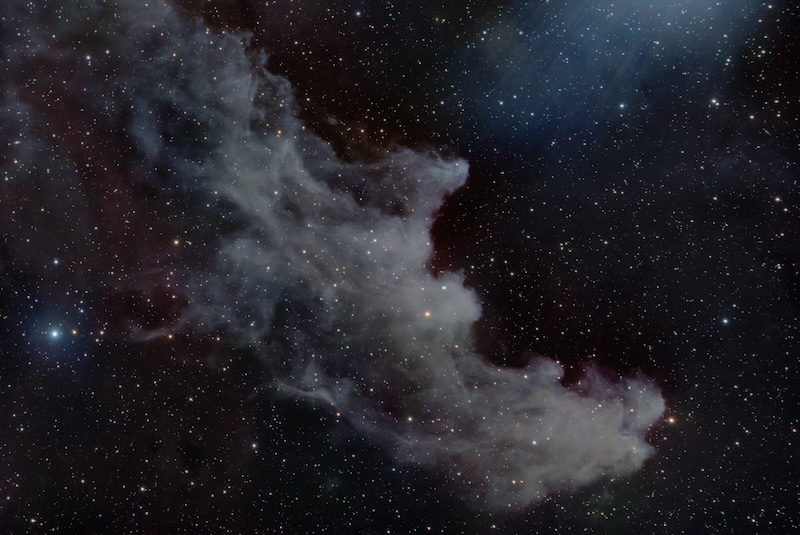
It’s that time of year again, when creepy-crawlies and spine-chilling images tickle our imaginations. One of the spookiest views in the night sky is of the Witch Head Nebula, with the catalog designation IC 2118. The Witch Head Nebula is located near Orion’s brightest star, Rigel. But Rigel is just outside the image above, so the witch gets all the attention. And, if the field of view was large enough to include the blue supergiant star, you could see that the witch appears to be gazing at Rigel.
The constellation Orion, accompanied by the Witch Head Nebula, rises from the eastern horizon before midnight every Halloween. This lengthy nebula spans 70 light-years and lies 900 light-years from Earth. The nebula is extraordinarily faint at magnitude 13, so you can only spot it with large telescopes.
Scientists think it might be an ancient supernova remnant. The Witch Head Nebula is categorized as a reflection nebula, or one that shines with the aid of a nearby star. In this case, Rigel shines its bright light on the gas and dust to create the reflection that we see. Basically, the dust reflects more blue light than red, which gives it its eerie purplish-blue hue.
Want to learn how to “capture the witch”? Try this post from the Galactic Hunter.
Want more ghoulish fun? Watch: Halloween Is an astronomy holiday
Some photos from our EarthSky Community
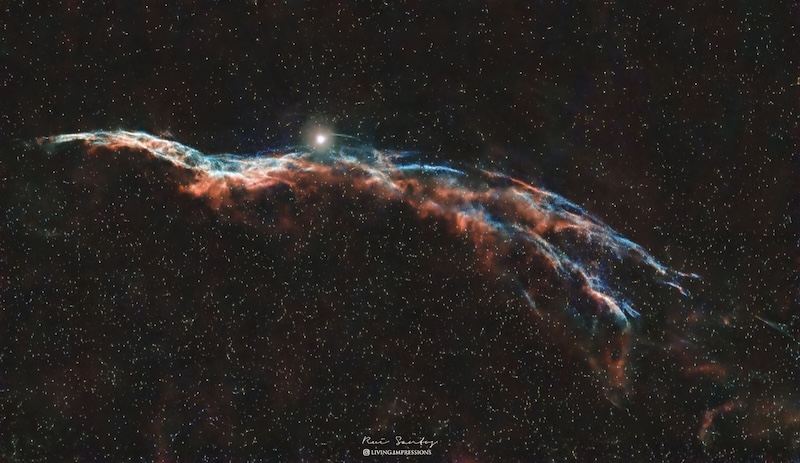
And, if you wonder how a witch can get around in the sky … there’s a Witch’s Broom Nebula located in Cygnus.
Bottom line: The Witch Head Nebula rises near the star Rigel in Orion on Halloween night, but you need a telescope to see it.
Read more: Halloween is an astronomy holiday. It’s a cross-quarter day
Like what you read?
Subscribe and receive daily news delivered to your inbox.
More from
Kelly Kizer Whitt


Visible planets and night sky guide for October and November

Lake Powell rises more than 10 feet after heavy rains
Lacerta the Lizard, home to a blazar