A daily update by email. Science news, great photos, sky alerts.
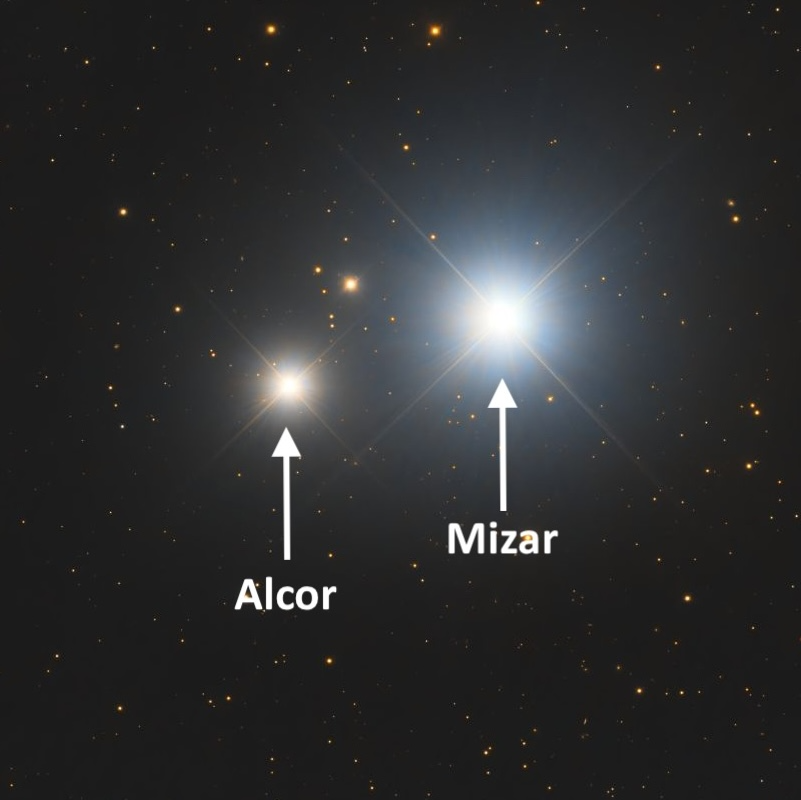
Mizar and Alcor are a famous pair of stars located at the bend of the handle of the Big Dipper. But what we see as 2 stars are really 6 stars!
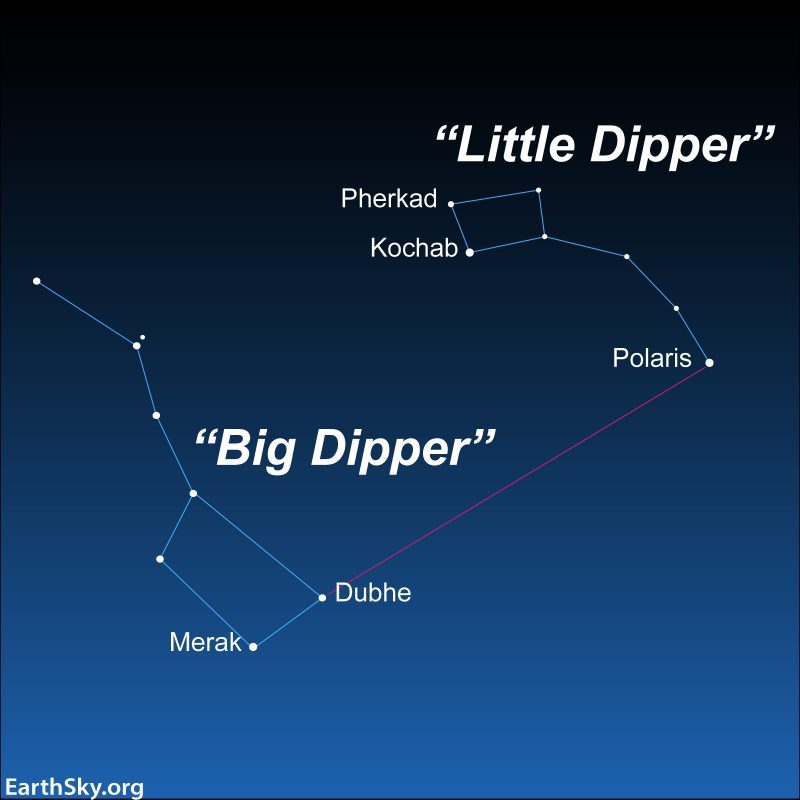
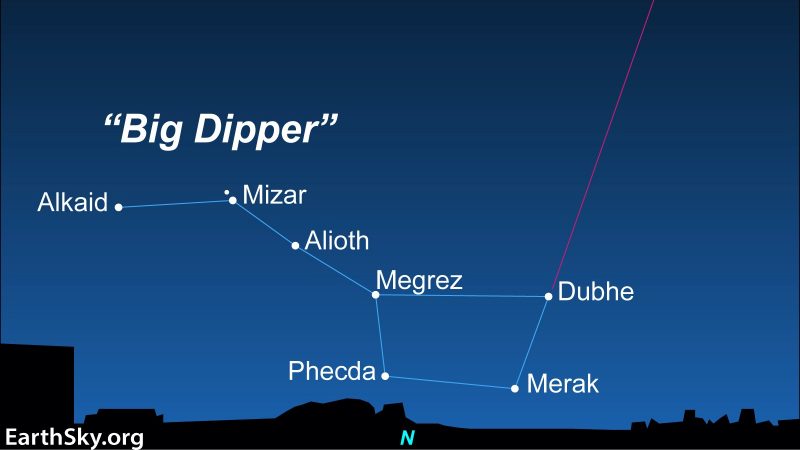
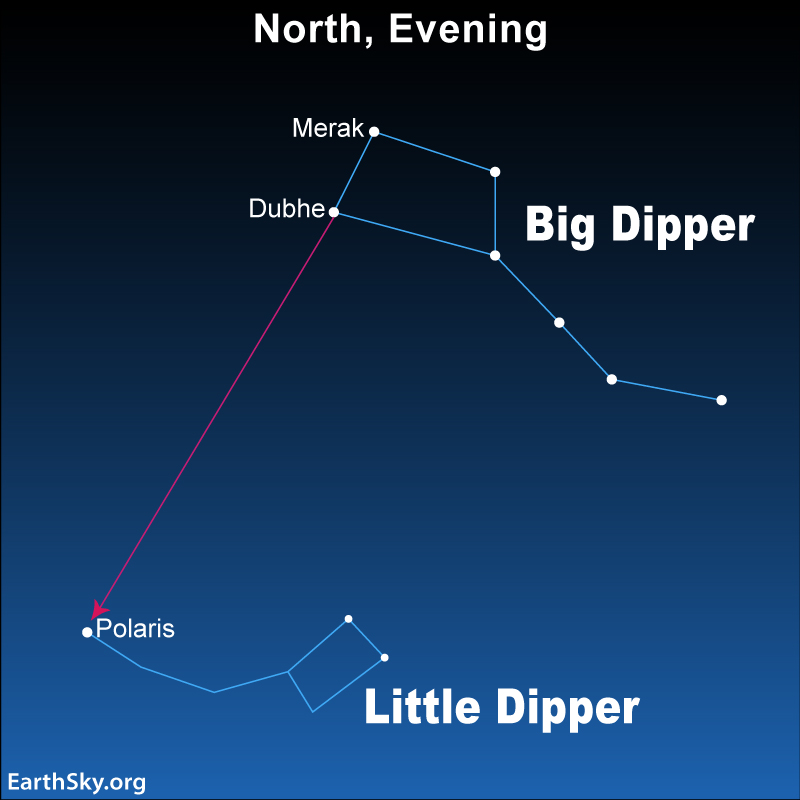
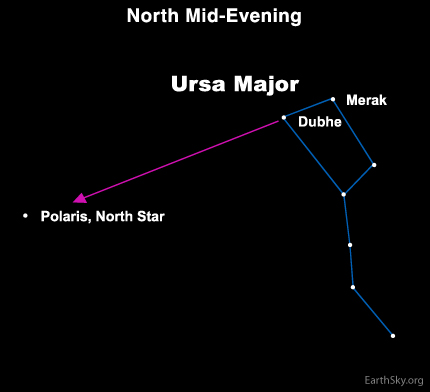
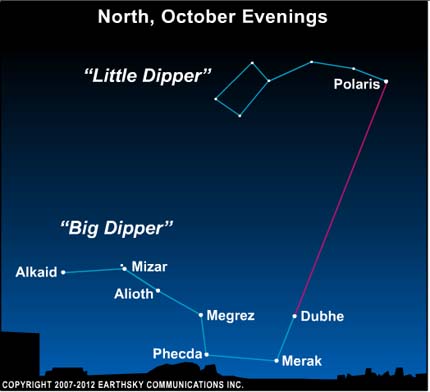
Do you know how to find the North Star? The 2 outer stars in the bowl of the Big Dipper point to Polaris, the North Star. It's quick and easy!
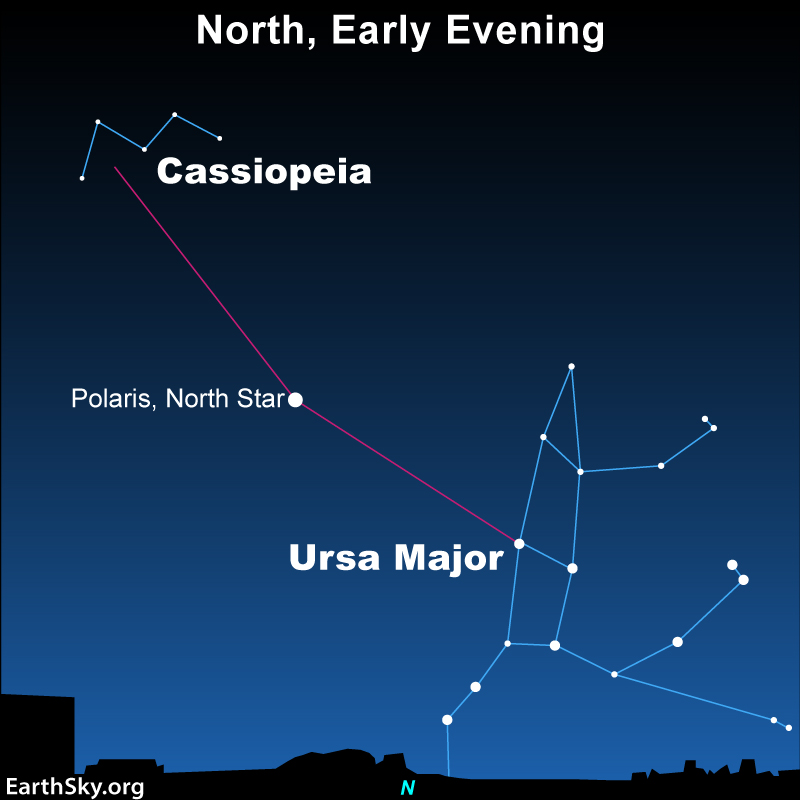
Watch the celestial clock and its 2 great big hour hands - Cassiopeia and the Big Dipper - as they swing around the North Star each and every night!
Want to find Polaris, the North Star? The entire northern sky turns around it. If you can find the Big Dipper, you can always find Polaris.
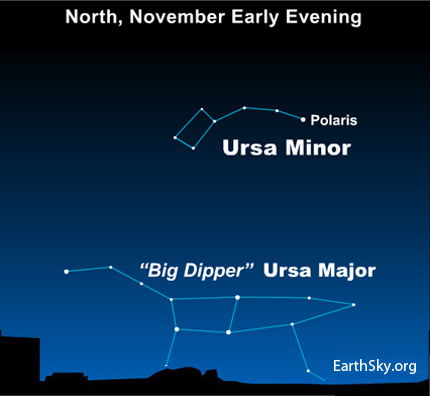
The Big Dipper is easy to recognize at most times of the year. But the Big Dipper in autumn rides low in the northern sky in the evening hours.
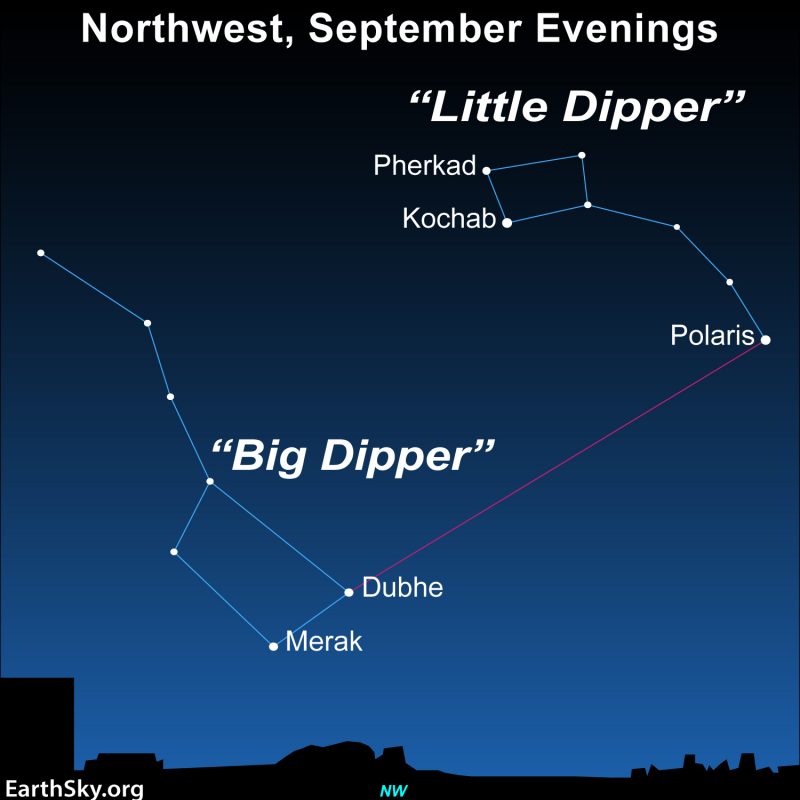
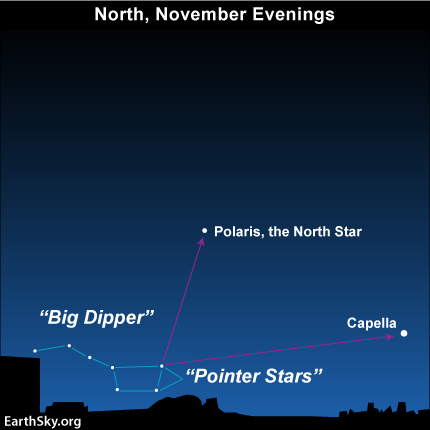
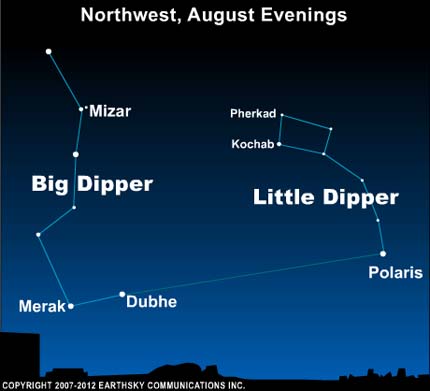
On northern autumn evenings, the famous Big Dipper lies low on - or even below - the northern horizon. You can use it to find Polaris, the North Star.
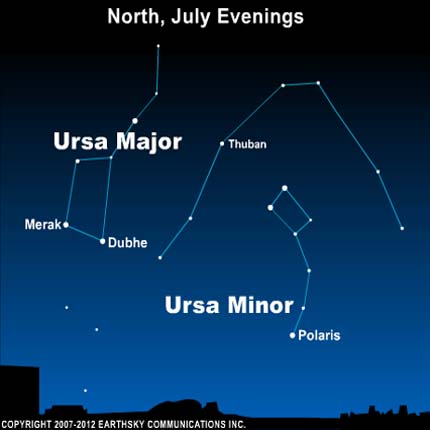
Polaris marks the end of the handle of the Little Dipper. The 2 outer stars in the bowl of the Big Dipper point to Polaris and help you find the Little Dipper.
Every year, the Big Dipper (Great Bear) descends to its lowest point in the sky on November evenings. This makes it difficult, or impossible, to see.
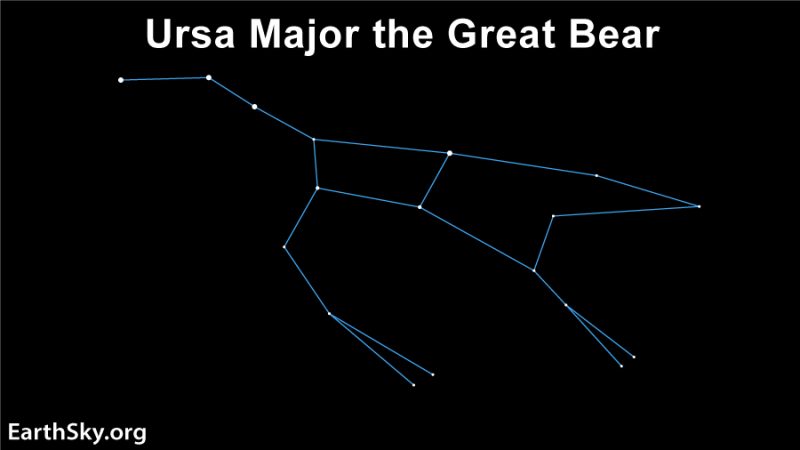
Ursa Major the Great Bear is in Northern Hemisphere skies and is home to the asterism of the Big Dipper, which you can use to find other constellations.
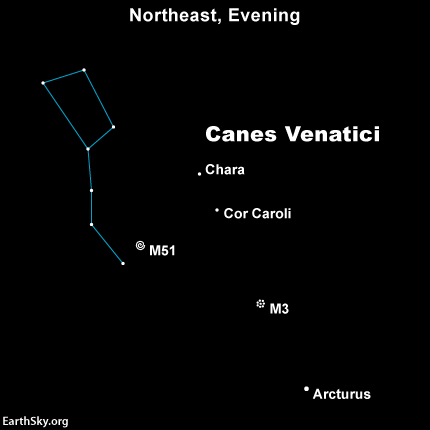
Find out how to use the Big Dipper to find the constellation Canes Venatici, also known as the Hunting Dogs, which contains the stars Chara and Asterion.
Polaris and Thuban have this in common: both reside, or have resided, at the apex of Earth's sky. That is, both are famous pole stars.
The 2 outermost stars in the bowl of the Big Dipper always point to the North Star, aka Polaris. That's why astronomers call these stars The Pointers.
You've heard of the "pointer" stars of the Big Dipper? They point to the North Star. You can also use bowl stars to find the star Capella, aka the Goat Star.
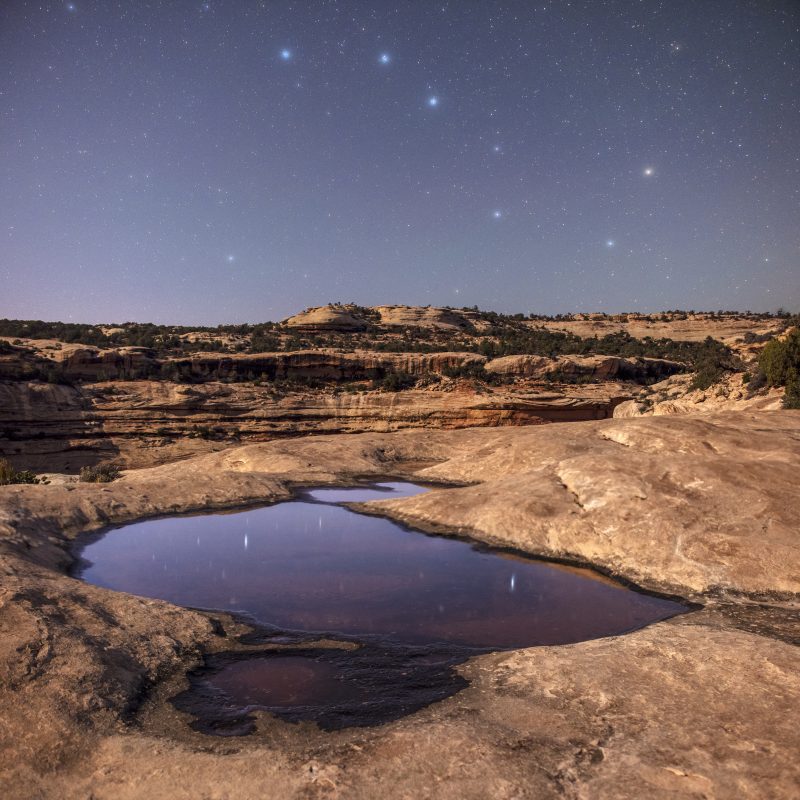
The Big Dipper over a pool in the Utah desert, caught from a canyon littered with the rock art and ruins of Ancestral Puebloans.
Here's an easy astronomy lesson, from a master in the art of loving nature.
The Big Dipper is easy to recognize, but the Little Dipper ... not so much. Here's a tip that can help.
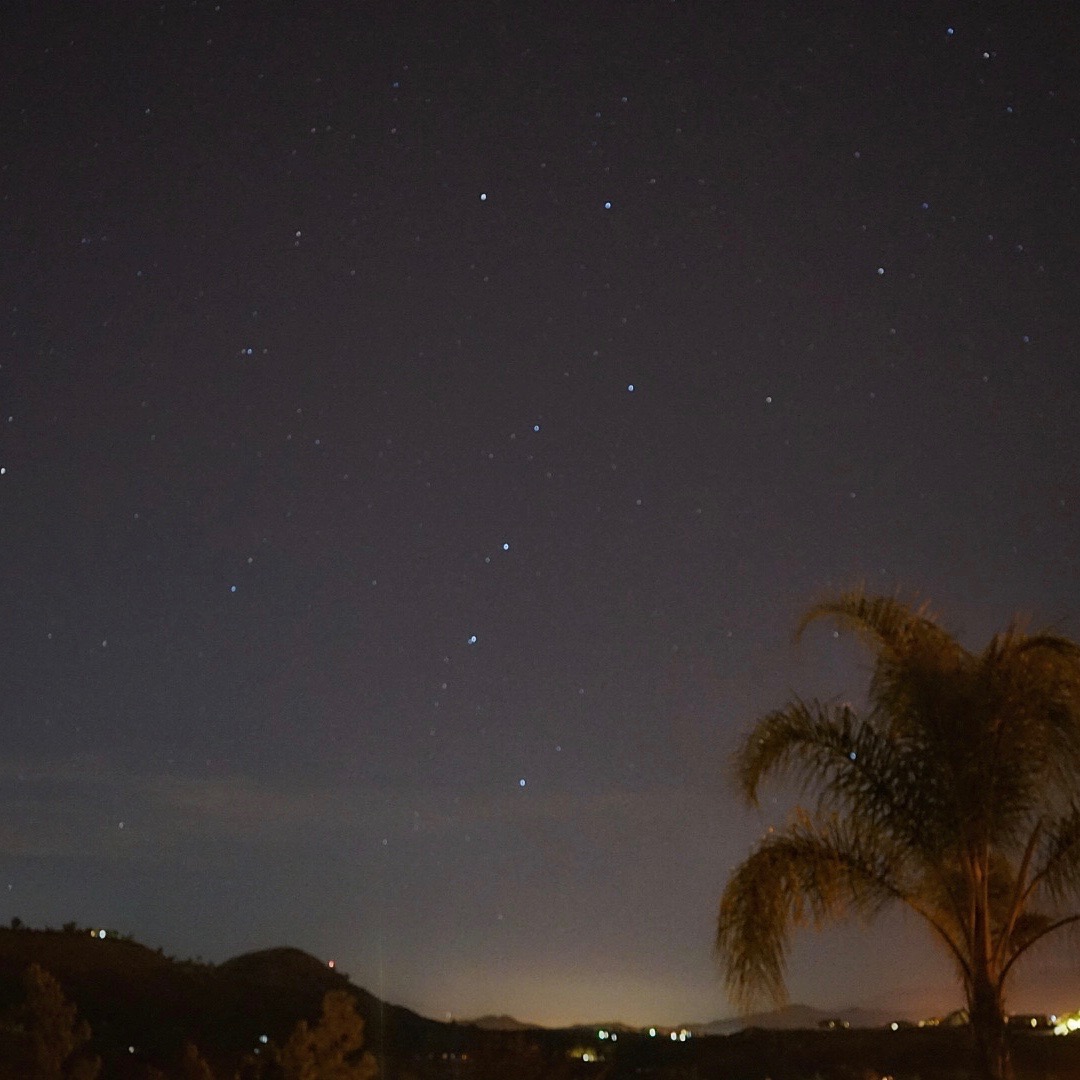
The Big Dipper is low in the sky in the evening hours at this time of year. But you can see it after midnight. Janet Aviles caught it earlier this week, ascending in the northeast.
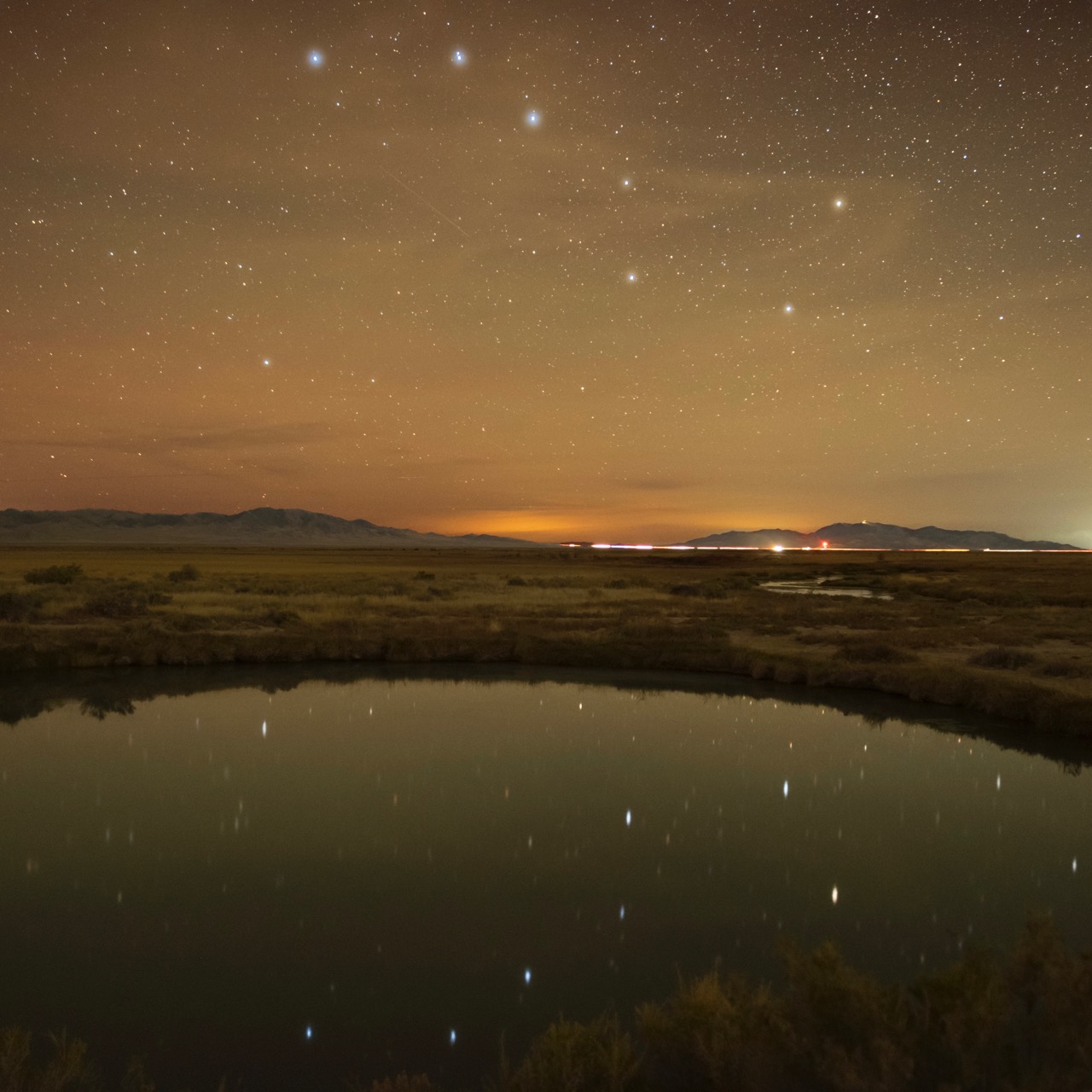
The famous Big Dipper asterism, caught mirrored in Horseshoe Spring, one of many natural hot springs in Utah’s West Desert.
From 41 degrees N. - and farther north - the Big Dipper is circumpolar, meaning it never sets. But from more southerly latitudes, the Dipper is below your horizon each evening now. Want to see it? Here's how.
Use the Big Dipper to find Polaris, the North Star. Then notice the two stars Mizar and Alcor in the Big Dipper’s handle.
EarthSky Newsletter
Nearly half a million daily subscribers love our newsletter. What are you waiting for? Sign up today!
Join now to receive free daily science news delivered straight to your email.