A total lunar eclipse was visible on the night of March 13-14, 2025, for the western half of Africa, western Europe, the Americas, eastern Australia, northern Japan and eastern Russia. Did YOU see it? The skies were cloudy for many people … But thankfully, some skywatchers from around the Western Hemisphere could capture the magnificent event. Enjoy these wonderful photos and see more incoming images here. Do you have an image to share? Submit it here.
Total lunar eclipse with aurora
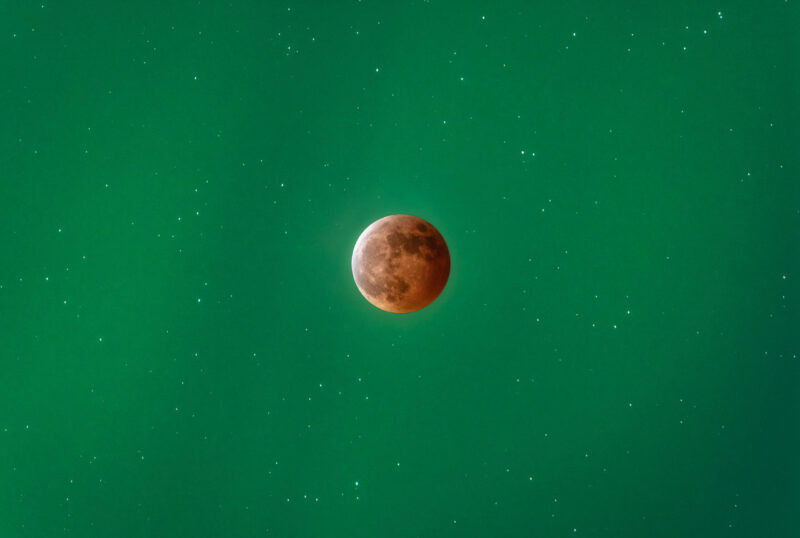
Dan Zafra of Capture the Atlas shared this image with EarthSky that he took of the totally eclipsed moon. Dan wrote: “I just captured during the total lunar eclipse last Thursday, a rare moment where an aurora substorm erupted right at the peak of totality. I traveled all the way to northern Alaska to photograph this event, and luckily, the skies were clear. The result was a once-in-a-lifetime image of these 2 incredible celestial events happening at the same time.” Thanks, Dan! You can see more of his images here.
Total lunar eclipse of March 13-14, 2025
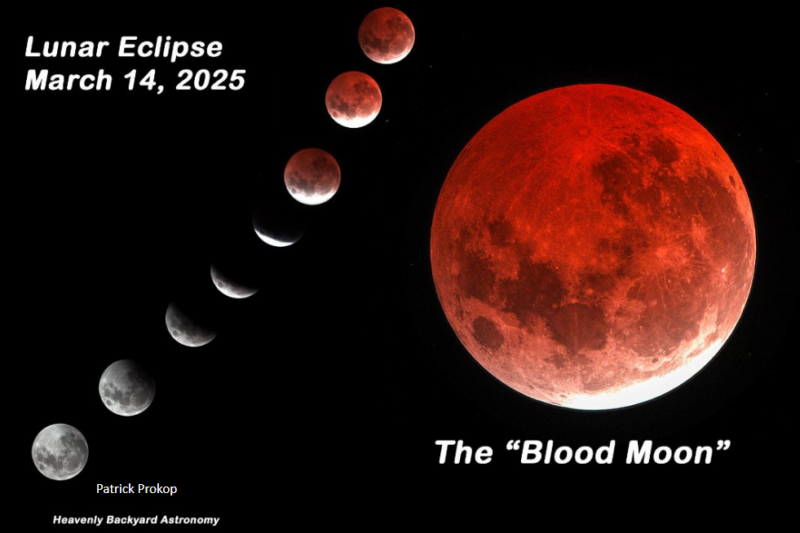
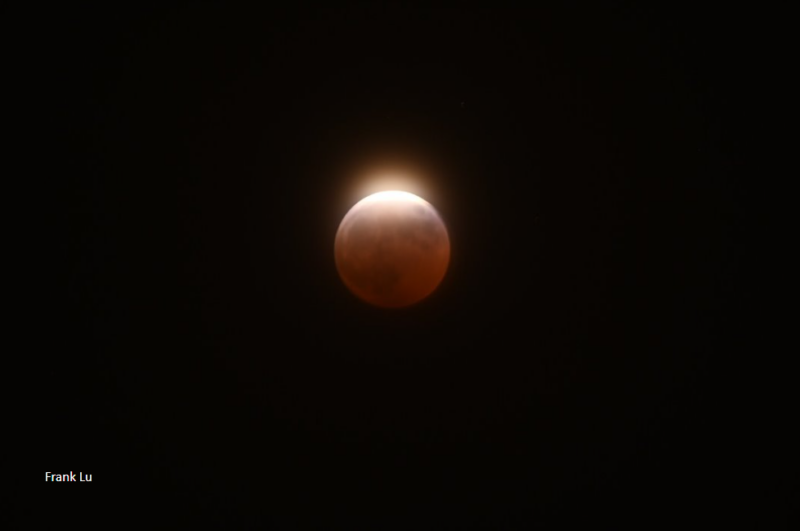
View at EarthSky Community Photos. | Cecille Kennedy in Depoe Bay, Oregon wrote: “The forecast was rainy, and the clouds were thick. We didn’t see the moonrise. Hours later, there was a clearing on the other side and a few stars became visible. I went outside to see the most beautiful blood red moon playing hide and seek with the clouds. I managed to take a few shots before dark clouds covered the night, and the rains came.” Thank you, Cecille!View at EarthSky Community Photos. | Patrick Prokop in Savannah, Georgia, created this composite image of the different phases of the eclipse. Wonderful! Thank you, Patrick.View at EarthSky Community Photos. | Frank Lu in Arlington, Texas, shared this peculiar image and wrote: “While waiting for totality, it occurred to me that a similar diamond ring effect may be possible. I overexposed and I think I’ve achieved the desired outcome. I’m calling this a golden ring.” Thank you! Watch this video of Baily’s beads and the diamond ring effect during a total solar eclipse.View at EarthSky Community Photos. | Petr Horálek captured these full moons from the Cerro Tololo Observatory in Chile. Petr wrote: “I made it happen (with no sleep yet) to finalize today’s lunar eclipse triplet, as the eclipse was truly beautiful over the CTIO Cerro Tololo observatory, Chile. Colors in the Earth’s shadow were vivid, including the turquoise effect at the start and even end of the eclipse (where primarily the ozone layer causes a bluish tint, referring to Richard Keen’s explanation from 2007). The effect was easily capturable on camera, but also nicely visible to binoculars.” Amazing, thank you! Image via Petr Horálek/ CTIO (Cerro Tololo Observatory)/ AURA/ NFS/ NOIRLab.
Eclipse sequences
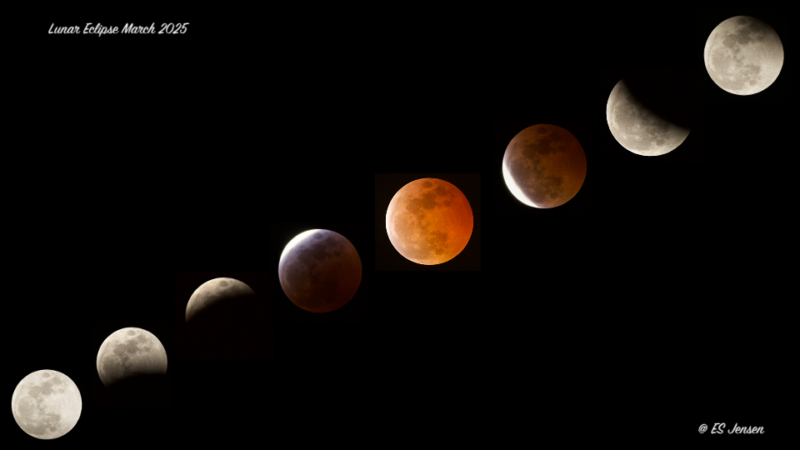
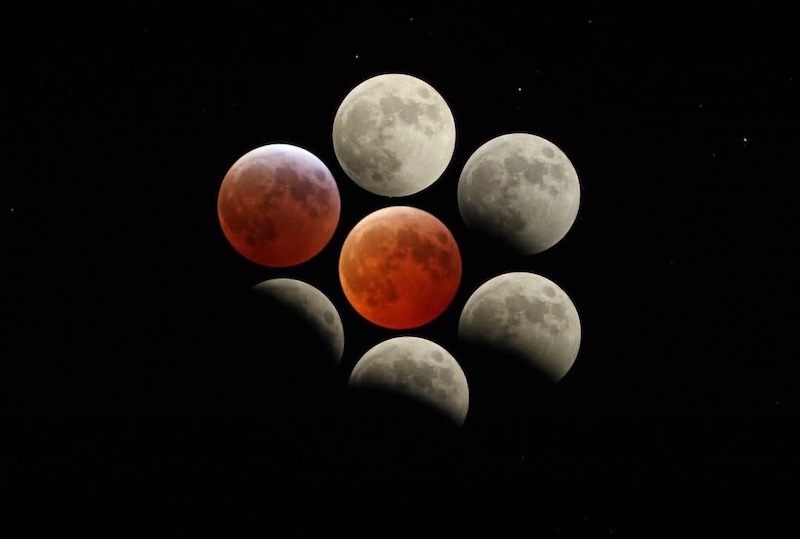
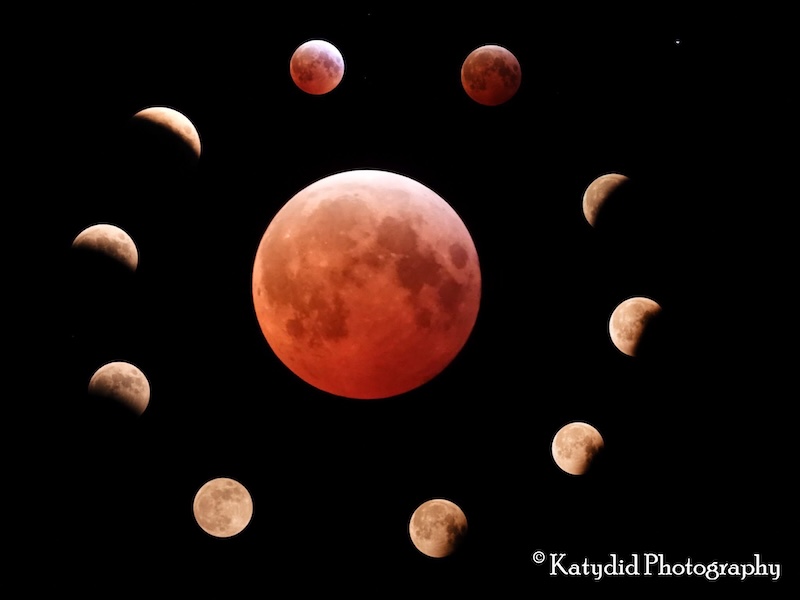
View at EarthSky Community Photos. | Mike Taylor caught these sequence of the lunar eclipse from Maine on March 14, 2025. Mike wrote: “The wind was calm, the air was brisk, the clouds were few, and a couple different groups of coyotes were howling back and forth to each other. Stephen King would be proud.” Thanks, Mike!View at EarthSky Community Photos. | Eric Jensen in Milwaukee, Wisconsin, shared this “montage of the total lunar eclipse” on March 14, 2025. Thanks, Eric!View at EarthSky Community Photos. | Smita Parida in Rockville captured images of the lunar eclipse on March 14, 2025, and arranged them into a question mark. Thanks, Smita!View at EarthSky Community Photos. | John Niehay in Macon County, Illinois, captured these images of the moon throughout the eclipse from March 13 to 14, 2025. Thanks, John!
More composite views
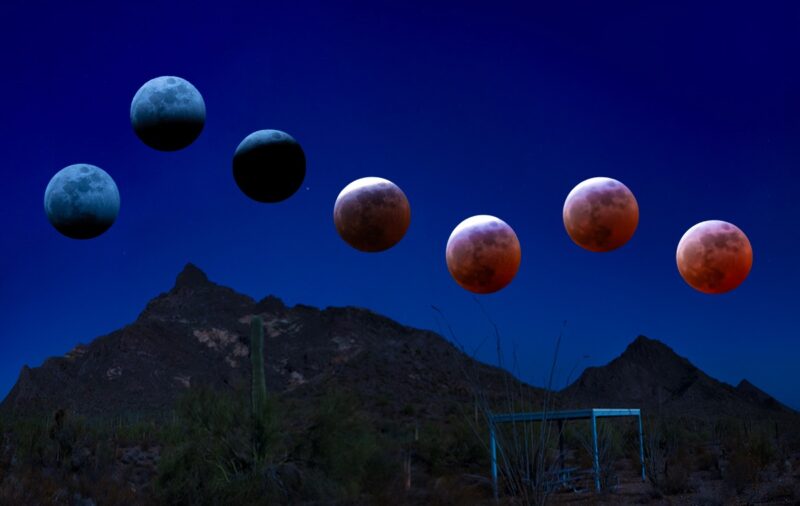
View at EarthSky Community Photos. | Jelieta Walinski wrote, “We just returned from an unforgettable journey, braving the elements to capture the breathtaking Blood Moon. Despite initial forecasts of rain, we decided to take a chance and drive to Saguaro National Park West in Arizona. However, as the radio warned of an impending storm, we made a bold decision to push through the tempest. Rain, wind, and a haboob couldn’t deter us! My husband’s persistence paid off as we arrived at Organ Pipe Cactus National Monument, where the skies finally cleared.” Thank you, Jelieta!View at EarthSky Community Photos. | Elizabeth Seeley caught the eclipsing Worm Moon from Frankford, West Virginia, on March 14, 2025, and wrote: “I happened to be off today so stayed up and watched the eclipse reach maximum. Very cool!” Thank you, Elizabeth.View at EarthSky Community Photos. | Kathy Hunter caught these views of the lunar eclipse on March 14, 2025, also from West Virginia. Kathy wrote: “My first composite!” Thank you, Kathy.
The eclipse and the stars
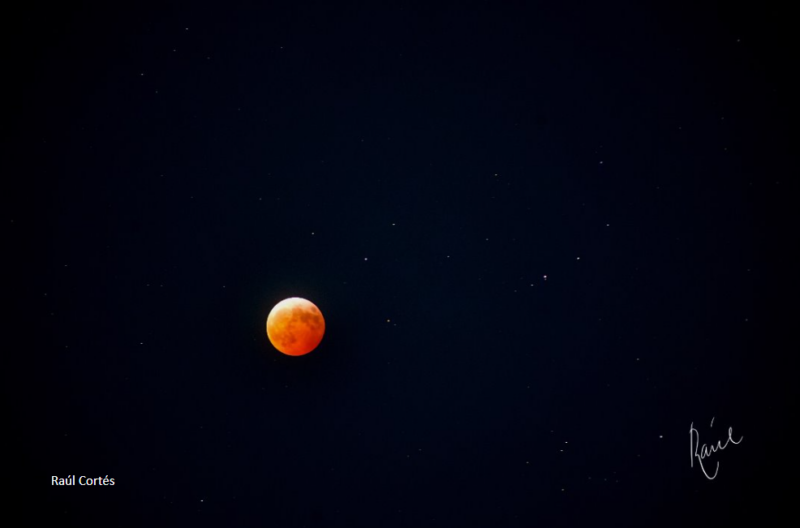
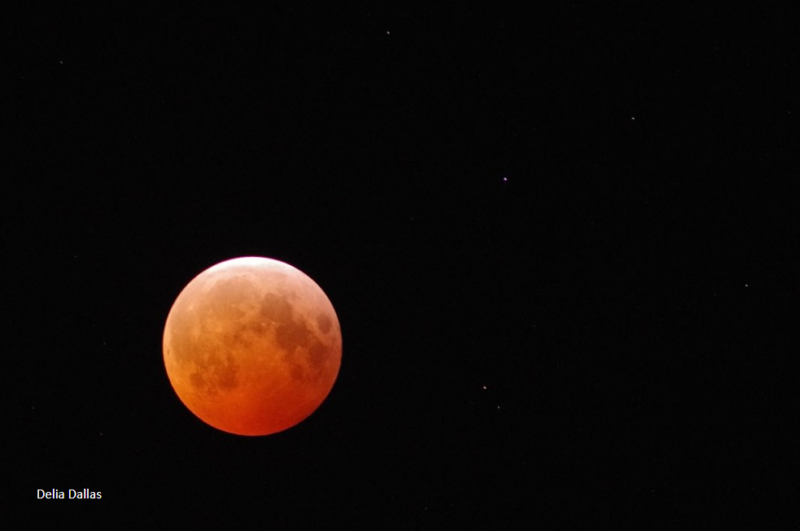
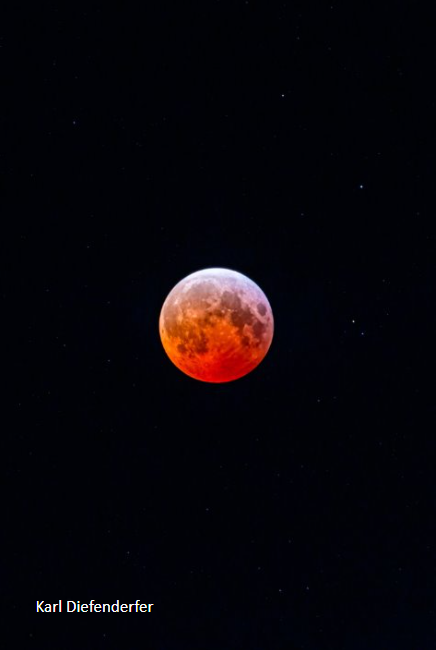
View at EarthSky Community Photos. | EarthSky’s Raúl Cortés shared this image from Monterrey, Mexico, and wrote: “During a full moon, stars around the moon are difficult to see because the intense glare of the moon washes out many stars. But during a lunar eclipse at totality, as soon as the moon goes completely into Earth’s shadow, stars immediately pop out and can be seen despite a full moon is there. That is the Blood Moon. It was an amazing scene. I had a chance to see the complete lunar eclipse and it was an amazing event.” Thank you! Did you know that the March full moon is also known as the Worm Moon?View at EarthSky Community Photos. | Delia Dallas captured this image from Warner Robins, Georgia, and wrote: “Pic of the lunar eclipse 10 minutes before clouds formed and completely obscured it.” Thank you, Delia!View at EarthSky Community Photos. | Karl Diefenderfer in Quakertown, Pennsylvania, shared this image of the eclipsed moon and wrote: “Was able to image the lunar eclipse Just before the clouds rolled in!” Phew! Thank you, Karl.
An eclipse of many colors
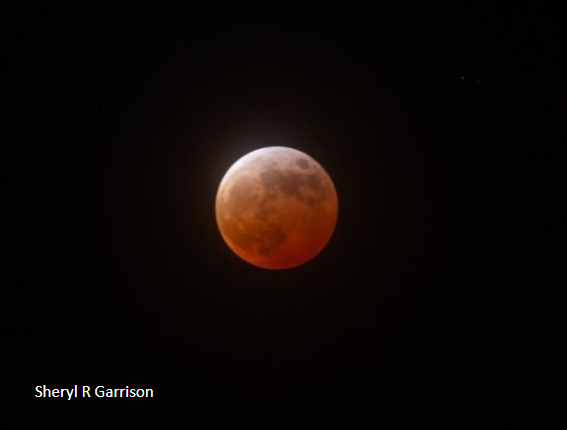
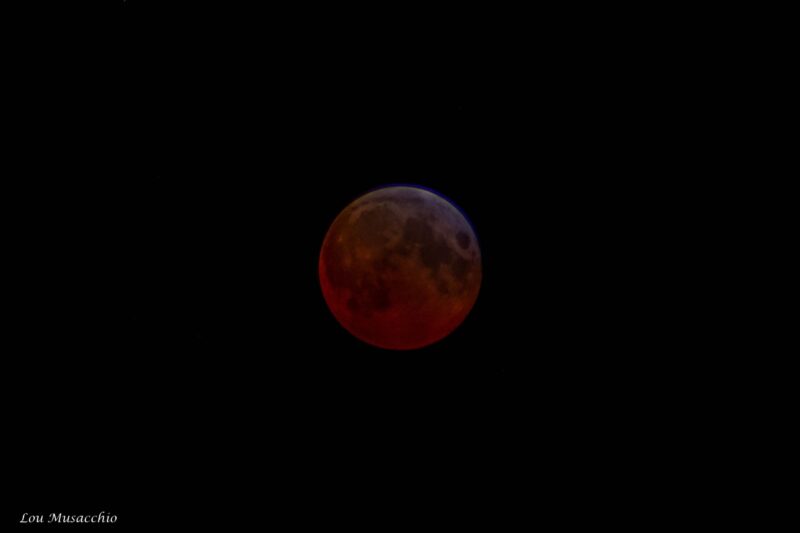
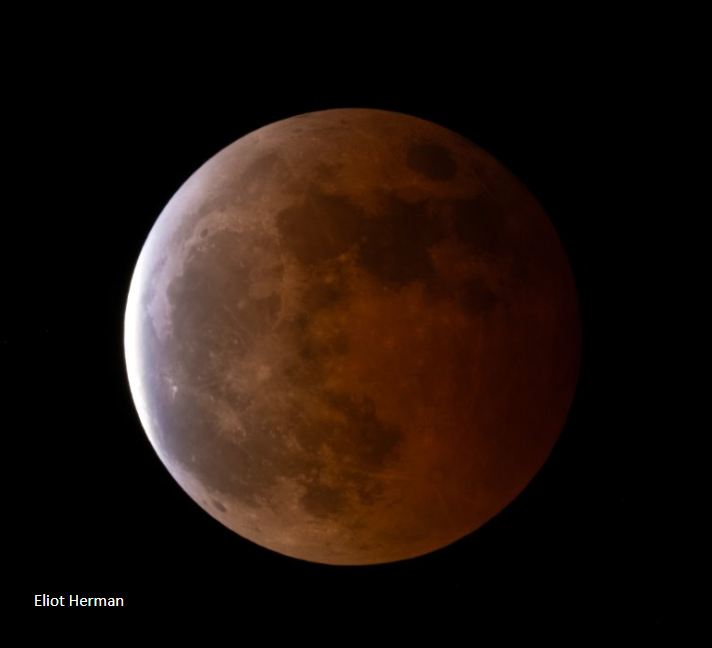
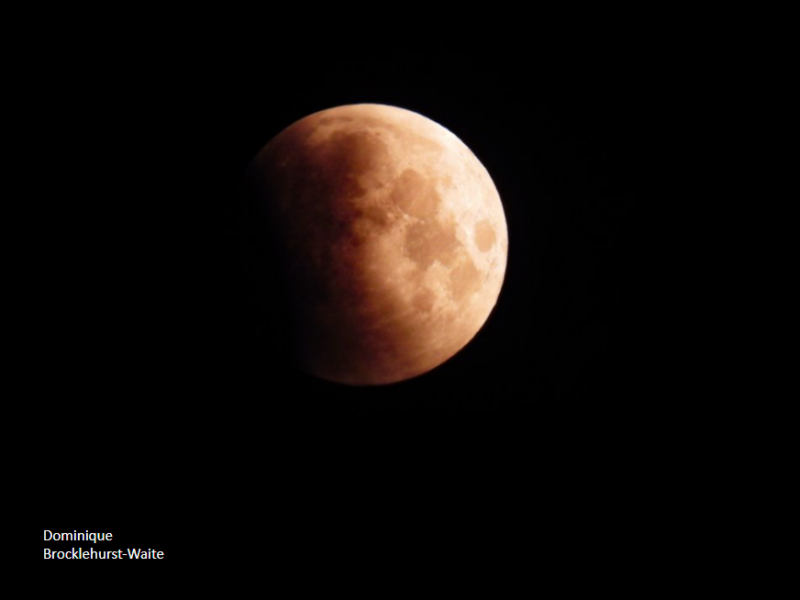
View at EarthSky Community Photos. | Sheryl R Garrison in Southern Alberta, Canada, shared this image of the eclipse and wrote: “It was the battle of the clouds and chilly temperatures, but It was worth it to see the lunar eclipse.” Thank you!View at EarthSky Community Photos. | Lou Musacchio in Montreal, Quebec, Canada, photographed the full Worm Moon almost at maximum eclipse. See the colors? From red, to orange, to gray/bluish. Beautiful! Thank you, Lou.View at EarthSky Community Photos. | Eliot Herman in Tucson, Arizona, shared this image and wrote: “Captured at the predicted end of totality. This eclipse was moderately dark at totality and the colors of ozone band were muted for this event.” Thank you!View at EarthSky Community Photos. | Dominique Brocklehurst-Waite in Wokingham, Berkshire, UK, shared this beautiful image of the eclipsed moon during its partial phase. Thank you!View at EarthSky Community Photos. | Asha Prasad in Minnesota captured this lovely view of the moon during its partial phase. Thank you, Asha!
Bottom line: A total lunar eclipse was visible for many skywatchers around the world yesterday night. Did you see it? Here are some amazing images for you to enjoy.
Cristina Ortiz - based in Granada, Spain - is EarthSky's defender of animals with her "lifeform" videos at EarthSky YouTube. Discover the most fascinating facts about all the beings with whom we share Earth. Are you ready for the adventure? Cristina has been an EarthSky.org editor since 2021. She has a master’s degree in translation and interpreting, specializing in science and technology. "Since I was a kid," she says, "I could feel that passion for science and communication."
Like what you read? Subscribe and receive daily news delivered to your inbox.
Thank you! Your submission has been received!
Oops! Something went wrong while submitting the form.