Good news for whale lovers. After 30 years of marine park protection in the Great Australian Bight, the southern right whale (Eubalaena australis) is returning to South Australia in greater numbers. This raises hope for the long-term recovery of this endangered species.
In fact, scientists from Flinders University, along with other experts, announced on August 25, 2025, that a new record has been set for whale sightings in the region since 2016. However, there has also been a decline in calf numbers. Why is that?
The scientists published two studies, one on July 8, 2025, in the peer-reviewed journal Marine Mammal Science, and another on July 28, 2025, in the peer-reviewed Journal of Cetacean Research and Management.
Record sightings of southern right whales
Scientists have described this year’s whale season in South Australia as a ray of hope for marine ecology and conservation. Bridgette O’Shannessy, a Ph.D. candidate at Flinders and lead author of the new study in Marine Mammal Science, which draws on 30 years of survey data (1992–2022), says:
This year marks a significant milestone: Thirty years since the establishment of the Great Australian Bight Marine Park in 1995, a sanctuary created largely due to groundbreaking research identifying the Head of Bight as a critical nursery area for these endangered whales.
Southern right whales inhabit the southern coasts of Australia between May and October, during key stages of their life cycle such as calving, nursing, mating, and migrating. Claire Charlton, researcher at Flinders University and lead scientist for the Australian Southern Right Whale Research Program, notes:
With early sightings already reported at Head of Bight, Fowlers Bay and Encounter Bay, we are eagerly anticipating a bumper year after recent years of slower growth.
Charlton, who is also co-author of the two new scientific studies, adds:
This week we recorded almost 200 whales across South Australia, with 70 females and calves at Head of Bight, nine females and calves at Fowlers Bay and four females with calves at Encounter Bay. These are record numbers observed since 2016.
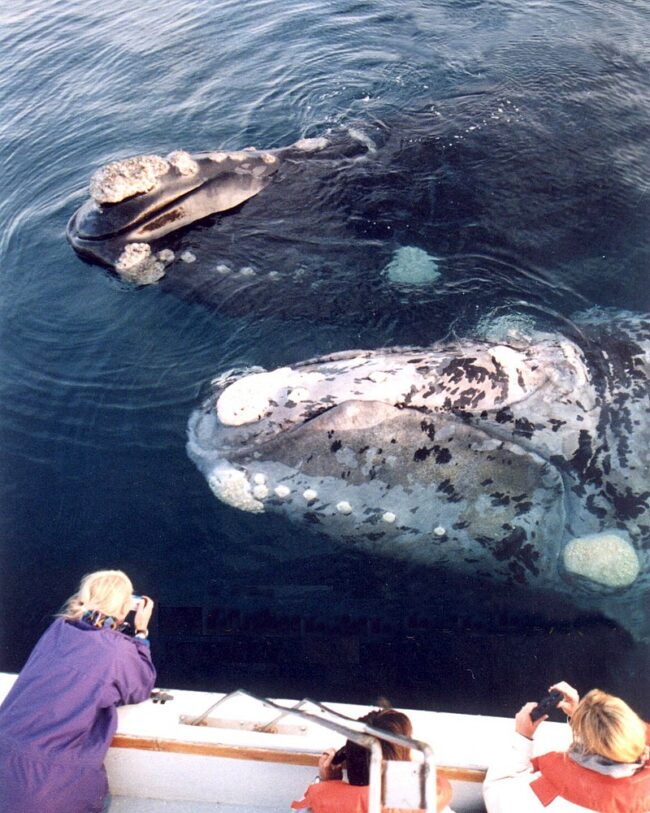
Not all news is good
In recent years, marine scientists have observed significant changes in the behavior and distribution of southern right whales along Australia’s southern coast. While some of these changes reflect progress in conservation efforts, others raise concerns in the scientific community.
New studies based on decades of monitoring offer a mixed outlook: encouraging signs of recovery in certain areas contrast with worrying trends in overall population growth and reproduction. O’Shannessy says:
We celebrate the increasing numbers and site occupancy of whales at the historically important area of Fowlers Bay, and the conservation success of the Great Australian Bight Marine Park in protecting whales at Head of Bight.
Charlton adds:
However, the findings also serve as a caution as the overall population growth rate has slowed, and calving success has declined over the past decade.
This is especially concerning given that this species has been a symbol of successful marine conservation. O’Shannessy states:
Often considered a flagship species for successful conservation management, we are starting to see some long-term reduction in reproductive success and growth.
Still, the data also reveal notable recovery in certain zones, highlighting the effectiveness of well-managed marine protected areas. According to O’Shannessy:
Our data show rapid recolonization at Fowlers Bay, one of the fastest growth rates for southern right whales anywhere in the world. This demonstrates the power of marine protected areas, but also the need for ongoing threat mitigation for the Australian population.
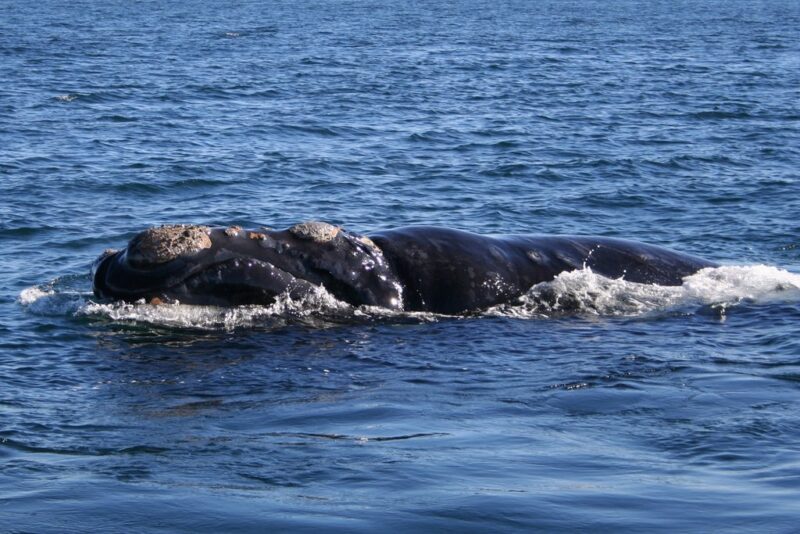
How do algae blooms affect whales?
In the article from Flinders University, researchers mention how whales are being affected by a devastating harmful algal bloom (HAB). The connection between southern right whales and HABs in South Australia is indirect but significant. These blooms impact the whales’ food sources, health, and reproductive success.
Southern right whales feed on zooplankton, especially copepods and krill (types of tiny crustaceans), which can be negatively affected by HABs. Harmful algal blooms disrupt marine ecosystems by displacing or killing key plankton species and by producing toxins that accumulate in the food chain.
The result is food scarcity or contamination, which can lead to poor health, lower reproductive success, or changes in migratory and breeding behaviors. Poor nutrition due to limited food supply can cause reduced female fertility and lower calf survival.
HABs are often a symptom of climate change and ocean warming, which affect whale habitats. Since these mammals rely on stable, clean coastal ecosystems for calving and nursing, HABs may signal serious environmental degradation.
Furthermore, HABs are frequently triggered by agricultural runoff or coastal development, activities also linked to other whale threats such as noise pollution, ship strikes, and entanglement in fishing nets. These cumulative impacts create a combined threat to whale populations.
Why is it important to protect the whole coast?
The Great Australian Bight Marine Park has been key to protecting Head of Bight, the most important calving ground for southern right whales. Today, many whales return to this area each year during the breeding season, and increasing numbers are also returning to Fowlers Bay, a historic calving site.
While whale numbers are rising, growth rates vary by location: in Fowlers Bay, whale numbers are growing rapidly (around 15% annually), but in Head of Bight, growth is slower (around 3.3% per year). Moreover, in the past 10 years, calf production has declined, signaling emerging challenges to conservation.
Whales are also shifting their habits, moving more between important areas along Australia’s southern coast and spending less time in traditional gathering spots. That’s why it’s crucial to protect all the regions they use for movement and reproduction, not just a few.
Long-term research is incredibly valuable. Studying whales over many years helps scientists understand how their populations are changing and what actions are needed to protect them in the future.
The Australian Southern Right Whale Research Program, led by Claire Charlton from Flinders University, has been collecting data annually for 35 years, supported by the Minderoo Foundation and other partners.
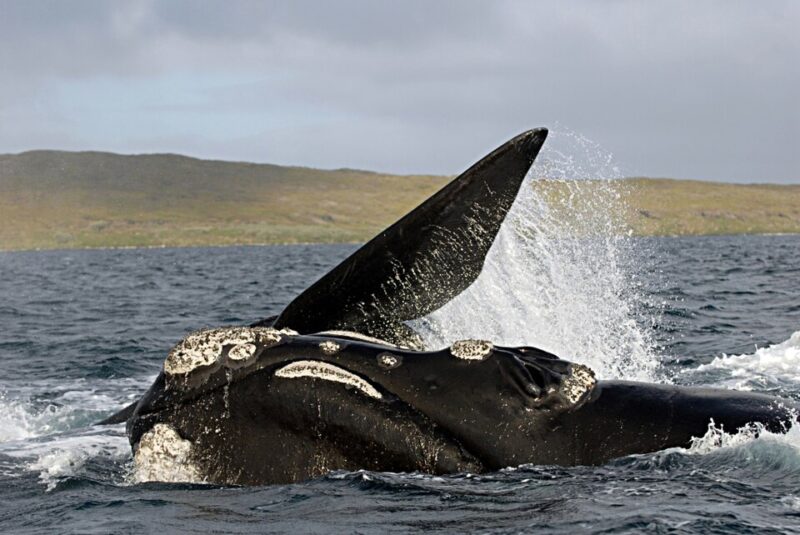
35 years of effort
From 1976 to 2024, aerial survey data estimates the current southern right whale population at between 2,346 and 3,940 individuals, which is only 16% to 26% of pre-whaling population levels. Additionally, calf numbers have declined from a peak of 222 in 2016 to 200 in 2024.
Associate Professor Luciana Möller, who works in the Molecular Ecology and the Cetacean Ecology, Behaviour and Evolution Labs at Flinders University, notes:
In recent decades, reproduction in both the eastern as well as our western populations in Australia appears to have levelled off, with aerial surveillance indicating a decline in calf abundance.
Changes in available food sources seem to combine with coastal development and habitat disturbances, including vessel strike, noise disturbance and fishing equipment entanglement as major threats to recovery.
This year marks the 35th consecutive year of the southern right whale research program in the Great Australian Bight, carried out by Flinders University in collaboration with the Minderoo Foundation, Yalata Anangu Aboriginal community, Department of Environment and Water, Eyre Peninsula Cruises, and Curtin University. As Charlton explains:
This research aims to assess distribution, abundance, life histories, health and behavior to help inform management and policy and national recovery goals.
Australia’s Southern Right Whale Recovery Plan aims to reduce threats, protect and restore habitat, monitor recovery, generate scientific knowledge to support these actions, and raise public awareness about whale protection.
Bottom line: The southern right whale is returning to south Australia in record numbers since 2016! That’s thanks to the protection of the Great Australian Bight for over 30 years.
Read more: Humpback whales are giving birth outside breeding grounds
Read more: Humpback whales communicate with us using “smoke” rings
Like what you read?
Subscribe and receive daily news delivered to your inbox.
More from
Cristina Ortiz


Amazon wildfires hide another threat to the rainforest

The Komodo dragon is the world’s largest living lizard
Scientists discover a new tiger cat hiding in plain sight
Reef fish survival threatened by motorboat noise