Pinocchio frogs are named after the famous fictional character Pinocchio. Why? Because they have miraculously extending nose-like snouts! Watch this video to discover interesting facts about these fascinating amphibians. Image via Noppe Herlinde/ Shutterstock.
Pinocchio frogs seem straight out of a fairy tale
If you like the story of Pinocchio, the wooden puppet whose nose grows whenever he lies, you’re going to love Pinocchio frogs. Their noses don’t grow because they’re lying … they grow to help them flirt!
These tiny male amphibians call out to attract a mate, and when a female comes closer, she gets a look at that cute, quirky nose. Some birds show off their feathers, other animals perform elaborate dances, and Pinocchio frogs proudly show off their noses.
Rainforest camouflage masterpieces
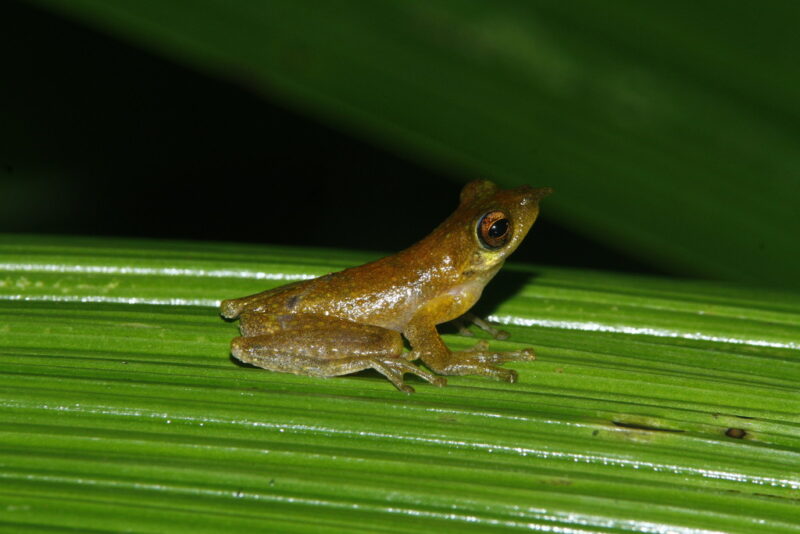
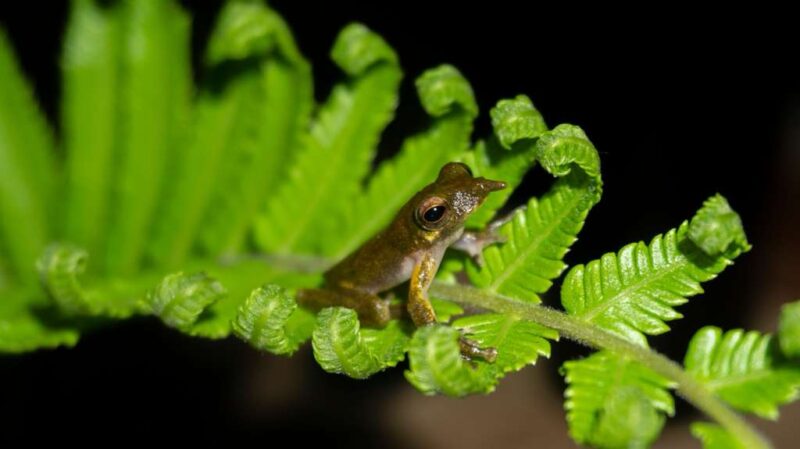
Pinocchio frogs (Litoria pinocchio) are tiny creatures, usually around 2–3 inches (5–7 cm) in length. And they are arboreal. That means they live high in the rainforest canopy and only go to the ground occasionally. Their skin patterns combine browns, greens and mottled textures that match moss, bark and wet leaves, allowing them to camouflage in their habitat, the rainforests of New Guinea.
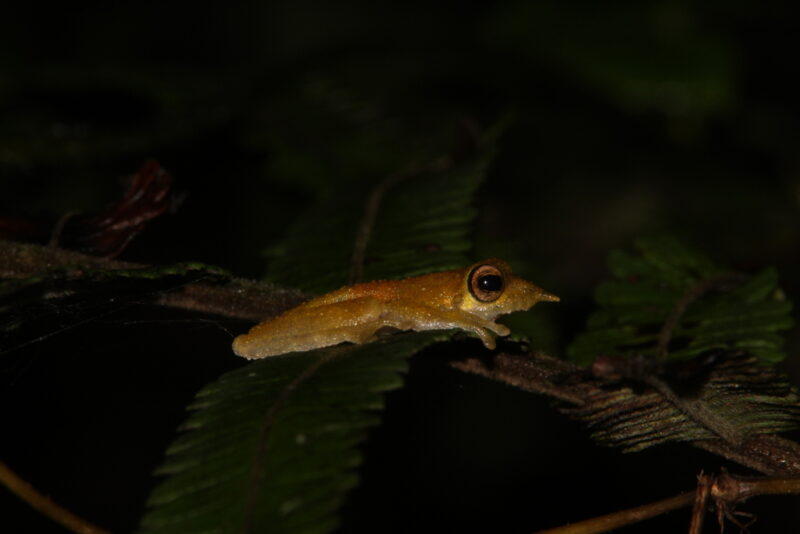
But sometimes they can appear more yellowish depending on light and humidity. That yellowish color can also help them blend into their dense rainforest surroundings, where sunlight filters through thick branches and leaves.
The mystery of the shifting snout
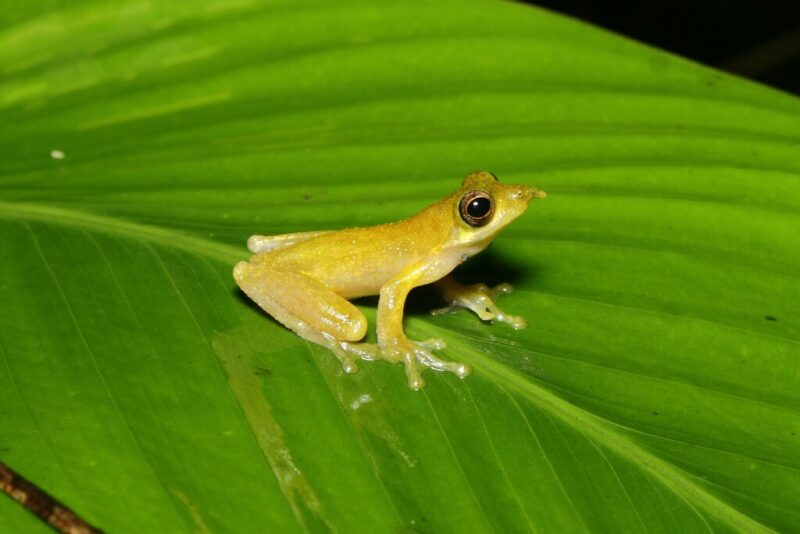
Male frogs develop a flexible extension on the front of the face made of soft tissue. The frog can partially erect this structure, and it changes shape with activity; it becomes more visible and pronounced during calling and shrinks back when the frog rests. Females do not develop this structure, which strongly suggests a role linked to reproduction.
Scientists think that the nasal projection plays a role in attracting mates, working alongside vocal calls. While calls carry over distance, the nasal structure might function as a close-range display, helping individuals stand out once they are near each other. In that sense, it could work similarly to the way a peacock’s tail signals quality during courtship.
Survival in a vertical world
Remote mountain forests in New Guinea have revealed many previously unknown species over time. These discoveries come from multiple expeditions rather than a single moment, reflecting how inaccessible these ecosystems remain.
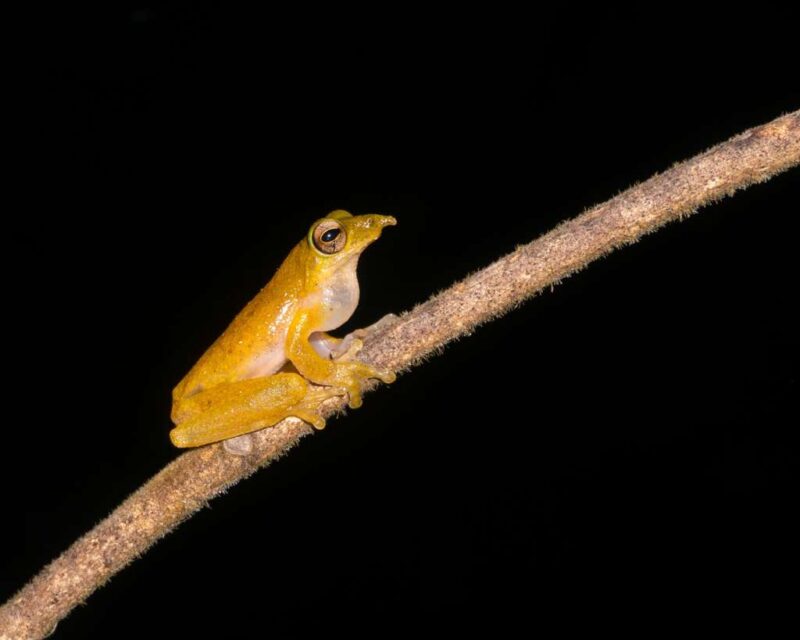
Within this environment, the frogs spend most of their time on vegetation above the forest floor. Sticky toe pads allow them to move across wet leaves and narrow branches, while their compact bodies help them navigate the tangled rainforest. Like many tree frogs, they feed on small insects and other invertebrates, which they capture during the night.
Life cycles in the clouds
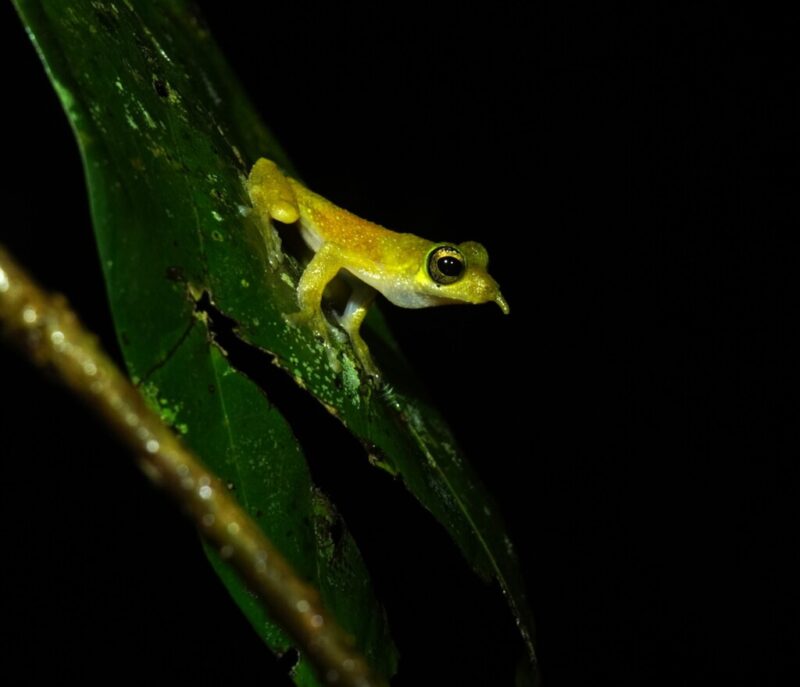
Reproduction depends strongly on moisture. Females lay eggs in damp, protected locations close to water, where humidity prevents drying. The tadpoles begin life in water before gradually transforming into adult frogs.
Because rainfall in these forests fluctuates, breeding is closely tied to wetter periods. This dependence on microclimate conditions makes successful reproduction sensitive to environmental changes, even in relatively undisturbed habitats.
Pinocchio frogs’ conservation status
There is not enough information to assign a precise conservation category to this frog. Its habitat in New Guinea is still partly remote and relatively intact, but other areas are increasingly affected by logging and land conversion.
Much about Pinocchio frogs is still unknown: how many populations exist, how connected they are, and how they respond to gradual environmental change.
This creature, which seems to have stepped straight out of a fairy tale, remains deeply mysterious.
Bottom line: Pinocchio frogs use their extending noses for courtship displays, blending fairy-tale looks with real rainforest survival strategies.
Read more: A rare and elusive frog found again after 130 years
Read more: Mexican burrowing toad looks like a deflated balloon
Like what you read?
Subscribe and receive daily news delivered to your inbox.
More from
Cristina Ortiz


New clues to how infectious fungus Candida auris resists antifungals

Amazon wildfires hide another threat to the rainforest
The Komodo dragon is the world’s largest living lizard
Scientists discover a new tiger cat hiding in plain sight