The 15-year anniversary of the deadly Joplin tornado
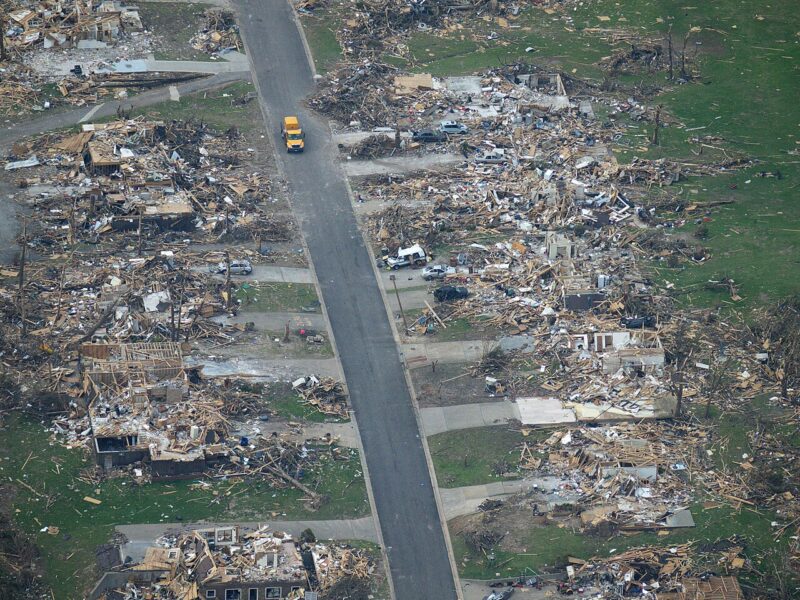
On May 22, 2011, an EF5 tornado with winds of more than 200 miles (322 km) per hour devastated Joplin, Missouri. It was the 7th-deadliest tornado in the U.S. and the deadliest tornado since 1947. As the tornado bulldozed a path nearly a mile wide through the city, it took the lives of 158 people and injured more than 1,000.
And, in the days that followed, five more people died due to a deadly soil-dwelling fungus the tornado stirred up.
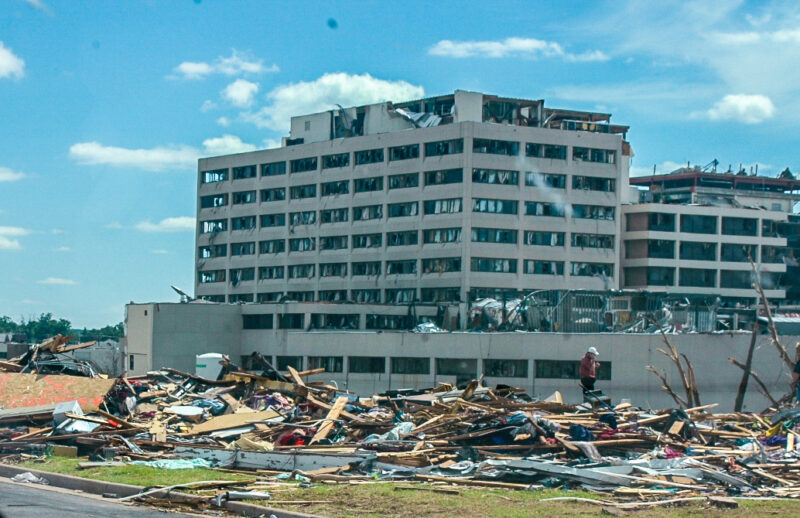
The Joplin tornado flattened homes, schools and businesses. It caused catastrophic damage at a nine-story hospital, St. John’s Regional Medical Center, which would later have to be demolished. And it became the costliest tornado in U.S. history at the time, with damages approaching $3 billion.
A hesitancy to act
The tornado struck on a Sunday evening. A local high school had just finished graduation ceremonies, plus other people were out and about, wrapping up their weekends. Due to the high death toll, the National Weather Service (NWS) conducted a service assessment to try to understand why so many people died.
On the one hand, the NWS found that many of the homes that were in the path of the tornado were poorly constructed. In fact, fatalities occurred in 59 different homes. There were also 19 deaths at a nursing home, four at an ICU, 11 in churches and eight in a Home Depot.
But another finding by the NWS was that when the tornado sirens first went off, many people were initially complacent. Instead of reacting at the first warning, many people reported that they waited as they assessed the risk and looked for more confirmation.
For many, confirmation came in the form of black skies and a terrifying roar as the rain-wrapped tornado overtook them.
Netflix made an excellent documentary on the Joplin tornado called The Twister: Caught in the Storm.
After the tornado, the killer fungus
As the city came together to clean up and mourn the dead, a new lethal aspect of the tornado came to light. While treating the injured in the following days, doctors noticed some survivors were developing severe infections in their wounds.
The culprit turned out to be a rare and often lethal fungal infection. The fungal spores were mucormycetes. Normally, they live in soil and decaying plant matter. But the violent tornado scoured the ground, ripping off topsoil and throwing the dirt and debris into the air. For some people, this dirt became deeply embedded in their wounds.
A 2013 study found that 13 people were affected by the fungus, and five of them died. The fungus can cause flesh-eating infections. The study said:
The researchers discovered a significant link between fungal infection and the occurrence of penetrating wounds (especially multiple wounds) containing wood, soil, gravel, and other foreign bodies.
Joplin today
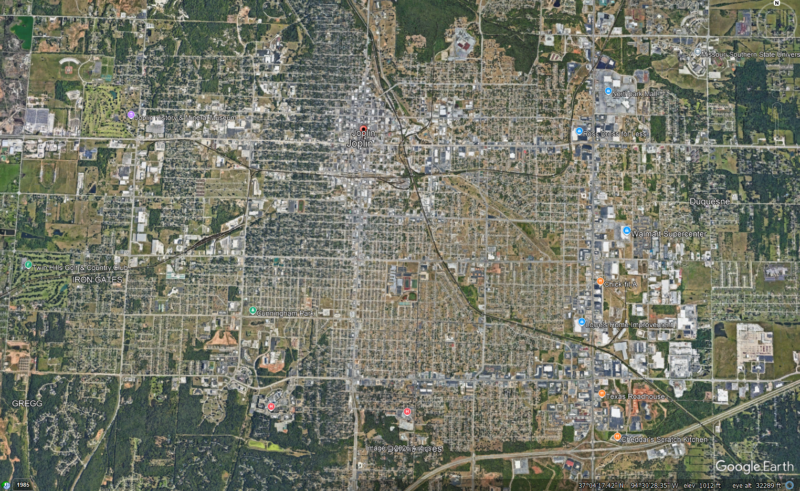
Today, much of the city of Joplin has been rebuilt. At the site of the former hospital a park now stands. And the new hospital, Mercy Hospital Joplin, stands alongside Interstate 44.
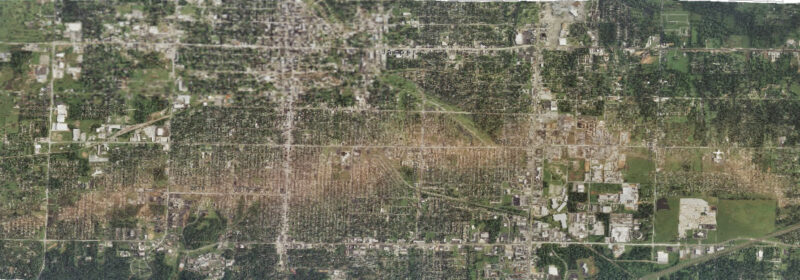
The six schools that were destroyed have now been rebuilt. While many homes replaced those that were turned to rubble, there are still some empty lots. Those lots, and the lack of mature trees, mean you can still see the path of the Joplin tornado on satellite even after 15 years.
Bottom line: It’s been 15 years since the Joplin tornado killed more than 150 people. What is the town of Joplin, Missouri, like today?
Read more: The Enhanced Fujita Scale rates the strength of a tornado
Like what you read?
Subscribe and receive daily news delivered to your inbox.
More from
Kelly Kizer Whitt


Why does anything exist? New theory emerges

Visible planets and night sky guide for October
Euclid was mapping the universe. Then it found a comet
Auriga the Charioteer and bright Capella on October evenings