



Elephant calf reunion in Kenya reveals the powerful family bonds of elephants after a lost baby answers her aunt’s call and rushes back to her herd.
On February 11, 2026, a baby elephant wandered alone into a tourist camp in northern Kenya. She had become separated from her family. What happened next revealed just how powerful elephant bonds can be. After researchers spent hours searching for the calf’s relatives, they reunited her with the family they believed she belonged to, and the response was immediate.
One elephant approached and called out. The calf answered. Within moments, the entire family gathered around the youngster, rumbling and trumpeting in what researchers described as an emotional reunion. The moment offered a glimpse into the deep social lives of elephants and the remarkable way families care for one another.
A Colorado State University (CSU) report published on May 19, 2026, describes how field researchers working in northern Kenya reconnected the calf with her family.
The search to reunite a calf with her family
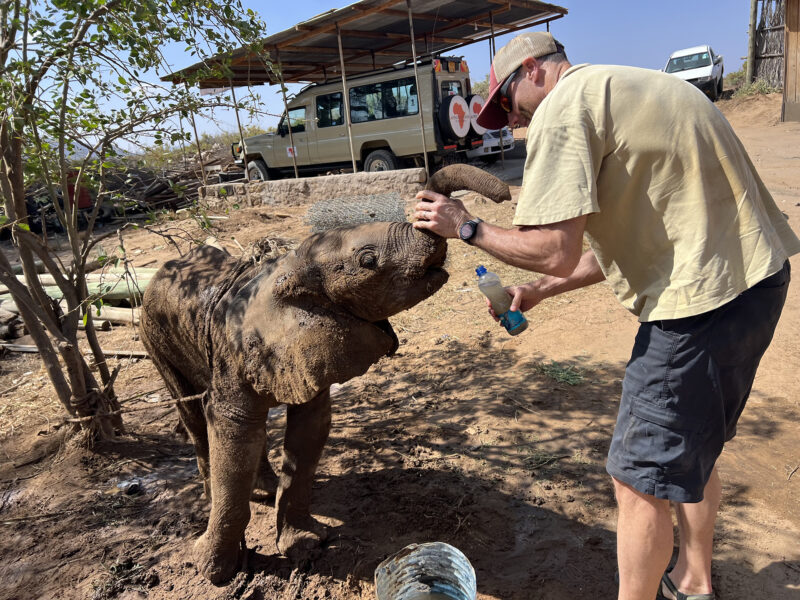
The rescue began when staff at a tourist camp in Samburu found a four-month-old elephant calf alone and disoriented. They contacted a research team led by Colorado State University professor George Wittemyer, who has studied elephants in northern Kenya for nearly three decades.
Researchers searched the Samburu National Reserve to determine which elephant family was missing a calf. The exact circumstances of how the young elephant became separated from her group are not known. After identifying the most likely family, the team carefully brought the calf back to them. How would they react?
The elephant calf reunion happened through sound
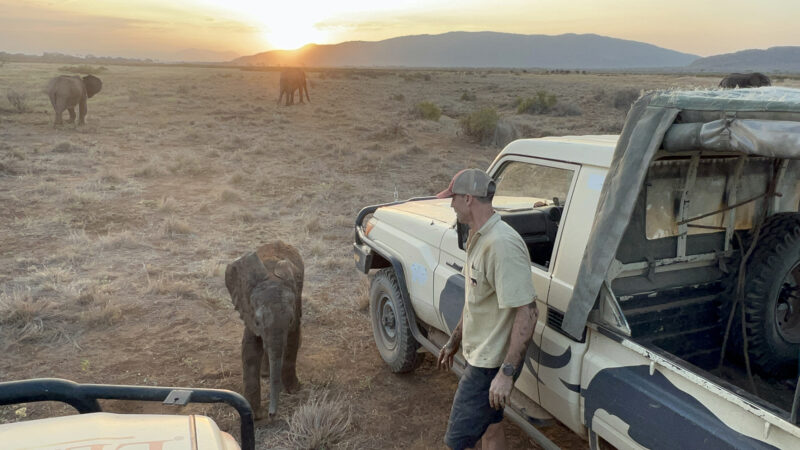
One of the calf’s aunts, known to researchers as Adelaide, approached and called out. The calf responded immediately.
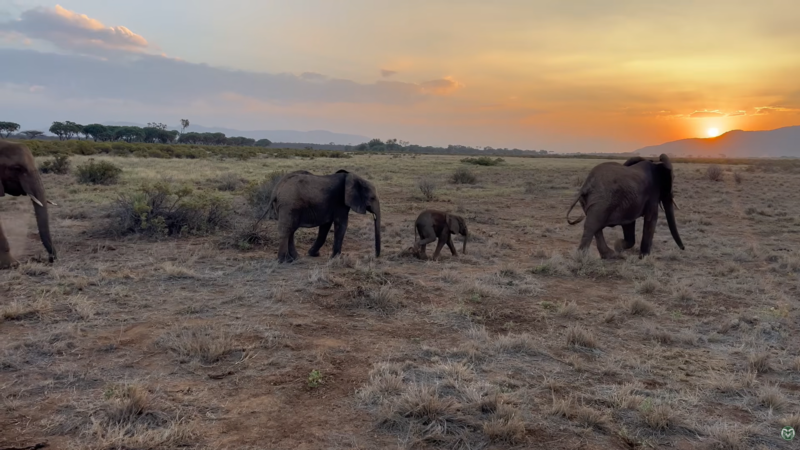
That exchange triggered a rapid response from the herd. Relatives moved in, surrounding the calf with rumbles and trumpeting sounds in what scientists recognize as a reunion ceremony after separation. Wittemyer explained:
Elephants are highly social, forming powerful bonds between each other that last a lifetime. Similar to our societies, these bonds make up the social fabric of elephant society and underpin the rich behaviors elephants exhibit.
Elephants rely on extended family care
Elephant families are built around cooperation and long-term social bonds. Calves are raised within tight family groups where mothers are supported by close female relatives who help protect and care for the young.
These relationships can last decades and are central to survival in the wild.
In this case, the calf’s mother had died from natural causes some time earlier. The family quickly took over caregiving roles after the reunion, staying close to the young calf and supporting her within the group. One of her aunts, Markle, who had lost her own calf earlier in the year, even nursed the hungry calf upon her return.
The importance of long-term research
Beautiful moments like this are possible thanks to long-term field research in Samburu National Reserve. Wittemyer and colleagues at Save the Elephants track elephant births, deaths, movements and social relationships, allowing them to recognize individuals and understand family structures. Wittemyer said:
Landscape integrity and protection is critical for the species’ survival given projections about human population growth in Africa over the next 80 years.
Wittemyer also teaches wildlife and conservation biology at Colorado State University, where he works with students to help them understand and appreciate the complexity of elephant societies and the conservation challenges they face. Wittemyer commented:
My work focuses on understanding the rich and complex social lives of elephants, so we can better understand their needs and engender fascination and interest in their lives among the people living with them and the global public.
Technology supports elephant conservation
Researchers combine field observation with technology such as GPS collars, drones and acoustic recorders to study movement patterns and communication. These tools allow scientists to follow elephant groups over long periods and across wide, often inaccessible landscapes.
GPS collars help map migration routes and show how different family units move. Drones provide a broader view of herd structure and movement patterns.
Acoustic recorders add another layer of information by capturing the complex vocalizations elephants use. Some research suggests that certain calls may function in a name-like way, allowing individuals to recognize and respond to specific members of their family.
Together, these technologies help conservationists identify key migration corridors and critical habitats before human expansion fragments them, improving strategies to reduce conflict between people and elephants. Wittemyer said:
Elephants are one of the most sentient and, therefore, relatable animals we share this planet with. But they are big and need space and resources as a result. Only with determination and foresight can we ensure the protection and survival of elephants – something I have faith we will accomplish.
When reunion was not enough
Although the reunion with her family was remarkable, the calf continued to face challenges in the days that followed. Markle allowed her to nurse, but there were concerns that she was not producing enough milk to fully support the orphaned calf.
Family members also remained attentive after the reunion, and when she became separated at one point in a dry riverbed, they called out to her until she rejoined the group.
Researchers do not know why she repeatedly wandered away. Elephants form lifelong relationships and can recognize and remember individual family members for decades. Given her very young age and dependence on milk, she may have struggled to keep up with the group, or may have been searching for her mother.
When she was later seen alone in an area known for lions, conservationists stepped in to prevent a potentially dangerous situation. On February 14, she was taken into the care of Reteti Elephant Sanctuary, where she could receive protection and specialized support.
Her story reflects the powerful social bonds of elephant families and the real risks young calves can face in the wild, and how timely human intervention can sometimes make the difference between survival and loss.
Bottom line: An elephant calf reunion in Kenya melted hearts recently. The lost baby answered her aunt’s call and her family rushed in to welcome her home.
Like what you read?
Subscribe and receive daily news delivered to your inbox.
More from
Cristina Ortiz


Scientists discover a new tiger cat hiding in plain sight

Reef fish survival threatened by motorboat noise
Giant trees break a decades-old science theory
Walking shark discovered in Papua New Guinea


