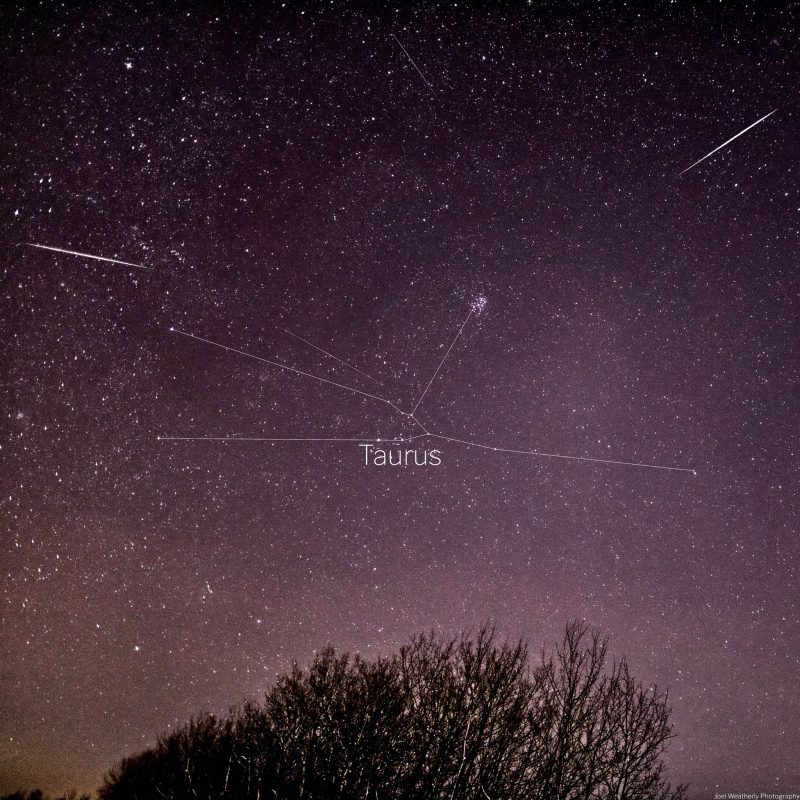
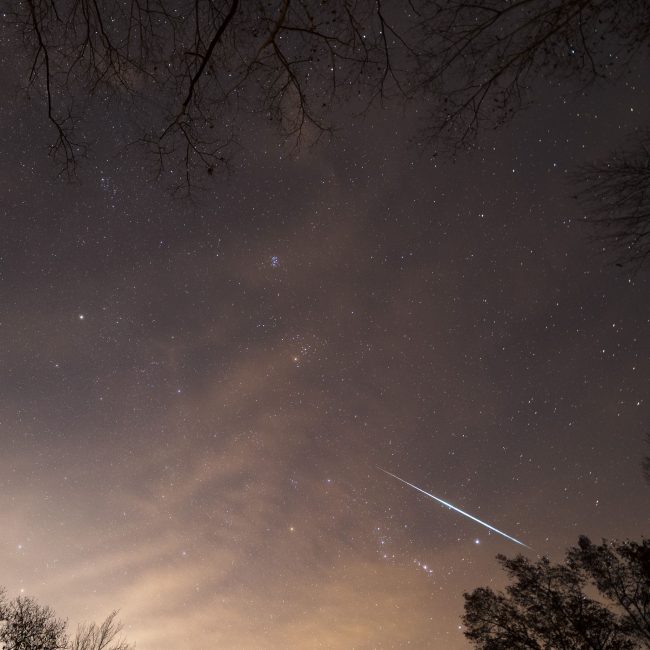
View at EarthSky Community Photos. | Joel Weatherly Edmonton, Alberta, Canada, created this composite from images captured on the morning of November 11, 2020. He wrote, “This is a composite image featuring Taurus and four meteors that I observed while out for the Northern Taurids meteor shower. The two brightest meteors left behind dust trails.” Thank you, Joel!View at EarthSky Community Photos. | George Preoteasa of Milford, Pennsylvania, snagged this photo of a Taurid meteor on November 7, 2020. He wrote: “[This meteor was] passing next to Orion. Notice Aldebaran, bright red star in the middle of the picture (not to be confused with Betelgeuse lower in the shot) and the Pleiades above. The moon was rising from the lower left corner.” Thank you, George! Equipment details: Sony a7iii, Sigma 14mm F/1.8.
Bottom line: The month of November features both the South Taurid and North Taurid meteor showers. The South Taurids tend to peak around November 5 and the North Taurids around November 12. Fireballs – extremely bright meteors, also known as bolides – are common with the Taurid meteor showers. Read more about the Taurid meteor showers. Did you capture a photo of a Taurid meteor? Share it with us!
Kelly Kizer Whitt - EarthSky’s nature and travel vlogger on YouTube - writes and edits some of the most fascinating stories at EarthSky.org. She's been writing about science, with a focus on astronomy, for decades. She began her career at Astronomy Magazine and made regular contributions to other outlets, including AstronomyToday and the Sierra Club. She has nine published books, including a children's picture book, Solar System Forecast, and a young adult dystopian novel, A Different Sky.
Like what you read? Subscribe and receive daily news delivered to your inbox.
Thank you! Your submission has been received!
Oops! Something went wrong while submitting the form.
If EarthSky has ever helped you discover something new, prepare for an eclipse, spot a planet, or simply inspired a moment of wonder, today is the perfect day to give back. Your donation helps keep trusted science news, expert night sky guides, and independent science journalism free for everyone.
Please help keep EarthSky going by donating today!
Please help keep
EarthSky going!
If you've already donated, we apologize for the popup and greatly appreciate your support.