



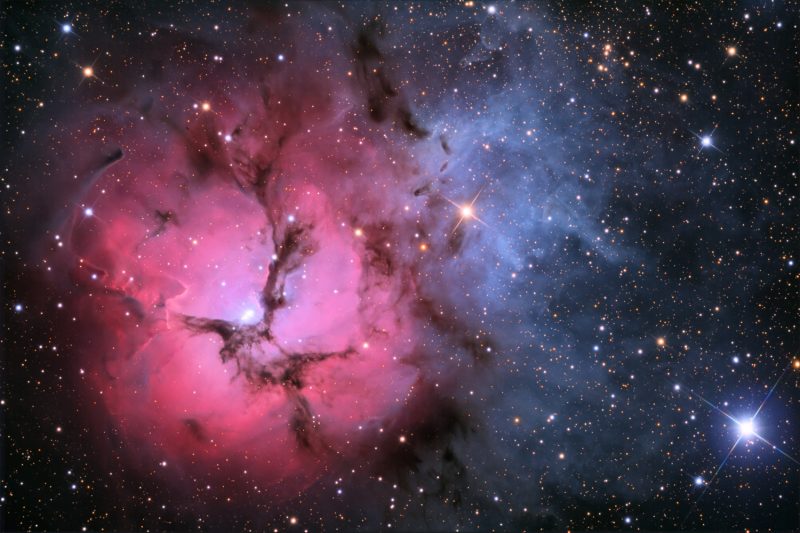
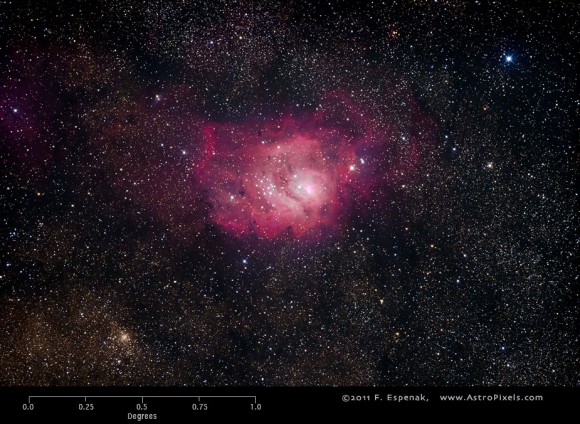
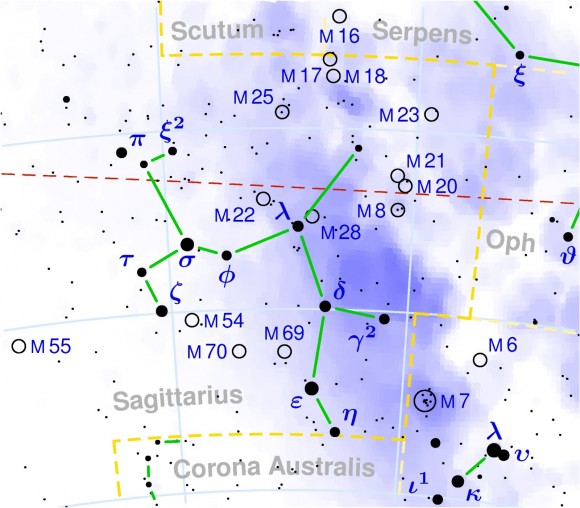
Take a dip in the Lagoon nebula (M8) and Trifid nebula (M20) on these September evenings, especially if you’re in a place where you can see the starlit band of the Milky Way. If you’re in the Northern Hemisphere, look in the south to southwest at nightfall and early evening to see the beautiful constellation Sagittarius just above the horizon. The famed Teapot asterism, part of Sagittarius, appears to be pouring tea from its spout towards the horizon. The Lagoon and Trifid nebulae are in this part of the sky.
From temperate latitudes in the Southern Hemisphere, look overhead to find Sagittarius and its famous Lagoon and Trifid nebulae.
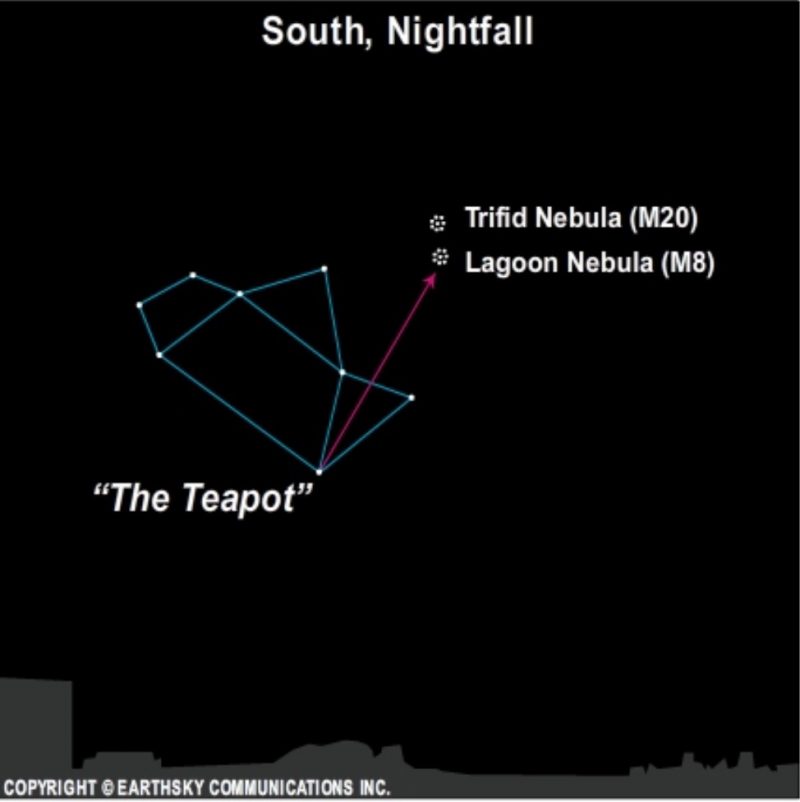
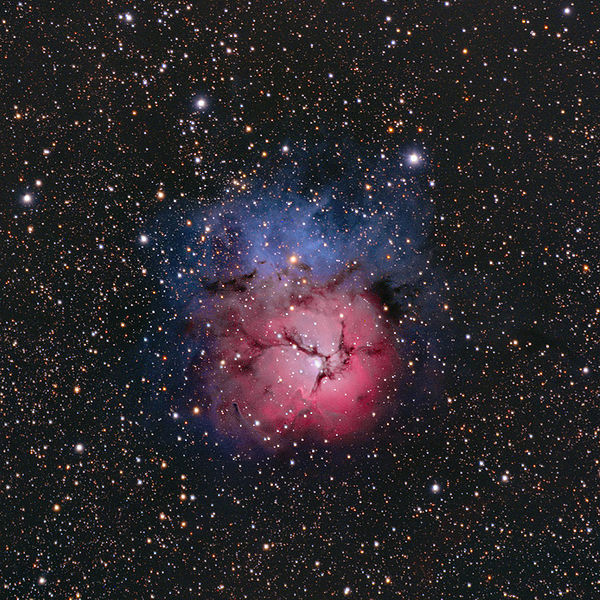
How to find the Lagoon and Trifid nebulae. So you’ve located the constellation Sagittarius and its famous Teapot asterism. Be aware that, as you sweep around the area of the Teapot with your binoculars, you will come across many fuzzy objects: blobs of stars. There are lots of open clusters and star-forming nebulae to look at in the region, but we are on the hunt for two in particular.
When you look at them, you are seeing two star-forming regions toward the heart of our Milky Way galaxy.
The Trifid is a little dimmer than the Lagoon. Trifid got its name because in photographs it has three distinct lobes. The Lagoon got its name because it looks like a round pool just outside the ocean of the Milky Way.
What’s cool about the Lagoon nebula is that you can see some of the stars that have formed from these clouds of gas. You might not spot it with binoculars, but those with small telescopes may notice a small cluster of stars within the nebula. This cluster is known as NGC 6530.
By late autumn and winter, these nebulae will drift out of the evening sky.
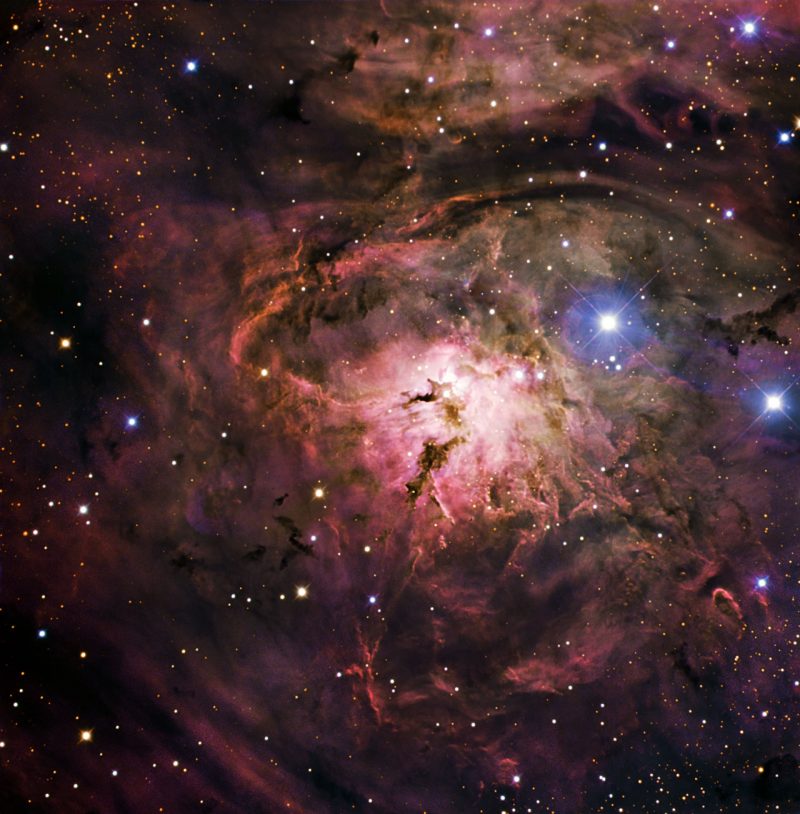
Bottom line: Take a dip in the Lagoon and Trifid nebulae on these September evenings, especially if you’re in a place where you can see the starlit band of the Milky Way.
Like what you read?
Subscribe and receive daily news delivered to your inbox.
More from
Bruce McClure


Cassiopeia and Perseus on October evenings

Meet Aquarius the Water Bearer and its stars
Check out the Double Cluster in Perseus on October evenings
Find the Andromeda Galaxy using Cassiopeia



