



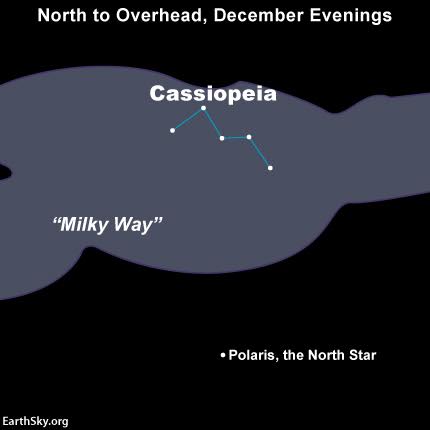
On these December evenings, turn toward the northern sky and see its famous constellation Cassiopeia the Queen. In early December, Cassiopeia swings directly over Polaris, the North Star, at roughly 8 p.m. local clock time. Cassiopeia – sometimes called The Lady of the Chair – is famous for having the shape of a telltale W or M. You will find this configuration of stars as a starlit M whenever she reigns highest in the sky, hovering over Polaris.
At this time of year, Cassiopeia can also be seen from tropical and subtropical latitudes in the Southern Hemisphere. From there, the constellation appears low in the north – yet highest in the sky – around 8 p.m. on early December evenings. As for Polaris … from the Southern Hemisphere, it’s below the horizon.
Because Cassiopeia returns to the same spot in the sky about four minutes earlier with each passing day, or 1/2 hour earlier with each passing week, or two hours earlier with each passing month, look for Cassiopeia to be at her high point over Polaris, the North Star, around 6 p.m. in early January.
From a dark country sky, you’ll see that Cassiopeia sits atop the luminous band of stars known as the Milky Way. Arching from horizon to horizon, this soft-glowing boulevard of stars represents an edgewise view into the flat disk of our own Milky Way galaxy. When Cassiopeia climbs above Polaris, the North Star, on these dark winter evenings, note that this hazy belt of stars that we call the Milky Way extends through the Northern Cross in the western sky and past Orion the Hunter in your eastern sky.
This Milky Way is fainter than the glorious broad band of the Milky Way we see in a Northern Hemisphere summer or Southern Hemisphere winter. That’s because, at the opposite side of the year, we are looking toward the star-rich center of the galaxy. On these December nights, we are looking toward the galaxy’s outer edge, not the center.
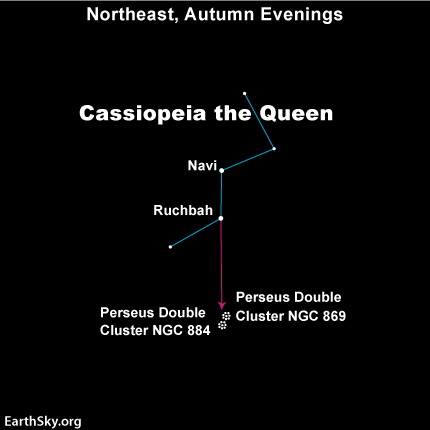
As the night marches onward, Cassiopeia – like the hour hand of a clock – circles around the North Star, though in a counter-clockwise direction.
By dawn, you will find Cassiopeia has swept down in the northwest, to a point below the North Star. At that time, if you’re at a southerly latitude, such as the far south U.S., you might not be able to see Cassiopeia. The constellation might be below your horizon. But if you’re located at a latitude like those in the northern U.S., you will see Cassiopeia low in the sky sitting on or near your northern horizon.
Look northward on these cold December evenings to see Queen Cassiopeia sitting on her chair, atop the northern terminus of the Milky Way!
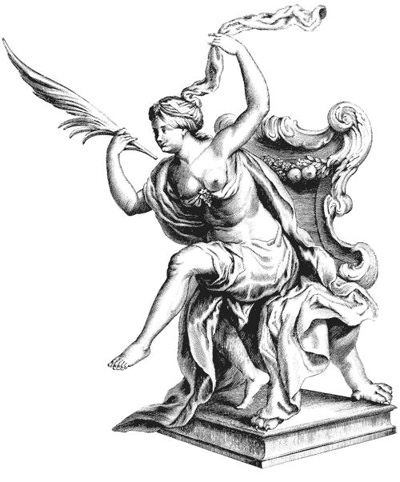
Bottom line: Watch for Cassiopeia the Queen on these December evenings. The constellation is shaped like an M or W. You’ll find Cassiopeia in the northeast at nightfall, sweeping higher in the north as evening progresses.
Like what you read?
Subscribe and receive daily news delivered to your inbox.
More from
Bruce McClure


Epsilon Lyrae is the famous Double Double star

Latest sunsets follow the summer solstice


