



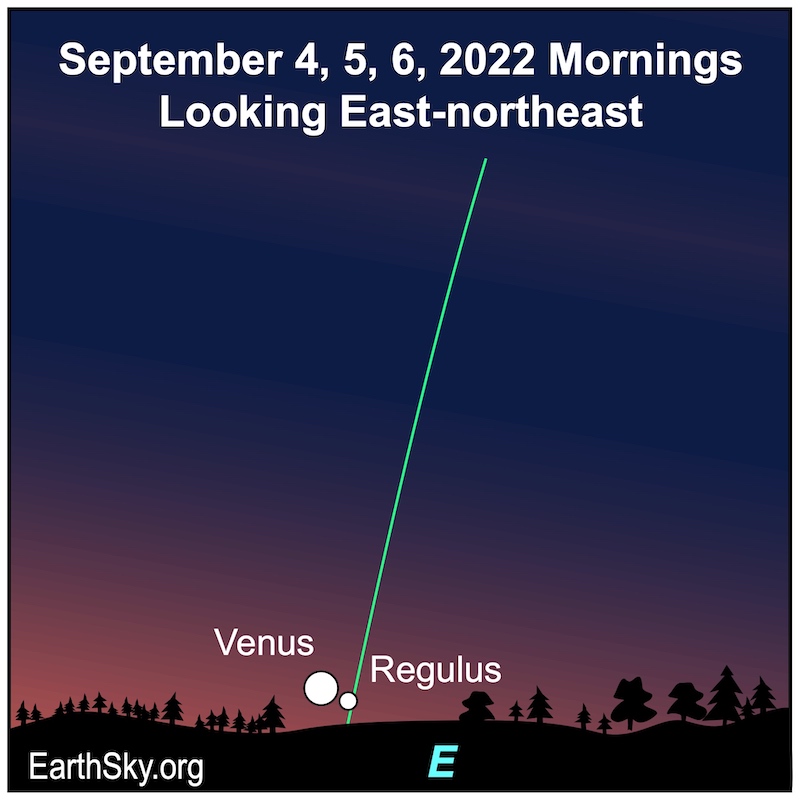
September 4, 5 and 6 mornings: Venus and Regulus
Just before sunrise in early September, 2022, you can still find Venus very low in the east before sunrise. It’ll appear near the star Regulus in Leo the Lion around September 4, 5 and 6.
Venus is the brightest planet and can be seen very low in the sky. Regulus is fainter, but still one of the brightest stars. On one of these mornings, it’ll pop into view for you.
And Venus? It’s now heading toward the sunrise glare, as Regulus is pulling out of the glare. Venus will pass 0.8 degrees north of Regulus on September 5.
Venus will soon pass behind the sun
Afterward, if you watch the eastern sky before sunrise, you’ll find that – one morning – Venus will be gone, too close to the sunrise to see (really, passing behind the sun from Earth). Meanwhile, Regulus – whose name means Little King – will be ascending in the eastern, predawn sky.
Venus will disappear into the sunrise glare in early September, pass most directly behind the sun on October 22, and emerge again into the evening sky before the year’s end.
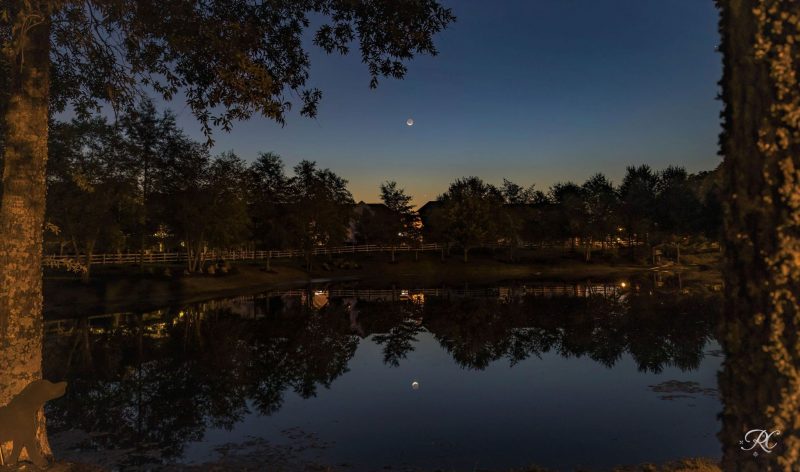
Bottom line: Venus and the star Regulus are visible near one another around the mornings of September 4, 5 and 6, 2022. Afterward, Venus will disappear into the sunrise.
For more great observing events in the coming weeks, visit EarthSky’s night sky guide
Like what you read?
Subscribe and receive daily news delivered to your inbox.
More from
Deborah Byrd


Visible planets and night sky guide for October

Orionid meteor shower 2026: All you need to know
See brightest star, Sirius, in your morning sky
Cassiopeia the Queen is overhead on autumn evenings



