Rob Pettengill wrote:
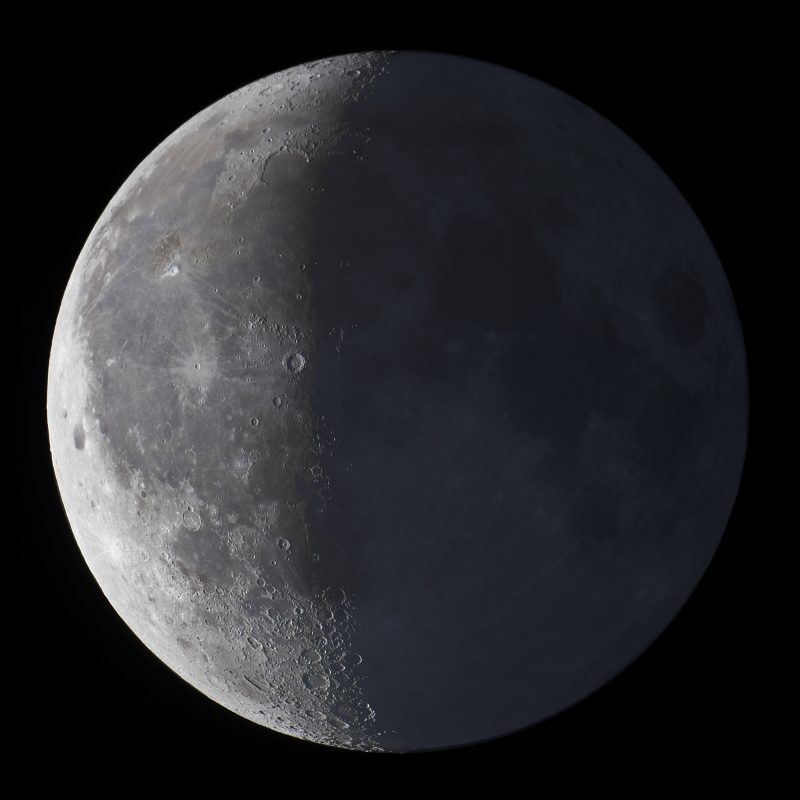
Early morning brings a delightful waning crescent moon 23 days into the lunar month. Earthshine lights the darkness of the near side with craters and maria becoming ghosts of their sunlit selves. Earthshine is easy to appreciate by eye, but difficult to capture because of the extreme dynamic range. This image was made with a day-lapse technique that uses 1 to 2 day separation between crescent and earthshine images to create a HDR composite image. Details of the technique are described here.
Questar 3.5″ telescope with Sony a6300 mirrorless camera, exposed 1/25 sec at ISO 200 for crescent and 20 sec at ISO 400 for earthshine.
Crescent Moon, best 8 of 50 images stacked and deconvolved in Lynkeos. Earthshine 2016-06-30 20 stacked images exposed 10 sec at ISO 400. HDR composited and cropped in Photoshop.
Thank you, Rob!
Like what you read?
Subscribe and receive daily news delivered to your inbox.
More from
Deborah Byrd


Visible planets and night sky guide for October

Stargazing tips! 10 great tips for beginning astronomers
Mars calendar year begins September 30: Happy New Year, Mars!
Alpha Cephei, or Alderamin, is a fast-spinning star