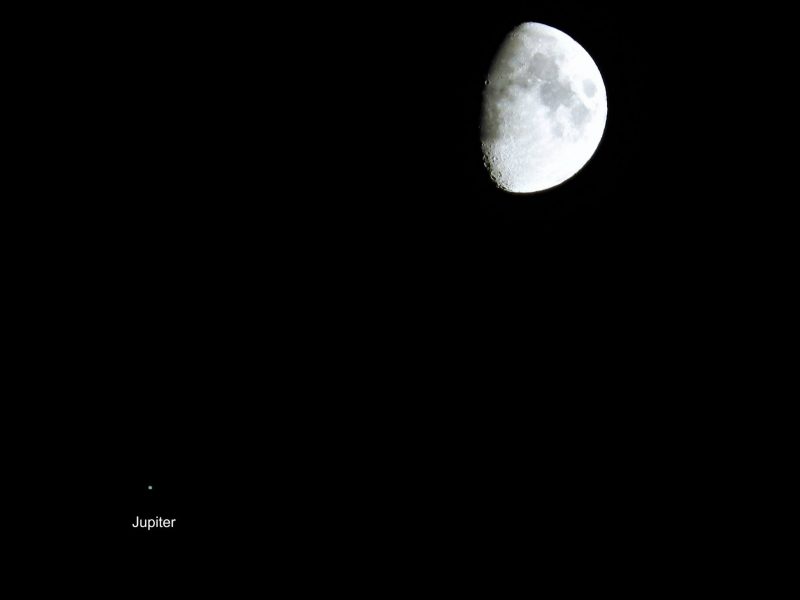
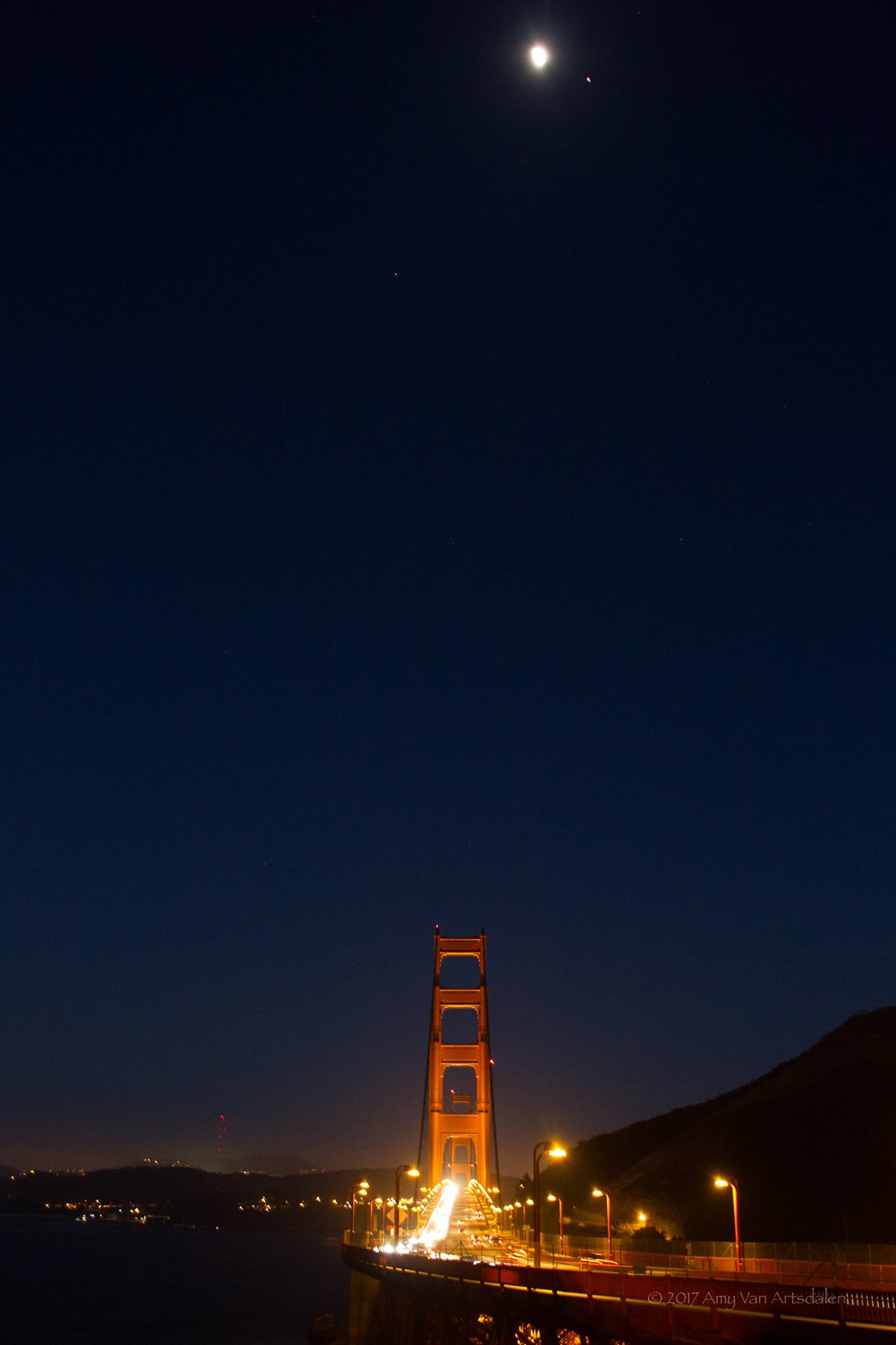
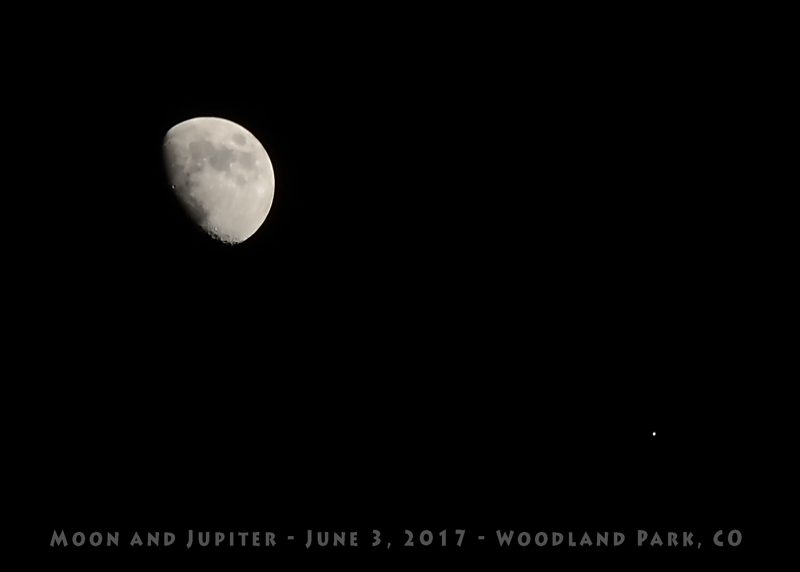
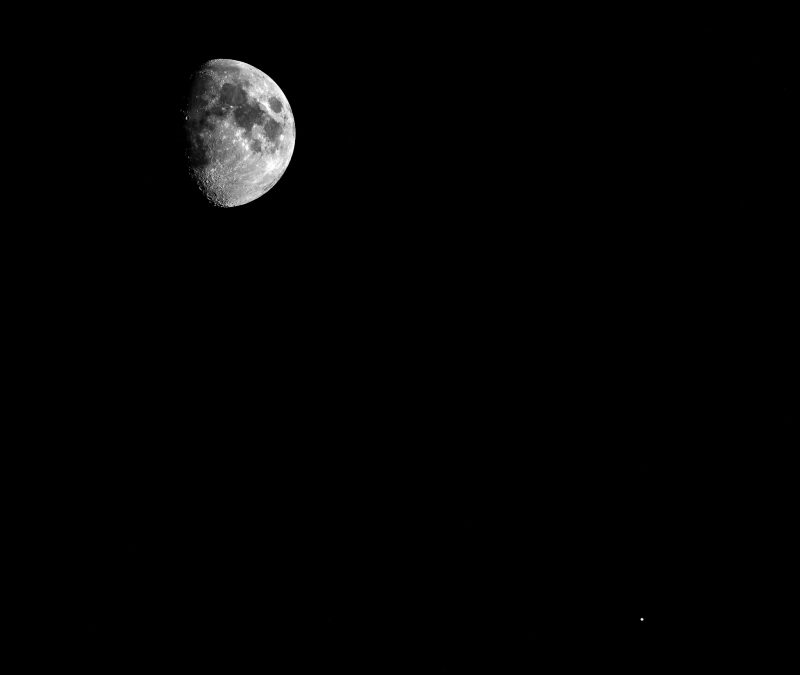
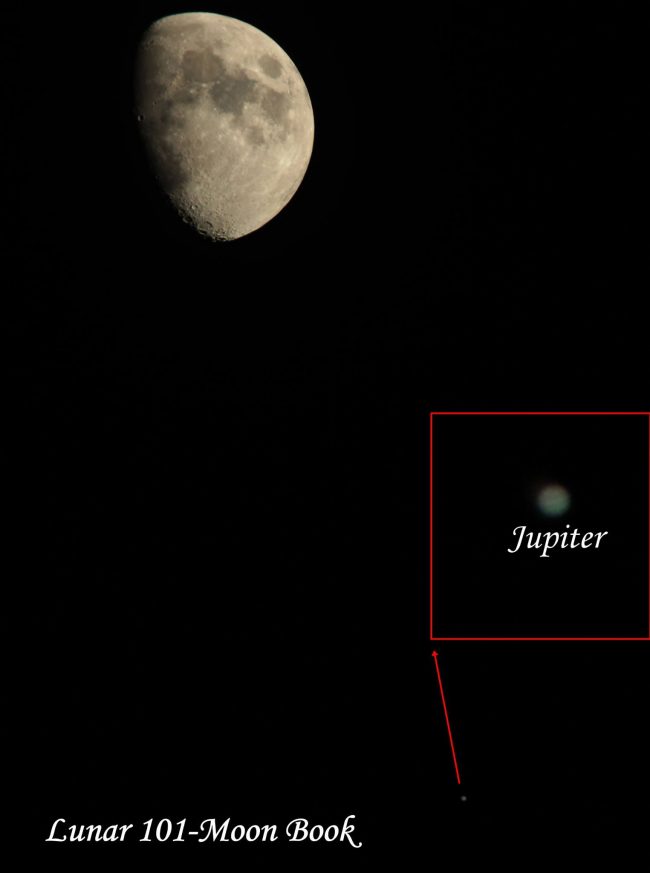
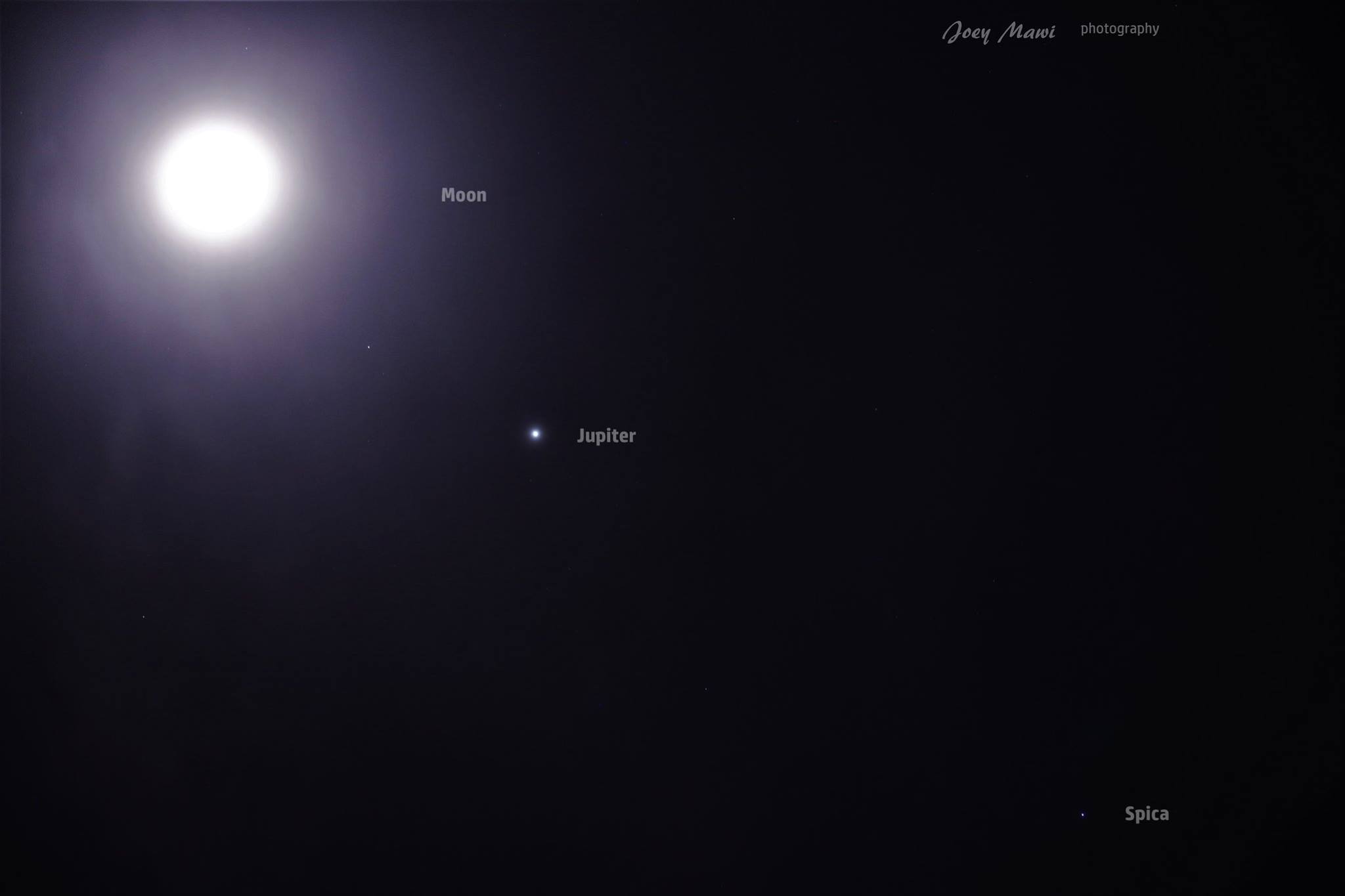
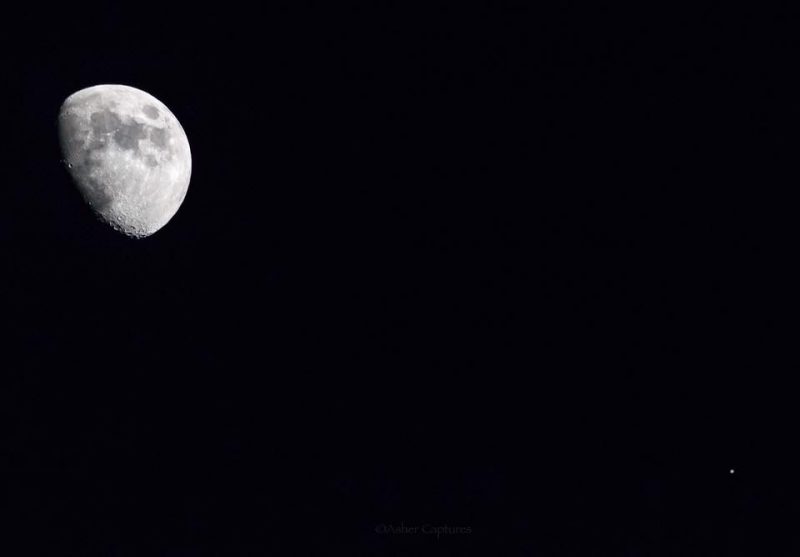
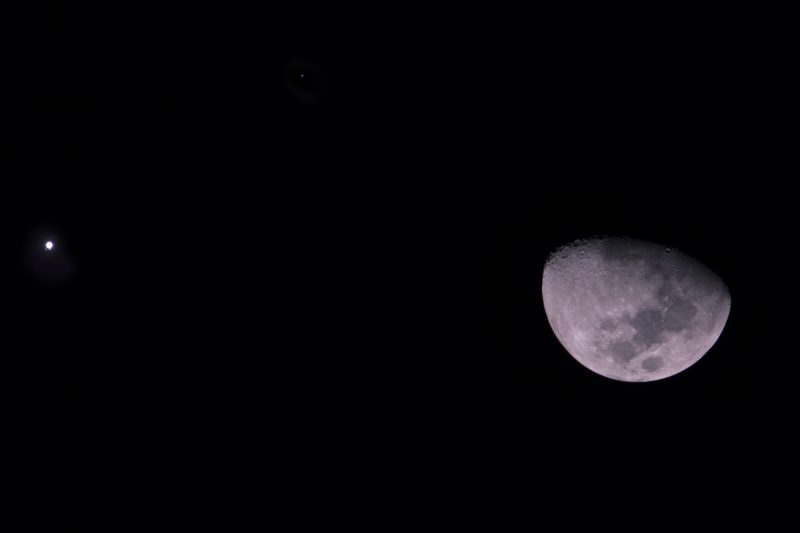
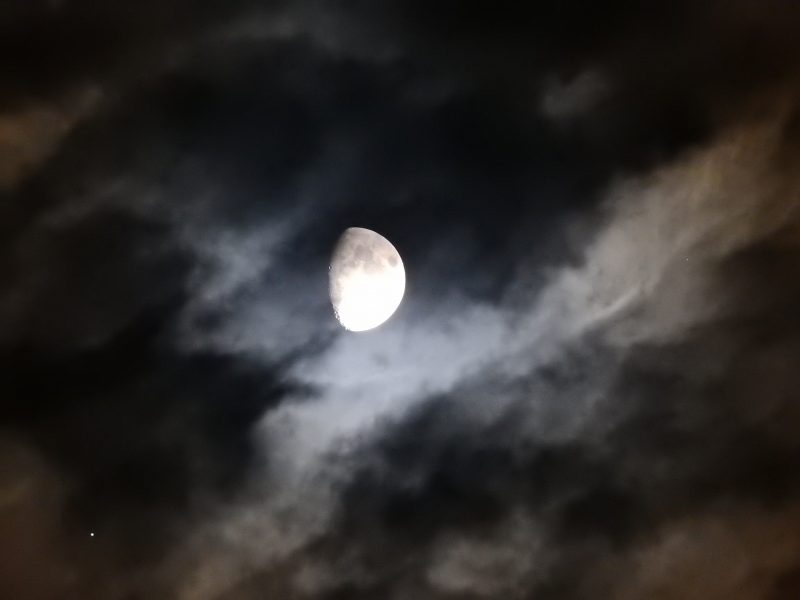
Moon and Jupiter on June 3, 2017 from Deirdre Horan in Dublin, Ireland.Amy Van Artsdalen in San Francisco caught the moon and Jupiter over the Golden Gate Bridge on June 3.Moon and Jupiter on June 3 from Stephanie Longo in Woodland Park, Colorado. She wrote: “It was hard to get a good picture of both the moon and Jupiter because the light of the moon overpowered everything around it. We took a lot of pictures and this was the best shot we got.” Super job, Stephanie. Thank you!Moon and Jupiter on June 3, 2017 from Dennis Anastassiou in Zakynthos, Greece. Notice that you can see a couple of Jupiter’s moons, in this shot.Photo captured by Eliot Herman in Tucson, Arizona with a Vixen VSD 100 mm astrograph telescope @ F3.8 and a Nikon D500 camera with an effective FL of 570 mm mounted on a tripod with a gear (not driven) head. Image processed from NEF using photoshop.Moon and Jupiter on June 3, 2017 from our friend Lunar 101-Moon Book.There were more stars near the June 3, 2017 moon and Jupiter, the brightest of which was Spica in the constellation Virgo. Photo by Joey Zahari Mawi at Gelugor, Penang Island, Malaysia.Moon and Jupiter on June 3, 2017 from Ashly Cullumber at Big Sur, California.Kurt Zeppetello in Monroe, Connecticut wrote: “This is a composite of two exposures. The base was a 1/500 sec to get the lunar detail and the second was for 2 seconds to get Jupiter … I though this looked really neat as I was already testing some new equipment …”Virginia MacDonald in Welland, Ontario, Canada wrote: “It was a super clear night tonight and the moon was crystal. I was happy to see just below the moon to the right was another planet. Turns out it’s Jupiter!”Moon and Jupiter on June 3, 2017 from Gordon McLaren in Falkirk, Scotland.
Bottom line: Photos of the moon and planet Jupiter on June 3, 2017
Deborah Byrd (asteroid 3505 Byrd) helps edit EarthSky.org and is a frequent host of EarthSky videos. Deborah created the EarthSky radio series in 1991 and founded EarthSky.org in 1994. Prior to that, she had worked for the University of Texas McDonald Observatory since 1976, and created and produced their Star Date radio series. She has won a galaxy of awards from the broadcasting and science communities, including having an asteroid named in her honor in 1990, a Public Service Award from the National Science Board in 2003, and the Education Prize from the American Astronomical Society in 2020. A science communicator and educator since 1976, Byrd believes in science as a force for good in the world and a vital tool for the 21st century. "Being an EarthSky editor is like hosting a big global party for cool nature-lovers," she says.
Like what you read? Subscribe and receive daily news delivered to your inbox.
Thank you! Your submission has been received!
Oops! Something went wrong while submitting the form.