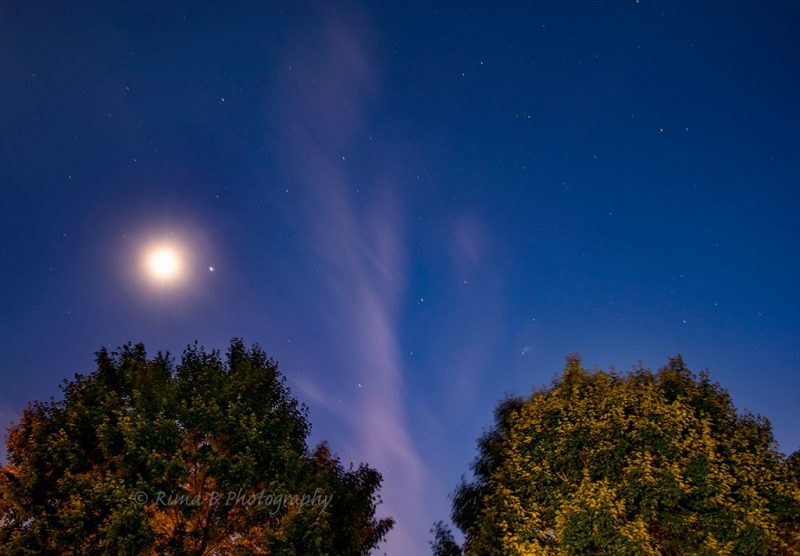
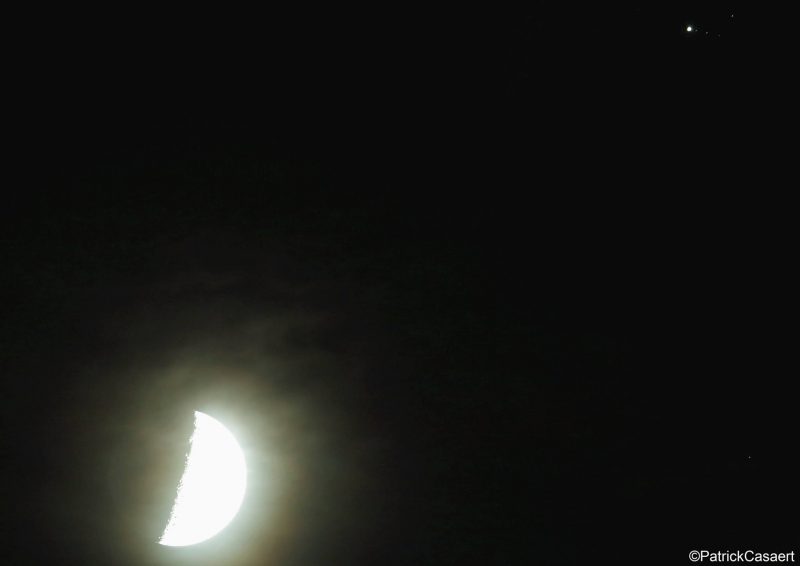
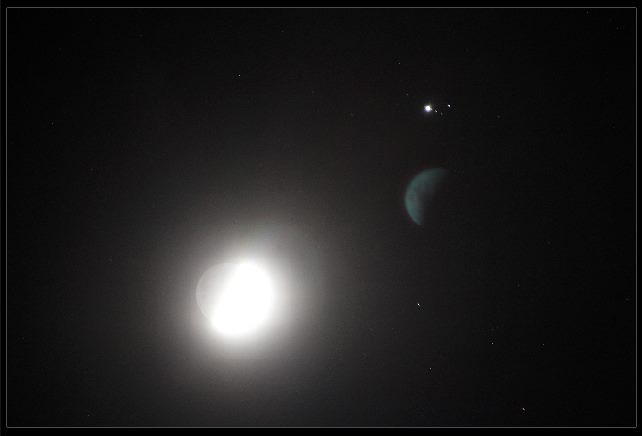
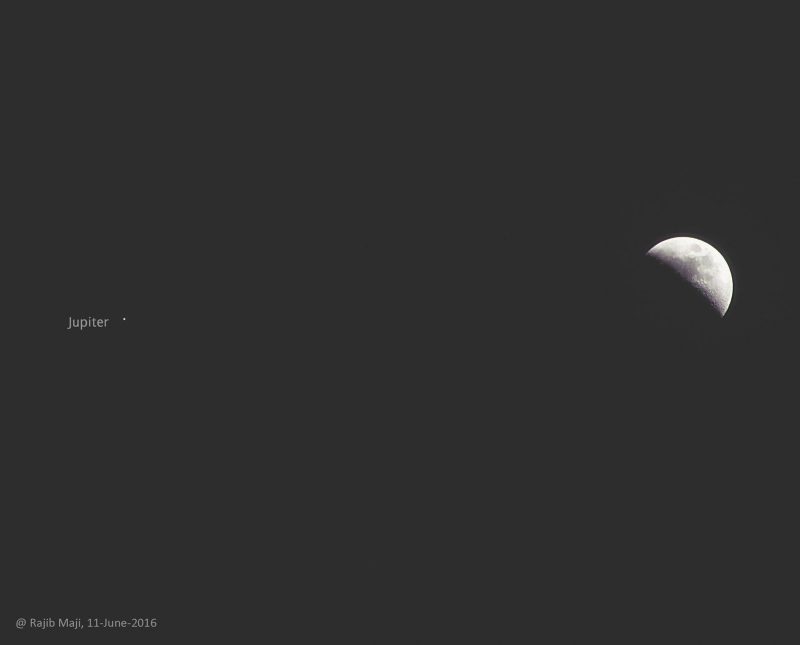
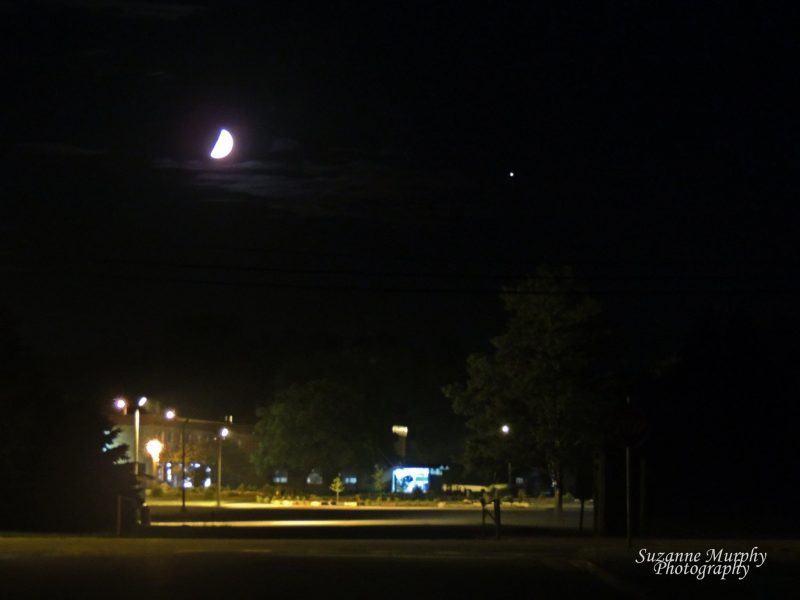
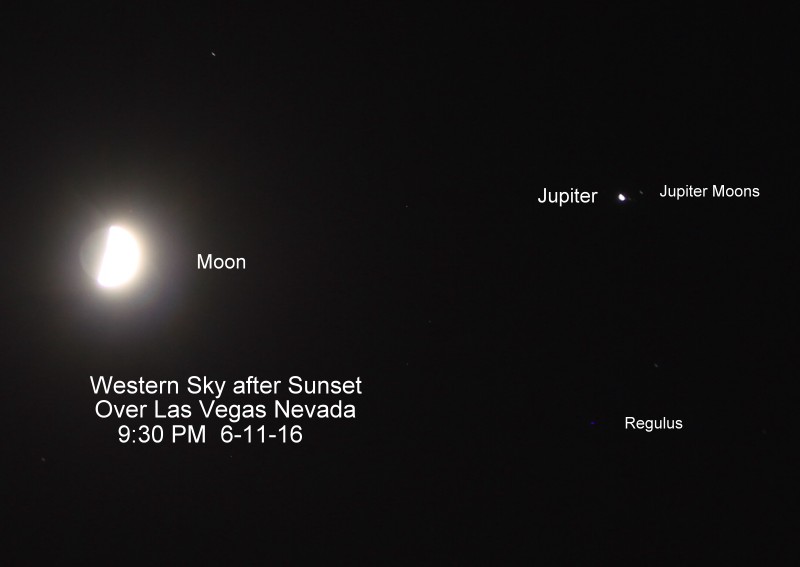
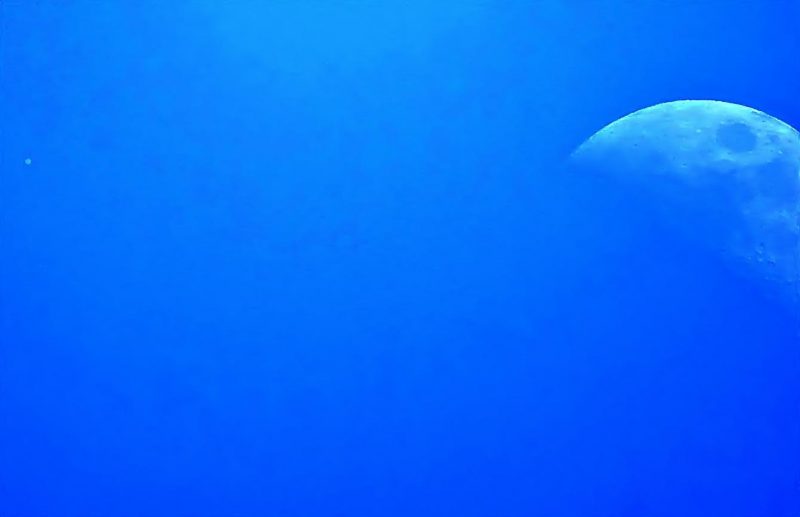
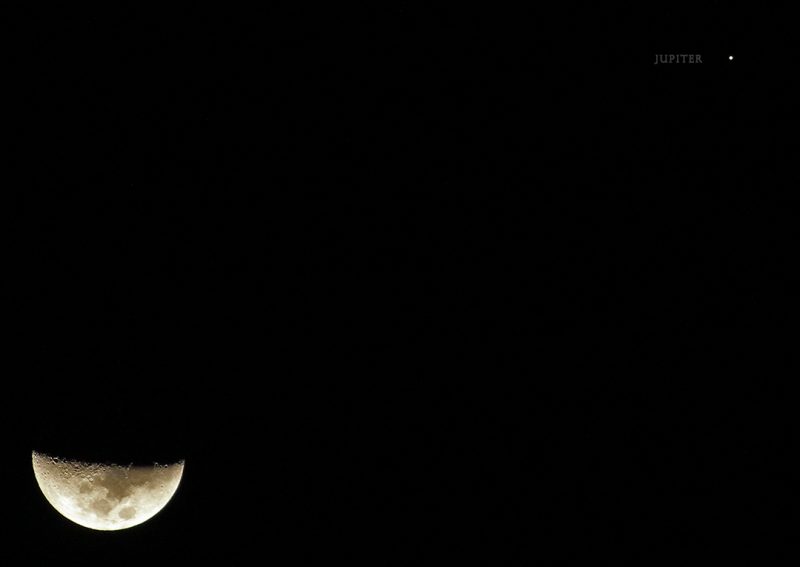
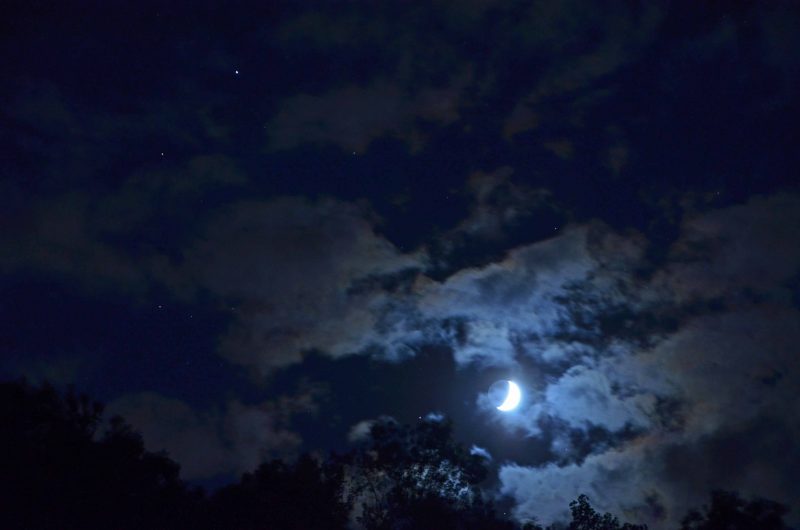
If you had looked with your eye, you would have seen Jupiter near the moon on the night of June 11, 2016. Photo by Rima Biswas.Telescopes and telephotos lens show more detail. This photo of the moon and Jupiter is from EarthSky Facebook friend Nikolaos Pantazis in Athens, Greece on June 11, 2016.Our friend Patrick Casaert at La Lune The Moon in Meaux, France, caught this shot of the moon and Jupiter on June 11.The moon was nearly a first quarter moon on the evening of June 11. Here’s Jupiter with 4 Jovian satellites via our friend Lunar 101 – MoonBook in Toronto.Dennis Anatassiou wrote: “Moon with Jupiter in the upper right with its own moons … plus a ghost image of the moon (lens reflection).” Sometimes lens flares like this one make really nice photos!Rajib Maji in India caught this photo of the moon and Jupiter on June 11.Another photo showing what the eye would have seen on the night of June 11, from Suzanne Murphy Photography in Wisconsin.Robert Kelly caught the moon and Jupiter on June 11 over Las Vegas, Nevada. He caught one of Jupiter’s moons, too!Helio C. Vital in Rio de Janeiro, Brazil, caught the moon and Jupiter in daylight on June 11. He wrote: “I used my Sony Cyber-Shot HX300 on a tripod to take the photos. It can give nice photos even at zooms higher than 100x.”Karthik Easvur in Pondicherry, India caught the moon and Jupiter on June 11.Here are the moon and Jupiter on the night of June 10 … plus a moondog, 22-degree halo and an upper tangent arc. From our friend Dee Hartin Photography in Australia.Even on the night of June 9, 2016, Jupiter was the brightest object near the moon. Photo by Patricia Evans in Seabrook, New Hampshire.
Bottom line: Favorite photos from the EarthSky community of the moon and Jupiter on June 10 and 11, 2016. Thanks to all who posted or submitted!
Deborah Byrd (asteroid 3505 Byrd) helps edit EarthSky.org and is a frequent host of EarthSky videos. Deborah created the EarthSky radio series in 1991 and founded EarthSky.org in 1994. Prior to that, she had worked for the University of Texas McDonald Observatory since 1976, and created and produced their Star Date radio series. She has won a galaxy of awards from the broadcasting and science communities, including having an asteroid named in her honor in 1990, a Public Service Award from the National Science Board in 2003, and the Education Prize from the American Astronomical Society in 2020. A science communicator and educator since 1976, Byrd believes in science as a force for good in the world and a vital tool for the 21st century. "Being an EarthSky editor is like hosting a big global party for cool nature-lovers," she says.
Like what you read? Subscribe and receive daily news delivered to your inbox.
Thank you! Your submission has been received!
Oops! Something went wrong while submitting the form.