



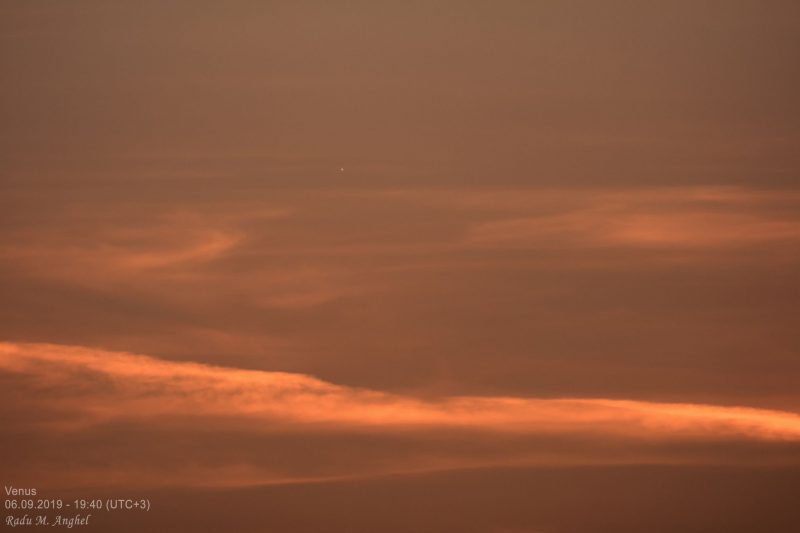
Planet guides (like ours) will tell you that the brightest planet Venus is not visible in September 2019. That’s because Venus reached superior conjunction on August 14. At that time, Venus was behind the sun as viewed from Earth. Now Venus is still mostly lost in the sun’s glare, but it has officially transitioned from our morning sky, where it lingered for most of 2019, to our evening sky. And behold! An EarthSky community member has glimpsed Venus already through a telescope. Radu Anghel of Bacau, Romania, wrote on September 6, 2019:
Venus, the Evening Star, at 5 degrees away from the sun. Visible only with the telescope for now, but will get farther from the sun and shine in the next weeks, in the west after sunset. One shot, ISO 100, 1/200s.
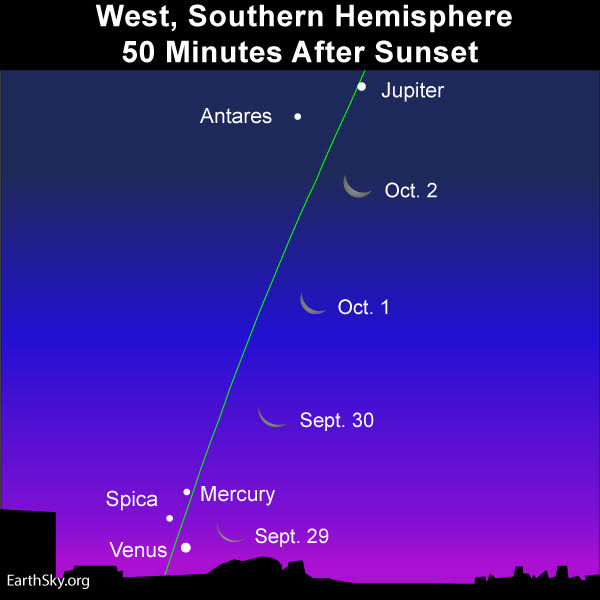
By the way, Venus comes to superior conjunction every 584 days. Southern Hemisphere observers might catch Venus with the eye alone by the end of September. Here in the Northern Hemisphere, the autumn angle of the ecliptic to the western horizon in the evening will place Venus lower in the sky, closer to the sunset horizon. We in the north might have to wait until October to see Venus with the eye alone.
Visit EarthSky’s guide to the bright planets
Bottom line: Photo from an EarthSky community member of Venus in the evening sky, just 5 degrees from the sun.
Like what you read?
Subscribe and receive daily news delivered to your inbox.
More from
Deborah Byrd


Visible planets and night sky guide for October

Stargazing tips! 10 great tips for beginning astronomers
Mars calendar year begins September 30: Happy New Year, Mars!
Alpha Cephei, or Alderamin, is a fast-spinning star



