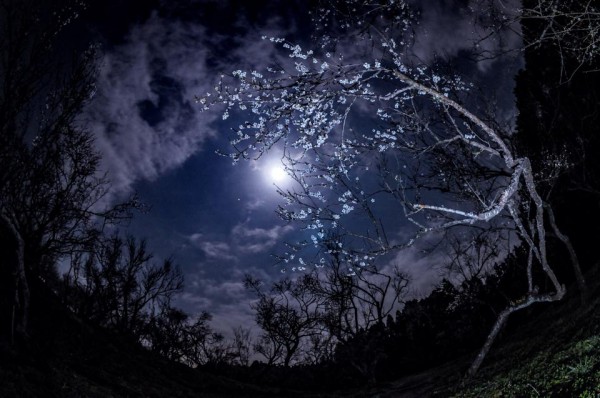
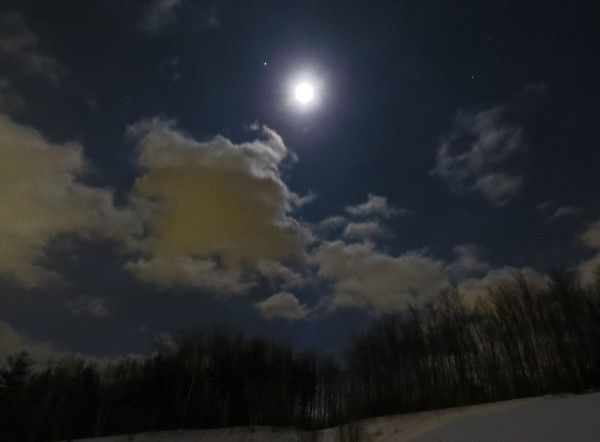
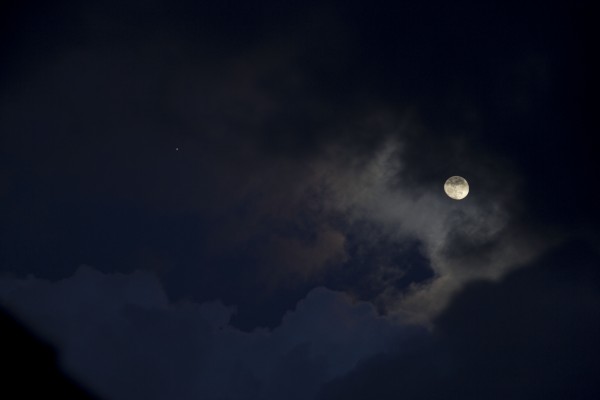
View larger. | Moon and Jupiter on March 2, 2015, seen from Japan. Masaaki Shibuya, who captured this photo, titled it A Moonlit Night of Plum Blossoms. Thank you, Masaaki!Patricia Lane Evans submitted this photo to EarthSky of the moon and Jupiter on March 2, 2015.
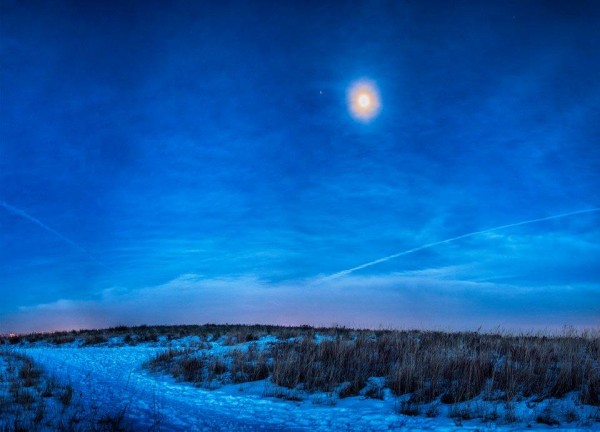
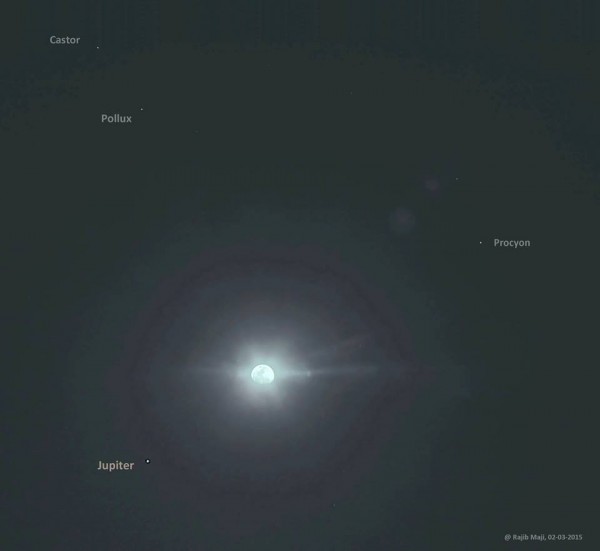
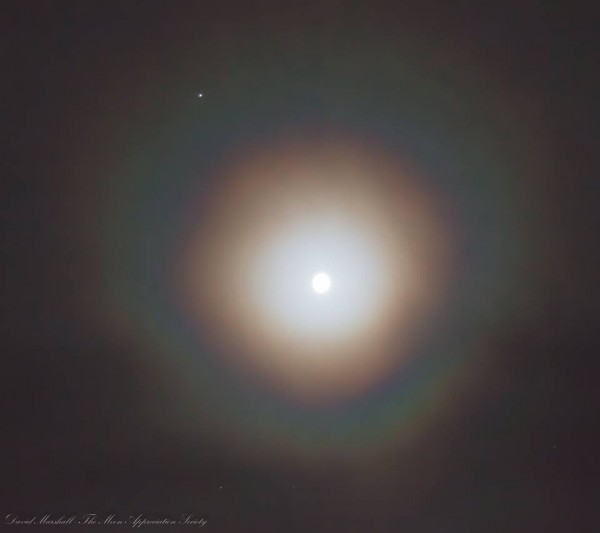
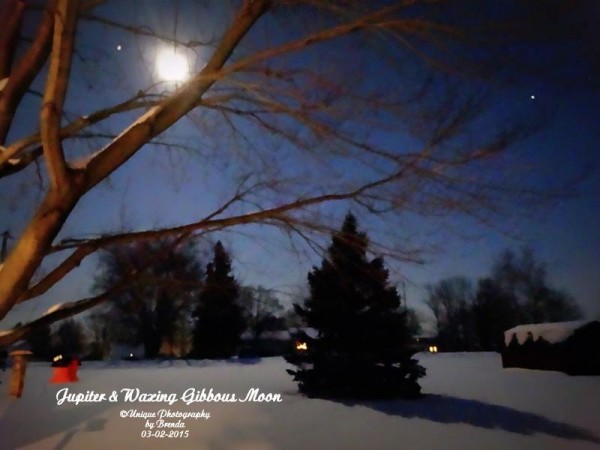
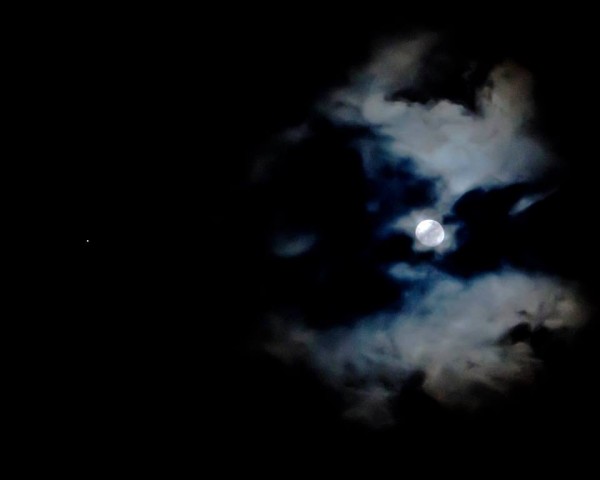
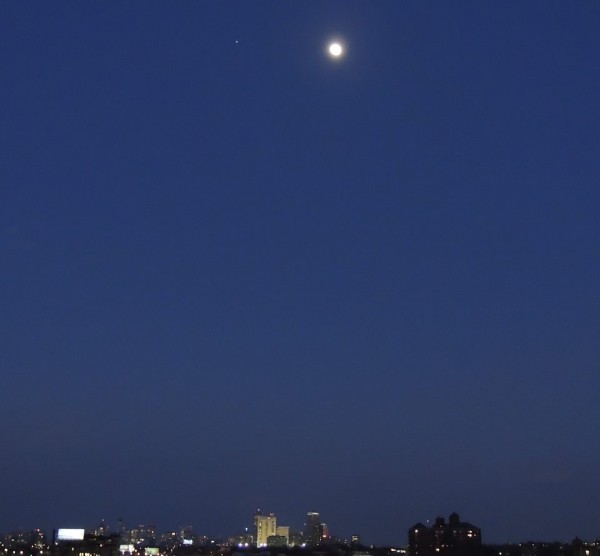
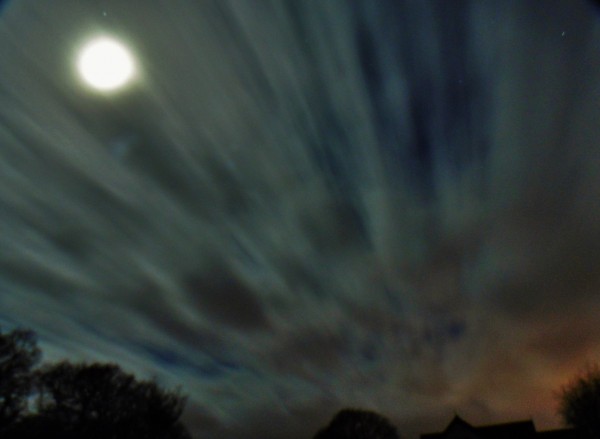
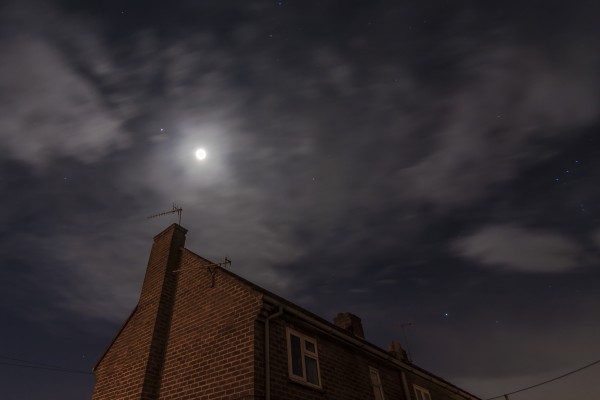
Michael Reagan submitted this photo. He caught the moon and Jupiter on March 2 from Fort Mohave, Arizona.Joe Randall caught the pair over Colorado and posted this photo to EarthSky Facebook.EarthSky Facebook friend Rajib Maji wrote: “I observed the moon today with Jupiter near by along with Castor-Pollux and Procyon. Rawatbhata, Rajasthan, India, 02-03-2015.”Moon and Jupiter on March 2, 2014 from Birgitta Johansson in Hudiksvall, Sweden.Moon and Jupiter on March 2, 2015 from EarthSky Facebook friend the Moon Appreciation Society in northern Italy. The moon has a corona around it. That’s a smaller halo of light than the large 22-degree halo we often see in photos. Read more about lunar coronas from Les Cowley’s great website Atmospheric Optics.Moon and Jupiter on March 2 from Brenda Pearson in North Benton, Ohio.Moon and Jupiter on March 2 over North Carolina, from Ken Christison.Moon and Jupiter on March 2 over Boston, by Walter Pierce.Pauli Pearce posted at EarthSky Facebook and wrote, “Jupiter and our moon sitting pretty above us all as the clouds rush by from Isle of Wight, UK.” See Jupiter above the moon?Jan Knurek in the UK submitted this photo to EarthSky. Jupiter and the moon on March 2, 2015.
Bottom line: Beautiful photos of the March 2, 2015 moon and Jupiter. Our thanks to all who posted at EarthSky Facebook and G+, and submitted directly to EarthSky.org. Don’t forget to look for the moon and Jupiter again on Tuesday evening, March 3, 2015. They won’t be as close as Monday evening … but they’ll still be beautiful.
Deborah Byrd (asteroid 3505 Byrd) helps edit EarthSky.org and is a frequent host of EarthSky videos. Deborah created the EarthSky radio series in 1991 and founded EarthSky.org in 1994. Prior to that, she had worked for the University of Texas McDonald Observatory since 1976, and created and produced their Star Date radio series. She has won a galaxy of awards from the broadcasting and science communities, including having an asteroid named in her honor in 1990, a Public Service Award from the National Science Board in 2003, and the Education Prize from the American Astronomical Society in 2020. A science communicator and educator since 1976, Byrd believes in science as a force for good in the world and a vital tool for the 21st century. "Being an EarthSky editor is like hosting a big global party for cool nature-lovers," she says.
Like what you read? Subscribe and receive daily news delivered to your inbox.
Thank you! Your submission has been received!
Oops! Something went wrong while submitting the form.