Science news, night sky events and beautiful photos, all in one place. Click here to subscribe to our free daily newsletter.
Martian dawn pic highlights cliffs and crags
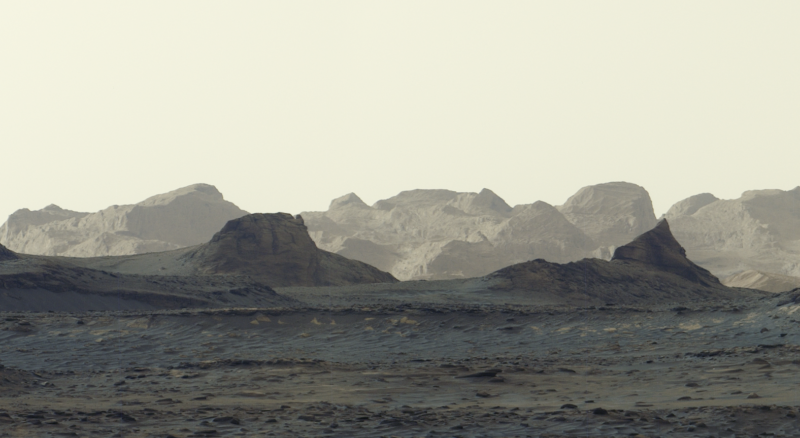
NASA’s Curiosity rover has been exploring the Mount Sharp region of Mars since it arrived in 2012. Now, on October 6, 2026, NASA has released this new pic of a Martian dawn, which illuminates the play of light on the cliffs and crags of the region.
The Mars Curiosity rover captured this image back on August 11, 2026, which was the 4,982nd Martian day, or sol. And since then, Curiosity has surpassed the 5,000 sol mark and is still going strong!
An odd feature on Mars
NASA said the crags on the horizon are known as yardangs. These are landscape protrusions carved out of bedrock. The yardangs protrude on the northwestern reaches of Mount Sharp.
Mount Sharp is a 3-mile-tall (5-km-tall) mountain, while the yardangs extend horizontally about 10 miles (16 km) across.
But scientists think something is odd about this yardang layer on Mars. Ashwin Vasavada, Curiosity project scientist of NASA’s Jet Propulsion Laboratory, said:
The yardang layer looks out of place. It’s the wrong color, the layers tilt at an odd angle, and it almost appears plastered on. But that’s what makes it exciting to reach.
No one is sure exactly what created this layer, but one idea is it may be ash deposited by ancient volcanic eruptions.

More about Mount Sharp
Mount Sharp lies within Gale Crater. And it makes up the crater’s central peak. Curiosity has now climbed 0.6 miles (1 km) of elevation as it ascends toward Mount Sharp. In fact, that’s the highest ever climbed on Mars, and the rover is still going.
Scientists say Mount Sharp is made of layers that formed over time. Lakes and streams once flowed here. But eventually, the water dried up and left behind salty deposits. The wind then eroded away some of the material, leaving behind the crags or yardangs.
Now the little Curiosity rover will roll onward, perhaps reaching the base of the yardangs by 2027. We look forward to seeing these jagged formations from a closer point of view!
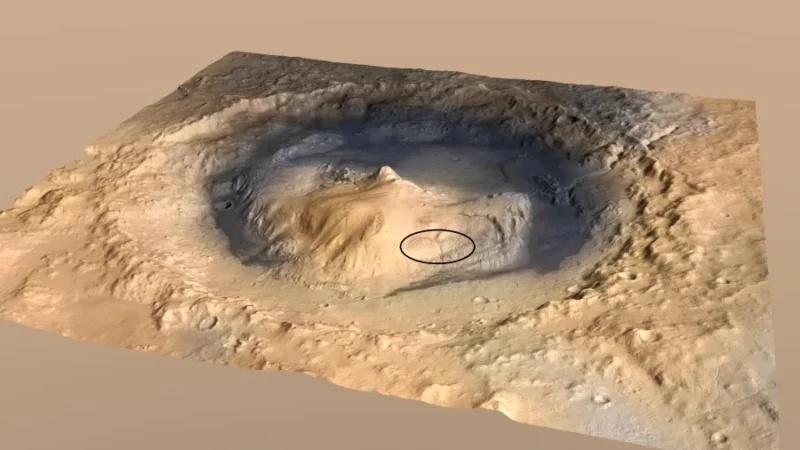
Bottom line: On October 6, 2026, NASA released an image of Martian dawn from the Curiosity rover. The image captures a pale light illuminating distant cliffs and crags.
Like what you read?
Subscribe and receive daily news delivered to your inbox.
More from
Kelly Kizer Whitt


The ghost of Biela’s Comet: It created a storm and disappeared

Visible planets and night sky guide for October
Moon and Jupiter pics here! A cosmic hide-and-seek
Solar system’s most bizarre moons! Take the tour