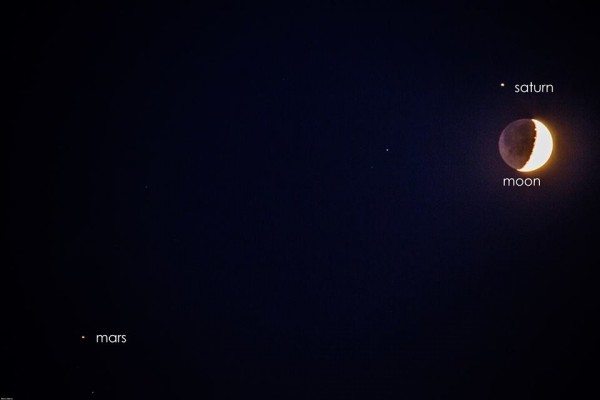
Marco Mereu in Italy caught the moon, Saturn and Mars on August 31, 2014.
There was a spectacular view of the moon, planet Saturn and planet Mars – in front of the constellation Libra, with bright Libra stars nearby – on the night of August 31, 2014. These images are from EarthSky Facebook, or submitted directly to EarthSky.org. Thank you to all who posted!
By Monday night, the moon will be further to the east of the two planets, near the star Antares.
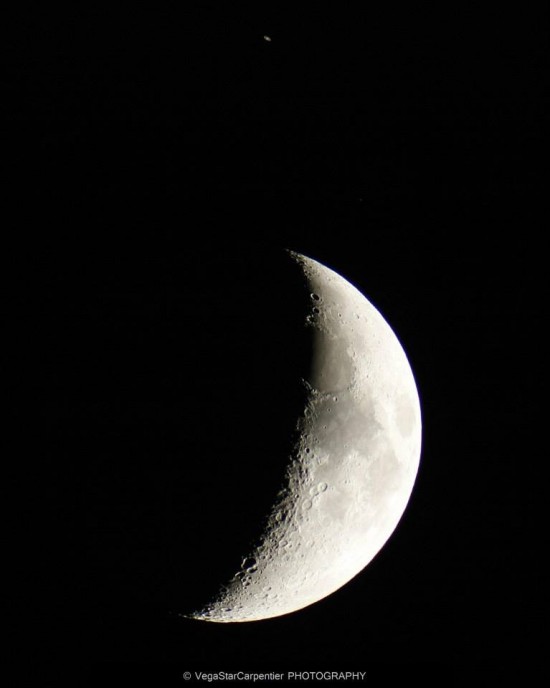
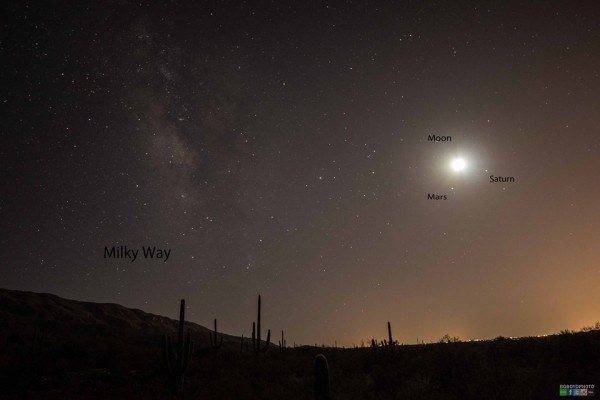
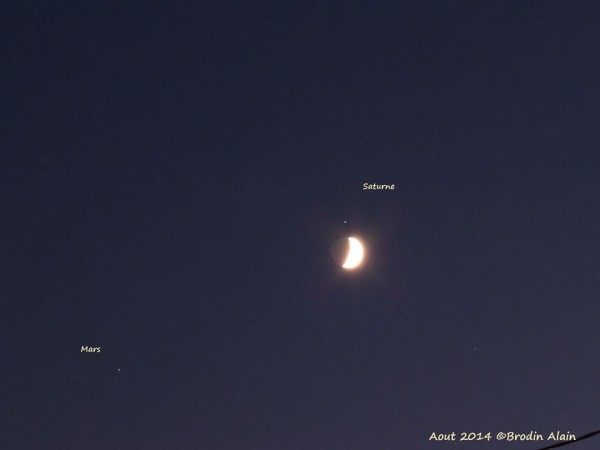
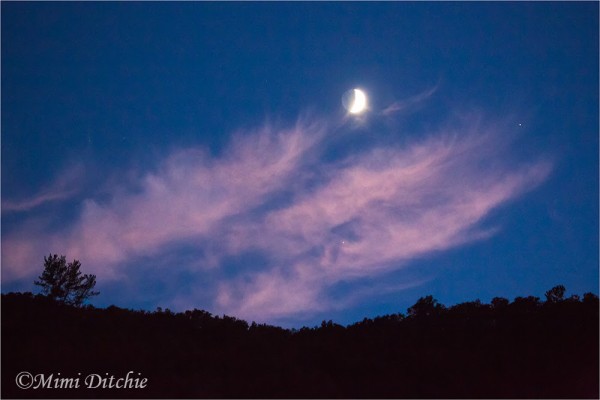
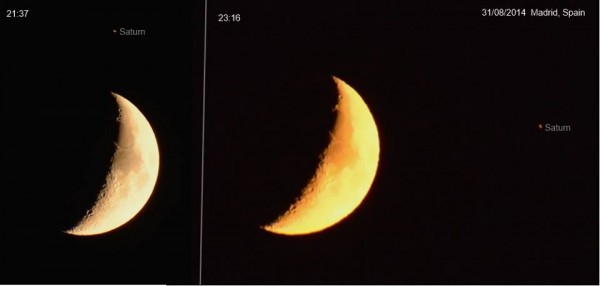
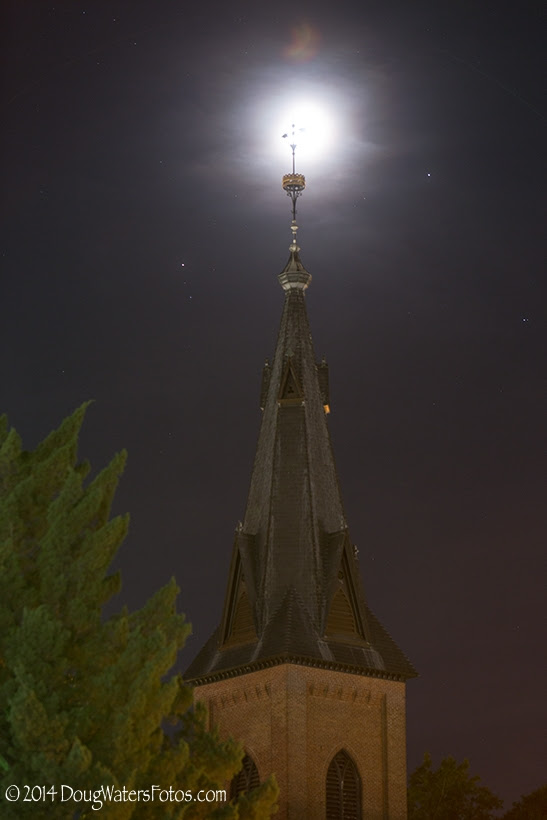
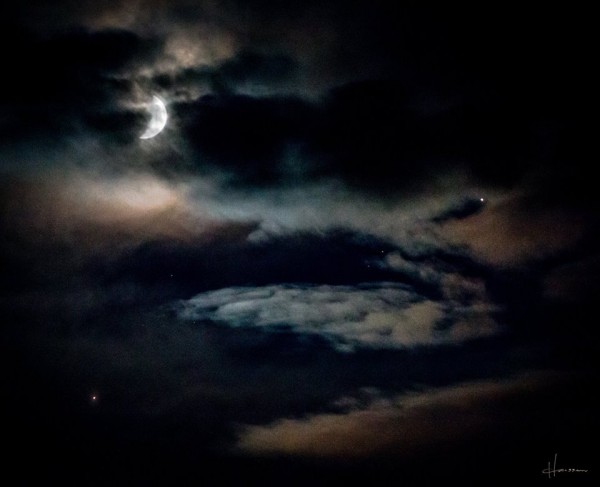
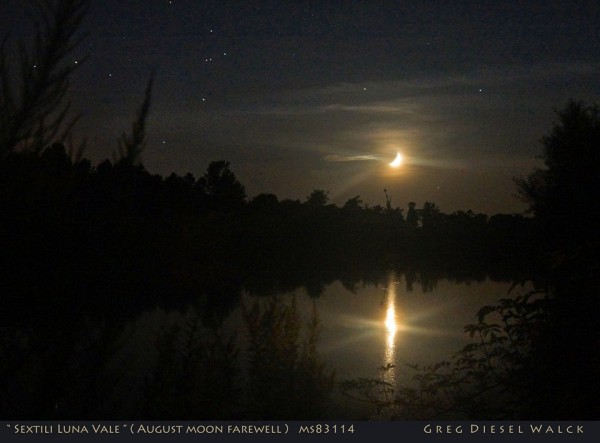
Vegastar Carpentier in France used a telescope to capture this view of Saturn (above) and the moon.BG Boyd Photo in Tucson, Arizona wrote, “Moon, Mars and Saturn conjunction with the Milky Way. The Moon was a waxing crescent but my long exposure (to bring out the planets and the Milky Way) captured a lot of the moonlight making it appear brighter than it actually was.”Brodin Alain in France captured this photo of the August 31 moon and planetsMimi Ditchie in California wrote, “I looked intently for Mars and Saturn to appear in the western sky near the moon after sunset. Suddenly they popped out, but the clouds almost covered them.”Annie Lewis in Spain wrote, “I was surprised at how much the relative positions of Saturn and the moon changed in just over an hour and a half.”DougWatersFotos. caught the planets and moon over a church steeple in New Bern, North Carolina.Keith Hanssen caught the planets and moon on August 31 through thin clouds over southwestern Montana.GregDiesel Landscape Photography wrote, “Last view of the moon before moonset, glimpse of Saturn lower left of the moon and a bright Antares upper left of frame. Currituck NC 10:40pm.”
Deborah Byrd (asteroid 3505 Byrd) helps edit EarthSky.org and is a frequent host of EarthSky videos. Deborah created the EarthSky radio series in 1991 and founded EarthSky.org in 1994. Prior to that, she had worked for the University of Texas McDonald Observatory since 1976, and created and produced their Star Date radio series. She has won a galaxy of awards from the broadcasting and science communities, including having an asteroid named in her honor in 1990, a Public Service Award from the National Science Board in 2003, and the Education Prize from the American Astronomical Society in 2020. A science communicator and educator since 1976, Byrd believes in science as a force for good in the world and a vital tool for the 21st century. "Being an EarthSky editor is like hosting a big global party for cool nature-lovers," she says.
Like what you read? Subscribe and receive daily news delivered to your inbox.
Thank you! Your submission has been received!
Oops! Something went wrong while submitting the form.