
Sun news October 9: Activity high after a powerful M flare

Today’s top story: Bam! Solar activity has jumped to high thanks to an M6.7 flare from volatile sunspot region AR4549 at at 15:48 UTC yesterday. We’d been expecting action from this region, due to its beta-gamma-delta magnetic complexity, and it didn’t disappoint. The powerful blast lit up a large portion of the solar disk in extreme ultraviolet imagery across several wavelengths. The eruption also hurled a huge chunk of solar stuff into space, known as a coronal mass ejection (CME). Experts are currently analyzing the event to see if any of this sun-stuff could be heading toward Earth. Stay tuned.
Past 24 hours on the sun
(11 UTC October 8 – 11 UTC October 9)
Flare activity: Solar activity reached high levels thanks to the M6.7. Observers registered 14 flares during the period: one M-class and thirteen C-class.
- Strongest flare: An M6.7 from AR4549, peaking at 15:48 UTC on October 8. Shortly after the blast, an R2 (moderate) radio blackout affected an area over the Atlantic Ocean, off the east coast of Brazil.
- Other notable flares: AR4549 kept popping off small C-class flares throughout the period.
- Lead flare producer: AR4549 topped the list, producing 12 of the period’s 14 flares. In fact, it was nearly the only producer. The other two, both C flares, came from an as-yet-unnumbered newcomer in the southeast.
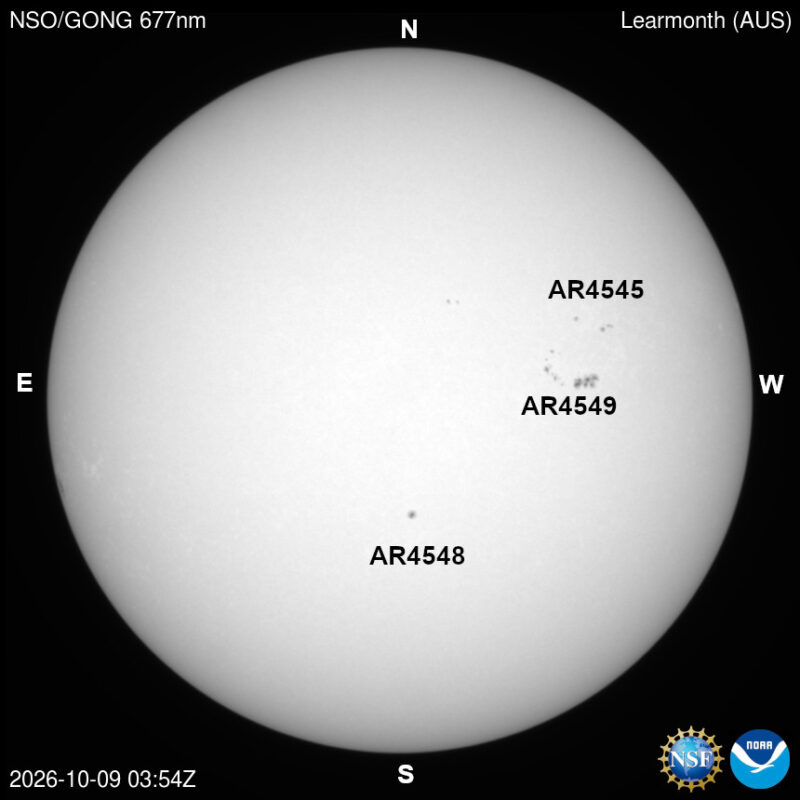
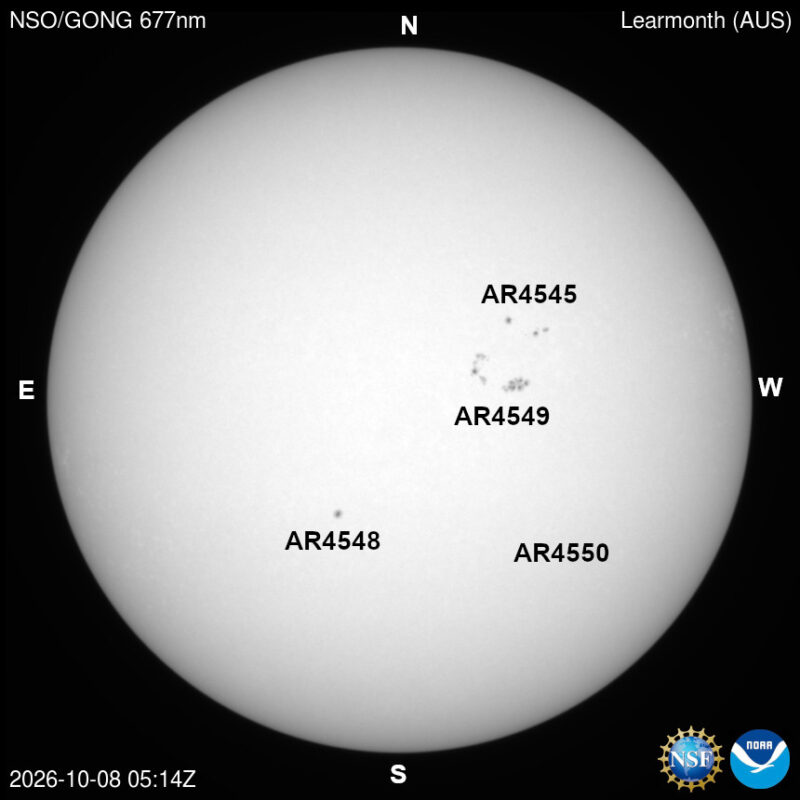
Sunspot regions: Currently, three numbered sunspot regions occupy the visible disk. In addition, a new region in the southeast is firing C flares but hasn’t received an official number yet.
- AR4549 (beta-gamma-delta): This remains the largest and most complex region on the disk. It showed some growth, and its leading spots have been separating. That kind of motion can build up magnetic shear, which raises the odds of stronger flares.
- AR4545 (beta): This region showed some decay over the period. It produced no flares.
- AR4548 (alpha): This relatively simple region stayed stable and produced no flares.
Blasts from the sun? The M6.7 flare from AR4549 produced a partial halo CME. Specialists are running deeper models and analyses to determine whether any component is heading toward Earth.
- October 6 CME: Meanwhile, we await the CME from the M1.4 and M1.8 flares of October 6. It should arrive later today, bringing a G1 to G2 (minor to moderate) geomagnetic storm.
- October 7 CME: A CME that left the sun on October 7 also remains on track for Earth. It could deliver a glancing blow late on October 10 or early on October 11.
Past 24 hours in space weather
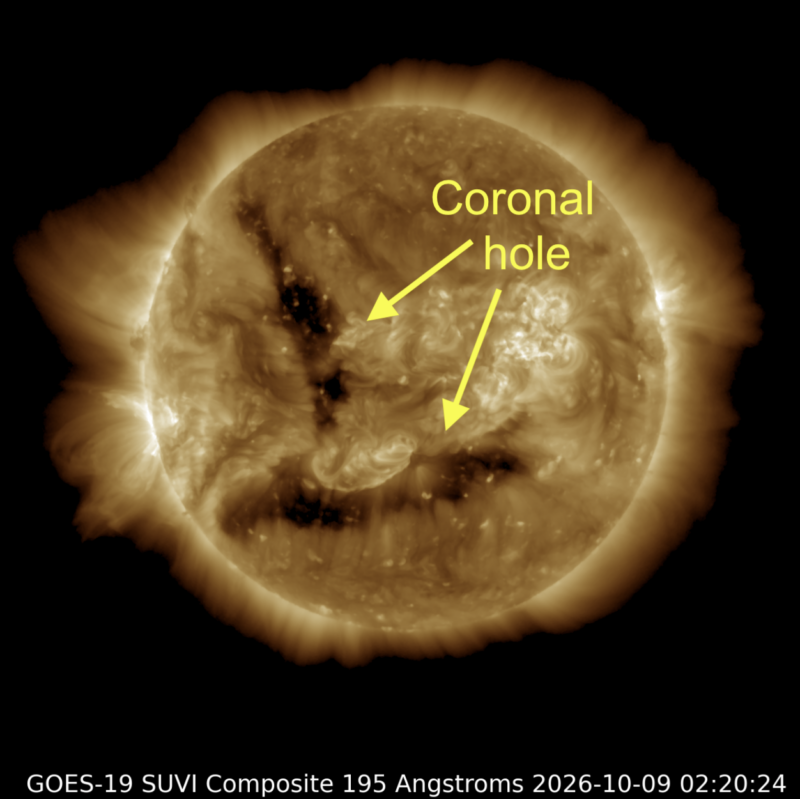
Solar wind: Solar wind speeds averaged low levels throughout the period, holding at ambient background conditions. In addition to this week’s CMEs, a large coronal hole is moving into an Earth-affecting position. Its high-speed stream may start reaching us in the coming days.
Bt, Bz and magnetic coupling: The total interplanetary magnetic field (IMF) (Bt) started the period weak, then rose slightly to moderate strength. Meanwhile, the north-south component (Bz) pointed mostly southward throughout the whole period.
Earth’s magnetic field: Geomagnetic activity stayed quiet to unsettled, with the Kp index ranging from 1 to 3. At the time of this writing, the Kp index sits at level 2.
What’s ahead? Sun–Earth forecast
Flare activity forecast: Forecasters raised their expectations to low-to-moderate solar activity. The chance for M-class flares climbed from 40% yesterday to 55% today. Likewise, the chance for an X-class flare rose to 10%. AR4549 remains the primary threat, given its beta-gamma-delta complexity. It’s now moving into the northwest quadrant.
Geomagnetic activity forecast:
- October 9: G1 to G2 (minor to moderate) geomagnetic storms are likely as the October 6 CME arrives later today.
- October 10: Expect unsettled to active conditions (Kp 3-4) as CME effects wane. Meanwhile, fast wind from the coronal hole may begin heading our way. Late in the day, the October 7 CME could deliver a glancing blow, bringing a chance of G1 storms (Kp 5) and a slight chance of G2 storms (Kp 6).
- October 11: Anticipate quiet to unsettled conditions (Kp 1-3), with some active intervals (Kp 4). However, that could change once analysts finish modeling the M6.7 CME.
Sun news October 8: Sun-stuff coming to Earth, auroras ahead!
A coronal mass ejection (CME) that left the sun on October 6 is racing toward Earth. Forecasters expect it to arrive in the early hours (UTC) tomorrow, likely triggering G1 to G2 (minor to moderate) geomagnetic storms. There is even a slight chance of G3 (strong) storm intervals. This could mean auroras visible across northern U.S. and U.K. latitudes. Meanwhile, modeling suggests a second CME — launched from the sun on October 7 — will give Earth a glancing blow late on October 10 or early on October 11. So the coming days could be great for aurora watching!
Past 24 hours on the sun
(11 UTC October 7 – 11 UTC October 8)
Flare activity: Solar activity was at low levels. Observers tracked 11 flares during the period: 10 C-class and one B-class.
- Strongest flare: A C8.0 flare peaked at 13:17 UTC on October 7 from AR4549.
- Other notable flares: AR4549 continued popping off small C-class flares throughout the period. AR4545 contributed one C1.6 flare peaking at 00:59 UTC on October 8.
- Lead flare producer: AR4549 dominated, producing nine of the 11 flares.
Sunspot regions: Four sunspot regions occupied the visible disk. One new region was numbered during the period.
- AR4549 (beta-gamma-delta magnetic configuration): This is the largest and most complex region on the disk. Despite its complexity, AR4549 appears generally stable in size. It remains the primary threat for moderate-class flaring.
- AR4550 (beta): This new region emerged in the southwest and was subsequently numbered during the period. It remained relatively quiet after its appearance.
- AR4545: A simpler region that produced one minor C-class flare during the period.
- AR4547: Another relatively simple region. It contributed one near-C-class event (B 9.6) during the period.
Blasts from the sun? The C8 flare from AR4549 at 13:17 UTC on October 7 launched a partial halo CME. STEREO-A coronagraph imagery first captured it at approximately 13:38 UTC. Initial modeling from the Space Weather Prediction Center (SWPC) indicates an Earth-directed component with arrival early on October 11. Other analysis suggests this CME will deliver a glancing blow late on October 10 or early October 11. No other Earth-directed CMEs were observed during the period.
- October 6 CME (prior event): A CME that departed the sun on October 6 remains on track for Earth. SWPC forecasts arrival early on October 9. The U.K. Met Office expects arrival in the early UTC hours of October 9. This is the primary driver for the upcoming geomagnetic storm forecast.
Past 24 hours in space weather
Solar wind: Solar wind speeds continued to decline throughout the period, returning to ambient background conditions. The decline follows the waning influence of a prior coronal hole fast solar wind stream.
Bt, Bz and magnetic coupling: The total interplanetary magnetic field (IMF) (Bt) remained weak. The north-south component (Bz) was generally southward.
Earth’s magnetic field: Geomagnetic activity was quiet to unsettled, with the Kp index ranging from 1 to 3.
Sun news October 7: Sun-stuff headed our way, auroras to come?

A chunk of sun-stuff is heading our way! During yesterday’s M1.4 flare from AR4549, coronagraphs caught a full halo event. That’s when solar material appears to head straight toward Earth in a ring. Then, during the M1.8 flare from the same region, we spotted a second blob of solar material, or coronal mass ejection (CME). Forecasters have confirmed that this material is coming toward Earth, with arrival estimated early on October 9. They anticipate G1 (minor) geomagnetic storming, with G2 (moderate) levels possible. And the timing couldn’t be better. With aurora season underway and a nearly new moon bringing dark skies, conditions look ideal for aurora-watching. Good luck, aurora hunters!
Past 24 hours on the sun
(11 UTC October 6 – 11 UTC October 7)
Flare activity: Solar activity returned to low levels, with only C flares during our observation period. Observers registered 11 flares in total, all C-class (common).
- Strongest flare: A C3.6 from AR4549, peaking at 15:06 UTC on October 6.
- Lead flare producer: AR4549 once again topped the list, firing 10 of the period’s 11 C flares, including the strongest.
Sunspot regions: Currently, the solar disk as seen from Earth holds three numbered sunspot regions, now that AR4547 has departed.
- AR4545 (beta magnetic complexity): This region showed some growth. Even so, it produced no flares.
- AR4547 (beta): This region rotated out of view to the far side of our star.
- AR4548 (alpha): This region showed no flare activity.
- AR4549 (beta-gamma-delta): This region kept growing and maintained its complex beta-gamma-delta configuration. It was once again the lead flare producer. It also carries the potential for more M (moderate) and even X (strong) flares.


Blasts from the sun? It’s now confirmed. After modeling and analysis, forecasters found that the M1.4 and M1.8 flares from AR4549 produced a CME heading directly toward Earth. Arrival should come early on October 9. When it does, it may stir Earth’s magnetic field up to G2 (moderate) storm levels.
Past 24 hours in space weather
Solar wind: Solar wind speeds kept easing over the past day, settling back to low, background levels.
Bt, Bz and magnetic coupling: The total interplanetary magnetic field (Bt) stayed weak. Meanwhile, the north-south component (Bz) behaved much as it did yesterday, pointing mostly southward through the whole period. At the time of this report, it still points south. However, with the field so weak, that southward tilt had little effect.
Earth’s magnetic field: The geomagnetic field reached unsettled levels during the period. The Kp index ranged from 1 to 3.
Sun news October 6: Bam! 3 M flares break the lull!

After days of only weak flaring, our star surprised us over the past day with 3 M (moderate) flares. Two of these came from AR4549, a newcomer sunspot region that has developed rapidly over the past 24 hours. It emerged just east of the solar disk’s center and quickly grew into a monster sunspot group with a beta-gamma-delta magnetic complexity, the most complex possible magnetic configuration. That means it’s capable of producing more M flares and even X (strong) flares. Plus, its position means that any solar material it fires into space would likely head toward Earth. Stay tuned!
Past 24 hours on the sun
(11 UTC October 5 – 11 UTC October 6)
Flare activity: Solar activity jumped to moderate levels with 3 M flares. Flare production also soared, from just 6 B-class (weak) flares the previous day to 22 flares this period: 3 M-class, 9 C-class (common) and 10 B-class.
- Strongest flare: An M1.8 from AR4549, peaking at 8:05 UTC on October 6. It caused an R1 (minor) radio blackout over the Arabian Sea, off the east coast of Somalia.
- Other M flares: First, an M1.1 from AR4545 peaked at 18:48 UTC on October 5, with an R1 (minor) radio blackout over the Pacific Ocean. Then an M1.4 from AR4549 peaked at 6:10 UTC on October 6, with an R1 (minor) radio blackout over the Indian Ocean.
- Lead flare producer: AR4549 topped the list with 16 flares: the two strongest of the period (M1.8 and M1.4), plus seven C flares and seven B flares.
Sunspot regions: Currently, the solar disk as seen from Earth holds 4 numbered sunspot regions. One newcomer received its number during this period: AR4549.
- AR4545 (beta): This region produced the M1.1.
- AR4547 (beta): This region produced three flares.
- AR4548 (alpha): This region showed no flare activity.
- AR4549 (beta-gamma-delta): The newcomer in the neighborhood! It grew rapidly to a large size and developed the strongest magnetic complexity there is. It also produced 2 M flares this period.
Blasts from the sun? Analysts are now modeling all 3 M flares to determine whether any produced a coronal mass ejection (CME) with an Earth-directed component. Given AR4549’s position near disk center, any CME from it deserves close attention.
Past 24 hours in space weather
Solar wind: Solar wind speeds returned to moderate levels over the past day.
Bt, Bz and magnetic coupling: The total interplanetary magnetic field (Bt) decreased to weak levels. Meanwhile, the north-south component (Bz) pointed mostly southward during the whole period.
Earth’s magnetic field: The geomagnetic field reached active levels during the period. The Kp index ranged from 2 to 4.
Sun news October 5: Coronal hole winds caused auroras last night


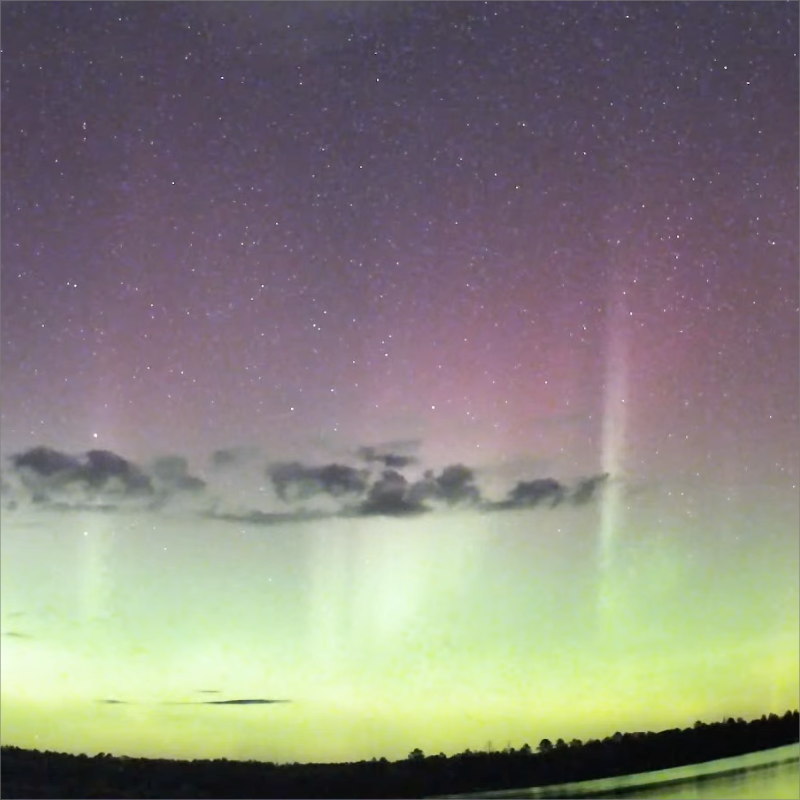
A stream of fast solar wind has been coming to Earth over the past few days from a coronal hole, or an area of lower density in the sun’s outer atmosphere. This solar wind pushed Earth’s magnetic field to G2 (moderate) geomagnetic storm levels over the past 24 hours. And that triggered beautiful auroral displays at high latitudes! Forecasters expect the fast winds to persist early today before gradually tapering off through midweek. Auroras might be visible again tonight, but likely only at the northernmost latitudes.
Past 24 hours on the sun
(11 UTC October 4 – 11 UTC October 5)
Flare activity: Low. The sun produced only B-class (weak) flares during this period, with 6 events tracked in total.
- Strongest flare: B9.6 from AR4545, peaking at 6:01 UTC on October 5.
- Other notable flares: A B7.9 flare from AR4545 peaked at 5:47 UTC on October 5. AR4547 produced a B4.3 flare at 17:57 UTC on October 4. Three additional B-class flares came from unidentified source regions.
- Lead flare producer: AR4545, responsible for the two strongest flares of the period.
Sunspot regions: Five numbered sunspot regions were on the disk. All were small and magnetically simple. No newcomers were reported.
- AR4545 (alpha): This region produced the period’s two strongest flares (B9.6 and B7.9).
- AR4546 (alpha): Positioned near the western limb, soon to rotate out of view.
- AR4547 (alpha): Quiet and largely unchanged.
- The remaining two numbered regions were quiet and stable throughout the period.
Blasts from the sun? Observers detected no Earth-directed coronal mass ejections ( CMEs) in available coronagraph imagery.
Past 24 hours in space weather
Solar wind: Solar wind speeds climbed dramatically. This acceleration was driven by a coronal hole high-speed stream from a positive-polarity, equatorial coronal hole.
Bt, Bz and magnetic coupling: The total interplanetary magnetic field (Bt) rose to strong. The north-south component (Bz) swung strongly southward.
Earth’s magnetic field: The geomagnetic field reached G2 (moderate) storm levels. The Kp index ranged from 2 to 5, with three separate G1 (minor) storm periods observed (Kp 5).
The sun in recent days
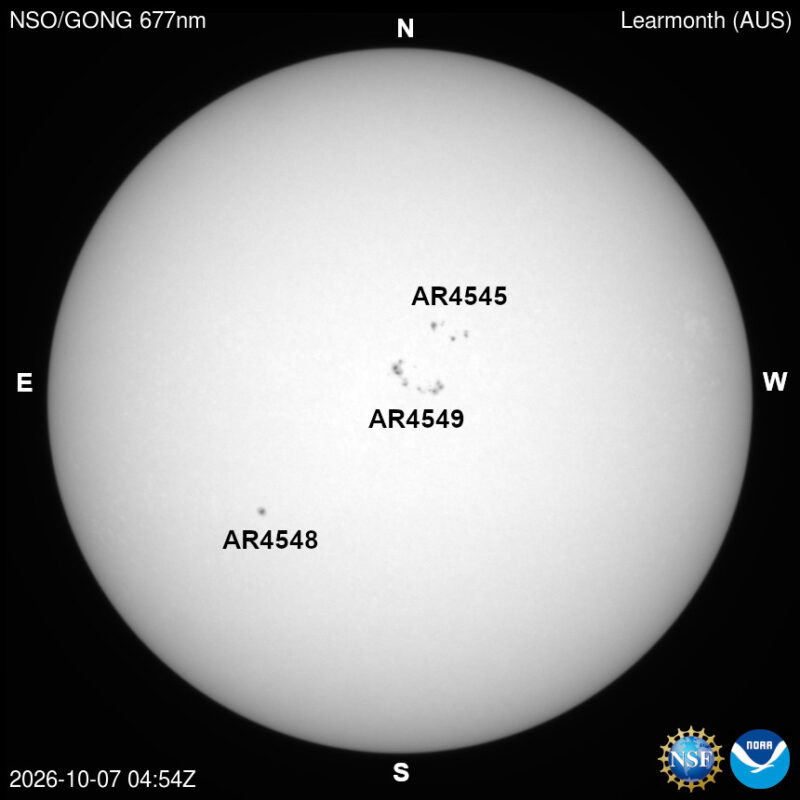
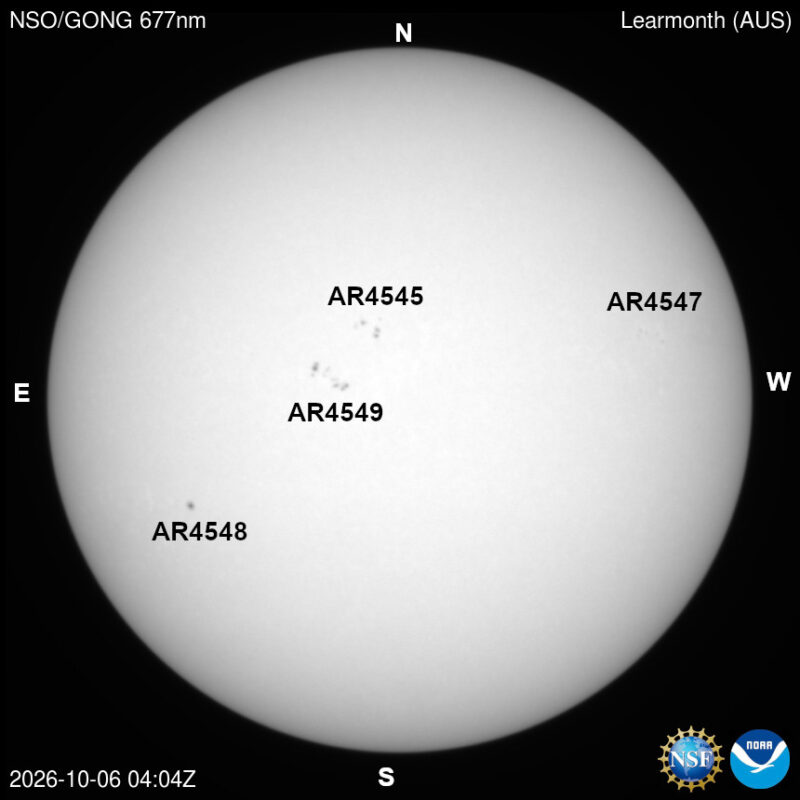
Earlier sun images
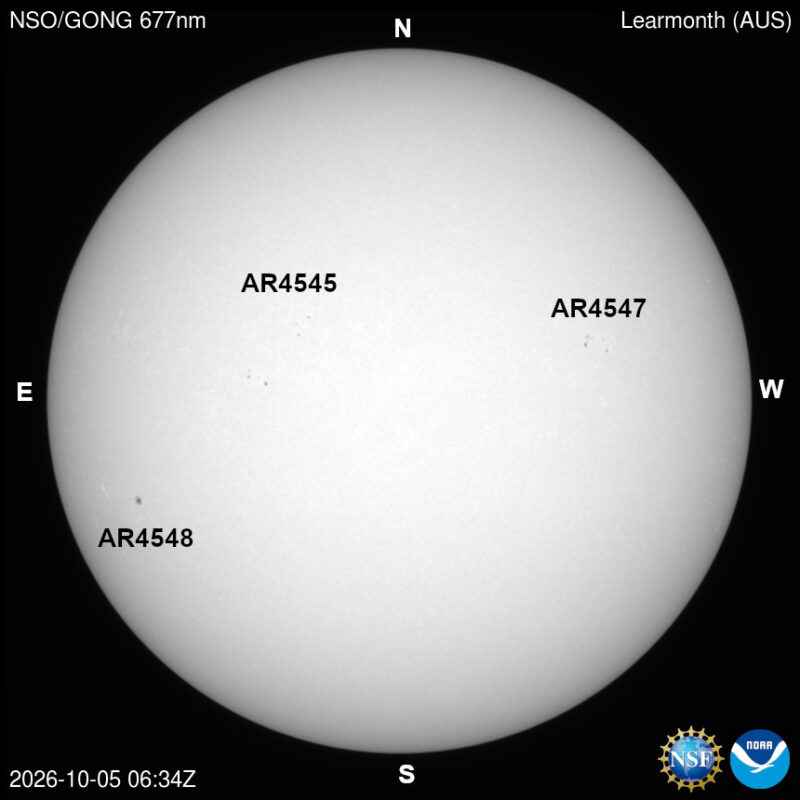
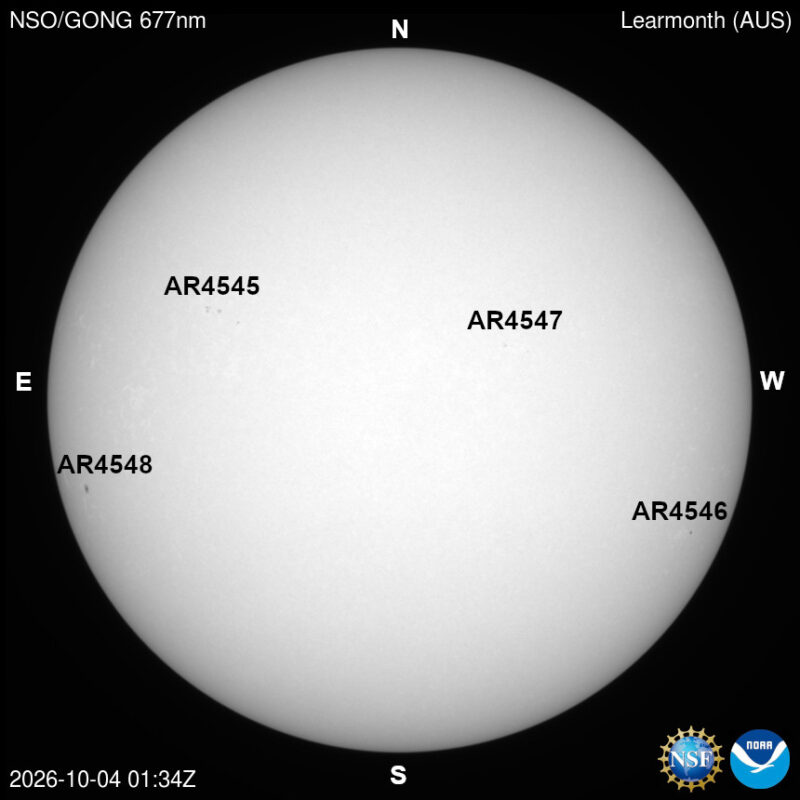
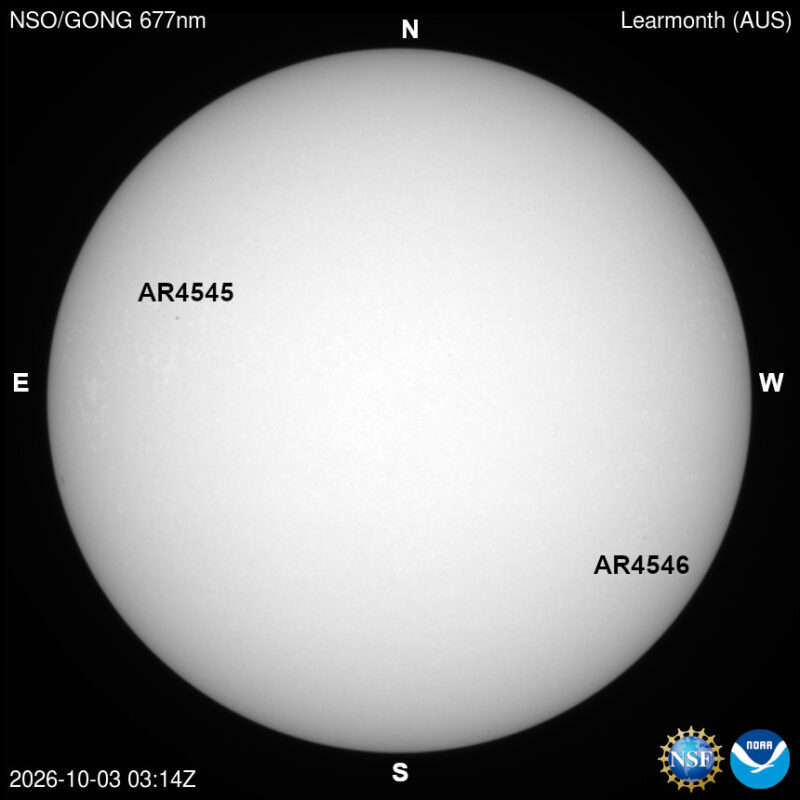
Sun images from our community
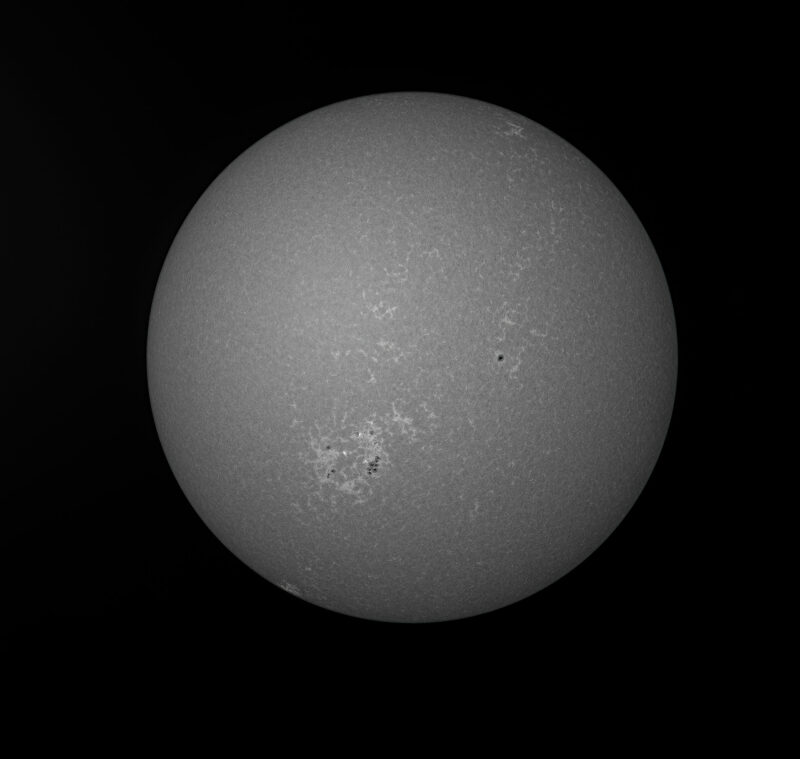
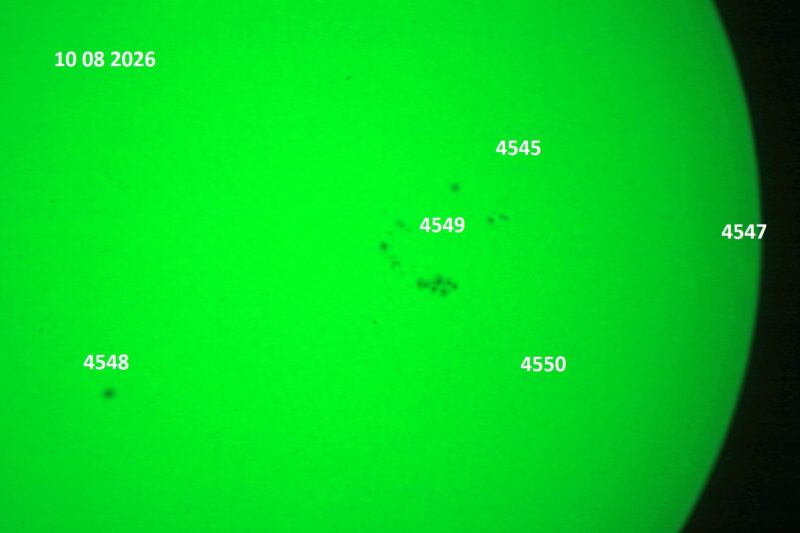
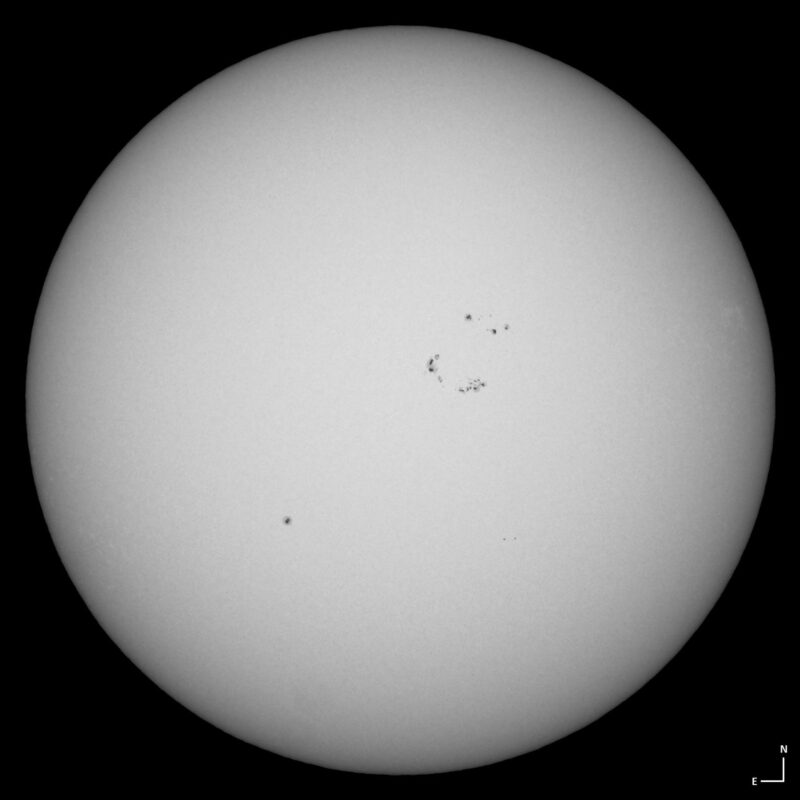
More sun images from our community
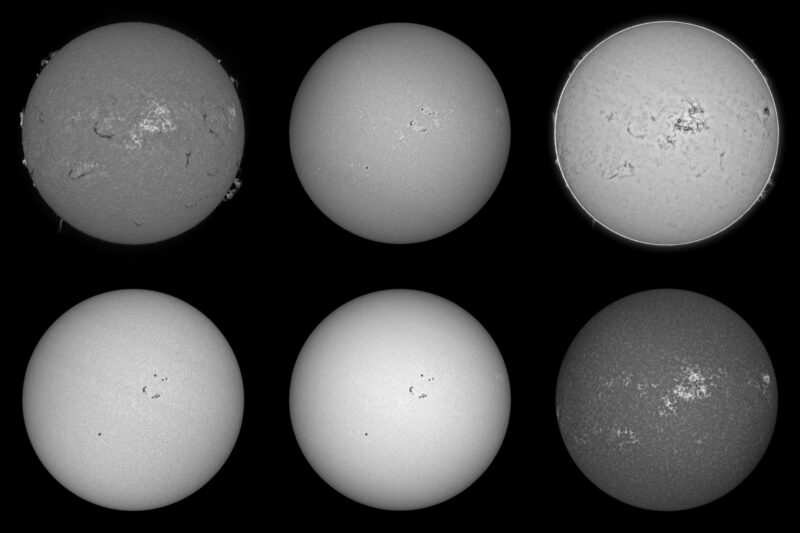
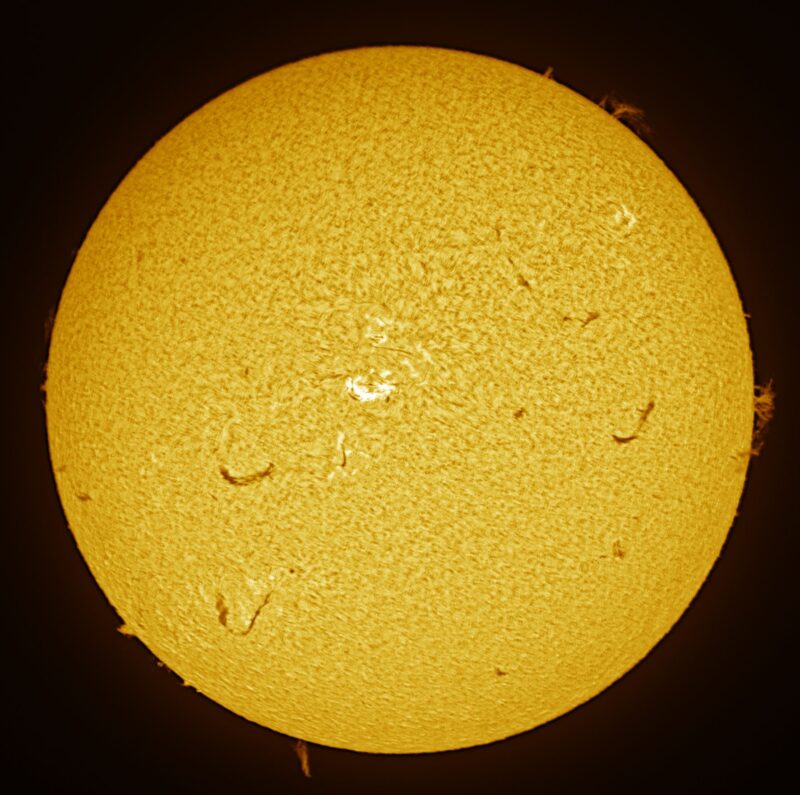
We sometimes feature sun images obtained using hydrogen-alpha filters. Read why.
Bottom line: Sun news, October 9, 2026: Bam! AR4549 fired an M6.7 flare and a coronal mass ejection (CME). Meanwhile, geomagnetic storms and auroras are on the way.
Like what you read?
Subscribe and receive daily news delivered to your inbox.
More from
C. Alex Young


Yes, there’s an aurora season, and it’s here

Sun activity archive for August 2026
Sun activity archive for July 2026
Sun activity archive for June 2026