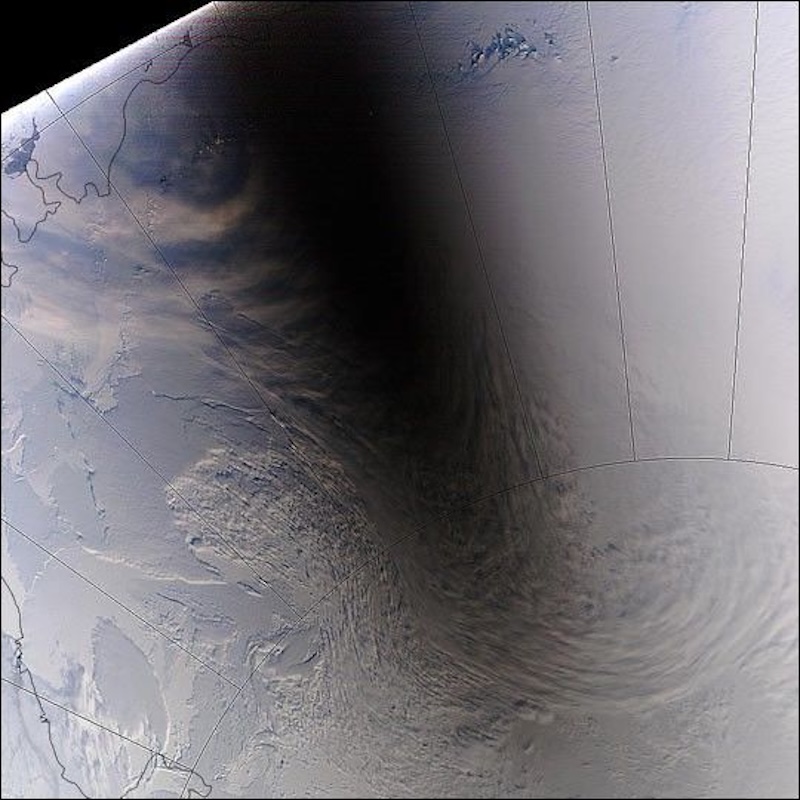
Sun news November 23: On this date, the 1st total solar eclipse seen from Antarctica
Today’s top story: On this date in 2003, a small group of lucky observers witnessed a rare total solar eclipse from Antarctica. Since 1900, only seven total eclipses have crossed the continent, and this was the first one anyone observed.
The moon’s shadow swept over a remote stretch of the Southern Ocean and East Antarctica, taking an unusual path. Most eclipse shadows move east, but this one curved south and then west around the continent.
Clouds obscured the view for most research stations. So about 200 eclipse chasers flew to meet the shadow instead. Two chartered jets cruised above the clouds at about 11 kilometers (7 miles) high. As a result, they enjoyed about 2 1/2 minutes of totality. Meanwhile, astronomers aboard photographed the sun’s faint outer atmosphere, the corona, to compare with views from the SOHO spacecraft.
Past 24 hours on the sun
(11 UTC November 22 – 11 UTC November 23)
Flare activity: Activity was low. The sun produced 4 flares, all B (weak) class.
- Strongest flare: B4.7 from AR4574, peaking at 06:30 UTC on November 23. Flares this weak cause no radio blackouts.
- Lead flare producer: AR4574, with 2 of the 4 flares.
Sunspot regions: Forecasters count two numbered sunspot regions on the Earth-facing disk. No new regions received numbers.
- AR4579 (alpha): This region sits in the northwest. It has simple alpha magnetic complexity, with a single mature spot. It held steady and produced one small B3.2 flare.
- AR4581 (beta): This wide, open region sits near the center of the disk. It showed minor decay, mostly in its trailing spots. Still, it produced one B3.3 flare.
- AR4574: This region sits right on the western limb. It produced the day’s two largest flares. However, it is rotating out of view, so we don’t count it.
Blasts from the sun? Observers spotted no Earth-directed coronal mass ejections (CMEs) in the past day. However, the slow November 19 CME could still deliver a weak, glancing blow. Forecasters expect it on November 23, possibly slipping into early November 24.
Past 24 hours in space weather
Solar wind: The solar wind stayed slow, between about 320 and 400 km/s.
Bt, Bz and magnetic coupling: The total IMF (Bt) stayed at normal levels. Bz dipped slightly south but mostly pointed north. As a result, coupling with Earth’s field stayed weak. Meanwhile, the solar wind’s magnetic direction flipped, possibly as Earth crossed a boundary between sectors of the sun’s magnetic field.
Earth’s magnetic field: Earth’s magnetic field stayed quiet, with the Kp index at 0 to 2. That’s well below the G1 (minor) storm level. Any aurora stayed at high latitudes.
What’s ahead? Sun–Earth forecast
Flare activity forecast: Forecasters expect very low activity on November 23-25, with a chance for C-class (common) flares. They also see a slight chance for M-class (moderate) flares. The likeliest sources are AR4581 and AR4579.
Geomagnetic activity forecast:
- November 23: Quiet to active conditions are possible. A glancing blow from the November 19 CME could push Kp to 4. If it hits, aurora could brighten at high latitudes, such as Alaska, northern Canada and northern Scandinavia.
- November 24: Mostly quiet conditions are likely (Kp 0-2). However, the CME could still arrive early in the day, bringing unsettled to active levels (Kp 3-4).
- November 25: Mostly quiet conditions are expected (Kp 0-2), with isolated unsettled periods (Kp 3) possible.
- November 26: Mainly quiet conditions are likely. Late in the day, fast wind from a coronal hole could arrive. That opening in the sun’s atmosphere may send a high-speed stream our way, though November 27 looks more likely.
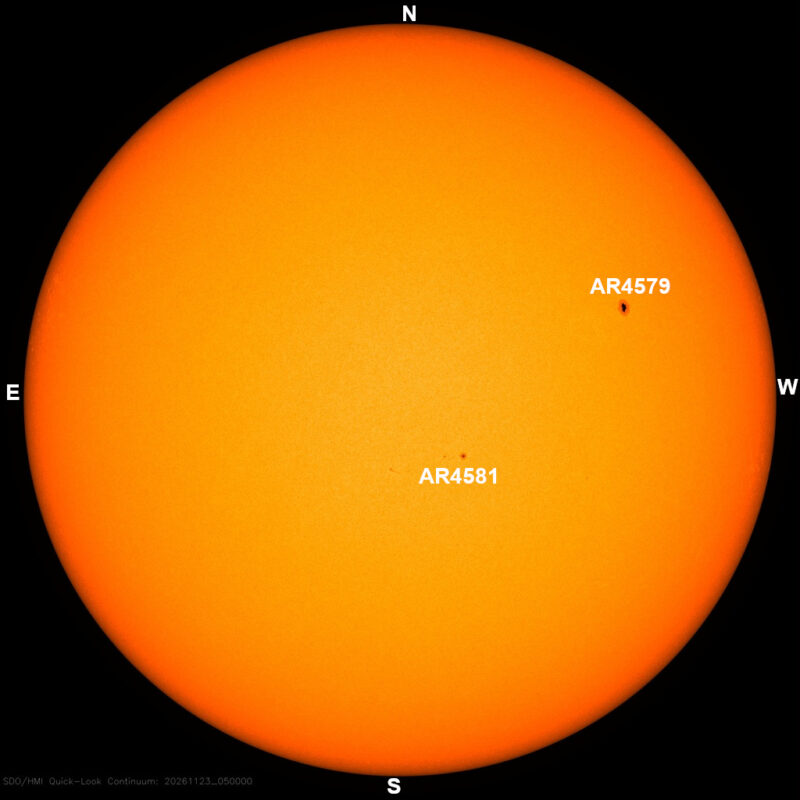
The sun in recent days
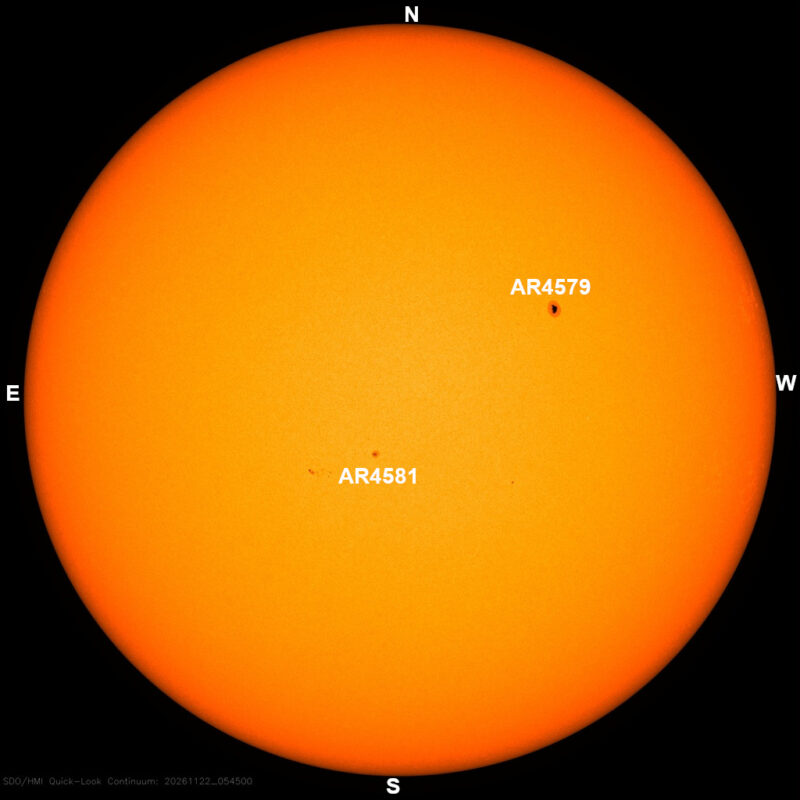
Earlier sun images
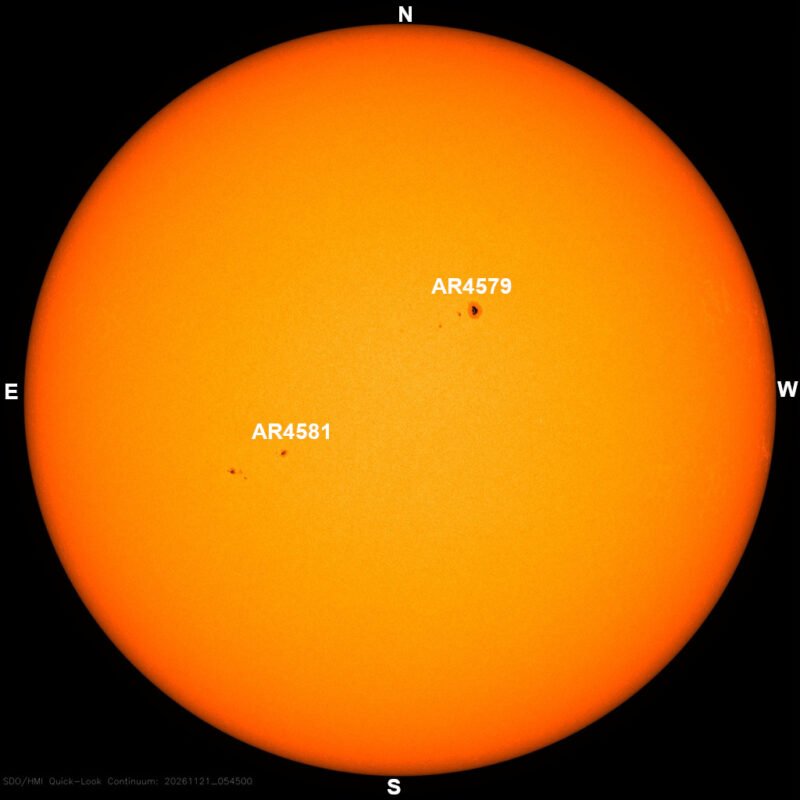
Sun images from our community
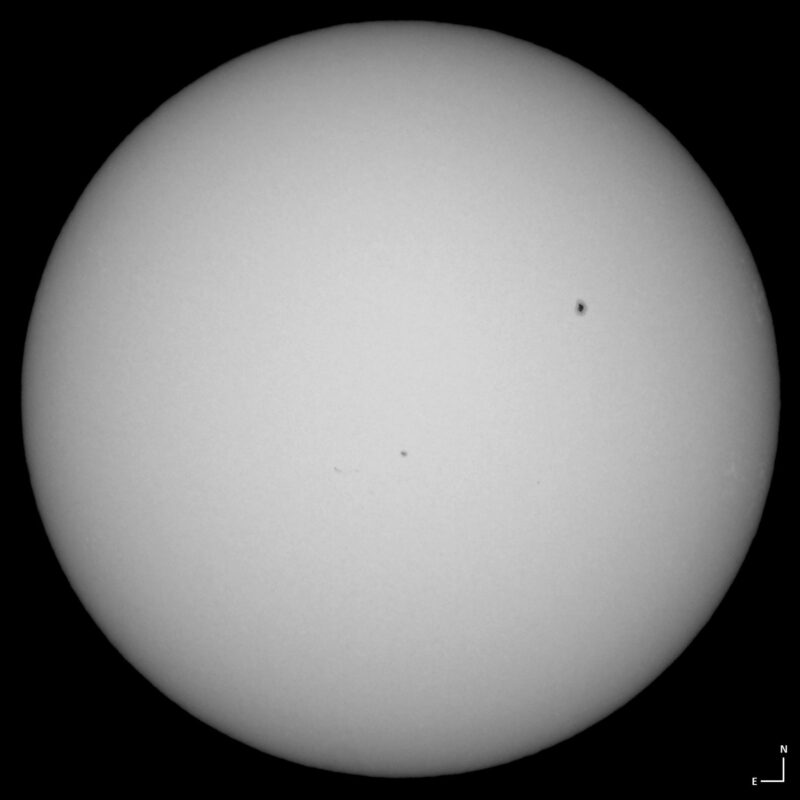
More sun images from our community
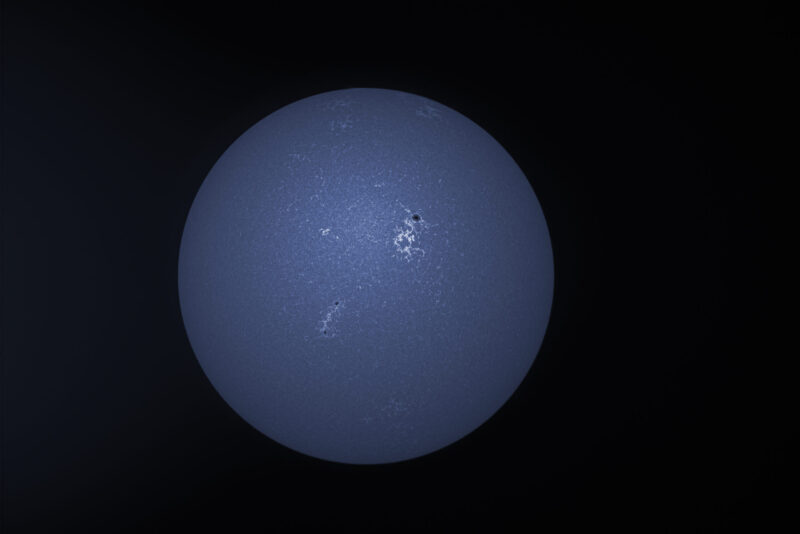
We sometimes feature sun images obtained using hydrogen-alpha filters. Read why.
Bottom line: Sun news November 23, 2026: On this date in 2003, people saw a total solar eclipse from Antarctica for the first time. Most watched from jets!
Like what you read?
Subscribe and receive daily news delivered to your inbox.
More from
C. Alex Young


Sun activity archive for October 2026

Yes, there’s an aurora season, and it’s here
Sun activity archive for September 2026
Sun activity archive for August 2026