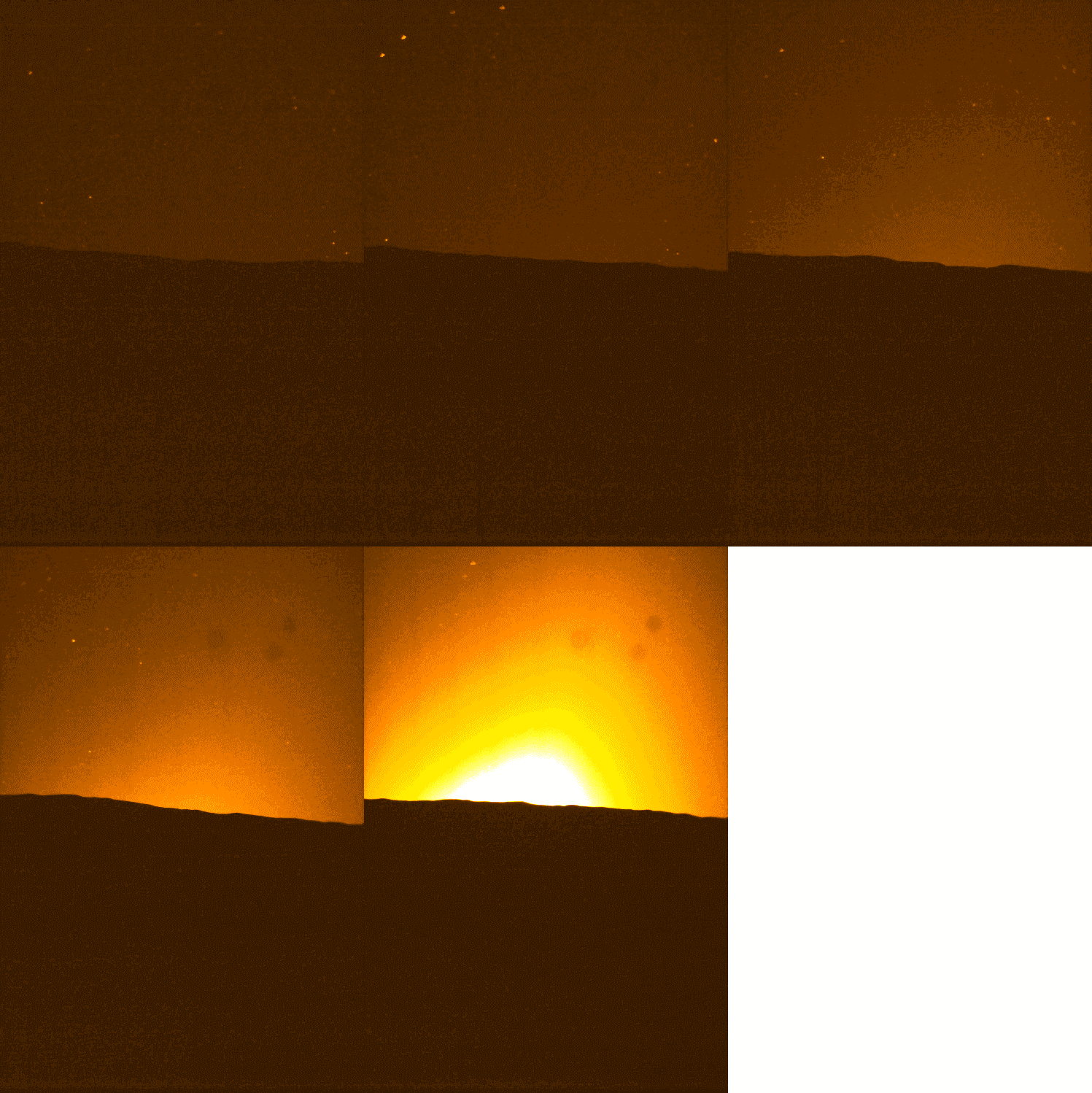
NASA’s robotic moon explorer, LADEE, crashed into the back side of the moon, as planned, on April 17, 2014. Just five days earlier, it captured this amazing imagery of the zodiacal light as seen from the moon’s vicinity. Looks a bit like twilight, doesn’t it? But remember, although twilight here on Earth is an atmospheric phenomenon, this is the moon, and the moon has no air. The zodiacal light – long called the false dawn, from the 12th century poem The Rubaiyat by Omar Khayyam – is really sunlight reflecting off dust grains that move in the plane of our solar system. So of course it’s visible from the moon as well!
By the way, researchers believe LADEE likely vaporized upon contact with the lunar surface because of its extreme orbiting speed of 3,600 mph. They think it may have smacked into a mountain or side of a crater. No debris would have been left behind.
Read more about the LADEE mission and this image from Emily Lakdawalla at the Planetary Society.
Learn more about the zodiacal light, or false dawn, as seen from Earth
* When false dawn streaks the east with cold, gray line,
Pour in your cups the pure blood of the vine;
The truth, they say, tastes bitter in the mouth,
This is a token that the ‘Truth’ is wine.
Bottom line: NASA’s LADEE spacecraft captured this image of the zodiacal light as seen from the moon, five days before it crashed into the moon’s surface on April 17, 2014.
Like what you read?
Subscribe and receive daily news delivered to your inbox.
More from
Deborah Byrd


Visible planets and night sky guide for October

Cassiopeia the Queen is overhead on autumn evenings
What star in the northeast flashes colorfully? It’s Capella!
Proxima Centauri is the closest star to our sun