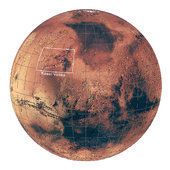
Mars is a dry desert world today, but there continue to be abundant signs that it once had flowing water on its surface. The images on this page – released by the European Space Agency (ESA) today (June 6, 2013), in celebration of the Mars Express spacecraft launch 10 years ago this week – show a region on Mars known as Kasei Valles, named for the word “Mars” in Japanese. It is an ancient flood plain on Mars, a huge system nearly 500 kilometers (300 miles) wide in some places. In contrast, the Grand Canyon in Arizona is only about 30 kilometers (18 miles) wide.
The first image is a mosaic, comprised of 67 images taken with the high-resolution stereo camera carried by Mars Express. Space scientists believe that dramatic flood events carved this impressive channel system on Mars. The second image is a perspective view of this amazing and beautiful place, surely a place you would want to check out if you could personally visit the planet next door.
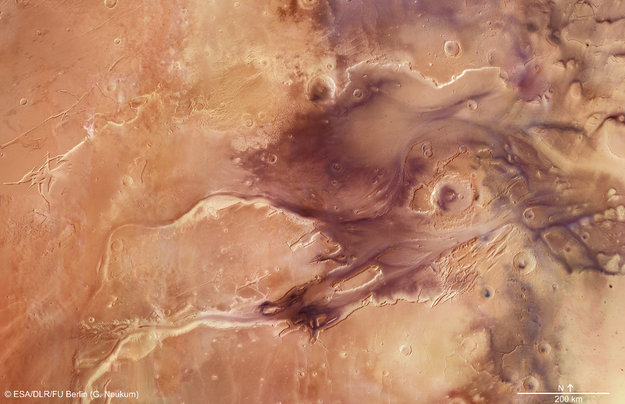
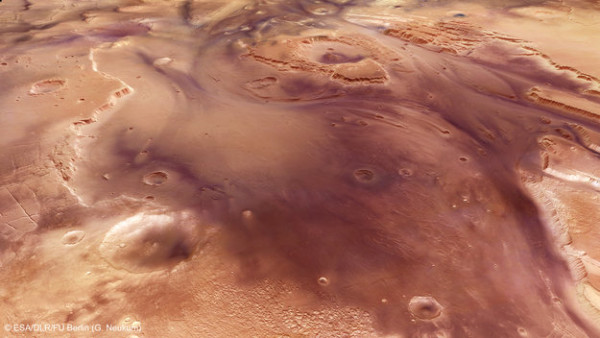
Bottom line: The European Space Agency today released two new images of Kasei Valles on Mars, an ancient and vast flood plain. ESA’s Mars Express spacecraft, launched 10 years ago this week, acquired them.
Like what you read?
Subscribe and receive daily news delivered to your inbox.
More from
Deborah Byrd


Visible planets and night sky guide for October

Stargazing tips! 10 great tips for beginning astronomers
Mars calendar year begins September 30: Happy New Year, Mars!
Alpha Cephei, or Alderamin, is a fast-spinning star