- Mars has marsquakes, the equivalent of Earth’s earthquakes. They show this neighboring planet is still seismically active.
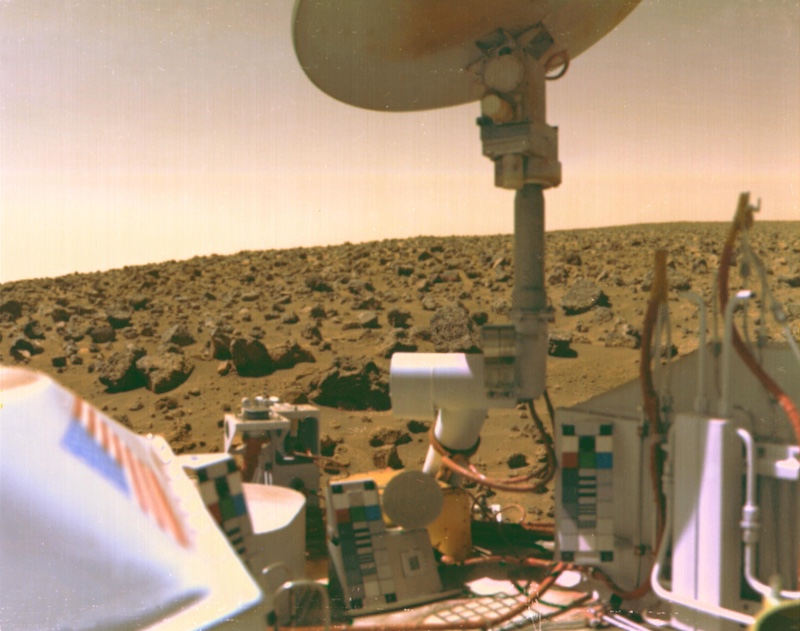
- NASA’s Viking 2 lander detected two possible marsquakes back in 1976. But they weren’t confirmed at the time.
- From 2018 to 2022, NASA’s InSight lander detected nearly 1,000 marsquakes. A new analysis shows that some of them were from the same region as the 1976 Viking 2 detections.
Science news, night sky events and beautiful photos, all in one place. Click here to subscribe to our free daily newsletter.
Marsquakes in the same place decades apart
The Viking 2 lander — 4th spacecraft from Earth ever to land on Mars — touched down on September 3, 1976. It landed in a region we earthlings call Utopia Planitia. Viking 2’s job was to search for signs of Martian life (it didn’t conclusively find any). It did carry a seismometer, with the hope it might detect marsquakes. But the instrument — mounted on the top deck of the lander — was susceptible to the Martian wind. And it was hard for scientists to separate true seismology from the wind’s vibrational “noise.”
Still, Viking 2 did detect what scientists believed were two small marsquakes on the plains of Utopia Planitia. It felt them on sol 53 and sol 80 of the mission. A sol is a Martian day, slightly longer than an Earth day.
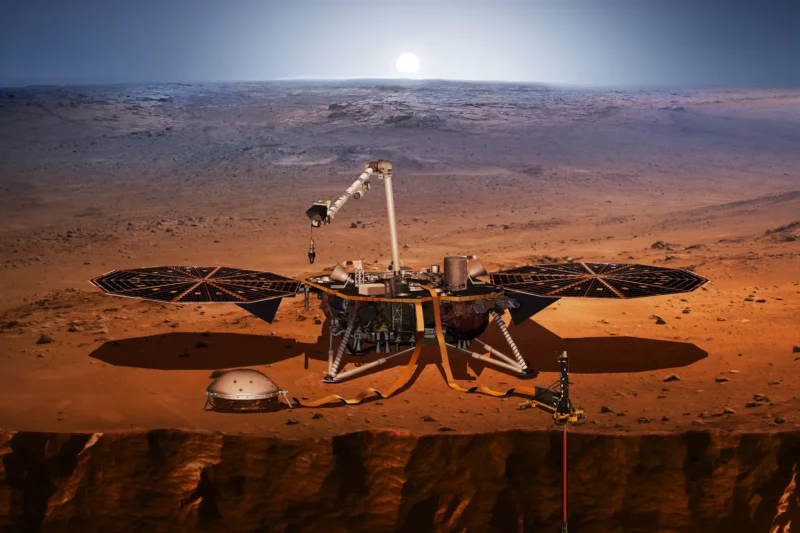
Fast forward some four decades. Now, another Mars spacecraft — NASA’s InSight lander, which set down in Elysium Planitia in 2018 — has detected nearly 1,000 marsquakes in the same approximate region where Viking 2 landed in 1976. Has InSight confirmed Viking 2’s marsquakes? Not exactly. But by comparing the data from the two missions, scientists have gained new clues to the seismic history of Mars.
The researchers published their peer-reviewed findings in AGU Advances on September 30, 2026.
And Matthew R. Francis wrote about the new findings for Eos on October 21, 2026.
Comparing the data
Viking 2’s landing site in Utopia Planitia — and InSight’s landing site in Elysium Planitia — are both in Mars’ northern lowlands. They are geographically adjacent regions, so similar that scientists and science journalists often refer to the Elysium-Utopia basin.
In the decades in between Viking 2 and InSight, scientists have pondered whether Mars was still geologically active. Now we know the planet does still experience marsquakes, the Martian equivalent of earthquakes.
Wanbo Xiao at Peking University in China is the lead author of the new InSight study. Xiao and his team compared the data from the old Viking 2 mission to the more recent data from InSight.
While one of the two detections by Viking 2 was dubious (probably because of the wind), the second one appeared more likely to be an actual marsquake.
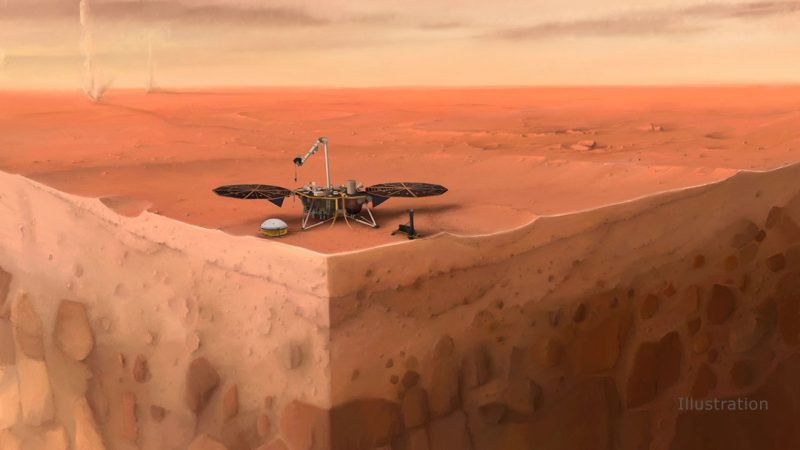
Of course, though, Viking 2 had just one tiny seismometer, on its deck. And InSight was designed specifically to look for marsquakes or other seismic activity below the Martian surface. Its seismometer was more advanced and placed directly on the ground. The paper states:
For nearly 50 years, scientists debated whether the candidate seismic signals recorded by Viking 2 reflected true Martian tectonics, considering limitations of the Viking instrument. Decades later, the substantial marsquakes detected by the InSight mission revealed a clearer seismic context of the planet. Here we reconstruct the original Viking seismic workflow and reexamine its candidate events, recorded on sol 53 and sol 80, using modern knowledge from InSight.
Marsquake or meteorite impact?
Viking 2’s sol 80 event was in the same region in Mars’ northern plains as the InSight detections. But — even after all these decades — it’s still not clear if it was an actual marsquake. It’s possible that a meteorite impact caused the seismic waves. As the paper notes:
The sol 80 event possibly located in the same northern-plains source region inferred for InSight seasonal marsquakes, although a distant tectonic marsquake or a meteorite impact remain as alternative explanations. The faster decay of the sol 80 event than typical InSight marsquakes could imply lateral variations of structural energy absorption in the Martian subsurface.
More broadly, this study shows how a historical planetary data set can gain new scientific implications when revisited using later mission data.
So what is the explanation for the differences between the Viking 2 data and the InSight data? The researchers conclude that there are probably several reasons. As they mentioned in the paper:
Fifty years after Viking 2 returned the first seismic observations from Mars, we reconstruct its unique seismic workflow and reassess the most credible candidate event, the sol 80 signal, using knowledge gained from the InSight mission. Our analysis reveals that the apparent contrast between Viking and InSight seismic observations primarily reflects differences in instrument response, sampling strategy, and the distinct spectral characteristics of Martian seismic events, rather than a change in Martian activity alone.
Marsquakes offer clues to seismic history on Mars
The sol 80 event in particular provides more clues to the history of seismic activity on Mars. As the paper explains:
The Viking 2 sol 80 event provides new constraints on Mars’ seismic history. Its independently inferred location overlaps the broad northern-plains region associated with InSight seasonal marsquakes, suggesting a possible long-lived active region outside Cerberus Fossae. However, alternative origins, including a distant tectonic marsquake analogous to InSight BB [broadband] events or a meteorite impact analogous to VF [very high frequency] events, cannot be excluded.

Mars’ ‘Grand Canyon’ and others also still active
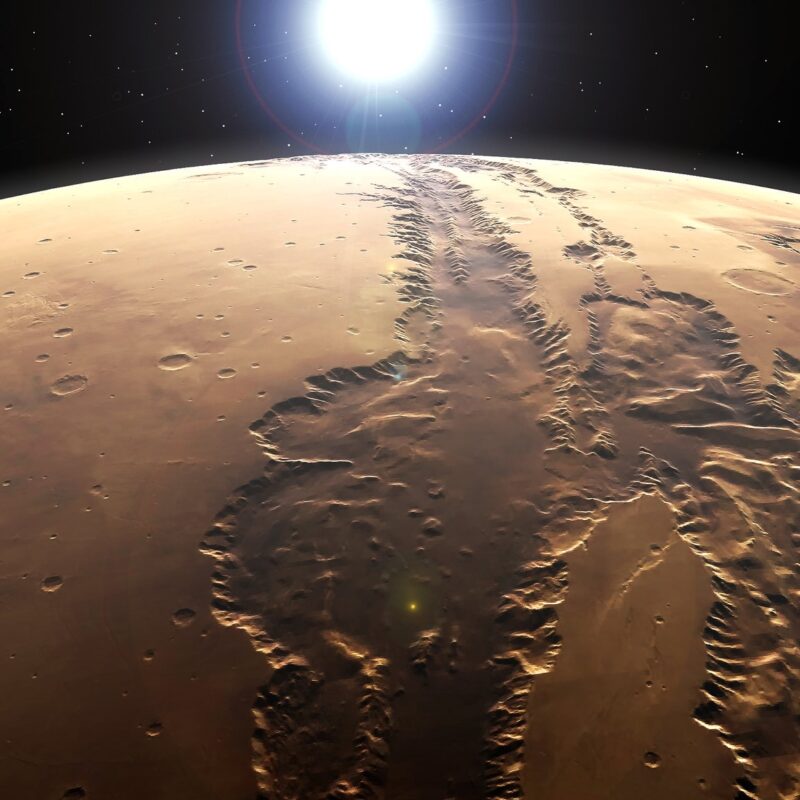
Valles Marineris. Scientists with Columbia University and Imperial College London just reported this month that the so-called Mars’ Grand Canyon — Valles Marineris — also is still experiencing marsquakes. That data came from the InSight lander, too. Valles Marineris is located south and southwest of both Utopia Planitia and Elysium Planitia. It straddles the Martian equator and stretches more than 2,500 miles (4,000 km), nine times longer than the Grand Canyon on Earth.
Cerberus Fossae. This is Mars’ primary seismic “hotspot.” It’s located east of InSight’s landing site and is a system of massive, young parallel fissures and faults running through the crust. InSight traced hundreds of marsquakes directly to magma movement, localized faulting, and active stress release in this region.
Tharsis Volcanic Region. Other distant, low-frequency quakes were traced back toward the Tharsis rise — the vast volcanic plateau home to Olympus Mons and the three massive Tharsis Montes volcanoes — indicating deep mantle activity or residual cooling under the volcanoes.
In addition, InSight recorded several seismic signals that appeared to be non-tectonic “impact quakes” caused by meteoroid strikes. Mars orbiters confirmed these by spotting fresh, newly formed impact craters in regions like Amazonis Planitia and Cerberus Fossae.
Bottom line: New analysis shows that two possible marsquakes detected by Viking 2 were in the same region as nearly 1,000 others detected by the InSight lander decades later.
Source: Fifty Years Later: Revisiting Viking 2 Seismic Signals Through InSight
Read more:
Marsquakes might explain Mars’ north-south hemisphere differences
Like what you read?
Subscribe and receive daily news delivered to your inbox.
More from
Paul Scott Anderson


Did comets seed life on Earth? A new study says — probably not

Do black holes split into smaller black holes?
Origins of Uranus and Neptune are surprisingly different
Habitable worlds: Better than Earth? Scientists wonder