A daily update by email. Science news, great photos, sky alerts.
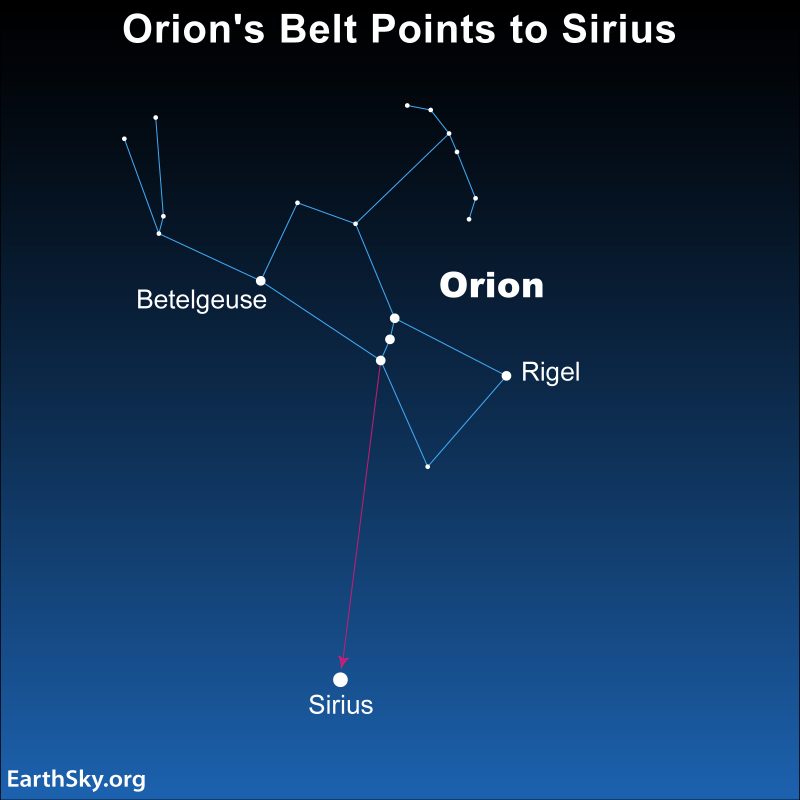
Star-hopping is going from stars you know to stars you don't know. Star-hop from the constellation Orion to Sirius, sky's brightest star, before they're gone.
As Earth makes its grand tour around the sun each year, the stars and constellations all do a westward shift in our sky. Orion is a good one to notice.
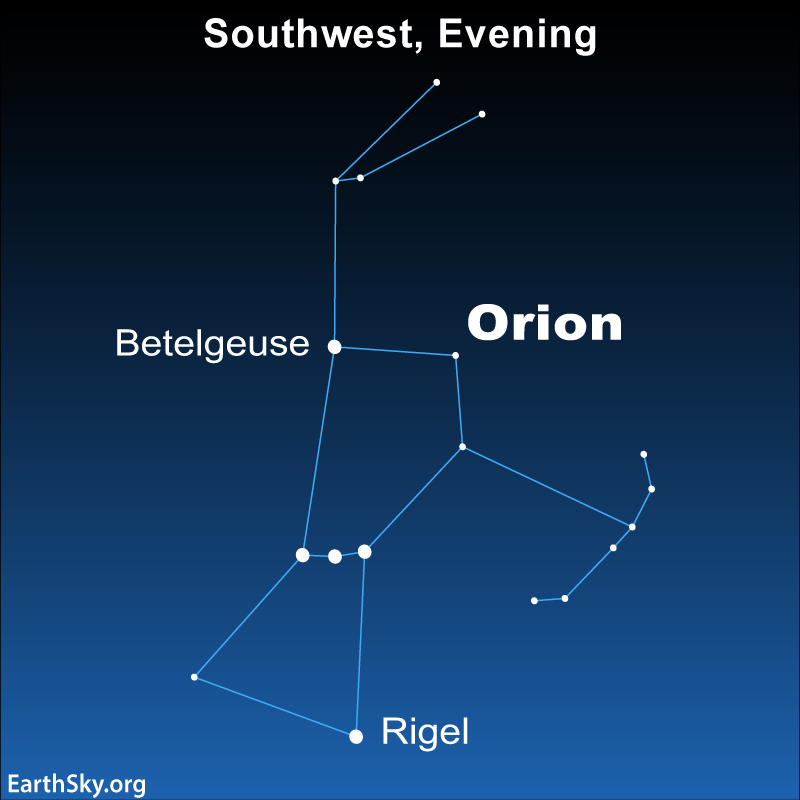
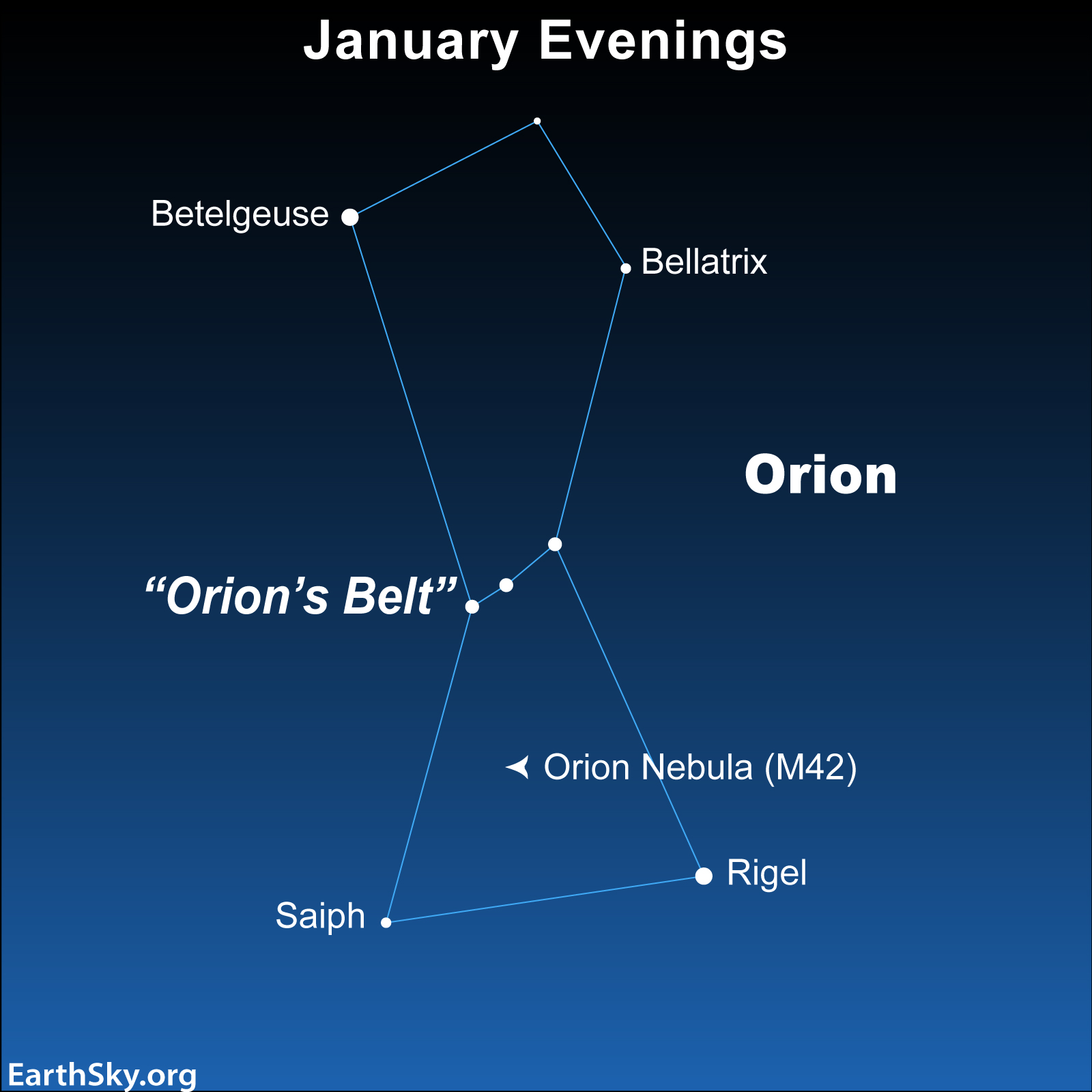
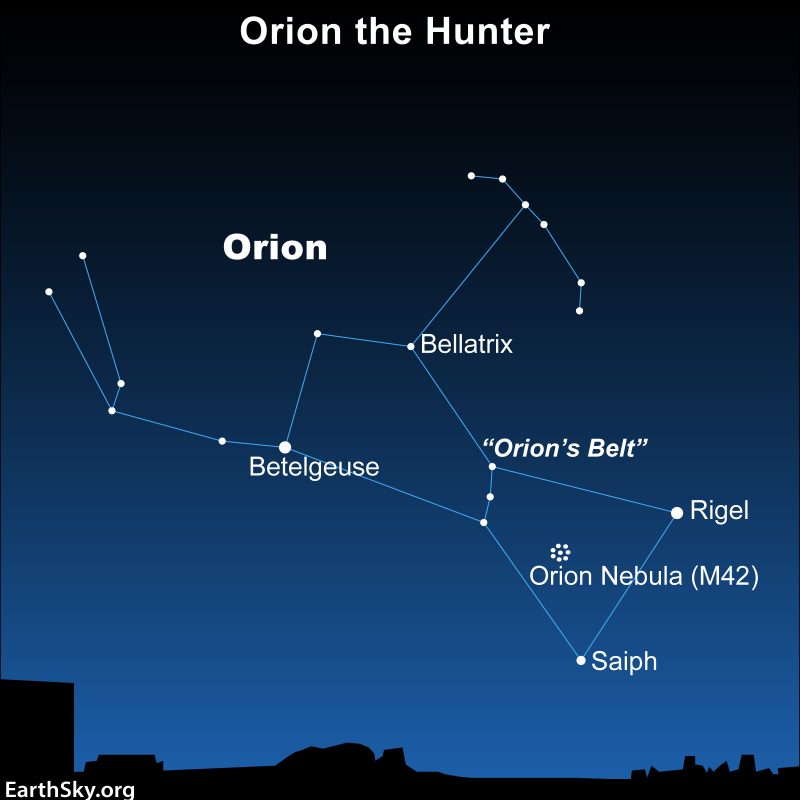
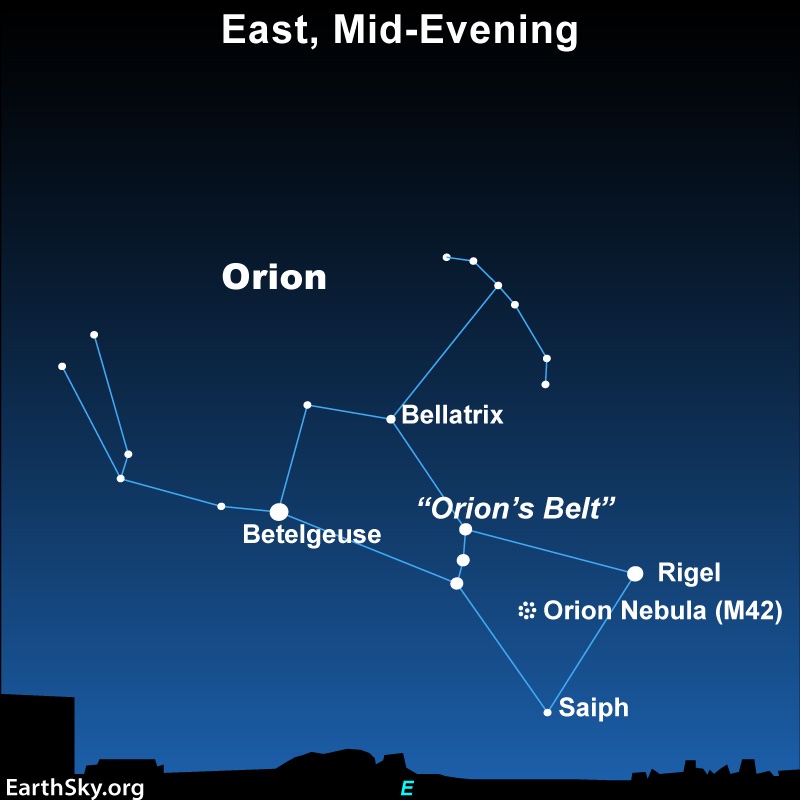
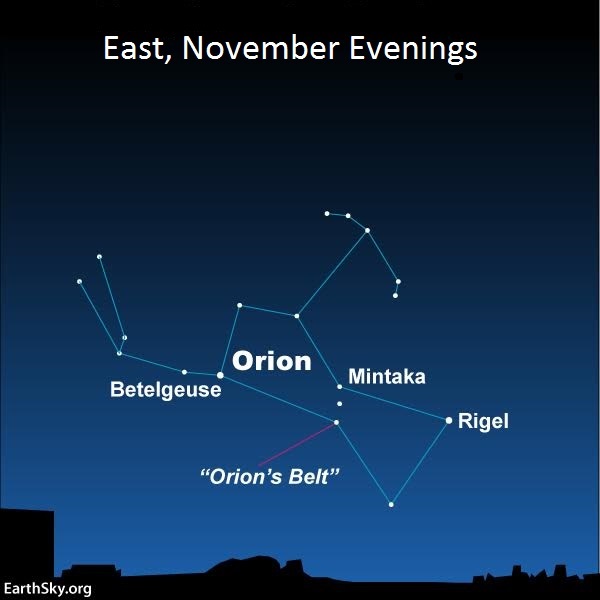
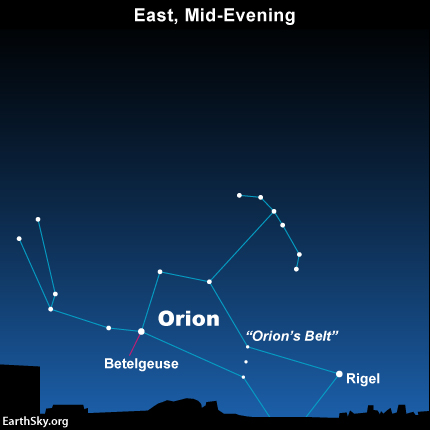
Orion the Hunter is one of the easiest constellations to identify thanks to Orion's Belt, the 3 medium-bright stars in a short, straight row at his waist.
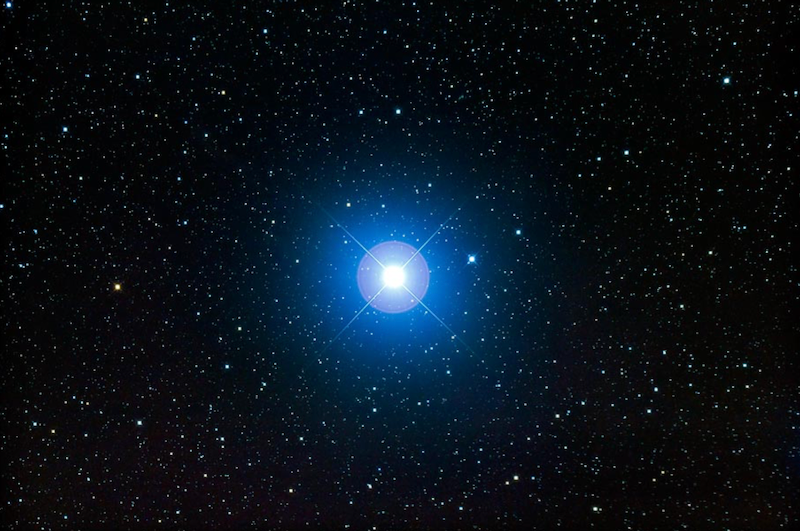
Blue-white Rigel shines as the brightest star in the constellation Orion the Hunter. It's a hot massive star, that someday will explode as a supernova.
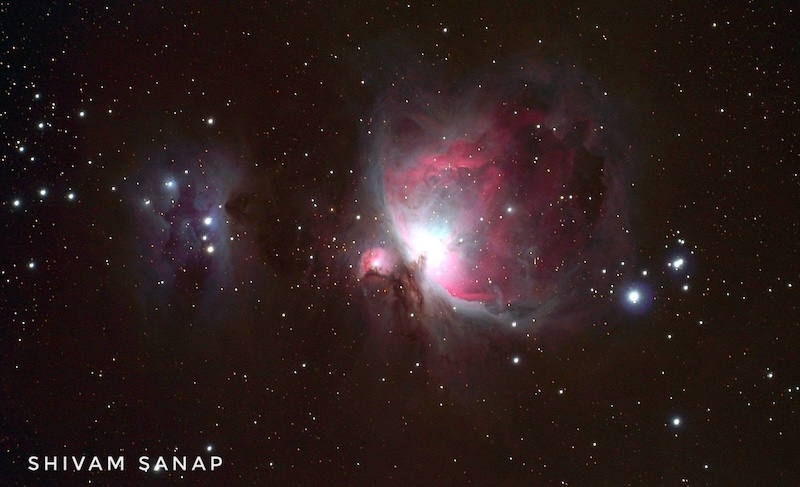
You can see the Orion Nebula as a fuzzy spot in the sky using just your eyes. It's really a vast cloud in space where new stars are forming. Learn more.
Orion the Hunter may be the most recognizable constellation, visible from both hemispheres. It's best in winter from the north and summer from the south.
In November, the famous constellation Orion is back in the evening sky! Its most recognizable feature is its belt of 3 medium-bright stars.
Sirius is the sky's brightest star. But sometimes bright planets outshine it. Orion's Belt is your ticket to identifying Sirius.
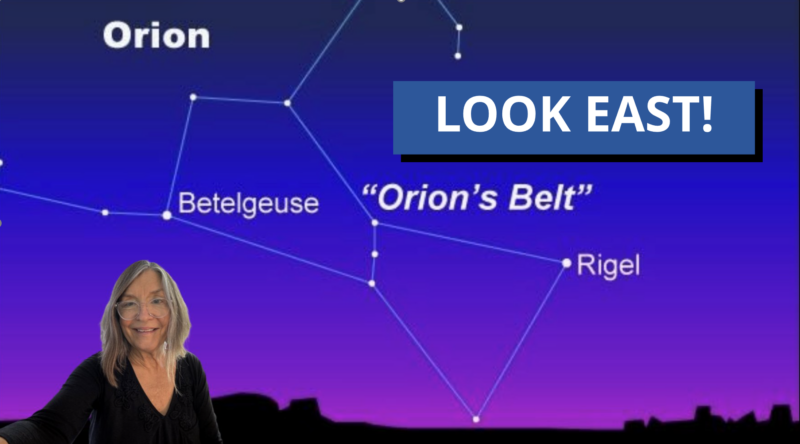
Orion the Hunter returns to the east at dawn at this time every year. Here's how to watch for this most noticeable of constellations.
About 14 million years ago, our solar system passed through a dense region of dust and gas in the constellation Orion, possibly affecting Earth's climate.
Orion's shoulder star Bellatrix has a name that means "female warrior." Bellatrix is one of the hottest stars you can see without optical aid.
Many know Orion's Belt, a short, straight row of 3 stars. Orion's Belt is considered a celestial bridge between the sky's Northern and Southern Hemispheres.
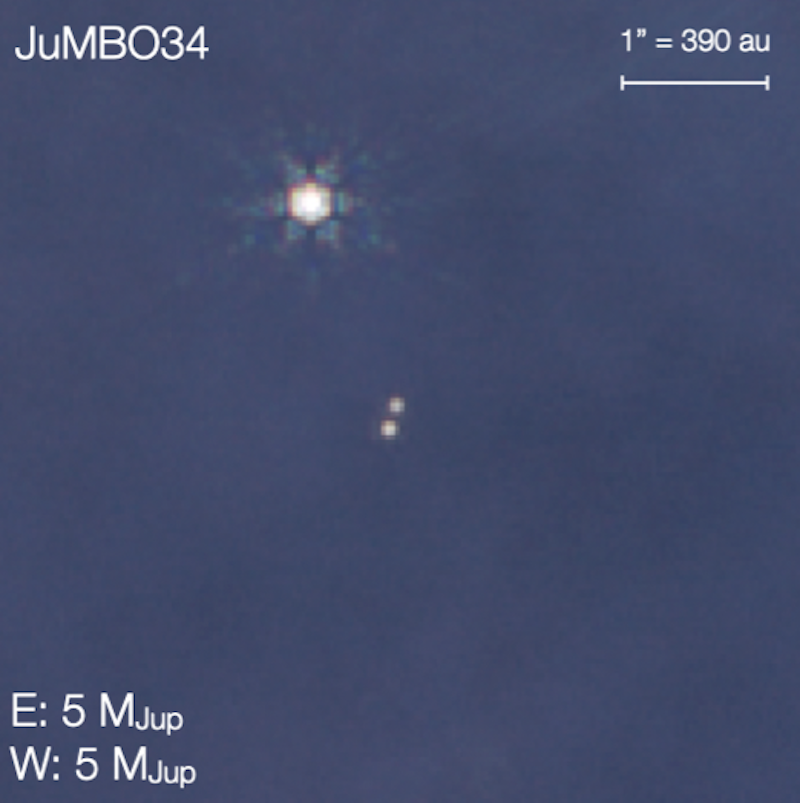
The James Webb Space Telescope has discovered something unexpected in the Orion Nebula: pairs of unusual planet-like 'binary objects' drifting freely in space.
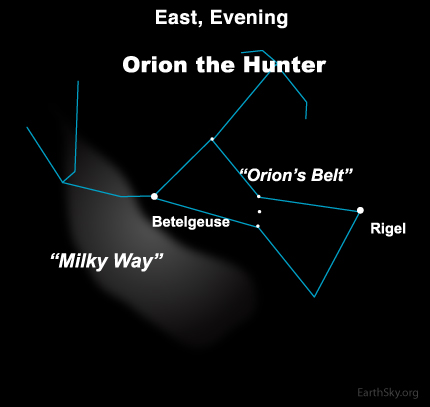
The constellation Orion the Hunter is very easy to find. If you have a dark sky, you can also see the luminous band of the Milky Way running behind it.
How to use Orion's Belt to find 4 bright stars - Betelgeuse and Rigel in Orion - Aldebaran in Taurus the Bull and Sirius in Canis Major.
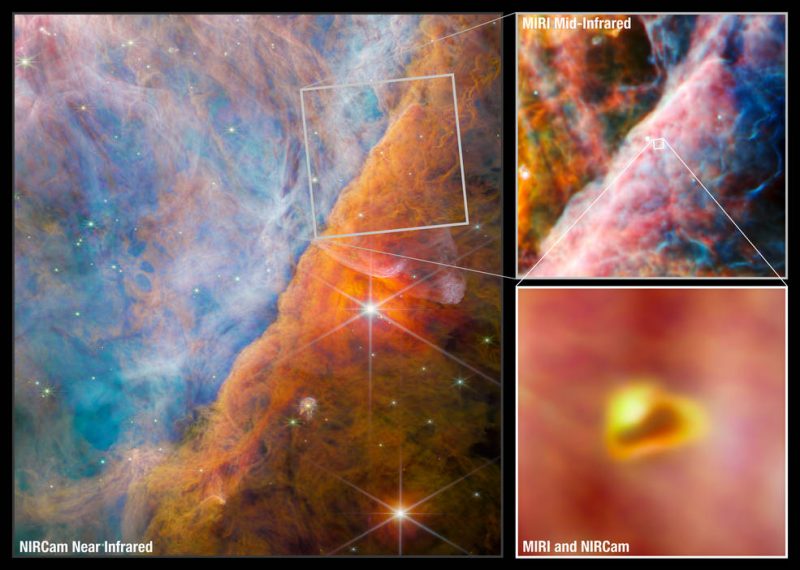
Scientists have found carbon compounds - life's building blocks - in a planet-forming disk, encircling a star in the famous Orion Nebula.
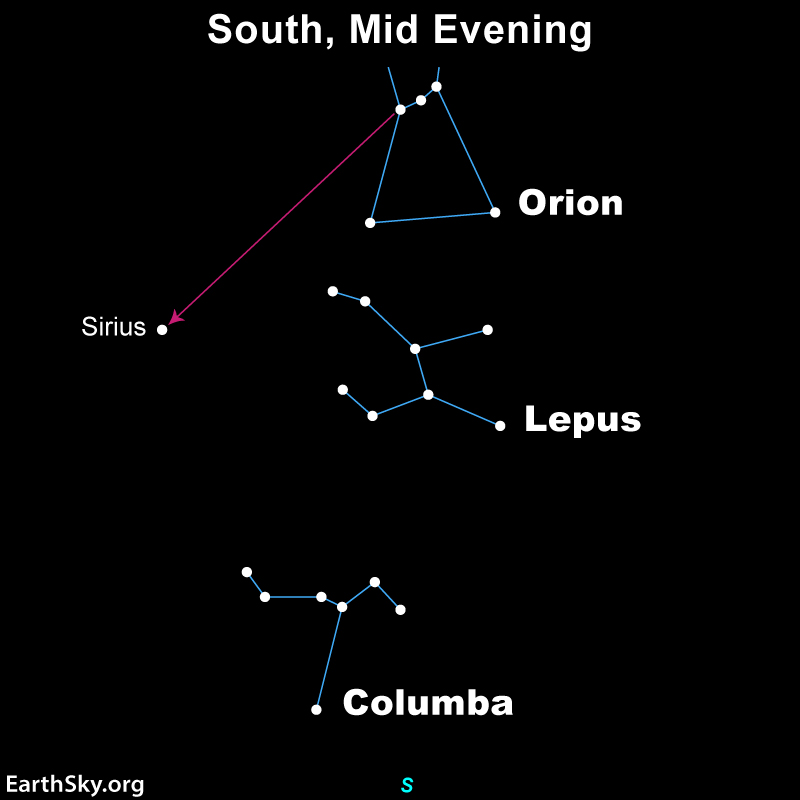
If you have a dark sky, you can see constellations representing a Hare and Dove. They're 2 faint constellations near easy-to-find Orion.
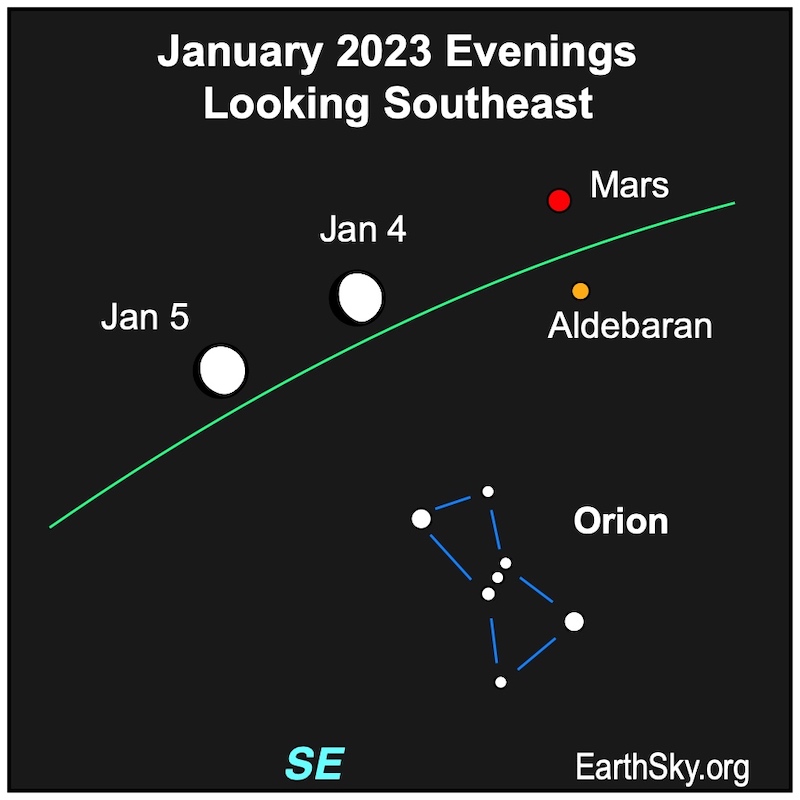
See the nearly full moon near Orion the Hunter, a hallmark of January skies. Bright, reddish Mars is nearby in the constellation Taurus the Bull.
The uncrewed Orion moonship has traveled around the moon and returned safely to Earth. The Artemis 1 splashdown was in the Pacific Ocean on December 11, 2022.
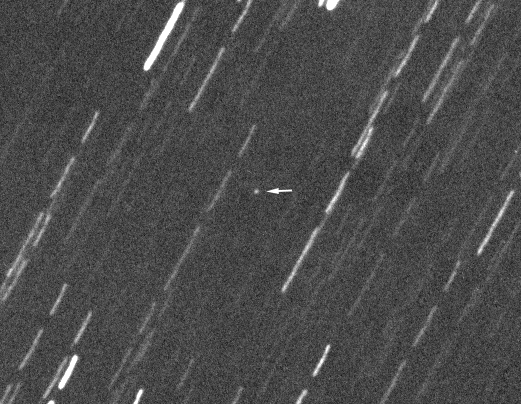
Orion moonship imaged when it was still more distant from Earth than the moon on November 27, 2022. Gianluca Masi of the Virtual Telescope Project reports.
EarthSky Newsletter
Nearly half a million daily subscribers love our newsletter. What are you waiting for? Sign up today!
Join now to receive free daily science news delivered straight to your email.