A daily update by email. Science news, great photos, sky alerts.
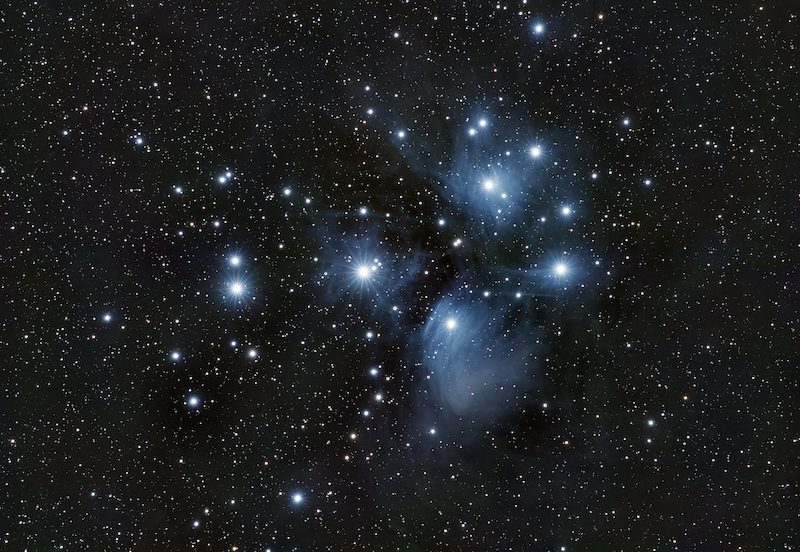
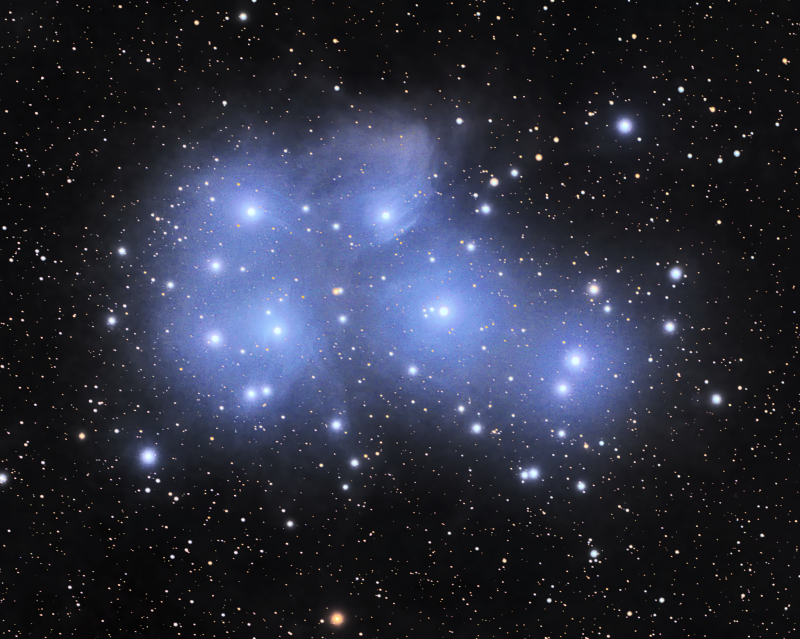
Astronomers have discovered that the Pleiades star cluster has more than 3,000 sibling stars that originated from the same giant molecular cloud.
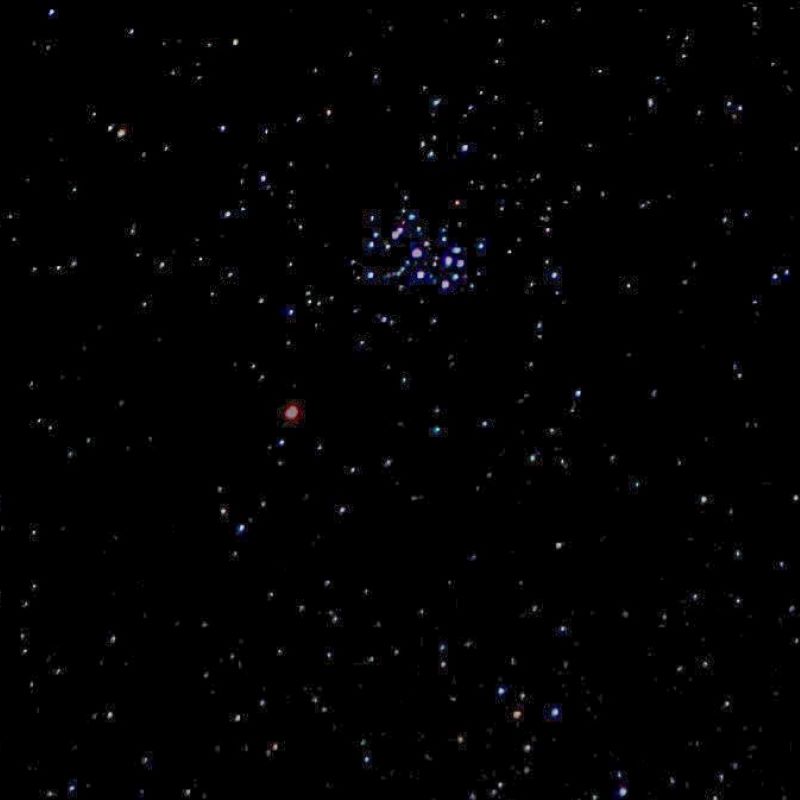
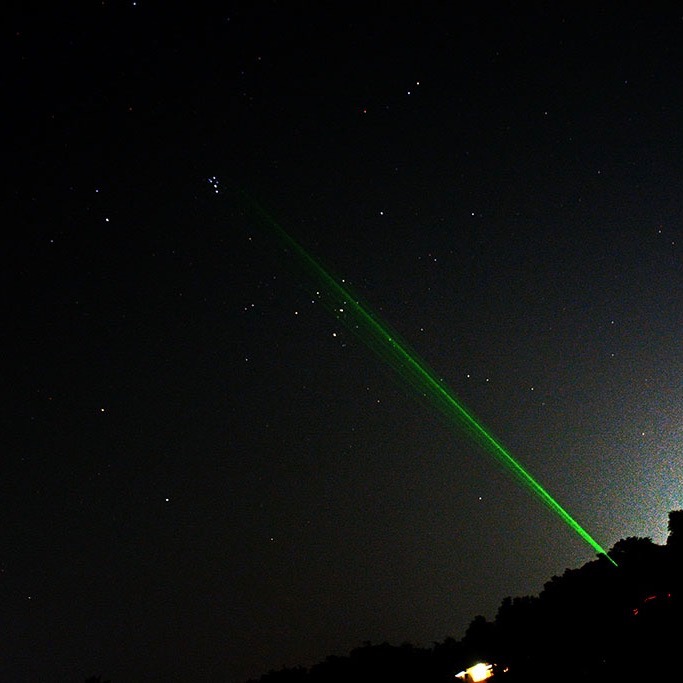
The Pleiades star cluster - aka the 7 Sisters or M45 - is visible from almost every part of the globe. It looks like a tiny, misty dipper of stars.
To most people,, the Pleiades cluster looks like a tiny misty dipper of six little stars. Yet the Pleiades is sometimes called the Seven Sisters. Why?
Watch for the moon near the Pleiades - a beautiful open star cluster - on the mornings of July 13 and 14, 2023. Nearby you'll find the bright star Aldebaran.
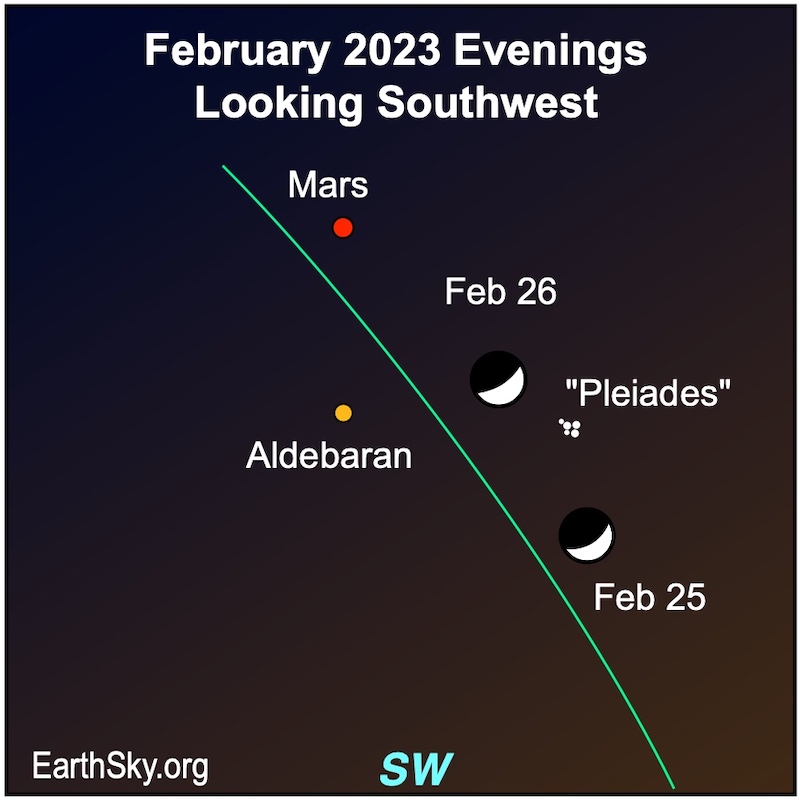
Watch for the moon near Pleiades - a beautiful star cluster - on the evenings of February 25 and 26. Nearby you'll find Mars and the bright star Aldebaran.
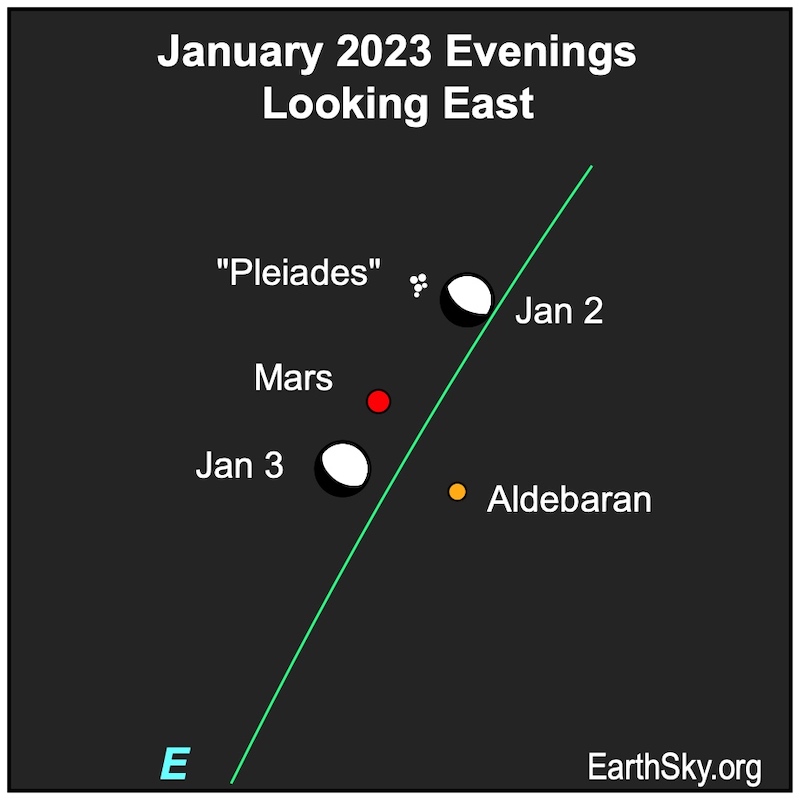
Look for the moon near Mars and the Pleiades star cluster on the evenings of January 2 and 3, 2023. The red star Aldebaran is also nearby.
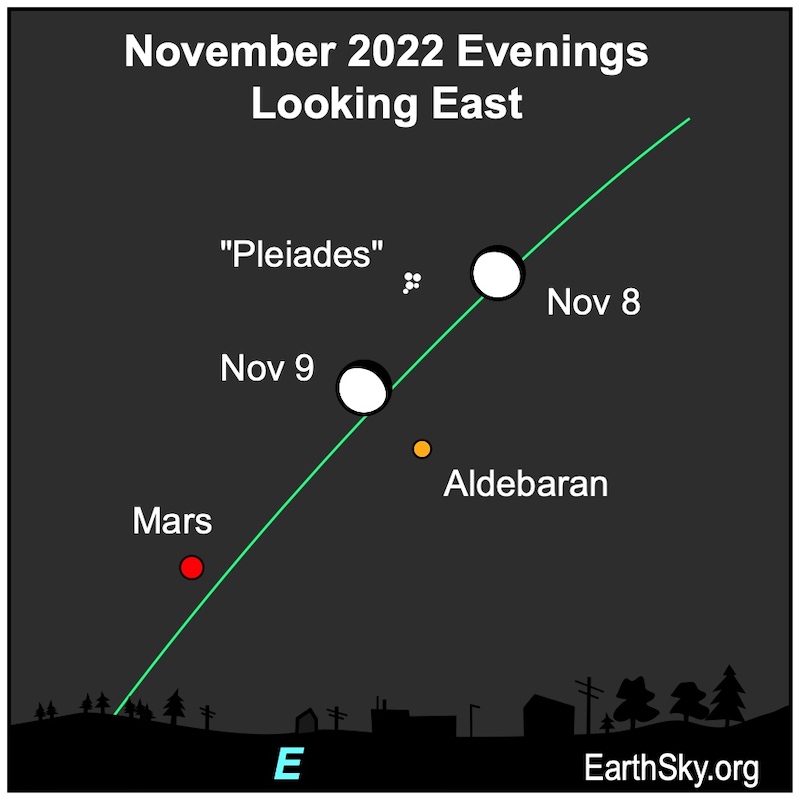
Find the moon near Pleiades and Mars on the evenings of November 7, 8 and 9, 2022. The moon undergoes a total lunar eclipse on the morning of November 8.
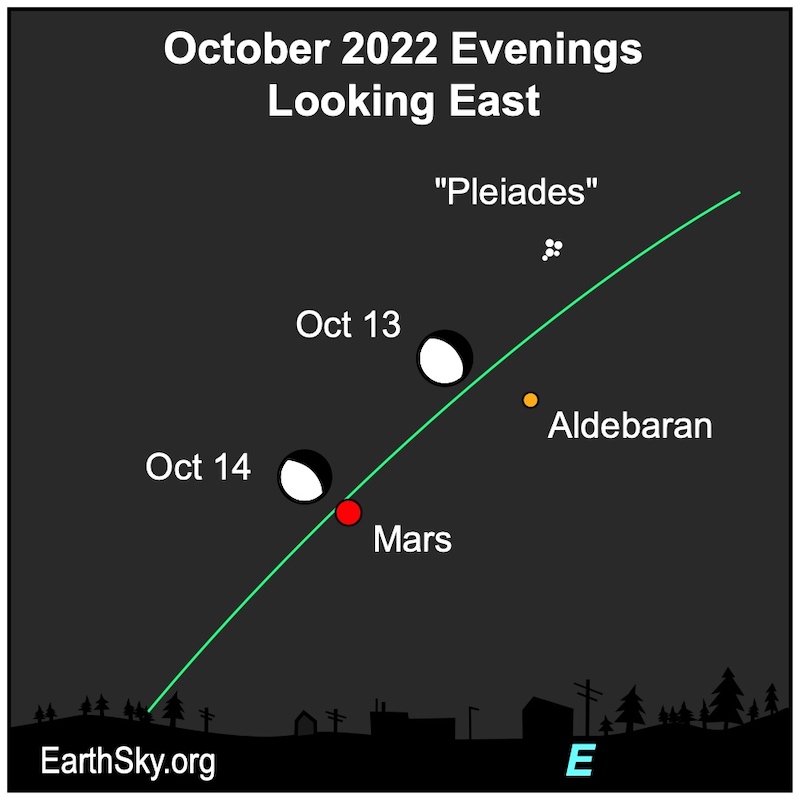
Moon, Mars, Pleiades ... and Aldebaran! Look for them all, overnight on October 13-14, and on October 14-15, 2022. Notice how bright Mars is now.
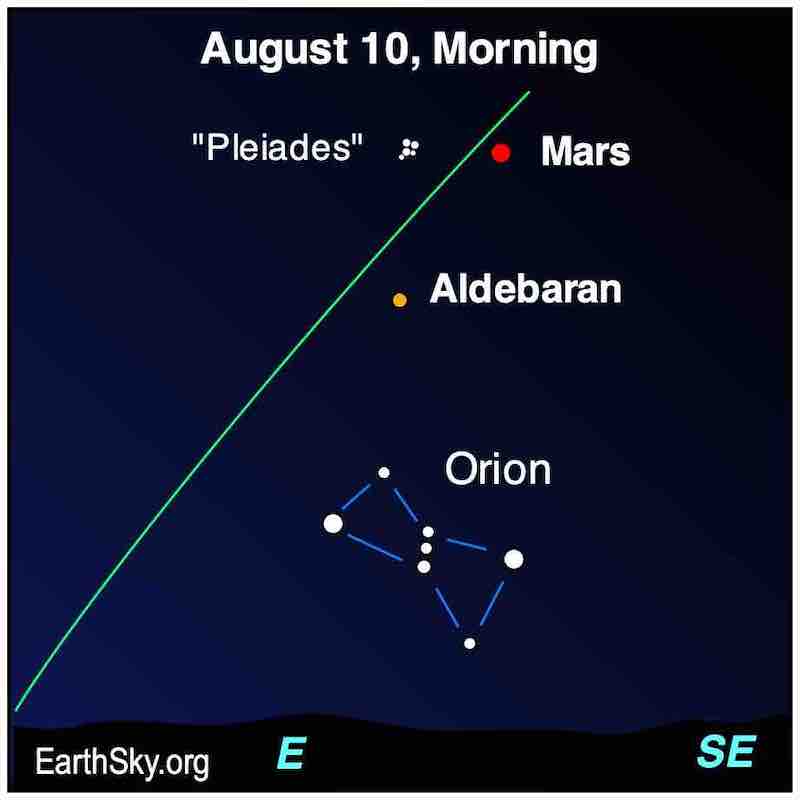
On the morning of August 10, 2022, look for Mars in the sunrise direction near the beautiful Pleiades star cluster. Nearby is reddish Aldebaran.
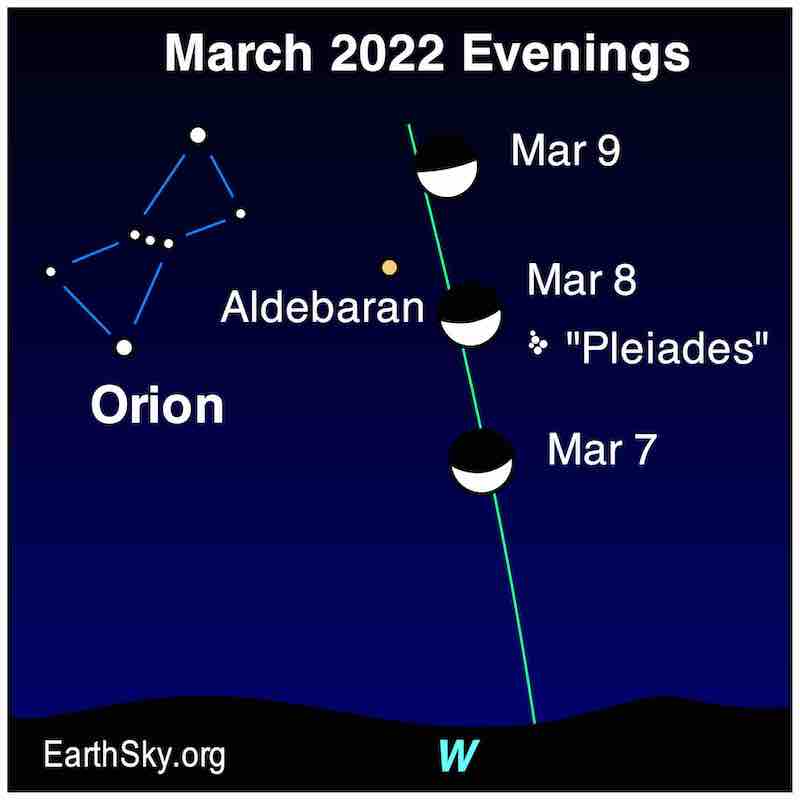
The moon passes between the Pleiades star cluster and the Hyades star cluster - with its reddish star Aldebaran - in the constellation Taurus on March 8.
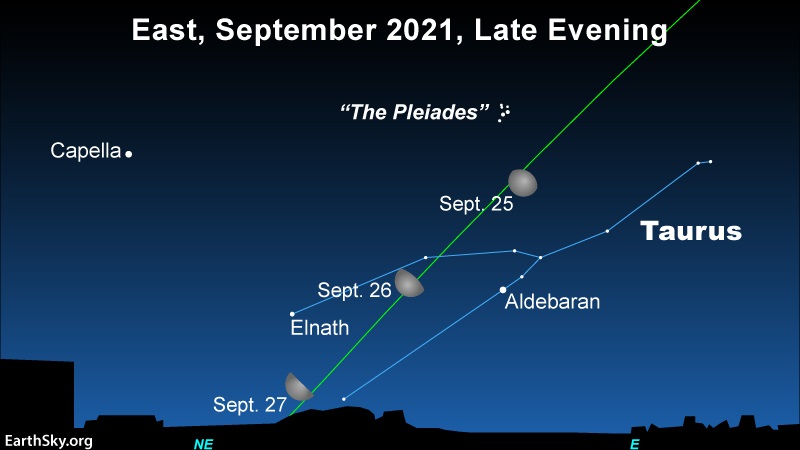
Late at night on these next several nights - September 25, 26 and 27, 2021 - watch for the moon, Aldebaran, Pleiades.
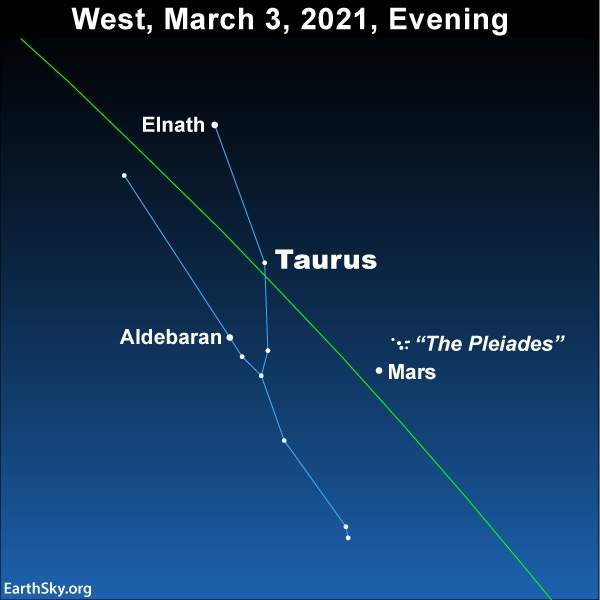
On March 3, 2021, the red planet Mars and Pleiades star cluster in Taurus will appear close together on the sky's dome. The two won't get this close again until 2038! See photos of the big event.
This year - on March 3, 2021 - the red planet Mars and the Pleiades star cluster - also known as the Seven Sisters - stage their closest conjunction on the sky's dome until February 4, 2038.
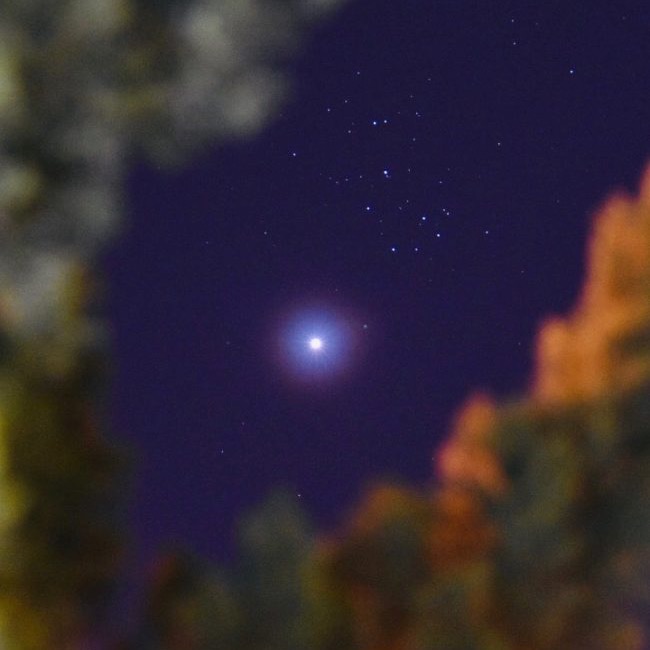
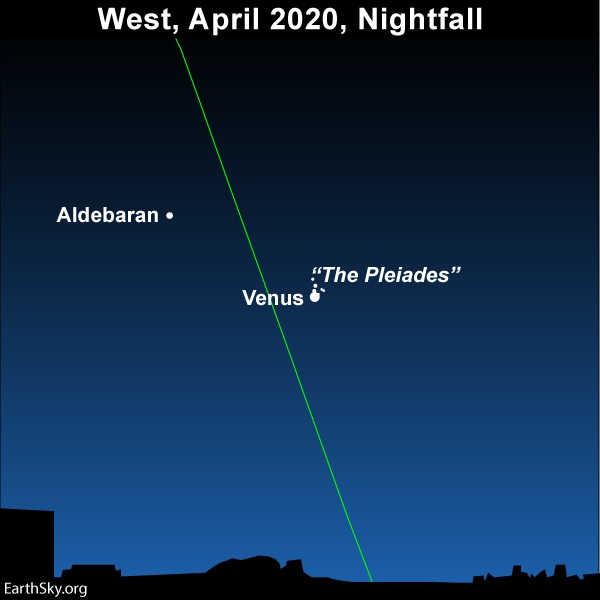
This week, Venus - the brightest planet and dazzling "evening star" - will pass the beautiful Pleiades star cluster, also known as the Seven Sisters. Look west after sunset! Venus and the Pleiades meet only every 8 years. Photos here.
The Venus-Pleiades conjunction is April 3. That's when Venus passes the Pleiades' brightest star, Alcyone. Any evening around then will be lovely!
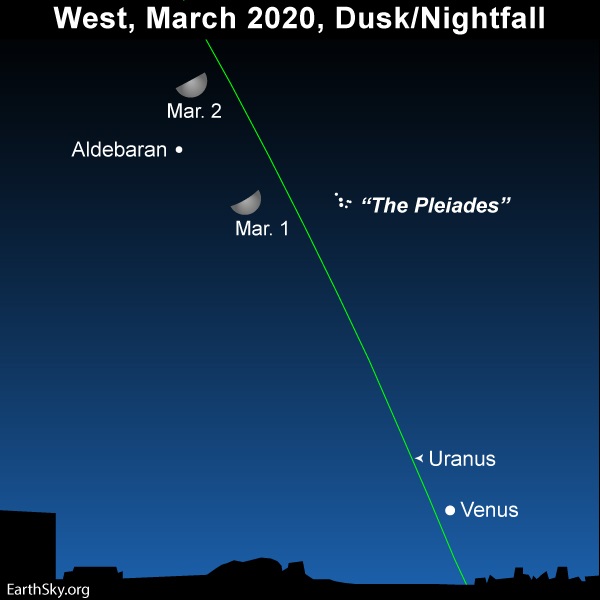
On March 1 and 2, 2020, the waxing moon is near the bright red star Aldebaran in Taurus the Bull, and the Pleiades star cluster. Dazzling Venus is nearby.
A long bright meteor, too, and on the night of the elusive Unicorn meteor shower ... but not a Unicorn meteor.
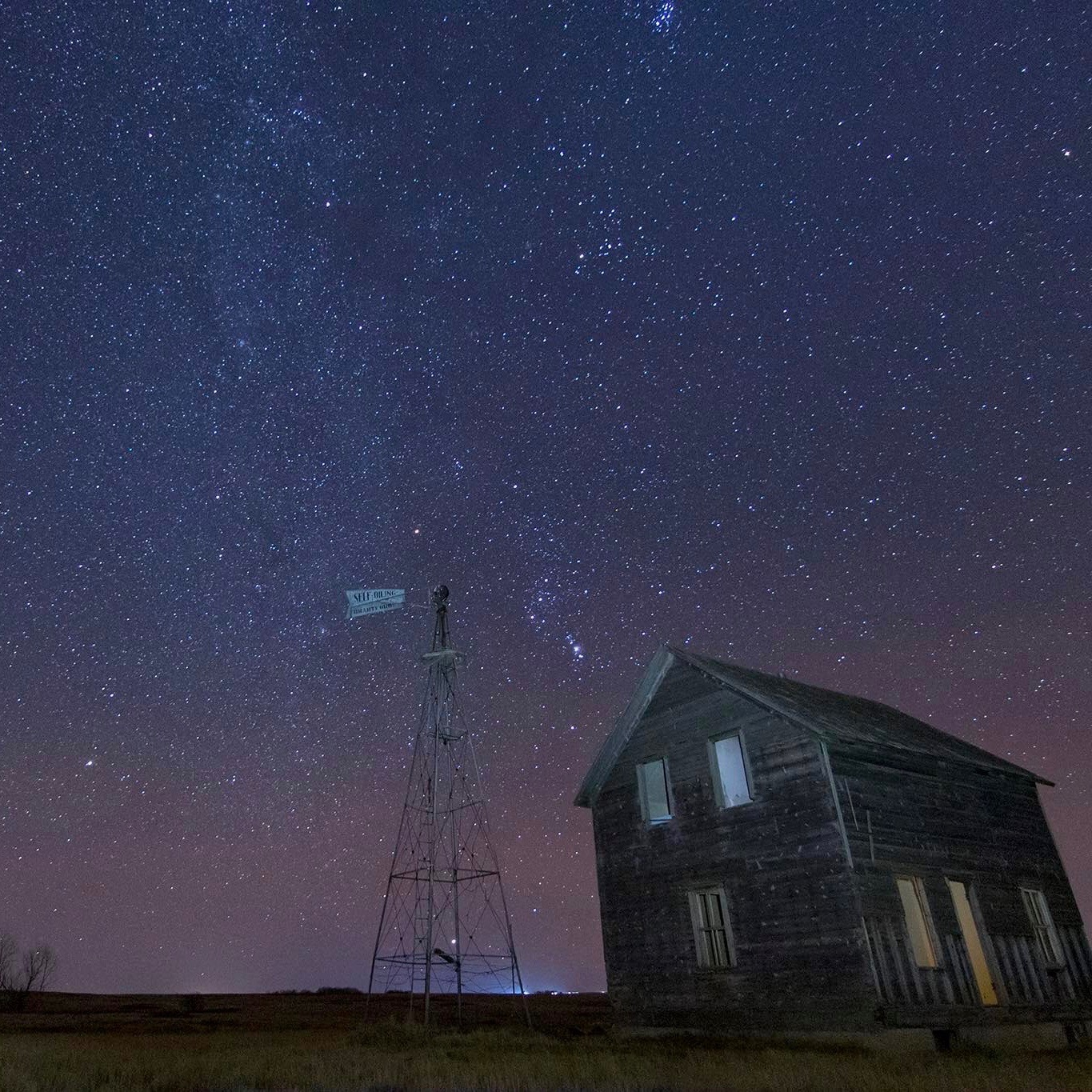
At this time of year, for all of us around the globe, the Pleiades star cluster culminates - reaches its highest point in the sky - around midnight.
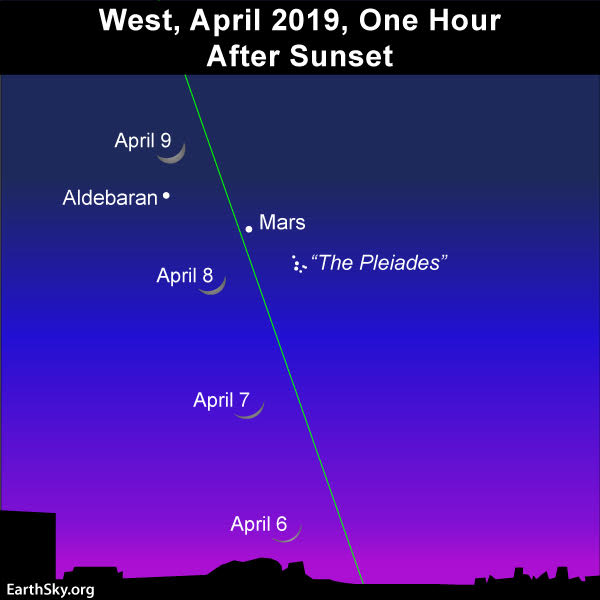
After sunset April 7-9, 2019 - watch the young crescent moon wax larger day by day as it sweeps past the red planet Mars, famous Pleiades star cluster and the red star Aldebaran.
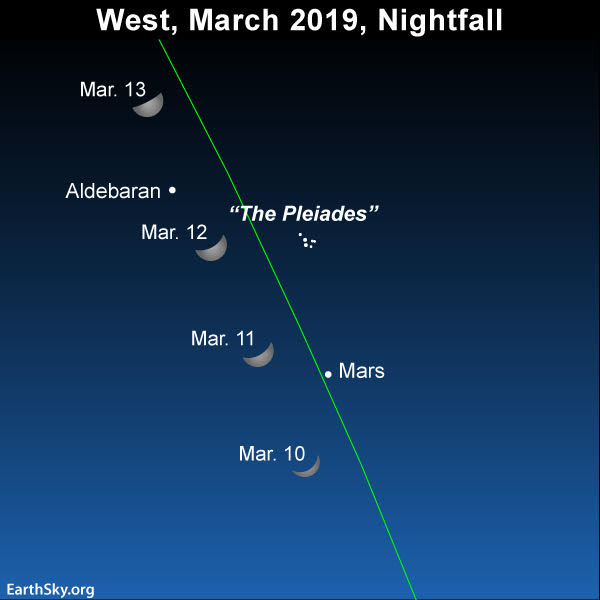
On March 10, 11 and 12, 2019, let the moon be your guide to the red planet Mars and the constellation Taurus' two major signposts: Aldebaran and the Pleiades cluster.