Sign Up for Our Amazing Newsletter!

A daily update by email. Science news, great photos, sky alerts.

Your email address will only be used for EarthSky content.
Privacy Policy
Thank you! Your submission has been received!
Oops! Something went wrong while submitting the form.

EarthSky
One Earth. One Sky. EarthSky.
Tonight Space Sun Earth Human Best Places to Stargaze EarthSky Community Photos About Store Donate Contact Us
Subscribe
Tonight
Tonight Brightest Stars Astronomy Essentials Moon Phases Clusters Nebulae Galaxies Favorite Star Patterns Constellations
Astronomy Essentials
Tonight
Visible planets and night sky guide for May
Marcy Curran
May 8, 2026
Clusters Nebulae Galaxies
Meet Omega Centauri, a giant globular star cluster
Bruce McClure
May 6, 2026
Astronomy Essentials
2026 Eta Aquariid meteor shower best before dawn on May 5
Editors of EarthSky
May 4, 2026
Space
Sun
Earth
Human
Human Spaceflight
Best Places to Stargaze
Community Photos
View Community Photos Trending Submit a Photo
About
Store
Donate
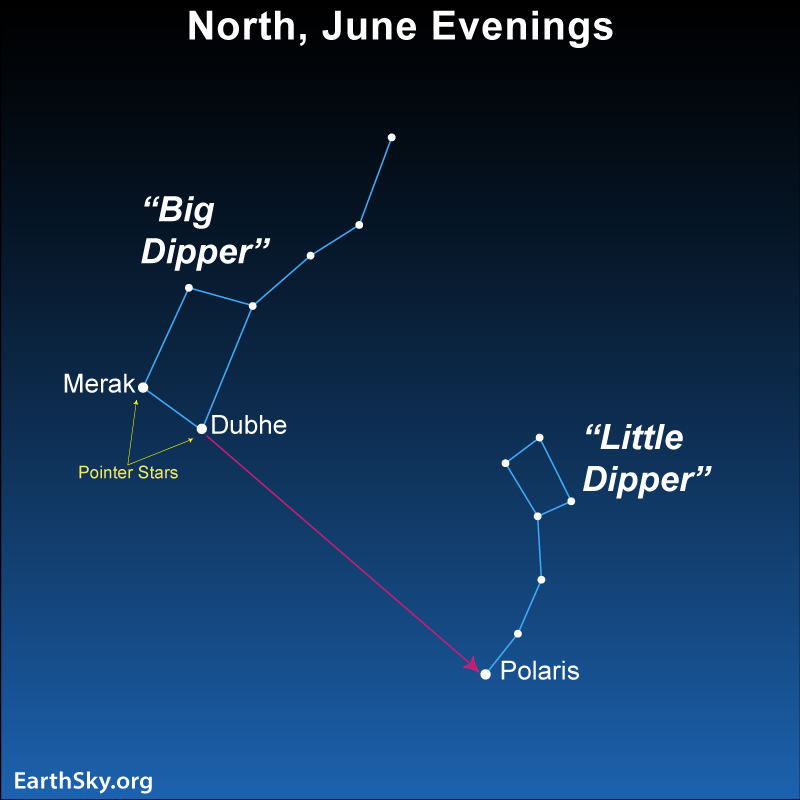
A red arrow from 2 stars in the Big Dipper to the star Polaris, in the Little Dipper.

The Big and Little Dipper: How to find them in spring

You can spot the Big and Little Dipper in the northern sky year-round. Follow the Big Dipper’s pointer stars to find Polaris and the Little Dipper.

Read More
A triangle inside a triangle with labeled stars.

A Spring Triangle of stars heralds the season

As the Northern Hemisphere enters spring, look for the Spring Triangle rising in the east, made up of bright stars from 3 prominent constellations.

Read More
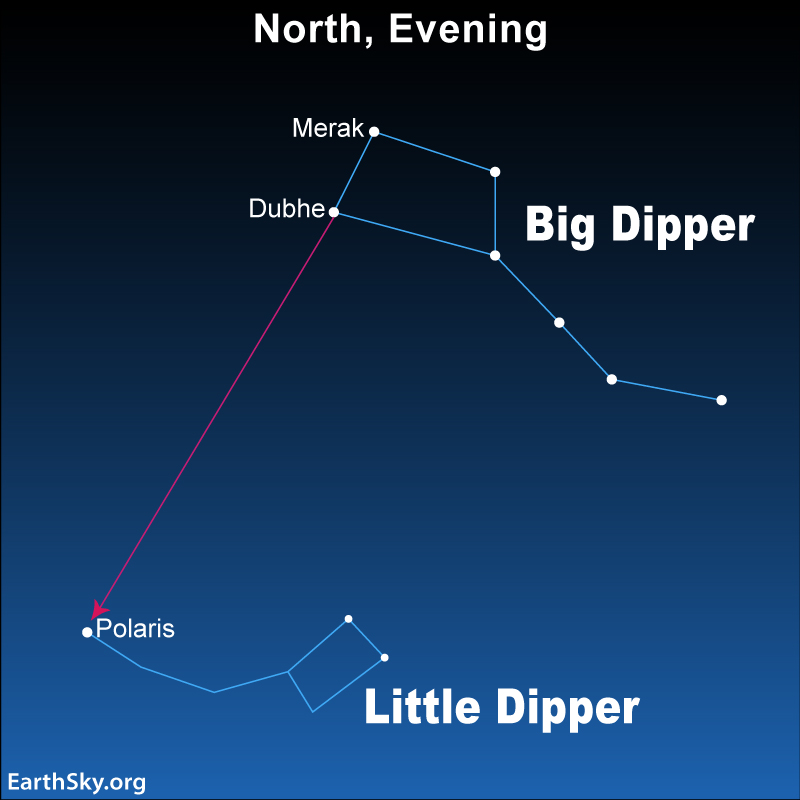
Sky chart linking 2 stars in the Big Dipper to Polaris with an arrow, with 5 stars labeled.

Use the Big Dipper to find Polaris, the North Star

Do you know how to find the North Star? The 2 outer stars in the bowl of the Big Dipper point to Polaris, the North Star. It's quick and easy!

Read More
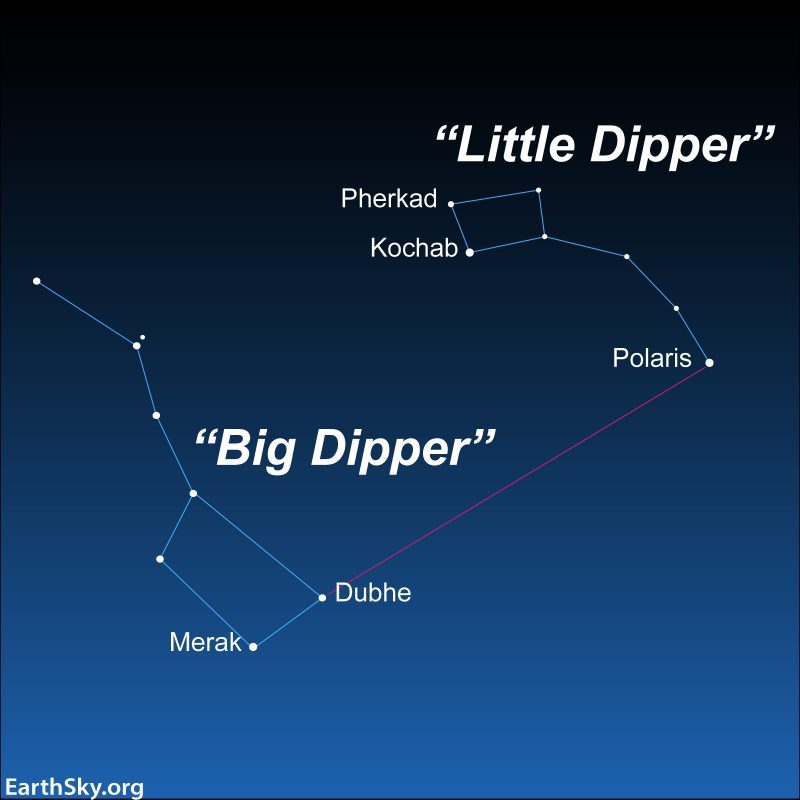
Sky chart linking 2 stars in the Big Dipper to Polaris with an arrow, with 5 stars labeled.

The Big Dipper, the Pointers and Polaris

Want to find Polaris, the North Star? The entire northern sky turns around it. If you can find the Big Dipper, you can always find Polaris.

Read More

Sky measurements: Degrees, arcminutes and arcseconds

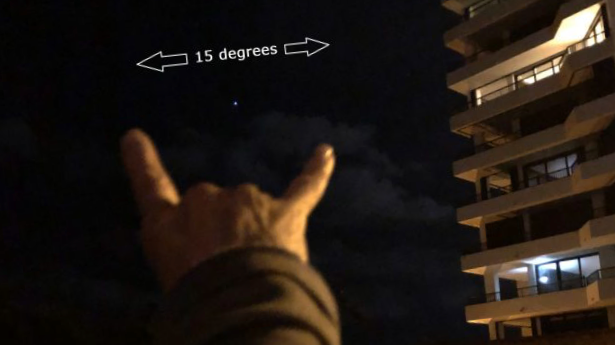
What are sky measurements - or distances - in the night sky? Here's what it means for objects to be several degrees (or arcminutes or arcseconds) apart.

Read More
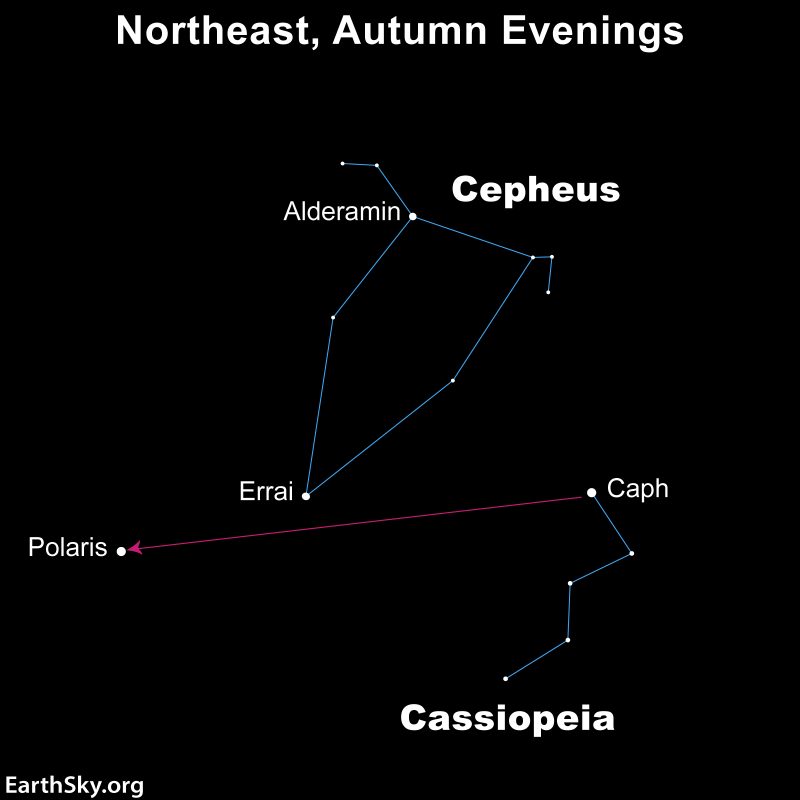
Constellations Cepheus and Cassiopeia with some stars labeled.

Gamma Cephei, aka Errai, a future North Star

Gamma Cephei - or Errai - is a binary star system that will one day be Earth’s North Star. It's home to the 1st exoplanet ever discovered.

Read More
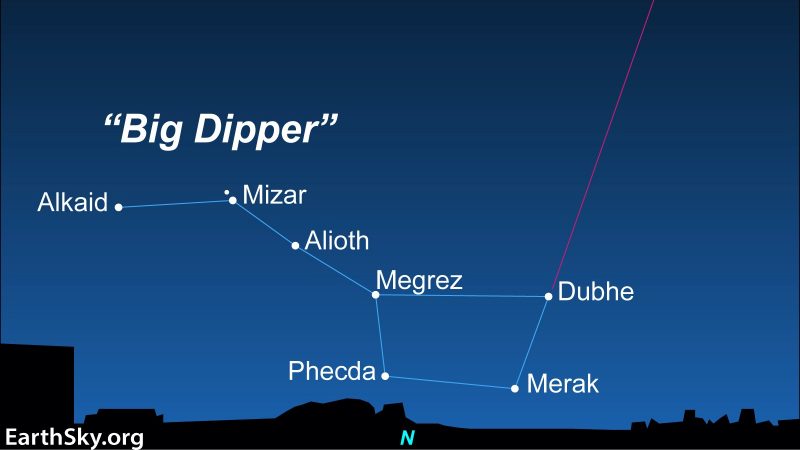
Chart of Big Dipper with stars labeled, including Mizar in handle with a tiny dot next to it.

The Big Dipper: Why can’t you see it now?

The Big Dipper is easy to recognize at most times of the year. But the Big Dipper in autumn rides low in the northern sky in the evening hours.

Read More
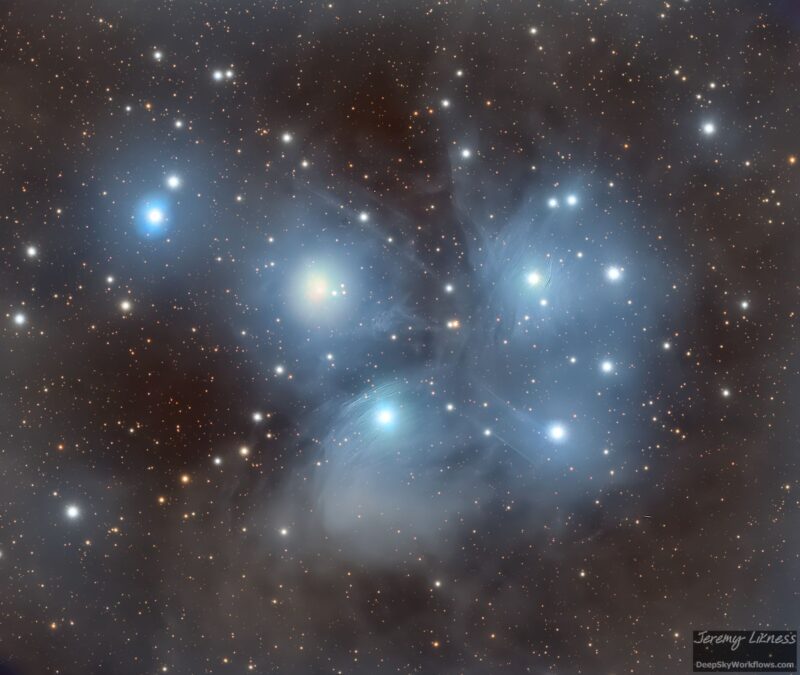
Light blue clouds in space with bright stars immersed within and many background stars.

Open star clusters are loose groups of stars

Open star clusters are young, loosely bound gatherings of stars that may still be surrounded by the nebula - or space cloud - in which they were born.

Read More
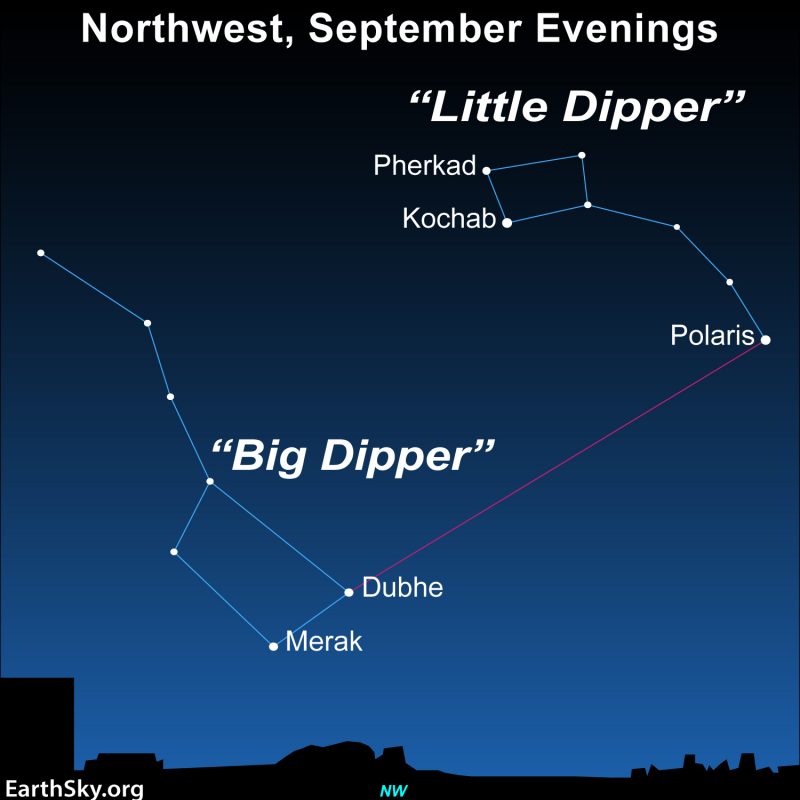
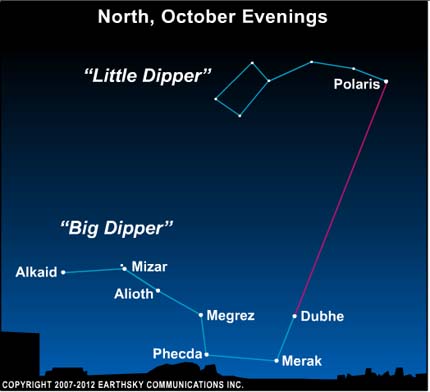
Star chart showing Big Dipper, Little Dipper and Polaris with stars labeled.

Why can’t I find the Big Dipper in September?

On northern autumn evenings, the famous Big Dipper lies low on - or even below - the northern horizon. You can use it to find Polaris, the North Star.

Read More
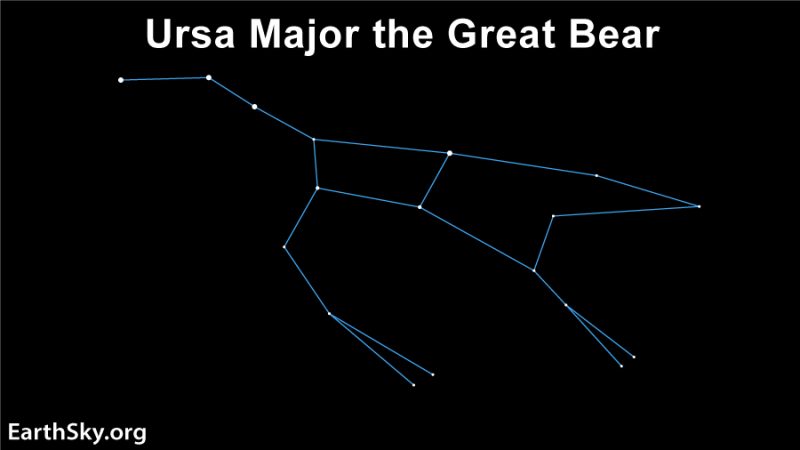
Dots and lines making the shape of the Big Dipper plus the longer form including the head and legs of Ursa Major.

Ursa Major the Great Bear, home to the Big Dipper

Ursa Major the Great Bear is in Northern Hemisphere skies and is home to the asterism of the Big Dipper, which you can use to find other constellations.

Read More
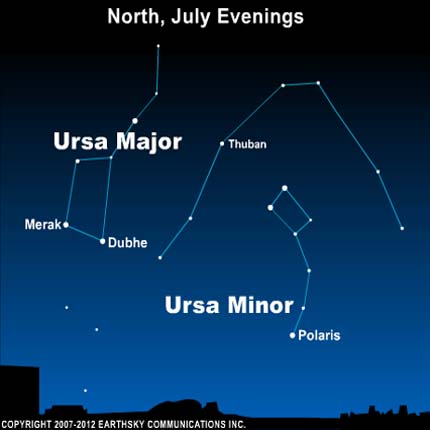
Star chart showing Big and Little Dippers, and constellation Draco.

Polaris and Thuban via the Big Dipper in July

Polaris and Thuban have this in common: both reside, or have resided, at the apex of Earth's sky. That is, both are famous pole stars.

Read More

Star-hop to the Hunting Dogs

Star-hop to Canes Venatici, the Hunting Dogs, tonight! You can do it, if you can find the constellation Leo the Lion and the famous Big Dipper asterism.

Read More
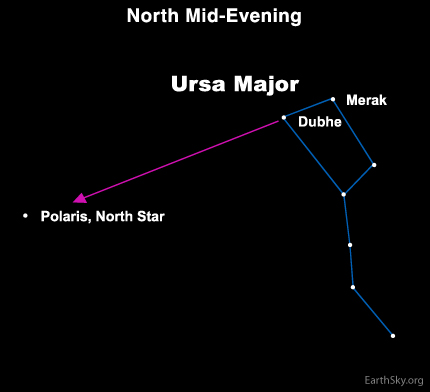
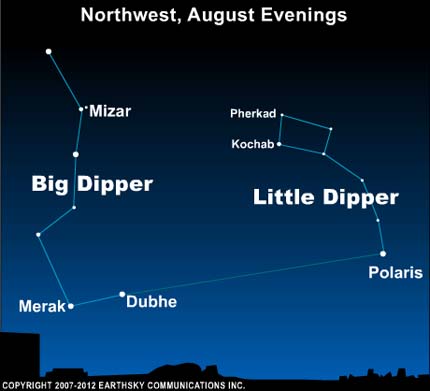
Star chart with arrow from Big Dipper to North Star Polaris

Big Dipper stars point to North Star

The 2 outermost stars in the bowl of the Big Dipper always point to the North Star, aka Polaris. That's why astronomers call these stars The Pointers.

Read More

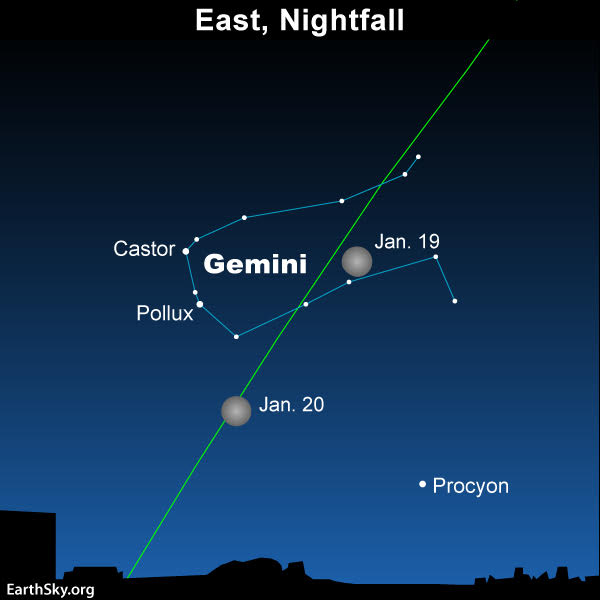
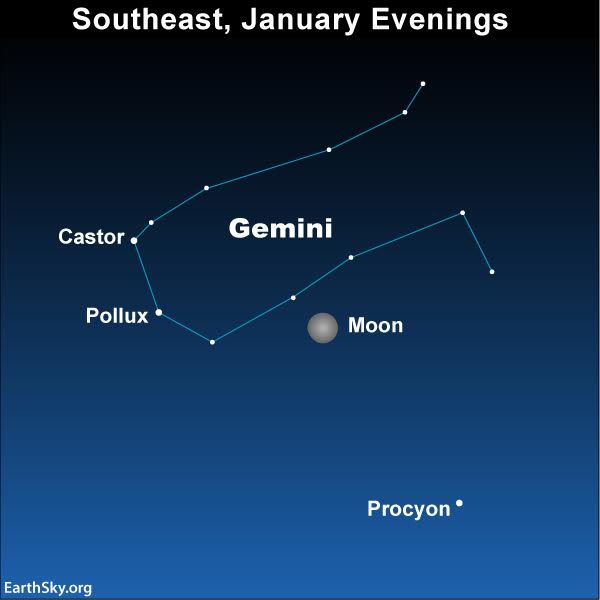
Moon near Castor and Pollux on January 19

On the night of January 19, 2019, let the full-looking waxing gibbous moon guide your eye to the bright Gemini stars, Castor and Pollux!

Read More

Use Big Dipper to find Little Dipper

The Big Dipper is easy to recognize, but the Little Dipper ... not so much. Here's a tip that can help.

Read More

Moon near Castor and Pollux January 29

Castor and Pollux - brightest stars in the constellation Gemini the Twins - are noticeable for being bright and close together on the sky's dome.

Read More
Sky chart of Big and Little Dippers with line from pointer stars to Polaris.

Can you find the Big Dipper?

From 41 degrees N. - and farther north - the Big Dipper is circumpolar, meaning it never sets. But from more southerly latitudes, the Dipper is below your horizon each evening now. Want to see it? Here's how.

Read More

Big Dipper to Polaris, Mizar, Alcor

Use the Big Dipper to find Polaris, the North Star. Then notice the two stars Mizar and Alcor in the Big Dipper’s handle.

Read More

Find Mizar and Alcor in the Big Dipper

Early stargazers used this pair of stars as a vision test.

Read More

Best photos of Comet Lovejoy near Beehive star cluster

Comet Lovejoy has been visible with binoculars in the predawn sky, near the famous Beehive star cluster. How to spot it, plus best photos, here.

Read More
EarthSky YouTube Channel
YouTube
Twitter
Facebook
Instagram
Store
Donate
© 2025-2029 Earthsky Communications Inc.
WEbsite by Milkyway.co
About
Contact Us
Terms & PRivacy