



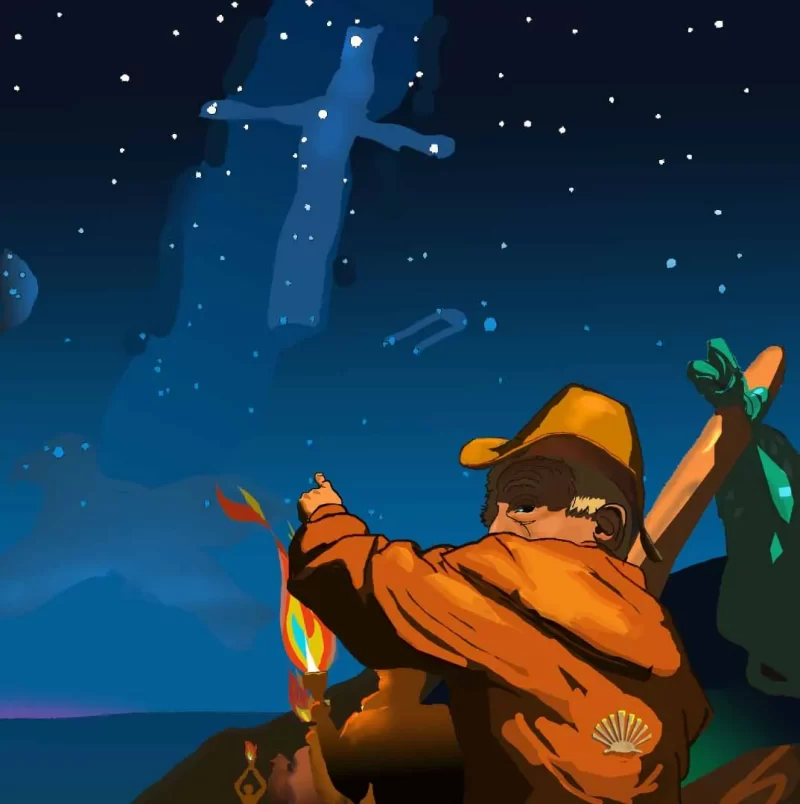
Guy Ottewell honored with an asteroid
On July 6, 2026, the International Astronomical Union (IAU) released its latest bulletin with the new names of a few dozen asteroids. Among them is asteroid 21008, now named Ottewell for the beloved British astronomer Guy Ottewell.
E. F. Helin first discovered the asteroid back on August 9, 1988, from Palomar Mountain. The International Astronomical Union explained why Guy was honored with his name on an asteroid:
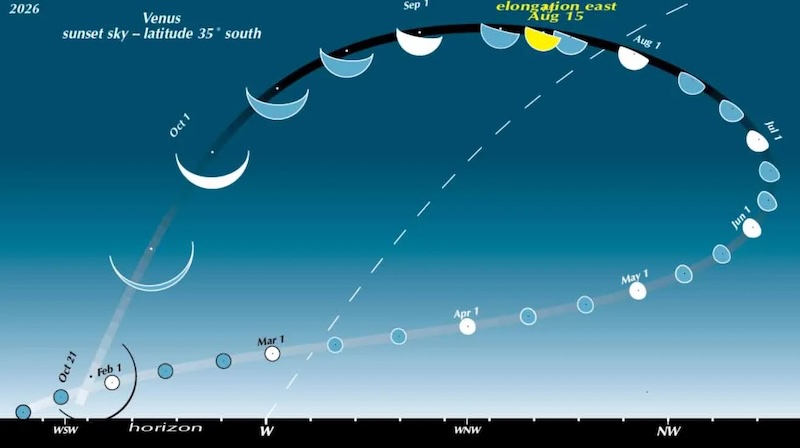
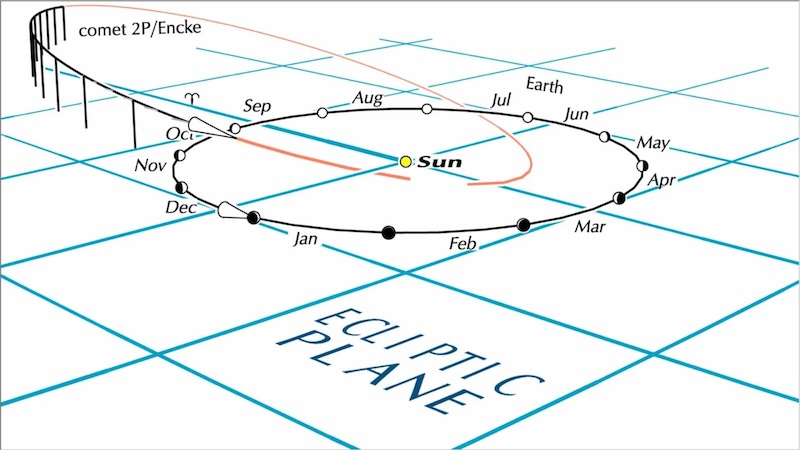
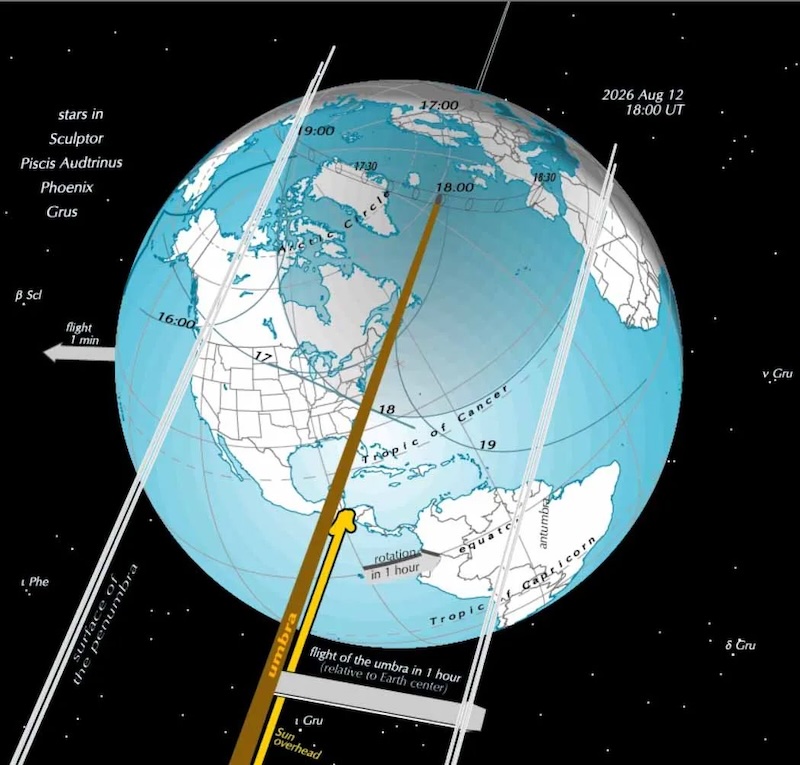
Guy Ottewell (b. 1936) is a British educator who published his Astronomical Calendar every year from 1974 to 2026. These featured Ottewell’s immersive illustrations depicting the celestial sphere and the motions of heavenly bodies for the coming year. His passion, skill, artistry and dedication to astronomy have been lauded by devoted followers worldwide.
Congratulations to Guy!
The man behind the yearly Astronomical Calendar
Guy Ottewell just turned 90 on July 4, 2026. EarthSky wishes him warm congrats on completing another trip around the sun. As the IAU said, Guy is best known worldwide for his beautiful astronomy charts and hand-illustrated yearly Astronomical Calendar. But he has many other publications as well. Take a look at The Five Escapers. And there’s been much praise for The Thousand-Yard Model (Or Earth as a Peppercorn).
Virtually every astronomy educator knows Guy’s calendar and employs it in teaching about the night sky and outer space. Millions have benefited from Ottewell’s unique view of outer space.
Ottewell’s Astronomical Calendar was popular as a printed book from 1974 to 2016. Thousands of sky-lovers in more than 100 countries purchased it. It took a hiatus beginning in 2017, but returned in 2023, in both printed and electronic formats. 2026 is the final year of Guy Ottewell’s Astronomical Calendar.
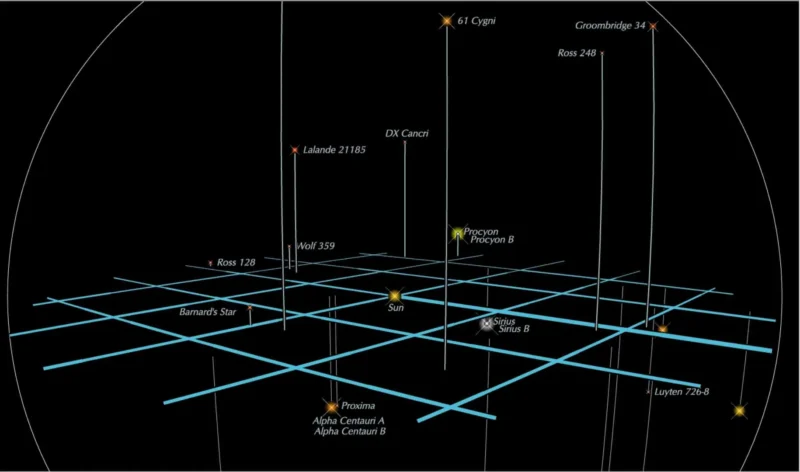
Another much-sought book is Ottewell’s Astronomical Companion. It was first printed in 1979 and has sold out 21 times. As no other book before or since, it gives readers a glimpse of the universe around us in 3-dimensional space. Guy has been hard at work on a new edition of the book and we hope it will be re-printed in 2027.
And if you’re a regular reader of EarthSky, you’ll have seen many of his charts in our sky guide and more over the years.
Guy Ottewell: A well-traveled educator
Guy Ottewell spent his childhood in Warwickshire, in the U.K.’s West Midlands, and his adolescence in Surrey, southeast of London. He did army service in Libya and hitchhiked home from there via Greece, Yugoslavia, Venice and Holland. He said:
I had done well enough at school in Greek and Latin to earn a scholarship to Cambridge, but, while there, studied Arabic, Persian, archaeology and anthropology. On vacations, I made hitchhiking journeys to Switzerland (to work in a theater), Morocco, and Iran and Afghanistan (returning from there via central Asia and Finland).
My first extended job was at a school in Arab Jerusalem, living there with my late wife Barbara. At Manchester University, and then at UCLA, I cataloged their libraries’ books in Middle Eastern languages. While at Manchester, I was encouraged to make a study of modern Hebrew, and traveled around Israel, once living in a kibbutz. For two years, I was a teacher at a native American ‘demonstration’ school in the Navajo reservation in Arizona. Open-air camping during my travels had inspired me to know the stars, but it was at the Navajo school that I first had use of a telescope. And I collected Navajo star lore.
Then my wife was asked to start a Montessori school at Greenville, South Carolina, so we moved. Being ready to turn from astronomy to another side of nature – plants – I grew 80 kinds of vegetables and made botanical drawings.
But I was asked by Professor Bill Brantley, of the Physics Department at Furman University, to show the stars to students. This led to his suggestion of an astronomical yearbook that the Physics Department could publish. This later became the yearly Astronomical Calendar. It turned out to meet a need, and I had to teach myself trigonometry and computer programming.
The early publishing imprint Astronomical Workshop – under which the Calendar and other works were initially released – had to become Universal Workshop when I took to the printer a book about human rights. I then added publications in some of my other fields of interest – history, fiction, poetry. Though not an employee of the university, I had the use of storage space and an office for fulfilling orders.
In 2001, I moved to England with my wife, Tilly, a journalist, and continued to publish the Astronomical Calendar.
My more recent journeys have been to see solar eclipses in Canada, Kenya, Java, Mexico, West Texas, India, Mongolia, the Caribbean, Turkey, Australia; to Peru at the time of Halley’s Comet; and long cycle rides in Italy, Turkey, Greece and India.
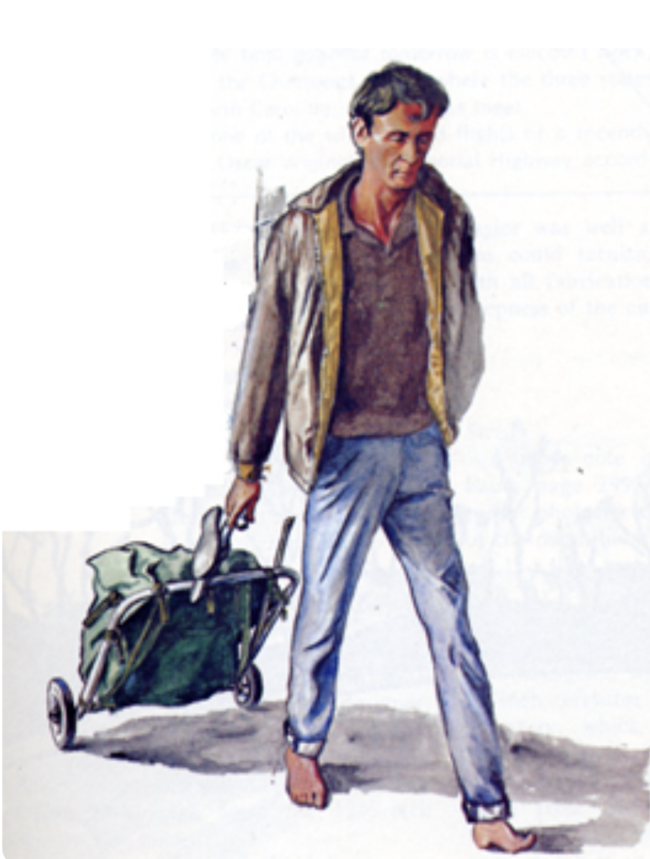
Guy’s artistic talents extend beyond his scientific illustrations, as demonstrated by this self-portrait.
View Guy Ottewell’s blog posts and charts at EarthSky
Ottewell routinely blogs at his website, Universal Workshop. And, in recent years, many of his blog posts have been reprinted at EarthSky.org.
At least through the end of 2026, you can also find his charts at EarthSky’s most popular post, our visible planet and night sky guide. EarthSky founder Deborah Byrd described Guy’s contributions to astronomy this way:
Through his own efforts, unaffiliated with any large organization, Guy has conveyed astronomy to millions of people since 1974. That’s when he published the original edition of his yearly Astronomical Calendar. He has published it since then, and it has become one of the most beloved resources in astronomy.
A voice that inspired generations of skywatchers
EarthSky’s John Jardine Goss, who is also a former president of the Astronomical League, shared his insight on Guy:
All his works – which include a number of topical, in-depth books and beautiful wall posters – have inspired curious skywatchers and amateur astronomers to see more and to learn more while they pursue the fascinating field of astronomy.
The late Alan Hale, co-discoverer of Comet Hale-Bopp, said this about Ottewell:
In addition to his astronomical writings and publications, Guy Ottewell has also engaged in numerous humanitarian efforts, and these infuse his writings. In so doing he is not only providing informational and educational benefits to his readers but is also demonstrating that the solar system and the universe within which we live are part of the common heritage of humanity.
And Joe Patterson, professor of astronomy at Columbia University, summed up our feelings at EarthSky when he said:
There’s nobody in Ottewell’s class.
Bottom line: On July 6, 2026, the International Astronomical Union honored longtime astronomy educator Guy Ottewell with an asteroid. Thus 21008 (1988 PE) is now also known as asteroid Ottewell.
Science matters. Wonder matters. You matter. Join our 2026 Donation Campaign today.
Read more: Artificial intelligence: Thoughts by astronomer Guy Ottewell
Like what you read?
Subscribe and receive daily news delivered to your inbox.
More from
Editors of EarthSky


Mercury after sunset and great for Southern Hemisphere!

Meteor shower guide 2026: Up next … the Orionids
We fly between the sun and Saturn. At opposition today
October birthstone: Colorful opal and tourmaline



