Lake Mead water levels could drop to record lows
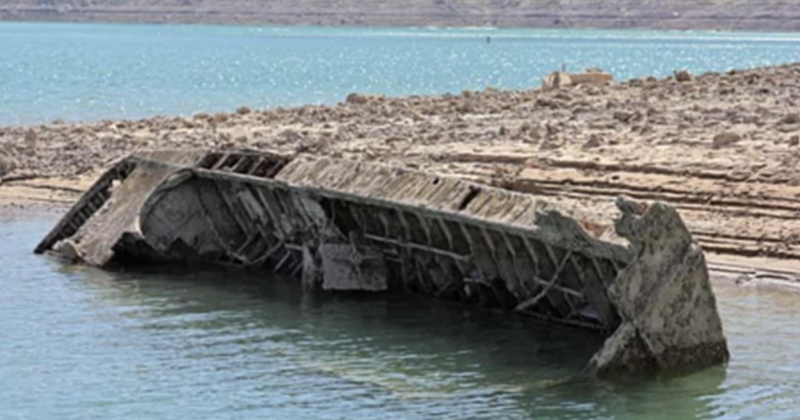
In the summer of 2022, water levels in Lake Mead dropped so low that formerly hidden bodies and boats were revealed. Now the U.S. Bureau of Reclamation is estimating that – by July 2027 – Lake Mead’s water levels could drop 20 feet (6 meters) below that.
The May 2026 report by the U.S. Bureau of Reclamation shows that Lake Mead water levels could drop to 1,020 feet (311 meters) by July 2027. That would be 20 feet lower than the 1,040 feet (317 meters) the lake hit in July 2022.
Currently, the water level in Lake Mead is at 1,052 feet (320.6 meters). That’s already below the recent average levels for the lake, which have been between 1,060 and 1,070 feet (323 meters and 326 meters).

Full capacity is at 1,229 feet (375 meters). But the lake hasn’t seen that since 1983.
Lake Mead is a freshwater resource
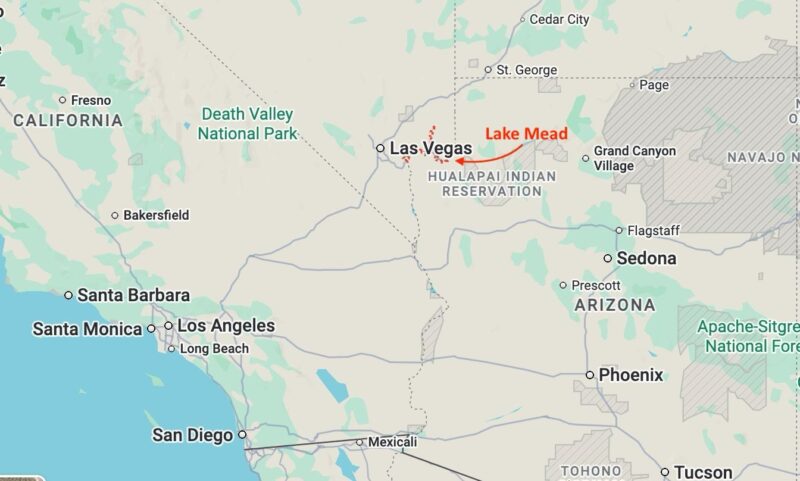
Lake Mead is the largest U.S. reservoir in terms of capacity. It sits on the Colorado River, 24 miles (39 km) east of Las Vegas, Nevada. The mighty Hoover Dam – completed in 1936 – holds back its waters. The water in Lake Mead supplies communities in Nevada, California, Arizona and some of Mexico. Because of drought and increased water usage demands, the lake has been below full capacity since 1983.
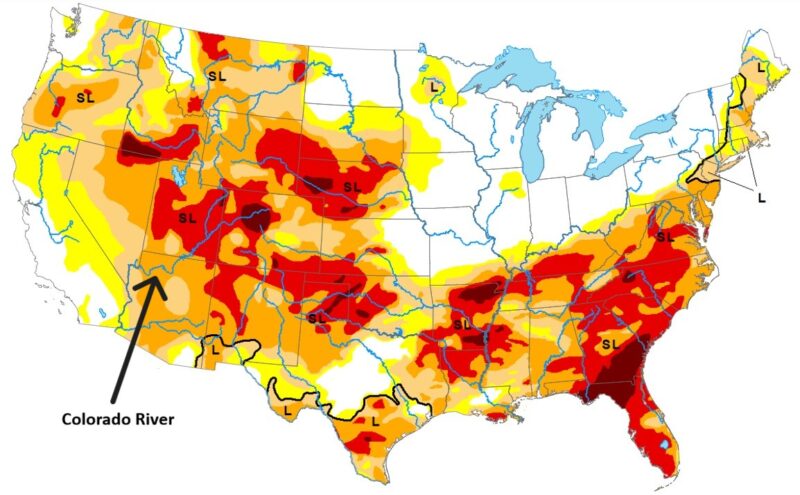
And drought conditions upstream from Lake Mead in 2026 are particularly severe.
Impacts of a lower Lake Mead
Lake Mead and, upstream from it, Lake Powell are two of the most important reservoirs in the U.S. They act as an interconnected “liquid savings accounts” for the Colorado River system, storing about 80% of the river’s water and providing critical drinking water, electricity, and irrigation for over 40 million people, according to KnowYourWaterNews.com, part of the Central Arizona Project.
When the water levels get low in reservoirs such as Lake Mead and Lake Powell, the hydroelectric plants at the dams there have reduced generating power. A change in federal water management plans means less water upstream from Lake Powell will be released to ensure power generation at Glen Canyon dam (which holds back Lake Powell).
Las Vegas pipes its water in directly from Lake Mead. San Diego imports about 3/4 of its water from the Colorado River. And about 40% of Phoenix’s water comes from the Colorado River. But these and other communities have learned water conservation over the past decades as drought increased. In fact, the city of Phoenix announced on April 28, 2026:
Over the past several decades, water use per person has declined even as the city’s population has grown.
Phoenix Water Services Director Brandy Kelso said:
Phoenix is not running out of water. We have planned for drought for decades. And we continue to invest in the infrastructure, conservation programs and water supplies needed to serve our community today and into the future.
Bottom line: The U.S. Bureau of Reclamation said that the water levels at Lake Mead could drop to all-time lows by July 2027.
Read more: Beavers know better. They saved the Czech government $1 million!
Like what you read?
Subscribe and receive daily news delivered to your inbox.
More from
Kelly Kizer Whitt


The MMX mission launches to Mars’ moons on Monday

Visible planets and night sky guide for October
No more leap seconds! Timekeeping is officially changing