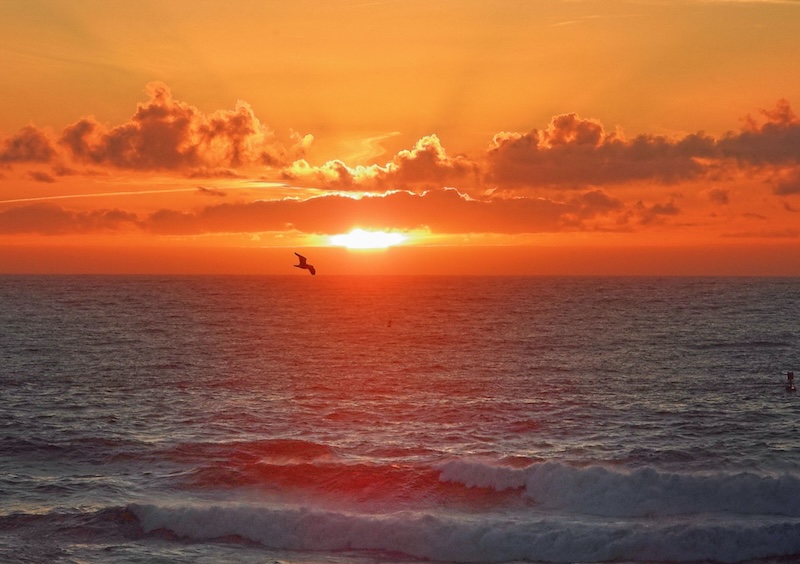
World Oceans Day 2025
World Oceans Day has fallen around June 8 every year since 1992. It’s a day to honor our connection to Earth’s oceans – even if we don’t live near a beach – and to learn what we can do to protect ocean habitats. This year, it’s celebrated on June 8.
World Oceans Day 2026 has the theme of REIMAGINE.
The day is meant to shed light on the wonder of the ocean and how it’s our life source, supporting humanity and every other organism on Earth.
Here’s a calendar of events around the world.
2026’s theme
According to World Oceans Day:
Reimagining a better future is the first step to building it.
For too long, we have treated the ocean as something vast, distant, and separate from us. We created that distance ourselves. The ocean has always flowed through us, in the air we breathe, the food we eat, and the climate that makes our lives possible. Now we are being called to reimagine that relationship. For the first time in a generation, humanity has chosen to govern a significant part of our shared ocean together. The entry into force of the BBNJ Agreement is not the end of negotiation but the beginning of a transformation that no treaty alone can complete.
‘Reimagine’ asks us to close that distance together. To move from passive inheritors of the ocean’s generosity to active guardians of its future. To govern not just beyond our borders but beyond our blind spots, beyond the habits of taking, operating in silos, and the belief that the way things have been is the way they must remain.
Why Earth’s oceans are so important
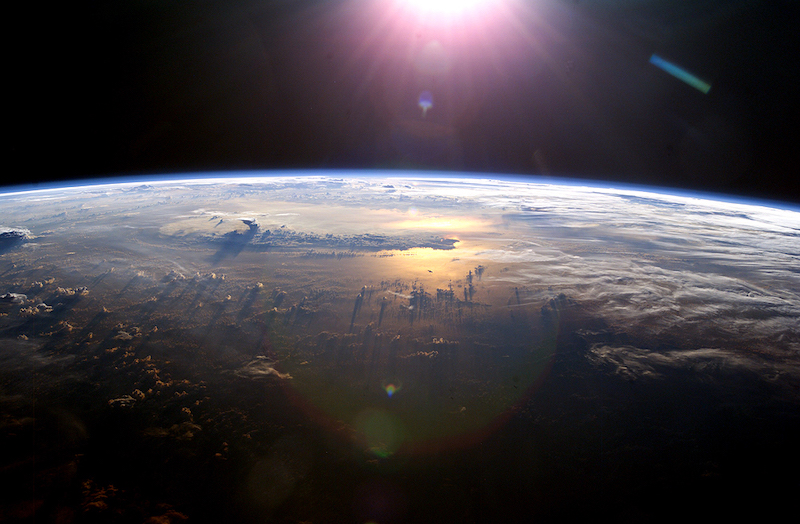
Earth’s oceans are critical to human survival. Indeed, more than half the oxygen in our atmosphere is generated via photosynthesis by phytoplankton and seaweed in oceans. In addition, millions of people depend on fish and other marine animals for food. Research on some marine organisms has led to the development of new medications. Moreover, ocean currents, known as global conveyor belts, help regulate Earth’s climate.
Perhaps the best reason we’ve seen to honor and protect Earth’s oceans comes from the 2013 video below, featuring Sylvia Earle, who is a National Geographic Society Explorer-in-Residence and perhaps the world’s most recognized living oceanographer. In the video below, among other things, Earle says:
I think of the ocean as the blue heart of the planet.
In addition, she says:
We, too, are sea creatures.
History of World Oceans Day
Canada made the original proposal for World Oceans Day in 1992 at the Earth Summit in Rio de Janeiro, Brazil. Subsequently, the day was unofficially celebrated on June 8 until 2008, when the United Nations officially recognized it. Since then, The Ocean Project and the World Ocean Network have coordinated World Oceans Day internationally. These organizations say they have had greater success and global participation each year.
We know that human activities have adversely affected the health of oceans: pollution, over-fishing, seawater acidification due to increased carbon dioxide, ocean warming and habitat destruction. There is so much to do to repair the damage.

So, what can you do to help?
There are things you can do on your own, on this day or any other. For example, if you live near an ocean, perhaps join a shoreline cleanup.
Even if you’re not near the sea, you can encourage your seafood retailers and favorite seafood restaurants to source their seafood more sustainably (Monterey Bay Aquarium’s Seafood Watch program is a terrific resource).
And we can all reduce our use of plastics with reusable shopping bags and refillable water bottles, and by using biodegradable products over plastic.
Watch NASA’s perpetual ocean video 2
Longing for the ocean? Check out this video with photos from the EarthSky community.
Bottom line: World Oceans Day is a day to honor our connection to Earth’s oceans and to learn what we can do to protect ocean habitats. Celebrate World Oceans Day in 2026 on June 8.
Like what you read?
Subscribe and receive daily news delivered to your inbox.
More from
Editors of EarthSky


Comet Halley is parent of 2 meteor showers

Inferior conjunction — Venus! October 23-24, 2026
Mercury after sunset and great for Southern Hemisphere!
Meteor shower guide 2026: Up next … the Orionids